Glossy Paper Label
CN → US| HS Code | Tariff Rate | Origin | Destination | Doc |
|---|---|---|---|---|
| 4821102000 | 35.0% | CN | US | Official Doc |
| 4821902000 | 35.0% | CN | US | Official Doc |
Product Images

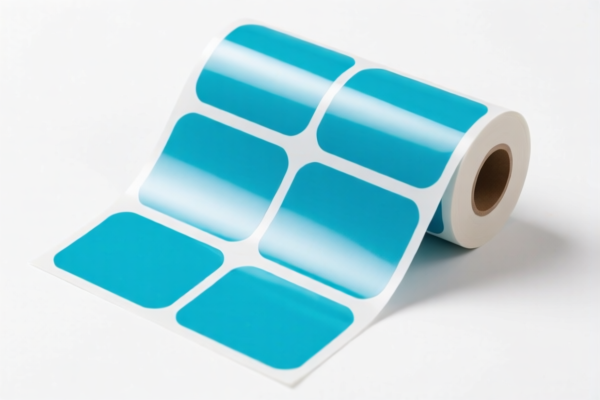
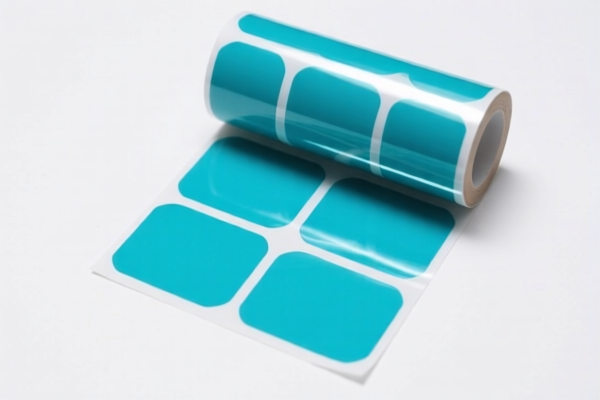
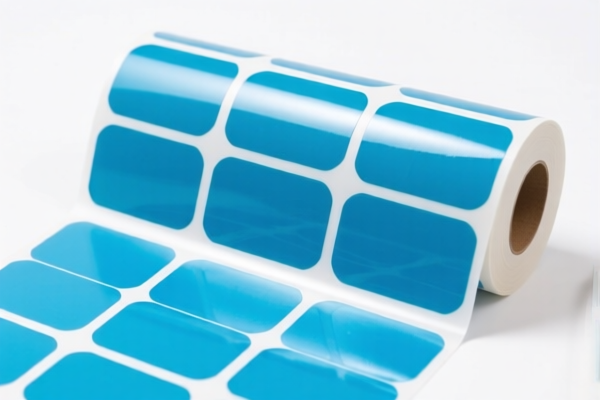
AI Analysis
🏷️ Glossy Paper Labels (Paper and Paperboard Labels)
🌐 HS Code Reference & Clearance Guide | 2026 Latest Tariff Analysis | Professional Clearance Strategy
📌 I. Product Definition & Classification: Are You Ready for "Glossy Paper Labels"?
Glossy Paper Labels are adhesive or non-adhesive labels made from paper, featuring a coated surface that provides a high-shine, reflective finish. They are widely used in packaging, retail, and logistics for their aesthetic appeal and printability.
In international trade, these are primarily classified under Chapter 48 (Paper and Paperboard). The critical distinction lies in the manufacturing method (lithographic process) and physical structure (self-adhesive vs. non-adhesive).
⚠️ Key Distinction:
- If printed via lithography → Classify under 4821.10.20.00
- If self-adhesive (sticker type) but not lithographic → Classify under 4821.90.20.00
📦 II. HS Code Classification Details (2026 Latest Tariff Authority Match)
Based on the provided data, here are the two possible classifications for Glossy Paper Labels. Note: These are mutually exclusive based on specific product features.
| HS Code | Product Description | Applicable Scenario | Key Feature |
|---|---|---|---|
4821.10.20.00 |
Printed in whole or in part by a lithographic process | Pre-printed labels with glossy finish, high-volume commercial printing | ✅ Lithographic Printing |
4821.90.20.00 |
Self-adhesive labels | Sticker labels, shipping labels, price tags with adhesive backing | ✅ Self-Adhesive |
🔍 Critical Reminder:
- If your glossy label is self-adhesive AND lithographically printed, it may still fall under4821.10.20.00if the lithographic process is the primary defining characteristic. However, if it is simply a "sticker" without specific lithographic emphasis,4821.90.20.00is safer.
- Never combine these two codes in one shipment unless you have distinct, separable products.
💰 III. 2026 Latest Tariff Rate Breakdown (Including Additional Duties)
✅ Applicable Country: United States (US)
✅ Origin: China (CN)
✅ Effective Time: Current (2026)
🎯 1. 4821.10.20.00 – Glossy Labels (Lithographic Printing)
| Item | Content |
|---|---|
| Base Tariff Rate | 0.0% |
| Additional Tariff (Section 301) | +25.0% |
| Total Tax Rate | 25.0% |
| Tax Calculation | CIF Value × 25% |
| De Minimis Exemption | ❌ Not Eligible (High tax rate disqualifies it from $800 exemption for most carriers) |
| Legal Basis | HTSUS: 4821.10.20.00 + USITC Section 301 Footnote |
📌 Explanation:
- Although the base tariff is 0%, the 25% Section 301 surcharge applies due to the origin (China).
- This is a significant cost burden for high-volume label imports.
- Glossy finish does not change the tax rate; the printing method (lithographic) is the key classifier.
🎯 2. 4821.90.20.00 – Self-Adhesive Labels
| Item | Content |
|---|---|
| Base Tariff Rate | 0.0% |
| Additional Tariff (Section 301) | +25.0% |
| Total Tax Rate | 25.0% |
| Tax Calculation | CIF Value × 25% |
| De Minimis Exemption | ❌ Not Eligible |
| Legal Basis | HTSUS: 4821.90.20.00 + USITC Section 301 Footnote |
📌 Explanation:
- Same tax structure as above.
- Self-adhesive is the defining feature. If you sell "stickers" or "pressure-sensitive labels," use this code.
- Even if not lithographically printed, the 25% surcharge still applies.
🛠️ IV. Customs Clearance Practical Advice (Pitfall Avoidance Guide)
✅ 1. Documentation Checklist (Essential)
| Document | Required | Description |
|---|---|---|
| ✅ Commercial Invoice | ✔️ | Must clearly state: "Glossy Paper Labels" + HS Code |
| ✅ Packing List | ✔️ | Detail dimensions, weight, and number of rolls/sheets |
| ✅ Product Specification | ✔️ | Specify: Adhesive type? Lithographic print? Surface finish (Glossy/Matte) |
| ✅ Label Design Proof | ✔️ | Show artwork to prove lithographic printing if using 4821.10.20.00 |
| ✅ Origin Certificate | ✔️ | Confirm CN origin to verify 25% surcharge applicability |
✅ 2. Declaration Tips (Key Mantra)
🔥 “Litho = .10, Self-Adhesive = .90, Both 25%, No Free Ride!”
| Scenario | Correct HS Code | Wrong Code | Risk |
|---|---|---|---|
| High-quality glossy labels, professionally printed | 4821.10.20.00 |
4821.90.20.00 |
Under-declaration if litho is main feature |
| Simple sticker labels, no complex print | 4821.90.20.00 |
4821.10.20.00 |
Over-complication, potential audit |
| Non-adhesive paper labels (peel-and-stick not included) | ❌ Not in Data | N/A | Not covered in provided data – may be 4821.10.90 or 4821.90.90 (check other codes) |
✅ 3. Special Situations
| Situation | Handling Advice |
|---|---|
| Mixed Shipment | If you ship both lithographic and self-adhesive labels, declare separately with two HS codes. Do not mix. |
| Glossy Coating Material | The "glossy" finish is considered part of the paper/board processing. It does not change the HS code from Chapter 48 to Chapter 35 (coatings). |
| Sample Shipments | Even samples are subject to 25% tax if value exceeds de minimis. Do not use "gift" declaration. |
🌍 V. Global Market Clearance Comparison (2026)
| Country/Region | Recommended HS Code | Tariff (China Origin) | Notes |
|---|---|---|---|
| 🇺🇸 USA | 4821.10.20.00 / 4821.90.20.00 |
25% (Total) | Section 301 applies. High cost. |
| 🇨🇳 China | 4821.10.20.00 / 4821.90.20.00 |
Varies | Import duties may apply, but no 301 surcharge. |
| 🇪🇺 EU | 4821.10.00 / 4821.90.00 |
~6.5% | No Section 301. Lower cost. |
| 🇬🇧 UK | 4821.10.00 / 4821.90.00 |
~6.5% | Post-Brexit tariff schedule. |
📌 Conclusion:
- USA is the most expensive market for Chinese paper labels due to the 25% additional tariff.
- Consider supply chain diversification (e.g., printing in Vietnam/Mexico) to avoid 301 tariffs if shipping to the US.
📌 VI. Common Errors & Pitfalls (Blood & Tears Lessons)
❌ Error 1: Declaring glossy labels as "Paper Sheets" (4802)
👉 Consequence: Misclassification, penalty, 25% + back taxes.
👉 Correction: Labels have specific shape/function → Must use Chapter 48 Heading 4821.
❌ Error 2: Ignoring the "Lithographic" distinction
👉 Consequence: Using 4821.90.20.00 for lithographic labels may trigger audits.
👉 Correction: Provide print specs to justify 4821.10.20.00.
❌ Error 3: Assuming "Glossy" = Higher Tax
👉 Consequence: None. Tax is based on process (litho) or structure (adhesive), not finish.
👉 Correction: Focus documentation on print method and adhesive presence.
✅ Correct Practice:
"Glossy Paper Labels, Self-Adhesive, Model XYZ, Lithographically Printed, Origin China, HS 4821.10.20.00"
🎯 VII. Conclusion: Professional Declaration, Cost Control!
🎯 Remember the Mantra:
🔹 "Litho gets .10, Adhesive gets .90, Both 25%, Plan Ahead!"
🔹 "Glossy is just surface, Print Method decides the Code!"
📌 Pro Tip:
If you are shipping to the US, consider Pre-Arrival Review Service (PARS) or Advance Ruling to confirm whether your specific "glossy" labels fall under .10 (litho) or .90 (adhesive) to avoid delays.
📣 Immediate Action:
📞 Consult a customs broker + Provide print samples + Verify adhesive type
🚀 Ensure your Commercial Invoice explicitly states the HS Code to avoid holds!
✨ Professional Customs Clearance Starts with Accurate Classification!
💼 Every 1% of Tax Savings Adds to Your Profit Margin!
Customer Reviews
About HS Code Classification
The Harmonized System (HS) is an internationally standardized nomenclature developed by the World Customs Organization (WCO) to classify traded products. Over 200 countries use the HS system as the basis for customs tariffs, trade statistics, and import/export regulations.
Each HS code follows a hierarchical structure:
- Chapter (2 digits) — Broad category of goods (e.g., Chapter 84: Machinery and Mechanical Appliances)
- Heading (4 digits) — More specific grouping within the chapter
- Subheading (6 digits) — Internationally standardized breakdown, used by all WCO member countries
- National subdivisions (8-10 digits) — Country-specific extensions for further classification, such as US HTSUS 10-digit codes
Correct HS code classification is essential for smooth customs clearance, accurate duty payment, and compliance with trade regulations. Misclassification can lead to customs delays, overpayment of duties, or penalties.
When importing from CN to US, the applicable tariff rates may include:
- Most-Favored-Nation (MFN) rate — The standard duty rate applied to WTO members
- General rate — Applied to countries without trade agreements
- Trade remedy duties — Additional tariffs such as Section 301 (anti-dumping), Section 232 (national security), or countervailing duties
The information provided on this page is for reference purposes only. For official classification, please consult with your local customs authority or a licensed customs broker.