Goggles Cover
CN → US| HS Code | Tariff Rate | Origin | Destination | Doc |
|---|---|---|---|---|
| 4202124000 | 16.3% | CN | US | Official Doc |
| 4202128980 | 52.6% | CN | US | Official Doc |
| 9004900010 | 20.0% | CN | US | Official Doc |
| 3926909950 | 22.8% | CN | US | Official Doc |
| 3926909989 | 22.8% | CN | US | Official Doc |
| 9004900090 | 20.0% | CN | US | Official Doc |
Product Images
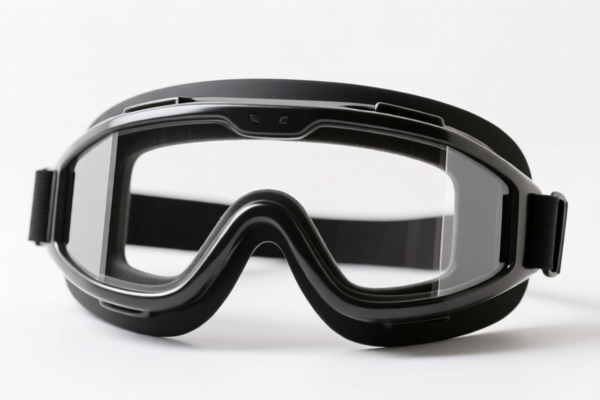
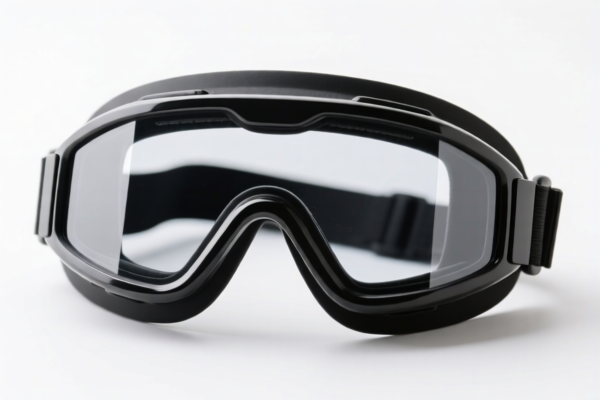
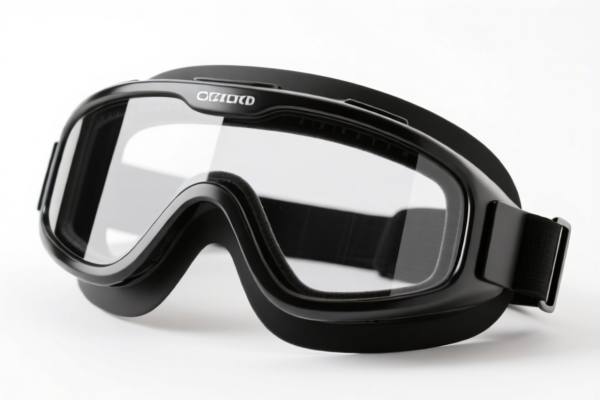
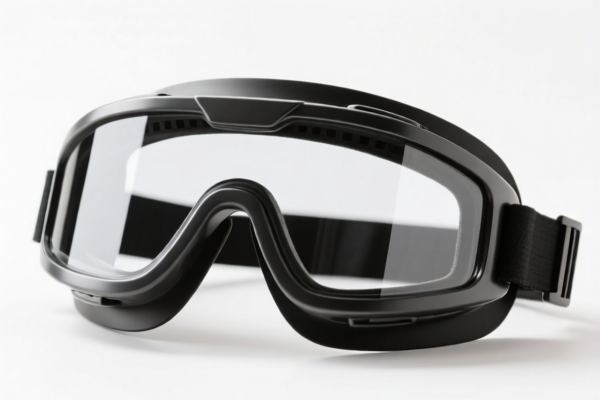
AI Analysis
👓 Goggles Cover (Protective Eyewear Cases & Shields)
🌐 HS Code Reference & Customs Clearance Guide | 2026 Latest Tariff Analysis | Strategic Classification
📌 I. Product Definition & Classification: What Exactly is a "Goggles Cover"?
"Goggles Cover" is an ambiguous term in international trade. It typically refers to two distinct categories of goods, which leads to drastically different HS Code classifications and tax liabilities. Understanding the material composition and intended function is critical to avoiding costly customs penalties.
Category A: Hard/Soft Protective Cases (Containers)
These are non-optical items designed solely to store, protect, and transport eyewear (goggles, safety glasses, swimming goggles). They do not provide optical protection themselves but serve as packaging or accessories.
Category B: Protective Eyewear Shelves (Shields/Filters)
These are actual optical or protective devices worn over or as eyewear. They function as face shields, welding filters, or safety screens, providing direct protection to the eyes/face.
⚠️ Key Distinction Point:
- If the item is a box, pouch, or case for storing goggles → It falls under Chapter 42 (Articles of Leather; Saddle and Harness).
- If the item is a face shield, visor, or safety screen worn for protection → It falls under Chapter 90 (Optical, Photographic, Cinematographic, Measuring... Instruments).
📦 II. HS Code Classification Details (2026 Latest Tariff Authority Comparison)
Based on the provided data, here are the four possible classification paths:
| HS Code | Product Description | Applicable Scenario | Material/Function |
|---|---|---|---|
4202.12.40.00 |
Goggles Cases / Eyewear Containers | Soft/hard cases for storing eyewear | Textile/Leather surface; Storage Only |
4202.12.89.80 |
Similar Containers (Textile Surface) | Cases with textile outer surface, not elsewhere specified | Textile outer surface; Storage Only |
9004.90.00.10 |
Protective Eyewear / Goggles | Safety goggles, welding goggles, or protective shields | Optical/Protective function; Worn for Protection |
9004.90.00.90 |
Goggles/Covers (Optical Category) | Other eyewear/goggles not specified above | Optical/Protective function; Worn for Protection |
3926.90.99.50 |
Face Masks & Visors (Plastic) | Plastic face shields, visors, or cover plates | Plastic material; Protective Barrier |
3926.90.99.89 |
Other Plastic Articles | Plastic goggles covers not elsewhere classified | Plastic material; Non-optical/Accessory |
🔍 Critical Reminder:
- Misclassification Risk: Declaring a "plastic face shield" as a "textile case" to lower taxes will be flagged by customs.
- Material is Key:
- Textile/Leather outer surface for storage → 4202 series.
- Plastic material for storage → 3926 series.
- Worn for eye protection → 9004 series.
💰 III. 2026 Latest Tariff Rate Breakdown (Including Additional Duties & Policy Add-ons)
✅ Applicable Country: United States (US)
✅ Origin: China (CN)
✅ Effective Date: Includes Section 301 & IEEPA add-ons
🎯 1. 4202.12.40.00 —— Eyewear Cases (Textile/Leather Surface)
| Item | Content |
|---|---|
| Base Duty | 6.3% |
| Additional Duty (Sec 301) | 0.0% |
| Section 122 Duty | 10.0% |
| Total Tax Rate | 16.3% |
| Calculation | CIF Value × 16.3% |
| Legal Basis | Base Tariff + Section 122 (if applicable) |
📌 Explanation:
- This is the lowest tax bracket for "goggles covers" classified as containers.
- No Section 301 (25%) is applied here, which is significantly better than optical products.
- Section 122 (10%) applies specifically to certain textile/apparel containers under specific conditions.
🎯 2. 4202.12.89.80 —— Similar Containers (Textile Outer Surface)
| Item | Content |
|---|---|
| Base Duty | 17.6% |
| Additional Duty (Sec 301) | 25.0% |
| Section 122 Duty | 10.0% |
| Total Tax Rate | 52.6% |
| Calculation | CIF Value × 52.6% |
| Legal Basis | Base Tariff + Sec 301 + Section 122 |
📌 Warning:
- This classification carries the highest tax burden in the dataset.
- Applies if the item is considered a "general textile container" not specifically listed under4202.12.40.
- Avoid this classification if your product fits4202.12.40or can be classified under plastics/opticals.
🎯 3. 9004.90.00.10 & 9004.90.00.90 —— Protective Eyewear (Optical Category)
| Item | Content |
|---|---|
| Base Duty | 2.5% |
| Additional Duty (Sec 301) | 7.5% |
| Section 122 Duty | 10.0% |
| Total Tax Rate | 20.0% |
| Calculation | CIF Value × 20.0% |
| Legal Basis | Optics Chapter + Sec 301 + Section 122 |
📌 Note:
- Both subheadings (10and90) have the same total tax rate of 20%.
- The distinction lies in the specific type of protective eyewear (e.g.,10might be for specific safety standards,90for others).
- If your product is a goggle cover that is worn as a shield, this is the correct classification.
🎯 4. 3926.90.99.50 & 3926.90.99.89 —— Other Plastic Articles (Plastic Material)
| Item | Content |
|---|---|
| Base Duty | 5.3% |
| Additional Duty (Sec 301) | 7.5% |
| Section 122 Duty | 10.0% |
| Total Tax Rate | 22.8% |
| Calculation | CIF Value × 22.8% |
| Legal Basis | Plastics Chapter + Sec 301 + Section 122 |
📌 Note:
- Both subheadings (50and89) have the same total tax rate of 22.8%.
- Applies if the "goggle cover" is made of plastic and is not primarily a textile case.
-3926.90.99.50specifies "Face masks and visors," while3926.90.99.89is a catch-all for other plastic articles.
🛠️ IV. Customs Clearance Practical Advice (Battle-Tested Pitfall Avoidance)
✅ 1. Preparation Checklist (Non-Negotiable)
| Document | Required | Purpose |
|---|---|---|
| ✅ Product Photos | ✔️ | Clearly show material (textile vs. plastic) and use (storage vs. protection). |
| ✅ Composition Statement | ✔️ | E.g., "100% Polyester with PVC lining" or "ABS Plastic." |
| ✅ Usage Declaration | ✔️ | "For storage only" vs. "Worn for eye protection." |
| ✅ Technical Drawing | ✔️ | If claiming optical function, provide specs for lens/visor. |
| ✅ Commercial Invoice | ✔️ | Use precise terminology: "Eyewear Case" vs. "Safety Visor." |
✅ 2. Classification Strategy (Key Mantras)
🔥 "Material Dictates Chapter, Function Dictates Tax!"
| Scenario | Correct HS Code | Incorrect HS Code | Consequence |
|---|---|---|---|
| Textile Goggle Case | 4202.12.40.00 (16.3%) |
4202.12.89.80 (52.6%) |
Overpay by 36.3% |
| Plastic Goggle Case | 3926.90.99.50 (22.8%) |
4202... |
Misclassification Risk |
| Worn Safety Shield | 9004.90.00.10 (20.0%) |
3926... |
Penalty for False Declaration |
💡 Pro Tip:
- If your product is a soft pouch, aim for4202.12.40.00(16.3%) as it is the lowest tax rate.
- If it is a hard plastic case,3926.90.99.50(22.8%) is the correct path. Do not try to classify plastic cases under textile codes.
✅ 3. Special Circumstances
| Situation | Handling Advice |
|---|---|
| Mixed Material Cases | If a case has textile outer shell and plastic interior, customs may classify based on the principal material or essential character. Provide detailed composition. |
| Goggles + Case Sold Together | Declare separately or as a set. If set, the essential character of the set determines the HS code. Usually, the goggles (9004) dominate, but if sold as a "kit," clarify. |
| Welding Goggles with Cover | The goggles themselves are 9004. The storage box is 4202. Do not merge them. |
🌍 V. Global Market Clearance Comparison (2026 Latest)
| Country/Region | Recommended HS Code | Total Tax (China Origin) | Key Certification | Notes |
|---|---|---|---|---|
| 🇺🇸 USA | 4202.12.40.00 |
16.3% | None | Best rate for textile cases. |
| 🇺🇸 USA | 9004.90.00.10 |
20.0% | FDA/ANSI Z87.1 | For optical protection. |
| 🇪🇺 EU | 4202.12 |
~12% | CE | Different duty structure. |
| 🇨🇳 China | 4202.12 |
~12% | CCC (if optical) | Import duty applies. |
📌 Conclusion:
- USA is the most complex market due to Section 122 and Section 301.
- Textile cases (4202.12.40.00) offer the best tax advantage (16.3%) for storage items.
- Optical products (9004) are taxed at 20%, which is competitive compared to the 52.6% for misclassified textile containers.
📌 VI. Common Errors & Pitfalls (Lessons Learned)
❌ Error 1: Declaring a plastic case as a textile case
👉 Consequence: Customs inspection reveals plastic → Rejection or penalty.
❌ Error 2: Declaring a worn visor as a storage case
👉 Consequence: Fraud alert → Goods seized or heavy fines.
❌ Error 3: Using vague descriptions like "Goggle Accessory"
👉 Consequence: Customs assigns highest duty (often 4202.12.89.80 at 52.6%) due to ambiguity.
✅ Correct Approach:
"Eyewear Carrying Case, Outer Shell: 100% Polyester, Inner: EVA Foam, Model XYZ, For Storage Only"
🎯 VII. Conclusion: Professional Classification Saves Money!
🎯 Remember the Golden Rule:
🔹 "If it stores, check 4202. If it protects, check 9004. If it's plastic, check 3926."
🔹 "16.3% is the sweet spot for textile cases. 20% is fair for optical protection. Avoid 52.6% at all costs!"
📌 Tips:
- If you are shipping goggles cases (storage), ensure the outer material is textile to qualify for the lower 16.3% rate under 4202.12.40.00.
- If you are shipping protective eyewear, declare it as Optical under 9004.90.00.10 at 20.0%.
- Always provide clear photos and material composition to support your classification.
📣 Immediate Action:
📞 Consult with a customs broker for pre-classification.
📸 Submit product images showing material and function.
🚀 Ensure accurate HS Code declaration to avoid delays and extra costs!
✨ Professional Clearance Starts with Accurate Classification!
💼 Every percentage point matters in global trade!
Customer Reviews
About HS Code Classification
The Harmonized System (HS) is an internationally standardized nomenclature developed by the World Customs Organization (WCO) to classify traded products. Over 200 countries use the HS system as the basis for customs tariffs, trade statistics, and import/export regulations.
Each HS code follows a hierarchical structure:
- Chapter (2 digits) — Broad category of goods (e.g., Chapter 84: Machinery and Mechanical Appliances)
- Heading (4 digits) — More specific grouping within the chapter
- Subheading (6 digits) — Internationally standardized breakdown, used by all WCO member countries
- National subdivisions (8-10 digits) — Country-specific extensions for further classification, such as US HTSUS 10-digit codes
Correct HS code classification is essential for smooth customs clearance, accurate duty payment, and compliance with trade regulations. Misclassification can lead to customs delays, overpayment of duties, or penalties.
When importing from CN to US, the applicable tariff rates may include:
- Most-Favored-Nation (MFN) rate — The standard duty rate applied to WTO members
- General rate — Applied to countries without trade agreements
- Trade remedy duties — Additional tariffs such as Section 301 (anti-dumping), Section 232 (national security), or countervailing duties
The information provided on this page is for reference purposes only. For official classification, please consult with your local customs authority or a licensed customs broker.