Gold Jewelry
CN → US| HS Code | Tariff Rate | Origin | Destination | Doc |
|---|---|---|---|---|
| 7113195091 | 23.0% | CN | US | Official Doc |
| 7113195095 | 23.0% | CN | US | Official Doc |
| 7116201500 | 24.0% | CN | US | Official Doc |
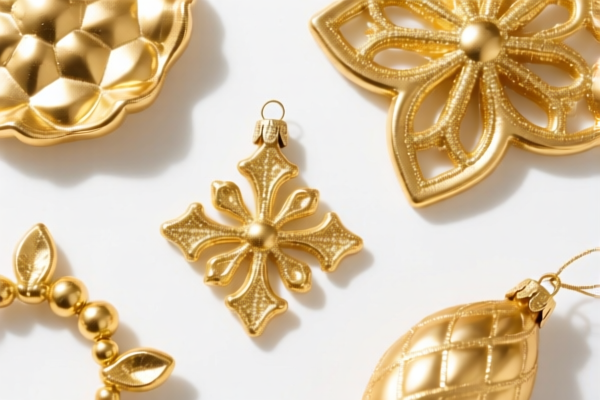
Product Images



AI Analysis
💍 Gold Jewelry (金制珠宝首饰)
🌐 HS Code Reference & Customs Clearance Guide | 2026 Latest Tariff Analysis | Professional Entry Strategy
📌 I. Product Definition & Classification: What Exactly is "Gold Jewelry"?
Gold jewelry refers to adornments made primarily of gold or precious metal alloys, categorized by material purity and design. In international trade, it falls under Chapter 71 (Natural or Cultured Pearls, Precious or Semi-Precious Stones, Precious Metals, Items of Precious Metals; Imitation Jewelry; Coin), specifically Heading 7113 (Articles of Jewellery and Parts Thereof, of Precious Metal or of Metal Clad with Precious Metal).
Key Distinction: - Pure/Precious Metal Jewelry: Made of gold, silver, or platinum (or clad with them). → Heading 7113 - Gemstone Jewelry: Made primarily of natural/synthetic stones. → Heading 7116
⚠️ Critical Classification Point:
- If the item is primarily gold/preious metal in structure, it belongs to 7113.xx.
- If the item is primarily stone/mineral with minor metal settings, it belongs to 7116.xx.
- Imitation Jewelry (base metal, non-precious) is NOT covered in the provided data scope.
📦 II. HS Code Classification Details (Based on Provided Data)
| HS Code | Product Description | Material Scope | Tax Category |
|---|---|---|---|
7113.19.50.91 |
Gold Jewelry, fitting precious metal material category | Pure Gold, Gold Alloys, Gold-Clad Items | Precious Metal Jewelry |
7113.19.50.95 |
Precious/Base Metal Clad Jewelry, catch-all category | Metal-clad items not specified elsewhere | Other Precious/Base Metal Jewelry |
7116.20.15.00 |
Jewelry of Natural/Synthetic Stone, fitting material & use definition | Stone-based jewelry (e.g., Diamond, Ruby, Glass) | Stone-based Jewelry |
🔍 Key Note:
- 7113.19.50.91 is the primary code for solid gold or gold-plated jewelry.
- 7116.20.15.00 applies when the primary value/mass comes from stones, not gold.
- Both categories under 7113 and 7116 carry significant additional tariffs due to US trade policies.
💰 III. 2026 Latest Tariff Rate Breakdown (Including Add-ons & Policy Surcharges)
✅ Applicable Country: USA (US)
✅ Origin: China (CN) (Based on 122 Clause reference)
✅ Effective Time: Current Trade Policy (Section 301 & Section 122)
🎯 1. 7113.19.50.91 & 7113.19.50.95 — Precious Metal Jewelry (Gold/Clad)
| Item | Content |
|---|---|
| Base Tariff (MFN) | 5.5% (Ad Valorem) |
| Section 301 Additional Tariff | 7.5% |
| Section 122 Tariff | 10% (Trade Enforcement) |
| Total Effective Rate | 23.0% |
| Tax Calculation | CIF Value × 23% |
| De Minimis Exemption? | ❌ No (High-value items typically excluded or monitored) |
| Legal Basis Path | HTSUS:7113.19.50.91 → USITC Footnote 301:7.5% → 122 Clause:10% |
📌 Explanation:
- 5.5% is the standard Most Favored Nation (MFN) duty for jewelry.
- 7.5% is the Section 301 tariff imposed on Chinese goods.
- 10% is the Section 122 tariff (under the Trade Expansion Act of 1962), recently reactivated for certain imports to protect domestic industries.
- Total 23% is a high barrier. Gold jewelry is a luxury good with low volume elasticity, so this cost is usually passed to consumers.
🎯 2. 7116.20.15.00 — Stone-Based Jewelry
| Item | Content |
|---|---|
| Base Tariff (MFN) | 6.5% (Ad Valorem) |
| Section 301 Additional Tariff | 7.5% |
| Section 122 Tariff | 10% |
| Total Effective Rate | 24.0% |
| Tax Calculation | CIF Value × 24% |
| De Minimis Exemption? | ❌ No |
| Legal Basis Path | HTSUS:7116.20.15.00 → USITC Footnote 301:7.5% → 122 Clause:10% |
📌 Note:
- Stone jewelry has a slightly higher base tariff (6.5%) than gold jewelry (5.5%).
- The additional tariffs remain the same (7.5% + 10%).
- Total 24% makes stone-based imports even more expensive than gold-based imports from China.
🛠️ IV. Customs Clearance Practical Advice (Real-World Pitfall Guide)
✅ 1. Preparation Checklist (Essential Documents)
| Document | Required | Purpose |
|---|---|---|
| ✅ Product Specification | ✔️ | Material breakdown: % Gold content (e.g., 18K = 75%), Stone type, Carat weight. |
| ✅ Commercial Invoice | ✔️ | Must explicitly state "Gold Jewelry" or "Stone Jewelry" and declare Country of Origin. |
| ✅ Packing List | ✔️ | Item count, gross weight, net weight. Jewelry is small but high-value; accurate weight is critical. |
| ✅ Appraisal/Valuation Proof | ✔️ | For customs valuation. Must match CIF value (Product + Insurance + Freight). |
| ✅ Anti-Money Laundering (AML) Compliance | ✔️ | High-value gold items may trigger AML checks. Ensure supplier transparency. |
✅ 2. Declaration Tips (Crucial Keywords)
🔥 “Be Precise: Gold vs. Stone, Clad vs. Solid, Origin Matters!”
| Scenario | Correct Declaration | Wrong Declaration | Risk |
|---|---|---|---|
| Solid Gold Ring | 7113.19.50.91 – "Gold Ring, 18K" |
"Jewelry" (Too vague) | Classification error → Penalty |
| Gold-Plated Bracelet | 7113.19.50.95 – "Metal Clad Jewelry" |
"Solid Gold" | Fraud/Harsh Penalty |
| Diamond Pendant | 7116.20.15.00 – "Stone Jewelry, Diamond" |
"Gold Jewelry" | Misclassification → Audit |
| Base Metal Necklace | Not in Data – Check Chapter 71 other headings | Force into 7113 | Rejection/Return |
✅ 3. Special Cases & Strategies
| Situation | Handling Advice |
|---|---|
| Mixed Materials | If >50% value is gold, use 7113. If >50% is stone, use 7116. |
| Low-Value Shipments | De Minimis ($800) may apply, but high tariff rates mean any shipment above $800 is heavily taxed. |
| Origin Labeling | Must clearly mark "Made in China" on packaging. Hidden origin leads to severe penalties. |
| Gift Items | Still subject to duty. Mark as "Commercial Sample" only if truly non-commercial. |
🌍 V. Global Market Comparison (2026 Latest)
| Country/Region | Recommended HS Code | Base Tariff | Total Effective Rate (China Origin) | Notes |
|---|---|---|---|---|
| 🇺🇸 USA | 7113.19.50.91 / 7116.20.15.00 |
5.5% / 6.5% | 23% / 24% | High due to 301 + 122 clauses |
| 🇨🇳 China | 7113.19.50.91 |
10% | 10% | No additional US tariffs |
| 🇪🇺 EU | 7113.11.00 |
0% | 0% | Free trade zone for most jewelry |
| 🇬🇧 UK | 7113.11.00 |
0% | 0% | Post-Brexit zero duty for jewelry |
| 🇯🇵 Japan | 7113.11.00 |
3% | 3% | Low tariff, stable policy |
📌 Conclusion:
- USA is the most expensive market for gold/stone jewelry due to Section 301 and 122 tariffs.
- EU, UK, and Japan offer significant duty advantages.
- Consider supply chain diversification (e.g., manufacturing in Vietnam or Thailand) to avoid China-origin tariffs if targeting the US market.
📌 VI. Common Errors & Pitfalls (Lessons Learned)
❌ Error 1: Declaring "Gold Jewelry" for base-metal-plated items
👉 Consequence: Customs may reclassify to cheaper codes if not properly documented, leading to fraud investigations.
❌ Error 2: Ignoring the 122 Clause (10%)
👉 Consequence: Underpaying duties by 10% → Back taxes + Interest + Penalties.
❌ Error 3: Mixing Gold and Stone values without clear breakdown
👉 Consequence: Customs chooses the higher tax rate code (usually 7116 at 24%) if origin/material is unclear.
❌ Error 4: Using vague descriptions like "Ornaments" or "Accessories"
👉 Consequence: Delays for classification review → Storage fees + Demurrage.
✅ Correct Practice:
"18K Gold Ring, Set with Synthetic Sapphire, Origin: China, Model: XYZ, Net Weight: 5g, Gross Weight: 10g"
🎯 VII. Conclusion: Precision in Classification Saves Money!
🎯 Key Takeaways:
🔹 Gold Jewelry (7113): 23% Total Tariff (China → US)
🔹 Stone Jewelry (7116): 24% Total Tariff (China → US)
🔹 No De Minimis Exemption for commercial shipments above $800.
🔹 Origin is Key: "Made in China" triggers 301 + 122 tariffs.📌 Strategic Advice:
- For US Market: Consider sourcing from non-China origins (e.g., India, Thailand) to avoid Section 301 and 122 tariffs.
- Pre-Clearance: Apply for an Advance Ruling if your product structure is ambiguous (e.g., mixed materials).
- Documentation: Always provide material certificates (e.g., Hallmark for gold) to speed up clearance.
📣 Immediate Action:
📞 Consult a licensed customs broker for pre-classification review.
🚀 Optimize supply chain to mitigate tariff risk.
💼 Accuracy in declaration is your best defense against customs delays!
✨ Professional Clearance, Start with Accurate Classification!
💼 Every percent in duty affects your profit margin significantly!
Customer Reviews
About HS Code Classification
The Harmonized System (HS) is an internationally standardized nomenclature developed by the World Customs Organization (WCO) to classify traded products. Over 200 countries use the HS system as the basis for customs tariffs, trade statistics, and import/export regulations.
Each HS code follows a hierarchical structure:
- Chapter (2 digits) — Broad category of goods (e.g., Chapter 84: Machinery and Mechanical Appliances)
- Heading (4 digits) — More specific grouping within the chapter
- Subheading (6 digits) — Internationally standardized breakdown, used by all WCO member countries
- National subdivisions (8-10 digits) — Country-specific extensions for further classification, such as US HTSUS 10-digit codes
Correct HS code classification is essential for smooth customs clearance, accurate duty payment, and compliance with trade regulations. Misclassification can lead to customs delays, overpayment of duties, or penalties.
When importing from CN to US, the applicable tariff rates may include:
- Most-Favored-Nation (MFN) rate — The standard duty rate applied to WTO members
- General rate — Applied to countries without trade agreements
- Trade remedy duties — Additional tariffs such as Section 301 (anti-dumping), Section 232 (national security), or countervailing duties
The information provided on this page is for reference purposes only. For official classification, please consult with your local customs authority or a licensed customs broker.