Gold Leaf Facial Mask
CN → US| HS Code | Tariff Rate | Origin | Destination | Doc |
|---|---|---|---|---|
| 3921110000 | 40.3% | CN | US | Official Doc |
| 3921190010 | 41.5% | CN | US | Official Doc |
| 3920991000 | 41.0% | CN | US | Official Doc |
| 3919905060 | 40.8% | CN | US | Official Doc |
| 3919905040 | 40.8% | CN | US | Official Doc |
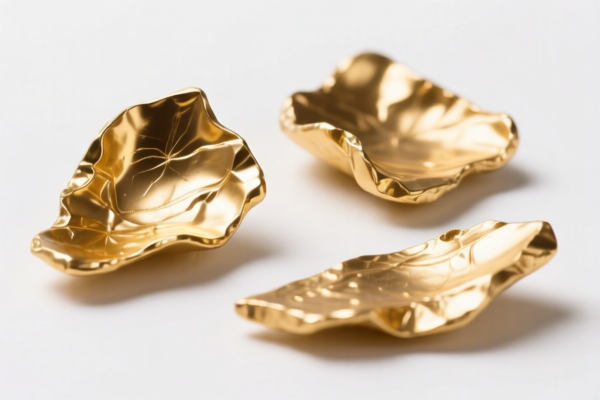
Product Images



AI Analysis
🎭 Gold Leaf Facial Mask (Cosmetic/Protective Film)
🌐 HS Code Reference & Customs Clearance Guide | 2026 Latest Tariff Analysis | Professional Strategy for Cosmetic Films
📌 Part I: Product Definition & Classification: What Exactly is a "Gold Leaf Mask"?
A "Gold Leaf Facial Mask" is a niche cosmetic product. In international trade, its classification hinges entirely on its material composition and functional form, rather than its cosmetic branding. Customs authorities often scrutinize these items to distinguish between:
- Textile/Fiber Masks: If the base is cotton, non-woven fabric, or hydrogel infused with gold particles.
- Plastic/Polymer Films: If the base is a transparent, self-adhesive plastic sheet (PET, PP, PE) coated or layered with gold foil for aesthetic or protective purposes.
⚠️ Critical Distinction for the Provided Data:
The provided HS codes (3919,3920,3921) all fall under Chapter 39: Plastics and Articles Thereof.
This implies the "Gold Leaf Mask" in question is NOT a traditional fabric mask, but rather a plastic-based film or sheet (likely PET or PP) used as a protective layer or cosmetic base, classified as plastic goods.
📦 Part II: HS Code Classification Details (Based on Provided Data)
Below is the detailed breakdown of the five potential HS Codes provided in the data, along with their specific tax structures.
| HS Code | Product Description & Rationale | Tax Rate Breakdown | Total Duty |
|---|---|---|---|
| 3921.11.00.00 | Plastic Plates, Sheets, Film, Foil, and Strip • Match Logic: Matches the form (film) and inferred material (plastic/polymer). No conflict with polystyrene categories. • Nature: General plastic film. |
Base: 5.3% Add-on (Sec 301): 25.0% 122 Clause: 10% |
40.3% |
| 3921.19.00.10 | Other Plastic Plates, Sheets, Film, Foil, and Strip • Match Logic: Matches form (film) and material (Polyethylene/PP). Consistent with "plastic board/sheet/film" attributes. • Nature: Other unspecified plastic films (often used for packaging or protection). |
Base: 6.5% Add-on (Sec 301): 25.0% 122 Clause: 10% |
41.5% |
| 3920.99.10.00 | Other Plates, Sheets, Film, Foil, and Strip, Non-Cellular • Match Logic: Plastic material (Protective film is often Polyester/PE); Form fits "film"; Composites/Laminates (gold layer + plastic base). • Nature: Composite or layered plastic films. |
Base: 6.0% Add-on (Sec 301): 25.0% 122 Clause: 10% |
41.0% |
| 3919.90.50.60 | Self-Adhesive Plated, Laminated, Supported, or Similar Self-Adhesive Plates, Sheets, Film, Foil, Tape, Strip, and Other Forms • Match Logic: Material inferred as plastic (common for protective films); Form fits flat film; "Other" category for unspecified types. • Nature: Self-adhesive plastic films (e.g., sticker-like masks or protective films). |
Base: 5.8% Add-on (Sec 301): 25.0% 122 Clause: 10% |
40.8% |
| 3919.90.50.40 | Self-Adhesive Plastic Film (Other) • Match Logic: Form is "film"; Inferred material is plastic (PET/PP for "gold leaf" aesthetic); Fits self-adhesive plastic film category. • Nature: Self-adhesive films, likely used for application or protection. |
Base: 5.8% Add-on (Sec 301): 25.0% 122 Clause: 10% |
40.8% |
🔍 Key Insight:
All provided codes carry very high effective tariffs (40.3% – 41.5%) due to the combination of US Section 301 Tariffs (25%) and Section 122 Tariffs (10%) on top of base duties. This is typical for plastic goods imported from China to the US.
💰 Part III: Tariff Rate Details (2026 Latest)
✅ Applicable Country: United States (US)
✅ Origin: China (CN)
✅ Effective Date: Current regulations (Section 301 & 122 clauses active)
🎯 1. 3921.11.00.00 — Plastic Film (General)
| Item | Content |
|---|---|
| Base Duty | 5.3% |
| USITC Additional (Sec 301) | +25.0% |
| 122 Clause Duty | +10.0% |
| Total Rate | 40.3% |
| Tax Calculation | CIF Value × 40.3% |
| De Minimis Eligibility | ❌ No (Denied for plastic films under current thresholds) |
| Legal Basis | USITC:3921.11.00.00 → FOOTNOTE:301 → Sec 122 |
📌 Explanation:
- 25% Sec 301: Standard additional tariff on Chinese plastic products.
- 10% Sec 122: Additional tariff on specific plastic articles (often related to recycling or strategic materials).
- Total 40.3%: High cost entry; margins must account for this.
🎯 2. 3921.19.00.10 — Other Plastic Film
| Item | Content |
|---|---|
| Base Duty | 6.5% |
| USITC Additional (Sec 301) | +25.0% |
| 122 Clause Duty | +10.0% |
| Total Rate | 41.5% |
| Tax Calculation | CIF Value × 41.5% |
| De Minimis Eligibility | ❌ No |
| Legal Basis | USITC:3921.19.00.10 → FOOTNOTE:301 → Sec 122 |
📌 Note:
- Highest rate in the set.
- Use only if the film is definitively NOT polystyrene (3921.11) and not composite (3920).
🎯 3. 3920.99.10.00 — Composite/Laminated Plastic Film
| Item | Content |
|---|---|
| Base Duty | 6.0% |
| USITC Additional (Sec 301) | +25.0% |
| 122 Clause Duty | +10.0% |
| Total Rate | 41.0% |
| Tax Calculation | CIF Value × 41.0% |
| De Minimis Eligibility | ❌ No |
| Legal Basis | USITC:3920.99.10.00 → FOOTNOTE:301 → Sec 122 |
📌 Reason:
- If the gold leaf mask is a multi-layer laminate (e.g., PET + adhesive + gold foil), this code is most accurate.
- Slightly lower base rate than 3921.19, but total remains high.
🎯 4 & 5. 3919.90.50.60 / 3919.90.50.40 — Self-Adhesive Plastic Films
| Item | Content |
|---|---|
| Base Duty | 5.8% |
| USITC Additional (Sec 301) | +25.0% |
| 122 Clause Duty | +10.0% |
| Total Rate | 40.8% |
| Tax Calculation | CIF Value × 40.8% |
| De Minimis Eligibility | ❌ No |
| Legal Basis | USITC:3919.90.50.xx → FOOTNOTE:301 → Sec 122 |
📌 Reason:
- If the mask is self-adhesive (sticks to skin without separate glue), these codes are appropriate.
- Both 50.40 and 50.60 have identical tax rates (40.8%). The distinction is often in the specific plastic composition or width, which requires expert verification.
🛠️ Part IV: Customs Clearance Practical Advice
✅ 1. Required Documentation Checklist
| Document | Required? | Notes |
|---|---|---|
| ✅ Product Spec Sheet | ✔️ | Must detail material composition (e.g., "PET film with gold coating"). |
| ✅ Material Composition Declaration | ✔️ | Explicitly state "Plastic (Polyester/PP)" to justify Chapter 39. |
| ✅ Commercial Invoice | ✔️ | Clearly describe as "Plastic Protective Film" or "Self-Adhesive Plastic Sheet," NOT just "Cosmetic Mask" (which might trigger cosmetic regulations). |
| ✅ Product Photos | ✔️ | Show texture, layering, and adhesive side if applicable. |
| ✅ FDA Notification (if applicable) | ⚠️ | If marketed as a cosmetic, ensure FDA compliance, but customs clearance relies on HS Code (Plastic). |
| ✅ Packing List | ✔️ | Itemize units clearly. |
✅ 2. Declaration Strategy (Key Tips)
🔥 "Material First, Function Second: Declare the Plastic, Not the Beauty!"
| Scenario | Correct Declaration | Wrong Declaration | Risk |
|---|---|---|---|
| Plastic Film Mask | "Self-Adhesive Plastic Film, for Cosmetic Use" | "Facial Mask" (vague) | May be misclassified as textile (0-5%) or cosmetic (high scrutiny). |
| Laminated Gold Mask | "Laminated Plastic Sheet, PET/Gold Layer" | "Gold Leaf Product" | Customs may doubt the plastic classification. |
| Non-Adhesive Film | "Plastic Film, Uncoated/Coated, for Protection" | "Sheet" | Ensure correct subheading (3920 vs 3921). |
📌 Critical Advice:
- Avoid "Cosmetic" in HS Description: While it is a cosmetic, the HS Code determines duty, not the use. Declare the physical material (Plastic Film) to align with Chapter 39. - Highlight "Plastic": Emphasize that the primary component is plastic (PET/PP), not fabric or paper.
✅ 3. Special Considerations
| Situation | Recommendation |
|---|---|
| De Minimis (Section 321) | ❌ Not Applicable. Plastic films from China are generally excluded from the $800 de minimis exemption under current trade rules. |
| Gold Foil Content | If the gold content is significant, ensure it’s classified as "plastic with gold coating," not "metal goods" (which might have different tariffs). |
| Self-Adhesive Nature | If it sticks to skin, use 3919 codes. If it’s just a film layer, use 3920/3921. |
🌍 Part V: Market Comparison & Strategy
| Market | Recommended HS Code | Approx. Duty (China Origin) | Notes |
|---|---|---|---|
| 🇺🇸 USA | 3919.90 / 3920.99 / 3921.11 |
40.3% – 41.5% | High duties due to Sec 301 & 122. |
| 🇨🇳 China | 3919.90 / 3921.11 |
~5% – 10% | Standard import duty. |
| 🇪🇺 EU | 3920.61 (PVC) / 3919.90 |
0% – 6% | No Section 301 equivalent. |
| 🇬🇧 UK | 3919.90 / 3921.11 |
0% – 6% | Post-Brexit rules apply. |
📌 Conclusion:
- The US market is the most expensive due to additional tariffs.
- Ensure your price structure accounts for ~41% duty.
- If possible, explore third-country sourcing (e.g., Vietnam, Malaysia) to avoid Section 301 tariffs, but verify origin rules carefully.
📌 Part VI: Common Mistakes & Pitfalls
❌ Mistake 1: Declaring as "Cosmetic Mask" (Textile/Non-woven)
👉 Result: If inspected and found to be plastic, you face back duties + penalties (40% vs 0-5%).
❌ Mistake 2: Ignoring Section 122 Duty
👉 Result: Underpayment by 10%. Customs will demand payment + interest.
❌ Mistake 3: Claiming De Minimis ($800 Exemption)
👉 Result: Plastics from China are not eligible. Shipment may be seized or returned.
✅ Best Practice:
Declare as: "Self-Adhesive Plastic Film (PET), for Cosmetic Application, Chinese Origin"
Use HS Code:3919.90.50.40or3919.90.50.60(if adhesive).
🎯 Part VII: Final Recommendation
🎯 Key Takeaway:
🔹 "Plastic Film, Not Cosmetic: Declare Material, Not Use!"
🔹 "Total Duty ~41%: Factor Into Pricing!"
🔹 "No De Minimis: Plan for Full Duty Payment!"
📌 Action Plan:
1. Verify Material: Confirm if the mask is truly plastic (PET/PP) and not fabric.
2. Choose HS Code:
- Adhesive? → 3919.90.50.40 or 3919.90.50.60 (40.8%)
- Non-Adhesive Film? → 3920.99.10.00 (41.0%) or 3921.11.00.00 (40.3%)
3. Prepare Docs: Include material spec sheets and clear descriptions.
4. Consult Broker: For pre-classification ruling if volume is high.
📣 Immediate Action:
📞 Contact your customs broker to confirm the exact material composition (PET vs PP vs PE) to select the most accurate HS Code.
🚀 Accurate declaration saves costs and prevents delays!
✨ Professional Clearance Starts with Precise Classification!
💼 Your Cost Efficiency Depends on This!
Customer Reviews
About HS Code Classification
The Harmonized System (HS) is an internationally standardized nomenclature developed by the World Customs Organization (WCO) to classify traded products. Over 200 countries use the HS system as the basis for customs tariffs, trade statistics, and import/export regulations.
Each HS code follows a hierarchical structure:
- Chapter (2 digits) — Broad category of goods (e.g., Chapter 84: Machinery and Mechanical Appliances)
- Heading (4 digits) — More specific grouping within the chapter
- Subheading (6 digits) — Internationally standardized breakdown, used by all WCO member countries
- National subdivisions (8-10 digits) — Country-specific extensions for further classification, such as US HTSUS 10-digit codes
Correct HS code classification is essential for smooth customs clearance, accurate duty payment, and compliance with trade regulations. Misclassification can lead to customs delays, overpayment of duties, or penalties.
When importing from CN to US, the applicable tariff rates may include:
- Most-Favored-Nation (MFN) rate — The standard duty rate applied to WTO members
- General rate — Applied to countries without trade agreements
- Trade remedy duties — Additional tariffs such as Section 301 (anti-dumping), Section 232 (national security), or countervailing duties
The information provided on this page is for reference purposes only. For official classification, please consult with your local customs authority or a licensed customs broker.