Gold Pendant Lanyard
CN → US| HS Code | Tariff Rate | Origin | Destination | Doc |
|---|---|---|---|---|
| 7326908688 | 87.9% | CN | US | Official Doc |
| 7326903500 | 92.8% | CN | US | Official Doc |
| 7117190500 | 10.0% | CN | US | Official Doc |
| 7117191500 | 25.5% | CN | US | Official Doc |
| 6307904020 | 17.5% | CN | US | Official Doc |
| 6307904010 | 17.5% | CN | US | Official Doc |
Product Images
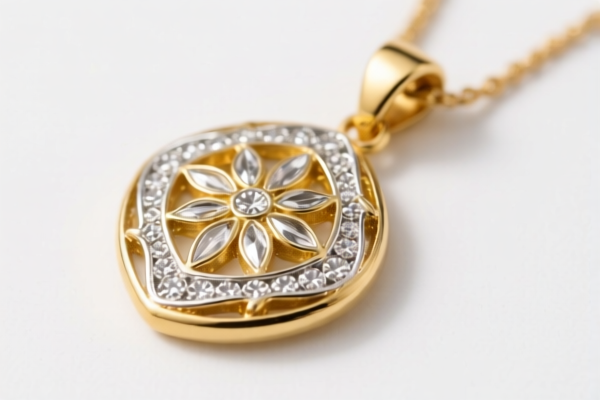
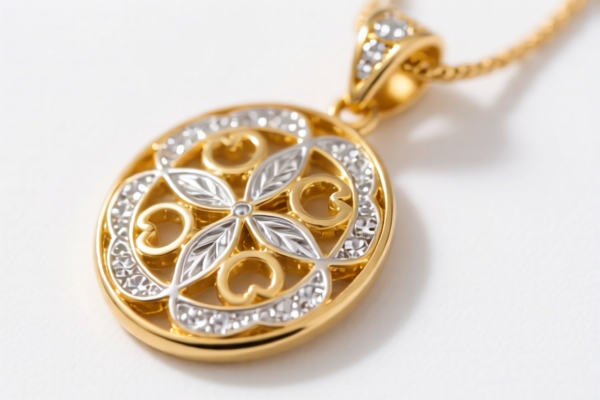
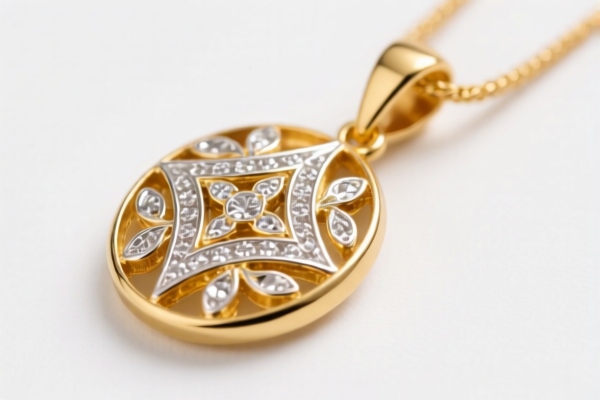
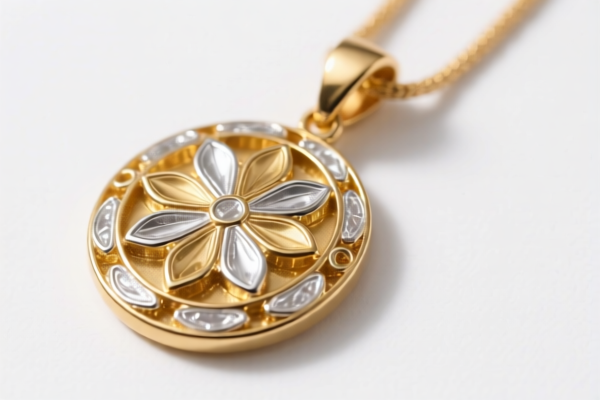
AI Analysis
📿 Gold Pendant Lanyard (Imitation Jewelry & Textile Accessories)
🌐 HS Code Reference & Customs Clearance Guide | 2024/2025 Latest Tariff Analysis | Professional Clearance Strategy
📌 1. Product Definition & Classification: What is a "Gold Pendant Lanyard"?
A "Gold Pendant Lanyard" typically refers to a decorative cord, chain, or rope used to hold a pendant, ID badge, or key, often featuring gold-colored plating or imitation materials. In international trade, classification depends strictly on the primary material and function:
Category A: Imitation Jewelry (Base Metal)
If the lanyard is primarily a metal chain, cable, or cord (even if plastic/rubber coated) designed to resemble jewelry (e.g., gold-plated chains), it falls under Chapter 71 (Imitation Jewelry).
- Key Feature: Valued as jewelry, made of base metal (copper, aluminum, zinc alloy, etc.), possibly plated with precious metal.
Category B: Textile Accessories (Cords/Tassels)
If the lanyard is primarily a fabric, cotton, or synthetic fiber cord (even if it has a small metal pendant), it is often classified as a made-up textile article (Cord/Tassel).
- Key Feature: Valued as a accessory/cord, not primarily as jewelry.
⚠️ Critical Distinction:
- If it looks like a necklace/bracelet chain → Chapter 71 (Imitation Jewelry).
- If it looks like a fabric lanyard/ID strap → Chapter 63 (Made-up Articles).
📦 2. HS Code Classification Details (Based on Provided Data)
| HS Code | Product Description | Material/Type | Tax Rate (China to US) |
|---|---|---|---|
| 7117.19.05.00 | Imitation Jewelry: Of base metal... Rope, curb, cable, chain... Toy jewelry valued not over 8 cents per piece | Base metal chain/cord (Gold-plated) | 0.0% |
| 7117.19.15.00 | Imitation Jewelry: Of base metal... Rope, curb, cable, chain... Other (Valued > 8 cents/piece or not toy) | Base metal chain/cord (Gold-plated) | 0.0% |
| 6307.90.40.10 | Other made up articles... Cords and tassels... Of cotton | Cotton/Fabric Lanyard | 7.5% |
| 6307.90.40.20 | Other made up articles... Cords and tassels Other | Synthetic/Polyester/Other Fabric Lanyard | 7.5% |
🔍 Note on "Other Articles of Iron or Steel" (7326.90.86.88 / 7326.90.35.00):
These codes are unlikely for a standard "Gold Pendant Lanyard" unless the lanyard is made of heavy iron/steel wire (e.g., industrial keychains or heavy-duty steel cables). For fashion/gold-plated items, Chapter 71 is more appropriate. However, if your product is a steel key ring/cable with a gold coating, it may fall under 7326.90.86.88 (77.9% total tax) or 7326.90.35.00 (50.0% total tax).
Recommendation: Avoid these unless it is clearly a steel industrial accessory.
💰 3. Tariff Rate Breakdown (Detailed)
✅ Applicable Country: United States (US)
✅ Origin: China (CN)
✅ Effective Date: Current as of 2024/2025
🎯 1. 7117.19.05.00 & 7117.19.15.00 – Imitation Jewelry (Base Metal Chains)
| Item | Detail |
|---|---|
| Base Tariff | 0.0% |
| Section 301 / IEEPA Additional Tariff | 0.0% |
| Total Tax Rate | 0.0% |
| Legal Basis | HTSUS 7117.19 |
| De Minimis Eligibility | ✅ Yes (if value ≤ $800) |
📌 Explanation:
- Imitation jewelry made of base metal (even if gold-plated) enjoys a 0% base duty.
- No additional Section 301 tariffs apply to imitation jewelry (Chapter 71).
- This is the most cost-effective classification for gold-plated chains/lanyards.
🎯 2. 6307.90.40.10 & 6307.90.40.20 – Textile Cords & Tassels
| Item | Detail |
|---|---|
| Base Tariff | 0.0% |
| Section 301 / IEEPA Additional Tariff | +7.5% |
| Total Tax Rate | 7.5% |
| Legal Basis | HTSUS 6307.90 |
| De Minimis Eligibility | ✅ Yes (if value ≤ $800) |
📌 Explanation:
- Fabric lanyards are subject to a 7.5% additional tariff under Section 301.
- While lower than steel products, it is higher than imitation jewelry.
🎯 3. 7326.90.86.88 – Other Articles of Iron/Steel
| Item | Detail |
|---|---|
| Base Tariff | 2.9% |
| Section 301 / IEEPA Additional Tariff | +25.0% |
| Steel/Aluminum/Copper Surcharge | +50% |
| Total Tax Rate | 77.9% |
| De Minimis Eligibility | ❌ No |
📌 Warning:
- If your lanyard is classified as steel (e.g., heavy-duty steel cable), the total tariff is 77.9%.
- This is extremely high and often leads to de minimis exclusion.
- Avoid this classification for fashion jewelry unless it is clearly an industrial steel product.
🎯 4. 7326.90.35.00 – Steel Containers/Accessories (e.g., Key Rings)
| Item | Detail |
|---|---|
| Base Tariff | 0.0% |
| Section 301 / IEEPA Additional Tariff | 0.0% |
| Steel/Aluminum/Copper Surcharge | +50% |
| Total Tax Rate | 50.0% |
| De Minimis Eligibility | ❌ No |
📌 Note:
- If the lanyard is a steel key ring or steel container-like accessory, it may fall here.
- 50% total tax is still very high.
🛠️ 4. Customs Clearance Recommendations
✅ 1. Classification Strategy
| Product Type | Recommended HS Code | Total Tax | Reason |
|---|---|---|---|
| Gold-Plated Metal Chain/Lanyard | 7117.19.05.00 or 7117.19.15.00 | 0% | Classified as imitation jewelry, no Section 301 tax. |
| Cotton/Polyester Fabric Lanyard | 6307.90.40.10 or 6307.90.40.20 | 7.5% | Classified as textile accessory. |
| Heavy Steel Cable/Key Ring | 7326.90.86.88 or 7326.90.35.00 | 50-77.9% | High tax, avoid if possible. |
💡 Pro Tip:
- If your lanyard has a gold-plated metal chain, declare it as Imitation Jewelry (7117.19.xx.xx) to enjoy 0% tariff.
- Do not declare it as "steel accessory" (7326) unless it is explicitly an industrial steel product.
✅ 2. Declaration Tips
| Do's | Don'ts |
|---|---|
| ✅ Declare as "Imitation Jewelry, Base Metal Chain, Gold-Plated" | ❌ Do not declare as "Steel Key Ring" if it is a fashion chain |
| ✅ Provide photos showing gold plating and base metal material | ❌ Do not use vague terms like "Accessory" without material detail |
| ✅ If fabric, specify "Cotton Lanyard" or "Polyester Cord" | ❌ Do not mix steel and jewelry descriptions |
✅ 3. De Minimis Strategy
- For HS 7117 (0% tax): ✅ Eligible for De Minimis (if value ≤ $800). This means no duty, no formal entry for small shipments.
- For HS 6307 (7.5% tax): ✅ Eligible for De Minimis (if value ≤ $800).
- For HS 7326 (50-77.9% tax): ❌ Not Eligible for De Minimis. Formal entry required, high duty burden.
🌍 5. Global Market Comparison (2024/2025)
| Market | Recommended HS Code | Total Tax (China Origin) | Notes |
|---|---|---|---|
| 🇺🇸 USA | 7117.19.xx.xx | 0% | Best option for gold-plated chains. |
| 🇪🇺 EU | 7117.19.xx.xx | ~2.5-4% | Lower than US, no Section 301. |
| 🇨🇳 China | 7117.19.xx.xx | 0% | Export tax may apply (check current rates). |
| 🇬🇧 UK | 7117.19.xx.xx | ~4.5% | Post-Brexit tariff applies. |
📌 6. Common Errors & Pitfalls
❌ Error 1: Classifying a gold-plated chain as steel article (7326).
👉 Result: 50-77.9% tax + loss of de minimis.
✅ Fix: Classify as Imitation Jewelry (7117) for 0% tax.
❌ Error 2: Declaring a fabric lanyard as jewelry (7117).
👉 Result: Customs may reject and reclassify to 6307 (7.5% tax) + penalties.
✅ Fix: Clearly state material as Cotton/Polyester.
❌ Error 3: Not specifying plating in description.
👉 Result: Customs may assume un-plated base metal, leading to different sub-classification.
✅ Fix: Use description: "Gold-plated base metal imitation jewelry chain."
🎯 7. Conclusion
For a "Gold Pendant Lanyard":
-
If Metal (Gold-Plated Chain): Use HS 7117.19.05.00 or 7117.19.15.00.
→ Tax: 0% | De Minimis: Eligible | Best Choice -
If Fabric (Cotton/Polyester): Use HS 6307.90.40.10 or 6307.90.40.20.
→ Tax: 7.5% | De Minimis: Eligible -
If Steel (Heavy Cable/Key Ring): Avoid if possible. Use 7326.90.xx.xx only if necessary.
→ Tax: 50-77.9% | De Minimis: Not Eligible | High Risk
🚀 Action Item:
For fashion jewelry lanyards, always choose Chapter 71 (Imitation Jewelry) to maximize duty savings and de minimis eligibility.
✨ Professional Clearance Starts with Precise Classification!
💼 Your Cost, Precisely Calculated!
Customer Reviews
About HS Code Classification
The Harmonized System (HS) is an internationally standardized nomenclature developed by the World Customs Organization (WCO) to classify traded products. Over 200 countries use the HS system as the basis for customs tariffs, trade statistics, and import/export regulations.
Each HS code follows a hierarchical structure:
- Chapter (2 digits) — Broad category of goods (e.g., Chapter 84: Machinery and Mechanical Appliances)
- Heading (4 digits) — More specific grouping within the chapter
- Subheading (6 digits) — Internationally standardized breakdown, used by all WCO member countries
- National subdivisions (8-10 digits) — Country-specific extensions for further classification, such as US HTSUS 10-digit codes
Correct HS code classification is essential for smooth customs clearance, accurate duty payment, and compliance with trade regulations. Misclassification can lead to customs delays, overpayment of duties, or penalties.
When importing from CN to US, the applicable tariff rates may include:
- Most-Favored-Nation (MFN) rate — The standard duty rate applied to WTO members
- General rate — Applied to countries without trade agreements
- Trade remedy duties — Additional tariffs such as Section 301 (anti-dumping), Section 232 (national security), or countervailing duties
The information provided on this page is for reference purposes only. For official classification, please consult with your local customs authority or a licensed customs broker.