Gold Powder for Electronics
CN → US| HS Code | Tariff Rate | Origin | Destination | Doc |
|---|---|---|---|---|
| 7108110000 | 35.0% | CN | US | Official Doc |
| 7108125050 | 39.1% | CN | US | Official Doc |
| 2843300000 | 40.0% | CN | US | Official Doc |
| 2843100000 | 40.5% | CN | US | Official Doc |
| 3824997000 | 35.0% | CN | US | Official Doc |
Product Images

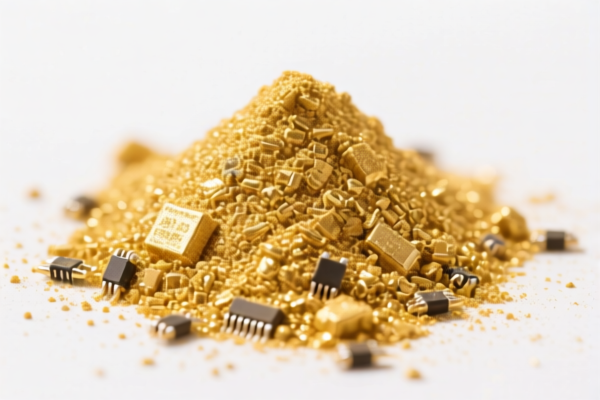
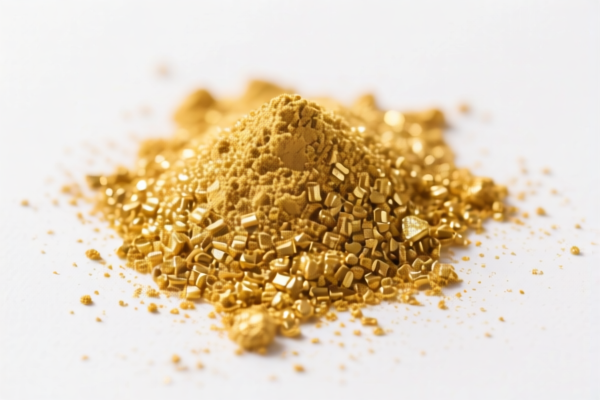

AI Analysis
🏆 Gold Powder for Electronics (金粉电子用)
🌐 HS Code Reference & Customs Clearance Guide | 2026 Latest Tariff Analysis | Professional-Level Strategy
📌 I. Product Definition & Classification: Do You Really Understand "Electronic Gold Powder"?
Gold powder for electronics is a high-purity functional material used in advanced manufacturing, including semiconductor packaging, thick-film pastes, conductive adhesives, and printed circuit boards (PCBs). In international trade, it is not a single commodity but is strictly classified based on its chemical state and physical form. Misclassification is the most common cause of customs delays or penalties for this product.
⚠️ Key Distinction Point:
- Elemental Gold (Metallic): Raw gold in powder form → Classified under Chapter 71 (Precious Metals) or Chapter 38 (Preparations).
- Gold Compounds: Gold chemically bonded with other elements (e.g., cyanide, oxides) → Classified under Chapter 28 (Inorganic Chemicals).
The specific HS Code depends entirely on whether the powder is pure metallic gold or a gold compound.
📦 II. HS Code Classification Details (2026 Latest Tariff Authority Mapping)
| HS Code | Product Description | Applicable Scenario | Chemical State |
|---|---|---|---|
7108.11.00.00 |
Gold powder, electronic use; matches gold material and powder form, non-monetary use | Pure elemental gold powder, no other additives, for sintering/conductive inks | ✅ Elemental Gold (Metal) |
7108.12.50.50 |
Gold powder, electronic use; matches non-monetary gold in unworked form, powder状 | Fine gold powder, unworked, specifically for electronics | ✅ Elemental Gold (Unworked) |
2843.30.00.00 |
Gold powder, electronic use; matches gold compound material, primary form | Gold compounds (e.g., gold salts) in basic form, for electroplating baths | ✅ Gold Compound |
2843.10.00.00 |
Gold powder, electronic use; matches colloidal precious metals, powder状 use | Colloidal gold (nanogold), highly dispersed, for specialized electronics | ✅ Colloidal Gold (Chemical) |
3824.99.70.00 |
Gold powder, electronic use; matches chemical products and preparations, for electroplating or PCBs | Mixtures, pastes, or formulations containing gold (not pure metal/compound) | ✅ Chemical Preparation |
🔍 Critical Reminder:
- Pure Metallic Gold Powder must be declared under 7108. Do not confuse with chemical preparations unless additives are significant.
- Colloidal Gold (often used in high-end biosensors or advanced semiconductors) falls under 2843.10, not 7108.
- Preparations/Pastes (e.g., gold-plating solutions, conductive pastes) fall under 3824, not the raw materials.
💰 III. 2026 Latest Tariff Rate Detailed Explanation (Including Surcharges & Policy Add-ons)
✅ Applicable Country: United States (US)
✅ Origin: China (CN)
✅ Effective Date: From November 10, 2025 (for subsequent imports)
🎯 1. 7108.11.00.00 —— Gold Powder, Electronic Use (Pure Elemental Gold)
| Item | Details |
|---|---|
| Base Tariff | 0.0% (ad valorem) |
| Section 301 Surcharge | +25.0% |
| Section 122 Tariff | +10.0% |
| Total Tariff Rate | 35.0% |
| Tax Calculation | CIF Value × 35.0% |
| De Minimis Eligibility | ❌ Not Eligible (deny_de_minimis) |
| Legal Basis Path | IEEPA:9903.01.25 → IEEPA:9903.01.24 → USITC:7108.11.00.00 → FOOTNOTE:122 |
📌 Explanation:
- Although the base tariff for precious metals is 0%, Section 301 adds 25% due to trade tensions.
- Section 122 adds an additional 10% for national security reasons (applies to gold imports).
- Total 35% is the final landed cost multiplier for pure gold powder.
🎯 2. 7108.12.50.50 —— Gold Powder, Electronic Use (Unworked Gold)
| Item | Details |
|---|---|
| Base Tariff | 4.1% |
| Section 301 Surcharge | +25.0% |
| Section 122 Tariff | +10.0% |
| Total Tariff Rate | 39.1% |
| Tax Calculation | CIF Value × 39.1% |
| De Minimis Eligibility | ❌ Not Eligible (deny_de_minimis) |
| Legal Basis Path | IEEPA:9903.01.25 → IEEPA:9903.01.24 → USITC:7108.12.50.50 → FOOTNOTE:122 |
📌 Note:
- Slightly higher base rate (4.1%) compared to7108.11due to specific sub-classification of "unworked" forms.
- The surcharges remain identical. Total 39.1%.
🎯 3. 2843.30.00.00 —— Gold Powder, Electronic Use (Gold Compounds)
| Item | Details |
|---|---|
| Base Tariff | 5.0% |
| Section 301 Surcharge | +25.0% |
| Section 122 Tariff | +10.0% |
| Total Tariff Rate | 40.0% |
| Tax Calculation | CIF Value × 40.0% |
| De Minimis Eligibility | ❌ Not Eligible (deny_de_minimis) |
| Legal Basis Path | IEEPA:9903.01.25 → IEEPA:9903.01.24 → USITC:2843.30.00.00 → FOOTNOTE:122 |
📌 Note:
- Gold compounds (e.g., gold(III) chloride) are treated as inorganic chemicals.
- Total 40.0% includes the 5% base + 25% (301) + 10% (122).
🎯 4. 2843.10.00.00 —— Gold Powder, Electronic Use (Colloidal Precious Metals)
| Item | Details |
|---|---|
| Base Tariff | 5.5% |
| Section 301 Surcharge | +25.0% |
| Section 122 Tariff | +10.0% |
| Total Tariff Rate | 40.5% |
| Tax Calculation | CIF Value × 40.5% |
| De Minimis Eligibility | ❌ Not Eligible (deny_de_minimis) |
| Legal Basis Path | IEEPA:9903.01.25 → IEEPA:9903.01.24 → USITC:2843.10.00.00 → FOOTNOTE:122 |
📌 Note:
- Colloidal gold (nanogold) has the highest base rate (5.5%) among gold-related powders due to its specialized chemical nature.
- Total 40.5%.
🎯 5. 3824.99.70.00 —— Gold Powder, Electronic Use (Chemical Preparations)
| Item | Details |
|---|---|
| Base Tariff | 0.0% |
| Section 301 Surcharge | +25.0% |
| Section 122 Tariff | +10.0% |
| Total Tariff Rate | 35.0% |
| Tax Calculation | CIF Value × 35.0% |
| De Minimis Eligibility | ❌ Not Eligible (deny_de_minimis) |
| Legal Basis Path | IEEPA:9903.01.25 → IEEPA:9903.01.24 → USITC:3824.99.70.00 → FOOTNOTE:122 |
📌 Note:
- This code is for mixtures or formulations (e.g., gold-plating solutions, conductive pastes) rather than pure gold or single compounds.
- Despite being a "preparation," it benefits from a 0% base tariff. Total 35.0%.
🛠️ IV. Customs Clearance Practical Advice (实战避坑指南)
✅ 1. Preparation Checklist (Non-negotiable Documents)
| Document | Must Provide | Description |
|---|---|---|
| ✅ Product Specification Sheet | ✔️ | Must specify purity (e.g., 99.99%), particle size (e.g., 0.5 microns), and chemical form (metal vs. compound). |
| ✅ Certificate of Analysis (COA) | ✔️ | Lab report proving the exact chemical composition (e.g., "Pure Gold" vs. "Gold Cyanide"). |
| ✅ Safety Data Sheet (SDS) | ✔️ | Required for chemical handling, especially for colloidal or compound forms. |
| ✅ Commercial Invoice | ✔️ | Must explicitly state: "Gold Powder for Electronics" and provide a detailed breakdown of content. |
| ✅ Packing List | ✔️ | Weight, volume, and packaging type (e.g., sealed bottles, anti-static bags). |
| ✅ Proof of Non-Monetary Use | ✔️ | Declaration that gold is for industrial/electronic use, NOT for investment or currency. |
✅ 2. Declaration Tips (Key Mnemonics)
🔥 “Form Dictates Code, Purity Dictates Duty, Code Mismatch Means Delays!”
| Scenario | Correct HS Code | Common Mistake | Consequence |
|---|---|---|---|
| Pure gold powder (metallic) | 7108.11.00.00 |
Misdeclared as 3824 (preparation) |
Overpayment of base tariff + potential fraud suspicion |
| Gold compound (e.g., salts) | 2843.30.00.00 |
Misdeclared as 7108 (metal) |
Customs rejection for incorrect chemical classification |
| Colloidal gold (nanogold) | 2843.10.00.00 |
Misdeclared as 7108 |
Tax calculation error (base rate difference) |
| Conductive paste/mixture | 3824.99.70.00 |
Misdeclared as 2843 (pure compound) |
Wrong duty application |
✅ 3. Special Case Handling
| Situation | Handling Advice |
|---|---|
| High-Purity Nanogold | Must provide particle size distribution data. If <100nm, strictly classify as 2843.10.00.00. |
| Gold Plating Solution | If it contains gold compounds in a solution, classify as 3824.99.70.00 or 2843.30.00.00 depending on formulation. |
| OEM Custom Gold Powder | Provide client’s technical specification sheet to prove the intended electronic application. |
| Mixed Shipments | Do not combine pure gold with compounds in one HS Code. Separate declarations are required. |
🌍 V. Global Market Clearance Comparison (2026 Latest)
| Country/Region | Recommended HS Code | Tariff (China Origin) | Certification Requirements | Remarks |
|---|---|---|---|---|
| 🇺🇸 USA | 7108.11.00.00 / 2843.30.00.00 |
35% - 40.5% (See above) | None specific for gold, but SDS required | High tariff impact; plan cost accordingly. |
| 🇨🇳 China | 7108.11.00.00 |
0% - 5% (Import Duty) | None | Low import cost, but watch for export controls. |
| 🇪🇺 EU | 7108.12.00.00 / 2843.30.00 |
0% (if eligible) | REACH Registration | REACH compliance is critical for chemical forms. |
| 🇯🇵 Japan | 7108.12.00.00 |
0% - 1.5% | FieS (Fire Service Act) for powders | Low tariff, but strict safety documentation. |
📌 Conclusion:
- USA imposes significant additional tariffs (Section 301 + Section 122), making cost calculation critical.
- EU & Japan are more tariff-friendly but have stricter chemical safety regulations (REACH, FieS).
- Accuracy in classification is paramount to avoid penalties in all markets.
📌 VI. Common Errors & Pitfalls (Lessons Learned)
❌ Error 1: Declaring "Gold Powder" without specifying chemical form (metal vs. compound).
👉 Consequence: Customs holds shipment for classification review → Delays of 2-4 weeks.
❌ Error 2: Misclassifying Colloidal Gold as Pure Gold (7108 vs. 2843).
👉 Consequence: Underpayment of base tariff → Back taxes + fines.
❌ Error 3: Ignoring Section 122 Tariffs for gold imports to the US.
👉 Consequence: Unexpected 10% additional duty on every shipment.
❌ Error 4: Using vague terms like "Conductive Material" instead of "Gold Powder".
👉 Consequence: Customs may assign a default higher rate or require additional testing.
✅ Correct Practice:
"Gold Powder, 99.99% Purity, Particle Size 0.5 Microns, Metallic Form, for Electronic Sintering, Model XYZ"
🎯 VII. Conclusion: Precision Classification, Cost Control, Smooth Clearance!
🎯 Remember the Mantra:
🔹 “Metal is 7108, Compound is 2843, Prep is 3824.”
🔹 “US Tariffs are 35-40.5%, plan your margins.”
🔹 “Specs must match Code, or face the delay.”
📌 Pro Tip:
If your gold powder is sourced from non-Chinese countries (e.g., Switzerland, Canada), you may avoid Section 301 and 122 tariffs, reducing the total rate to 0-5.5%.
We strongly recommend applying for an Advance Ruling from US Customs (CBP) for large-volume shipments to secure tariff certainty.
📣 Immediate Action:
📞 Contact a professional customs broker + Provide Technical Data Sheet (TDS) + Apply for HS Code Advance Ruling
🚀 Ensure your gold powder clears customs smoothly, stays within budget, and reaches the production line on time!
✨ Professional clearance starts with precise classification!
💼 Every percentage point of duty counts in the high-value electronics supply chain!
Customer Reviews
About HS Code Classification
The Harmonized System (HS) is an internationally standardized nomenclature developed by the World Customs Organization (WCO) to classify traded products. Over 200 countries use the HS system as the basis for customs tariffs, trade statistics, and import/export regulations.
Each HS code follows a hierarchical structure:
- Chapter (2 digits) — Broad category of goods (e.g., Chapter 84: Machinery and Mechanical Appliances)
- Heading (4 digits) — More specific grouping within the chapter
- Subheading (6 digits) — Internationally standardized breakdown, used by all WCO member countries
- National subdivisions (8-10 digits) — Country-specific extensions for further classification, such as US HTSUS 10-digit codes
Correct HS code classification is essential for smooth customs clearance, accurate duty payment, and compliance with trade regulations. Misclassification can lead to customs delays, overpayment of duties, or penalties.
When importing from CN to US, the applicable tariff rates may include:
- Most-Favored-Nation (MFN) rate — The standard duty rate applied to WTO members
- General rate — Applied to countries without trade agreements
- Trade remedy duties — Additional tariffs such as Section 301 (anti-dumping), Section 232 (national security), or countervailing duties
The information provided on this page is for reference purposes only. For official classification, please consult with your local customs authority or a licensed customs broker.