Golf Ball Line Marking Tools
CN → US| HS Code | Tariff Rate | Origin | Destination | Doc |
|---|---|---|---|---|
| 8205595560 | 40.3% | CN | US | Official Doc |
| 8205517500 | 38.7% | CN | US | Official Doc |
| 9506390080 | 22.4% | CN | US | Official Doc |
| 9506390060 | 22.4% | CN | US | Official Doc |
Product Images
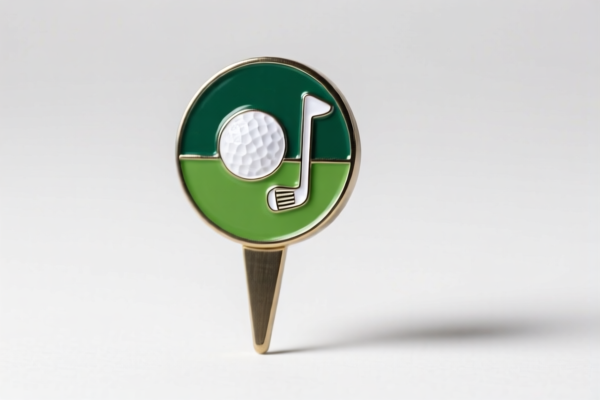
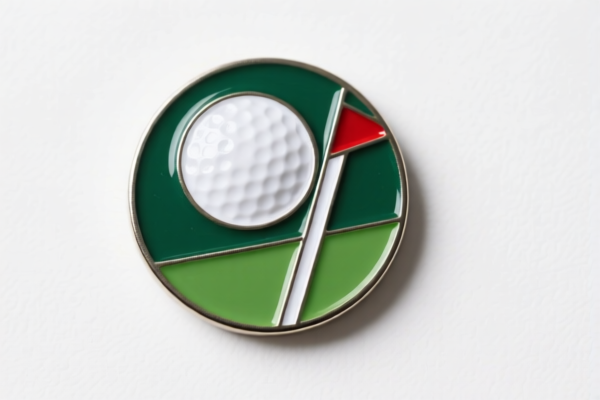
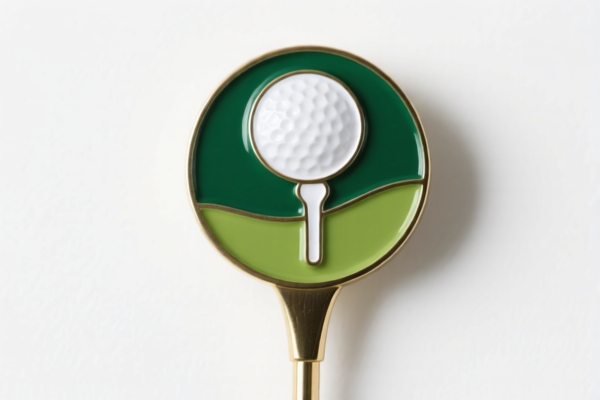
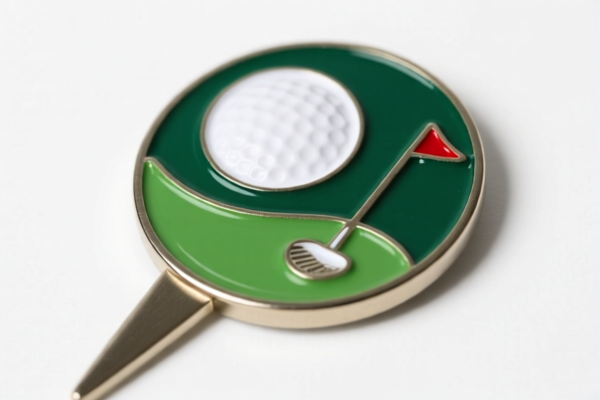
AI Analysis
⛳ Golf Ball Line Marking Tools (Golf Accessories & Markers)
🌐 HS Code Reference & Customs Clearance Guide | 2026 Latest Tariff Analysis | Professional Entry Strategy
📌 1. Product Definition & Classification: What are "Golf Ball Line Marking Tools"?
Golf Ball Line Marking Tools are small accessories used by golfers to mark the position of their ball on the green or to draw alignment lines on the turf. They typically include: * Ball Markers: Small, flat discs (metal or plastic) used to mark the ball’s spot. * Line Markers/Divot Tools: Often combined, these may have a metal tine for repairing divots and a marker on top, or a dedicated marker for drawing straight lines. * Classification Logic: These are not clubs, drivers, or irons. They are classified as accessories, attachments, or parts of golf equipment, or potentially as general hand tools if they are simple metal implements not specific to golf.
⚠️ Key Distinction Point:
- If the item is specifically designed for golf (e.g., a branded ball marker with a divot tool) → It falls under Golf Accessories/Parts (Chapter 95).
- If the item is a generic metal marker/tool with no golf-specific branding or design → It may be misclassified or double-checked as a Hand Tool (Chapter 82).
- Customs Risk: Misclassifying golf accessories as general hand tools can lead to significant duty differences due to "Section 301" (122 Clause) tariffs.
📦 2. HS Code Classification Details (Based on Provided Data)
| HS Code | Product Description | Application Scenario | Total Tax Rate | Key Characteristics |
|---|---|---|---|---|
9506.39.00.80 |
Other golf accessories (non-club parts), material inferred as plastic or metal | Generic ball markers, alignment aids, non-specific golf tools | 22.4% | Base: 4.9%, Section 301: 7.5%, Clause 122: 10% |
9506.39.00.60 |
Golf club parts and accessories, specifically for golf | Standard golf ball markers, divot repair tools with markers | 22.4% | Base: 4.9%, Section 301: 7.5%, Clause 122: 10% |
8205.59.55.60 |
Other hand tools (metal: iron/steel) | Generic metal marking tools, if deemed NOT specific to golf | 40.3% | Base: 5.3%, Section 301: 25.0%, Clause 122: 10% |
8205.51.75.00 |
Small hand tools (metal/plastic), fallback category | Small metal/plastic marking devices, if not classified as golf parts | 38.7% | Base: 3.7%, Section 301: 25.0%, Clause 122: 10% |
🔍 Critical Insight:
- Golf-Specific Items (9506.39.00.80/9506.39.00.60) attract 22.4% total duty.
- Non-Specific Hand Tools (8205.59.55.60/8205.51.75.00) attract 38.7% - 40.3% total duty.
- Why the difference? The Section 301 tariff (122 Clause) is 10% for golf goods (9506), but 25% for general hand tools (8205). This is a 15% tariff gap that must be avoided.
💰 3. 2026 Latest Tariff Rate Breakdown (Including Surcharges)
✅ Applicable Country: United States (US)
✅ Origin: China (CN)
✅ Effective Date: Current rates apply for imports after 2025/2026 adjustments.
🎯 1. 9506.39.00.80 & 9506.39.00.60 — Golf Accessories/Parts
Best for items clearly identifiable as golf equipment.
| Item | Details |
|---|---|
| Base Tariff | 4.9% |
| Section 301 (122 Clause) | +7.5% |
| Clause 122 Surcharge | +10% |
| Total Effective Rate | 22.4% |
| Tax Calculation | CIF Value × 22.4% |
| De Minimis Exemption? | ❌ No (Standard gift/personal allowance does not apply to commercial imports of this nature) |
| Legal Basis | HTSUS:9506.39 → Section 301 Footnote → Clause 122 |
📌 Explanation:
- Golf accessories (9506) are subject to a lower Section 301 surcharge (7.5%) compared to general hand tools.
- The 10% Clause 122 is applied uniformly.
- Result: A significantly lower total duty than misclassifying as hand tools.
🎯 2. 8205.59.55.60 — Other Hand Tools (Metal)
High-risk classification if the item is clearly for golf.
| Item | Details |
|---|---|
| Base Tariff | 5.3% |
| Section 301 (122 Clause) | +25.0% |
| Clause 122 Surcharge | +10% |
| Total Effective Rate | 40.3% |
| Tax Calculation | CIF Value × 40.3% |
| De Minimis Exemption? | ❌ No |
| Legal Basis | HTSUS:8205.59 → Section 301 Footnote → Clause 122 |
📌 Explanation:
- If Customs determines the item is a "hand tool" (e.g., a simple metal marker not specifically designed for golf), it falls under 8205.
- The Section 301 tariff jumps to 25%, resulting in a 17.9% higher duty than the golf classification.
🛠️ 4. Customs Clearance Practical Advice (Avoiding Pitfalls)
✅ 1. Documentation Checklist (Must-Haves)
| Document | Required | Notes |
|---|---|---|
| Product Specifications | ✔️ | Clearly state: "Golf Ball Marker" or "Golf Line Marker." Include material (metal/plastic). |
| Product Photos | ✔️ | Show the item in use on a golf green, or with golf clubs. Avoid generic images. |
| Commercial Invoice | ✔️ | Description must be specific: "Golf Accessory: Ball Marker & Line Tool." Do NOT use vague terms like "Metal Tool." |
| Harmonized Tariff Schedule (HTS) Reference | ✔️ | Cite 9506.39.00.80 or 9506.39.00.60 if golf-specific. |
| Brand/Logo Proof | ✔️ | If branded (e.g., Titleist, Callaway), provide proof of brand association to support golf classification. |
✅ 2. Classification Strategy (Key Tips)
🔥 Rule of Thumb:
"If it’s for golf, call it golf. If you call it a 'tool,' you pay 40%. If you call it a 'marker,' you pay 22%."
| Scenario | Correct HS Code | Risk if Misclassified |
|---|---|---|
| Branded ball marker (e.g., with company logo) | 9506.39.00.60 |
Low risk. Clearly for golf. |
| Unbranded metal marker with divot tool | 9506.39.00.80 |
Moderate risk. May be questioned as a hand tool. |
| Generic metal pen/markers (no golf use evident) | 8205.59.55.60 |
High duty (40.3%). Only use if truly not for golf. |
| Plastic alignment aids | 9506.39.00.80 |
Low risk. Clearly an accessory. |
✅ 3. Special Cases
| Case | Handling Advice |
|---|---|
| Mixed Shipments | If shipping both golf markers and generic hand tools, separate them. Declare golf markers under 9506 and other tools under 8205. Mixing them can trigger a full audit. |
| OEM/White Label | Even if unbranded, if the product is designed for golf (e.g., shape, packaging with golf imagery), claim 9506. Provide design specs as proof. |
| Gift Sets | If sold in a gift box with other golf items, keep the golf classification for the marker. |
🌍 5. Global Market Comparison (2026)
| Country/Region | Recommended HS Code | Duty Rate | Notes |
|---|---|---|---|
| 🇺🇸 USA | 9506.39.00.80 |
22.4% | Avoid 8205 (40.3%) due to 25% Section 301. |
| 🇪🇺 EU | 9506.31 |
~5-8% | No Section 301. Lower duties generally. |
| 🇨🇳 China | 9506.32 |
~5-10% | Check current BOCOM rates. |
| 🇬🇧 UK | 9506.31 |
~0-12% | Post-Brexit rules apply. |
📌 Conclusion:
- USA is the most critical market due to Section 301 tariffs.
- Misclassifying golf accessories as hand tools can cost you 17.9% extra duty.
- Always provide evidence of golf-specific use (photos, packaging, design) to support9506classification.
📌 6. Common Errors & Pitfalls (Lessons Learned)
❌ Error 1: Using generic term "Metal Tool" on the invoice.
👉 Result: Customs may assign 8205.59.55.60 → 40.3% duty.
✅ Fix: Use "Golf Ball Marker" or "Golf Accessory."
❌ Error 2: Assuming all metal items are hand tools.
👉 Result: Overpayment of duty.
✅ Fix: Golf-specific metal items are accessories, not hand tools.
❌ Error 3: Not providing product photos.
👉 Result: Customs cannot verify golf use → Delay or reclassification.
✅ Fix: Include clear images of the item in a golf setting.
🎯 7. Conclusion: Smart Classification Saves Money!
🎯 Remember the Formula:
🔹 Golf Accessory = 9506.39 = 22.4% Duty
🔹 Hand Tool = 8205.59 = 40.3% Duty
🔹 Savings = 17.9% per item!
📌 Pro Tip:
If you are exporting to the US, always classify golf markers under 9506.39.00.80 or 9506.39.00.60. Provide clear documentation to support this. If the item is truly a generic tool with no golf connection, then use 8205. Do not guess!
📣 Action Plan:
📞 Consult a Customs Broker before shipping large volumes.
📄 Prepare Product Data Sheets highlighting golf-specific features.
🚀 Optimize Your Tariff: Save 17.9% on every golf marker shipped to the US!
✨ Precise Classification, Maximized Profit!
💼 Don’t let 17.9% slip away. Classify Smart.
Customer Reviews
About HS Code Classification
The Harmonized System (HS) is an internationally standardized nomenclature developed by the World Customs Organization (WCO) to classify traded products. Over 200 countries use the HS system as the basis for customs tariffs, trade statistics, and import/export regulations.
Each HS code follows a hierarchical structure:
- Chapter (2 digits) — Broad category of goods (e.g., Chapter 84: Machinery and Mechanical Appliances)
- Heading (4 digits) — More specific grouping within the chapter
- Subheading (6 digits) — Internationally standardized breakdown, used by all WCO member countries
- National subdivisions (8-10 digits) — Country-specific extensions for further classification, such as US HTSUS 10-digit codes
Correct HS code classification is essential for smooth customs clearance, accurate duty payment, and compliance with trade regulations. Misclassification can lead to customs delays, overpayment of duties, or penalties.
When importing from CN to US, the applicable tariff rates may include:
- Most-Favored-Nation (MFN) rate — The standard duty rate applied to WTO members
- General rate — Applied to countries without trade agreements
- Trade remedy duties — Additional tariffs such as Section 301 (anti-dumping), Section 232 (national security), or countervailing duties
The information provided on this page is for reference purposes only. For official classification, please consult with your local customs authority or a licensed customs broker.