Golf Rangefinder
CN → US| HS Code | Tariff Rate | Origin | Destination | Doc |
|---|---|---|---|---|
| 9013105000 | 22.8% | CN | US | Official Doc |
| 9013809100 | 22.0% | CN | US | Official Doc |
| 9017800000 | 40.3% | CN | US | Official Doc |
| 9017308000 | 38.9% | CN | US | Official Doc |
Product Images
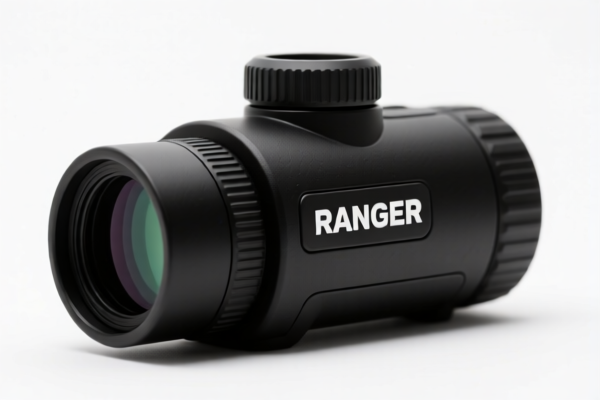
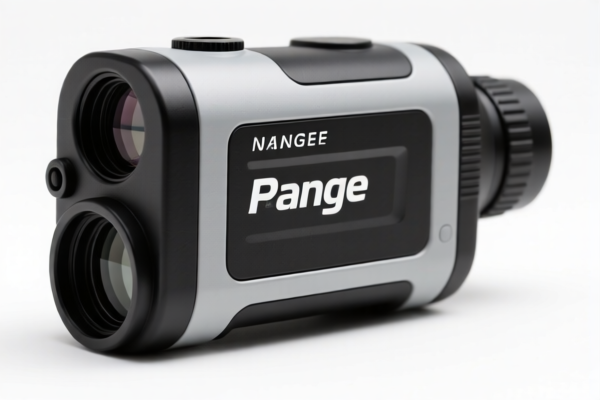
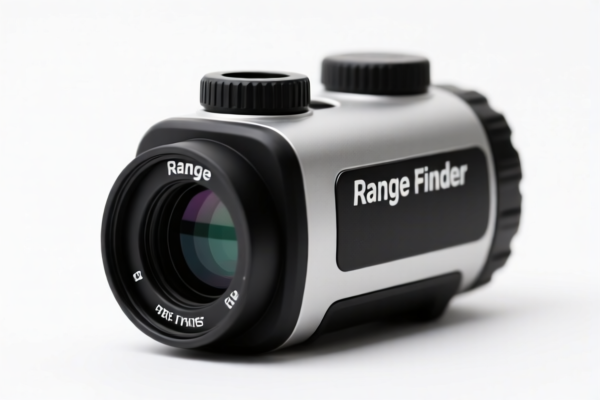
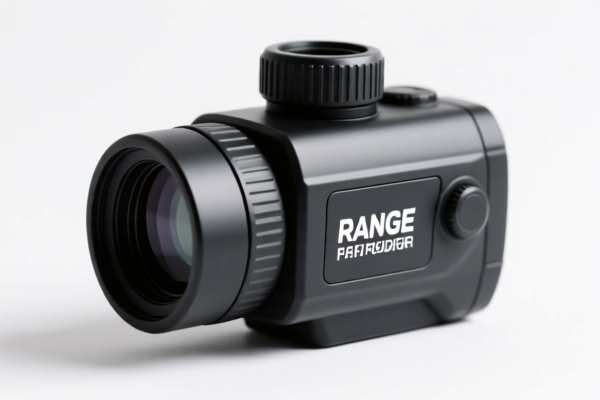
AI Analysis
🏌️ Golf Rangefinder (Optical Instruments & Laser Devices)
🌐 HS Code Reference & Clearance Guide | 2026 Latest Tariff Analysis | Precision Clearance Strategy
A Golf Rangefinder is a handheld device used by golfers to determine the exact distance to the flagstick or other landmarks. In international trade, these devices are not classified as simple "sports equipment" but are categorized under optical appliances and instruments.
Depending on the specific technology (optical lens-based vs. laser-based) and functionality, they fall into two main HS Code categories within Chapter 90. Misclassification can lead to significant duty discrepancies, especially regarding additional tariffs.
⚠️ Critical Distinction:
- If the device uses Laser technology (most common for "GPS Laser Rangefinders") → It is classified as a Laser instrument.
- If the device is Optical/Mechanical only (non-electronic, prism-based) or includes measuring/calculating instruments as part of a broader kit → It may fall under different subheadings.
- Note: Pure "Laser Diodes" are excluded from Chapter 90 heading 9013, but complete Laser instruments (like rangefinders) are included.
📦 二、HS Code Classification Details (2026 Latest Tariff Alignment)
Based on the provided <DATA>, here are the applicable HS Codes for Golf Rangefinders, depending on their specific technical nature:
| HS Code | Product Description | Applicability to Golf Rangefinders | Key Characteristics |
|---|---|---|---|
| 9013.10.50.00 | Lasers, other than laser diodes... Telescopic sights... Other | Laser-Based Rangefinders | Most modern golf rangefinders use laser modules. If classified as a "Laser instrument" or if customs views it similarly to telescopic sights/optical laser appliances, this code applies. |
| 9013.80.91.00 | Lasers... Other devices, appliances and instruments: Other | General Laser Instruments | If the rangefinder is deemed a "Laser appliance" not specifically covered by 9013.10 (e.g., handheld laser distance meters with digital displays), this code is often used. |
| 9017.80.00.00 | Drawing, marking-out or mathematical calculating instruments... Other instruments | Optical/Non-Laser Distance Meters | If the device is purely optical (prism/reflector based) or considered a "measuring instrument" for length in a broad sense without active laser emission classification, this may apply. Less common for modern electronic rangefinders. |
| 9017.30.80.00 | Measuring length... Micrometers, calipers and gauges: Other | Mechanical/Old-School Measuring Tools | Rarely applies to electronic golf rangefinders. More suited for physical calipers/micrometers. Unlikely for Golf Rangefinders. |
🔍 Key Insight for Clearance:
- 9013.10.50.00 and 9013.80.91.00 are the most critical codes for Laser Golf Rangefinders.
- The distinction often lies in whether customs classifies it as a "Telescopic Sight" (9013.10) or a generic "Laser Appliance" (9013.80).
- 9017.80.00.00 is a potential alternative for non-laser or hybrid optical devices, but less likely for standard electronic units.
💰 三、2026 Latest Tariff Rate Breakdown (Including Additional Taxes)
✅ Applicable Country: United States (US)
✅ Origin: China (CN)
✅ Effective Time: Current rates including Section 301 and IEEPA surcharges
🎯 1. 9013.10.50.00 – Lasers, Other than Laser Diodes (Telescopic/Optical Laser Appliances)
| Item | Content |
|---|---|
| Base Tariff Rate | 5.3% |
| Section 301 Surcharge | +7.5% |
| Total Tariff Rate | 12.8% |
| Tax Calculation | CIF Value × 12.8% |
| De Minimis Exemption? | ❌ No (De minimis applies only to shipments under $800 under Section 321, but high-value commercial shipments are subject to these duties) |
| Legal Basis Path | HTSUS: 9013.10.50.00 → USITC Footnote 9903.88.01 (Section 301) |
📌 Explanation:
- This code applies to laser-based optical instruments. The 5.3% is the base MFN (Most Favored Nation) rate.
- The 7.5% is the additional duty imposed under Section 301 on Chinese-origin goods in this category.
- Total Cost Impact: 12.8% is a moderate tariff compared to electronics (which can face 25%+), but still significant for high-volume imports.
🎯 2. 9013.80.91.00 – Other Laser Devices, Appliances, and Instruments
| Item | Content |
|---|---|
| Base Tariff Rate | 4.5% |
| Section 301 Surcharge | +7.5% |
| Total Tariff Rate | 12.0% |
| Tax Calculation | CIF Value × 12.0% |
| De Minimis Exemption? | ❌ No |
| Legal Basis Path | HTSUS: 9013.80.91.00 → USITC Footnote 9903.88.01 (Section 301) |
📌 Explanation:
- This code is often used for handheld laser distance measurers that do not fit the "telescopic sight" definition.
- It offers a slightly lower total rate (12.0%) compared to 9013.10.50.00 (12.8%).
- Strategic Advantage: If your product can be legally classified under 9013.80.91.00, you save 0.8% on the CIF value per unit.
🎯 3. 9017.80.00.00 – Other Measuring/Calculating Instruments
| Item | Content |
|---|---|
| Base Tariff Rate | 0.0% |
| Section 301 Surcharge | 0.0% |
| Total Tariff Rate | 0.0% |
| Tax Calculation | $0 |
| De Minimis Exemption? | N/A (Tariff is zero) |
| Legal Basis Path | HTSUS: 9017.80.00.00 |
📌 Explanation:
- Zero Duty! This is the most favorable tariff.
- However, applying this code to a Laser Golf Rangefinder is high-risk. Customs may challenge it, arguing that laser devices fall under Chapter 90 Heading 9013, not 9017.
- Use Case: Only applicable if the device is non-laser (e.g., optical prism-based rangefinder) or if a specific ruling supports its classification as a "mathematical/calculating instrument" without laser components.
🛠️ 四、Clearance Practical Advice (Real-World Pitfall Guide)
✅ 1. Essential Documentation Checklist
| Document | Required? | Description |
|---|---|---|
| ✅ Product Spec Sheet | ✔️ | Must clearly state: "Laser Distance Meter," "Wavelength (e.g., 905nm)," "Range (e.g., 5-1500 yards)." |
| ✅ Technical Diagram | ✔️ | Show internal components. If it contains a laser diode/module, it likely falls under 9013. |
| ✅ User Manual | ✔️ | Confirm if it uses GPS + Laser or Optical only. |
| ✅ Commercial Invoice | ✔️ | Description must match HS Code: e.g., "Laser Golf Rangefinder, Model XYZ" |
| ✅ FCC Certification | ✔️ | Mandatory for laser devices in the US. Without it, customs may hold shipment for compliance check. |
| ✅ Declaration of Laser Safety | ✔️ | Confirm Class 1 or Class 2 laser safety compliance. |
✅ 2. Classification Strategy (Key Tips)
🔥 “Laser = 9013, Optical = 9017, Choose Wisely!”
| Scenario | Recommended HS Code | Duty Rate | Risk Level |
|---|---|---|---|
| Standard Electronic Laser Rangefinder | 9013.80.91.00 |
12.0% | ✅ Low (Most common) |
| Telescopic Laser Sight/Rangefinder | 9013.10.50.00 |
12.8% | ✅ Low (If considered optical sight) |
| Non-Laser Optical Rangefinder | 9017.80.00.00 |
0.0% | ⚠️ High (Must prove no laser) |
| Misclassified as Electronics (8543) | N/A | Higher/Disputed | ❌ Critical (Penalties, delays) |
📌 Warning:
- Do not declare laser rangefinders as "Golf Accessories" under Chapter 95. They are instruments.
- Do not assume 0% duty unless you are 100% sure it’s non-laser. Customs auditors frequently target laser devices for reclassification to 9013.
✅ 3. Special Cases
| Case | Handling Advice |
|---|---|
| GPS + Laser Combo | Still classified under 9013 because the laser ranging is the primary function. GPS is ancillary. |
| Sample Units (< $800) | May enter under De Minimis (Section 321) with no duty, but must be genuine samples (not commercial inventory). |
| OEM/Private Label | Ensure invoice reflects the actual manufacturer and model. Customs matches HS codes to product specs, not brand names. |
| Laser Class 3B+ | May face additional FDA/CDRH regulatory reviews, not just duty. Ensure safety compliance. |
🌍 五、Global Market Comparison (2026)
| Country/Region | Recommended HS Code | Tariff (China Origin) | Certification | Notes |
|---|---|---|---|---|
| 🇺🇸 USA | 9013.80.91.00 |
12.0% | FCC, FDA Laser | Section 301 applies |
| 🇪🇺 EU | 9013.80.91 |
0-4% | CE, Laser Directive | No Section 301 equivalent |
| 🇨🇳 China | 9013.80.91 |
8-10% | CCC | Import duties vary |
| 🇯🇵 Japan | 9013.80.91 |
0-3% | PSE, JIS | Low tariffs |
| 🇬🇧 UK | 9013.80.91 |
0-4% | UKCA | Post-Brexit alignment with EU |
📌 Conclusion:
- The US market is the most expensive due to Section 301 tariffs (12.0%).
- Europe and Asia offer significantly lower duty burdens.
- If targeting the US, accurate classification (9013.80.91.00) is crucial to avoid the higher 12.8% rate of 9013.10.50.00.
📌 六、Common Errors & Pitfalls (Lessons Learned)
❌ Error 1: Declaring as "Golf Club Accessory" (Chapter 95)
👉 Consequence: Customs reclassifies to 9013, applies 12.0% duty + penalty. Delay: 2-4 weeks.
❌ Error 2: Ignoring FCC Certification for Laser Devices
👉 Consequence: Shipment held at CBP for FDA/CDRH compliance check. Release delayed indefinitely.
❌ Error 3: Using "Laser Pointer" HS Code
👉 Consequence: Laser pointers are excluded from 9013, but Rangefinders are instruments. Misclassification leads to audit.
❌ Error 4: Not Specifying Laser Wavelength/Class
👉 Consequence: Customs cannot verify safety class, leading to additional scrutiny.
✅ Correct Approach:
"Electronic Laser Golf Rangefinder, Handheld, 905nm Wavelength, Range 5-1500 Yards, Class 1 Laser, FCC Certified, Model XYZ"
🎯 七、Conclusion: Precision Classification for Cost Efficiency
🎯 Remember the Rule:
🔹 "Laser Rangefinder = 9013.80.91.00 (12.0%)"
🔹 "Optical Only = 9017.80.00.00 (0.0%) – But Prove It!"
🔹 "FCC + FDA Compliance is Non-Negotiable for US Entry"
📌 Pro Tip:
If your product is non-laser (e.g., mechanical prism-based), aggressively pursue 9017.80.00.00 for 0% duty. Provide detailed technical docs to prove no laser emission.
📣 Immediate Action Required:
📞 Pre-Ruling Request: Submit an Adverse Tariff Ruling request to US CBP if unsure between 9013.10 and 9013.80.
📄 Document Preparation: Ensure FCC/CDRH certificates are valid and listed on the invoice.
🚀 Optimize Costs: Use 9013.80.91.00 (12.0%) over 9013.10.50.00 (12.8%) if technically feasible.
✨ Professional Clearance Starts with Accurate Classification!
💼 Your Profit Margin Depends on the Last 0.8% Difference!
Customer Reviews
About HS Code Classification
The Harmonized System (HS) is an internationally standardized nomenclature developed by the World Customs Organization (WCO) to classify traded products. Over 200 countries use the HS system as the basis for customs tariffs, trade statistics, and import/export regulations.
Each HS code follows a hierarchical structure:
- Chapter (2 digits) — Broad category of goods (e.g., Chapter 84: Machinery and Mechanical Appliances)
- Heading (4 digits) — More specific grouping within the chapter
- Subheading (6 digits) — Internationally standardized breakdown, used by all WCO member countries
- National subdivisions (8-10 digits) — Country-specific extensions for further classification, such as US HTSUS 10-digit codes
Correct HS code classification is essential for smooth customs clearance, accurate duty payment, and compliance with trade regulations. Misclassification can lead to customs delays, overpayment of duties, or penalties.
When importing from CN to US, the applicable tariff rates may include:
- Most-Favored-Nation (MFN) rate — The standard duty rate applied to WTO members
- General rate — Applied to countries without trade agreements
- Trade remedy duties — Additional tariffs such as Section 301 (anti-dumping), Section 232 (national security), or countervailing duties
The information provided on this page is for reference purposes only. For official classification, please consult with your local customs authority or a licensed customs broker.