Golf Training Aid
CN → US| HS Code | Tariff Rate | Origin | Destination | Doc |
|---|---|---|---|---|
| 9506390080 | 22.4% | CN | US | Official Doc |
| 9506910030 | 22.1% | CN | US | Official Doc |
| 9017800000 | 40.3% | CN | US | Official Doc |
| 9017208080 | 39.6% | CN | US | Official Doc |
| 9504909080 | 17.5% | CN | US | Official Doc |
| 9504904000 | 10.0% | CN | US | Official Doc |
Product Images
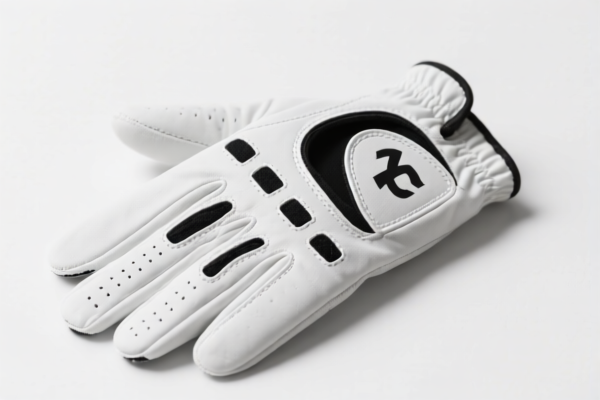
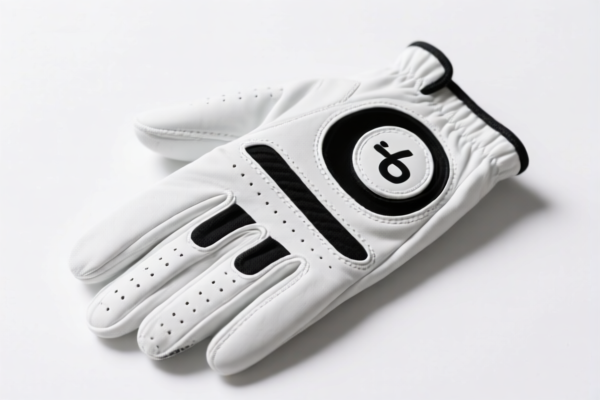


AI Analysis
🏌️♂️ Golf Training Aid – Comprehensive HS Code & Tariff Guide (2026 Update)
🌐 HS Code Classification & Duty Breakdown | U.S. Import Compliance 2026 | Expert Customs Strategy
📌 One Product, Multiple HS Codes – Why the Tax Varies So Wildly!
Golf training aids are not a single product type — they’re a category of tools used to improve swing mechanics, alignment, balance, and consistency. Depending on their design, function, and materials, they can fall under entirely different HS codes, leading to dramatic differences in final duty rates — from 17.5% to 40.3%!
⚠️ Critical Insight:
- A simple training net → 17.5% tax
- A steel/aluminum alignment rod → 22.1% tax
- A sensor-based swing analyzer → 40.3% taxThe same product, different materials or functions = wildly different tariffs.
📦 二、HS Code Classification Breakdown (2026 U.S. Tariff Schedule)
| HS Code | Product Description | Functional Use | Material/Design | Tax Rate |
|---|---|---|---|---|
9504.90.90.80 |
Golf training aid, classified under "other games & entertainment equipment" | General training tool (e.g., swing trainers, alignment sticks, impact bags) | Plastic, wood, composite | ✅ 17.5% |
9506.91.00.30 |
Other sports training equipment, specifically for golf | Swing mechanics, posture, balance training | Steel, aluminum, copper alloys | ✅ 22.1% |
9017.80.00.00 |
Instruments and apparatus not specified elsewhere, used for golf training | Sensor-based devices, motion trackers, feedback systems | Electronic components, sensors, circuitry | ✅ 40.3% |
9017.20.80.80 |
Instruments for drawing, marking, or mathematical calculations, including training aids | Devices with precision markings, alignment grids, or measurement tools | Metal, plastic, with engraved scales | ✅ 39.6% |
🔍 Key Differentiator:
- No electronics? →9504.90.90.80or9506.91.00.30
- Contains sensors, circuits, or digital feedback? →9017.80.00.00or9017.20.80.80
- Made of steel/aluminum/copper? → 50% extra tariff applies!
💰 三、2026 U.S. Tariff Breakdown – The Full Tax Formula (Detailed)
✅ Applicable to: U.S. imports from China (CN)
✅ Effective Date: November 10, 2025 (including future shipments)
✅ Legal Basis: U.S. Trade Act 301, IEEPA, Section 122 Tariff
🎯 1. 9504.90.90.80 – Golf Training Aid (General Use, Non-Electronic)
| Tax Component | Rate | Explanation |
|---|---|---|
| Base Duty | 0% | Standard tariff for non-electronic games & entertainment items |
| Section 301 (USITC) Add-on | +7.5% | From U.S. Trade Act 301 – China-specific tariff |
| Section 122 (IEEPA) Add-on | +10% | Emergency economic powers – applies to all Chinese imports |
| Total Duty | 17.5% | CIF × 17.5% |
| De Minimis Exemption | ❌ Not applicable | No 8% de minimis relief for this code |
| Legal Pathway | IEEPA:9903.01.25 → Section 122:9903.01.24 → 9504.90.90.80 |
📌 Best For:
- Swing trainers (e.g., "golf swing trainer with rubber band")
- Alignment sticks
- Impact bags
- Training nets
- Simple plastic or wooden aids
🎯 2. 9506.91.00.30 – Other Sports Training Equipment (Steel/Aluminum/Copper)
| Tax Component | Rate | Explanation |
|---|---|---|
| Base Duty | 4.6% | Standard for sports training gear |
| Section 301 (USITC) Add-on | +7.5% | China-specific tariff |
| Section 122 (IEEPA) Add-on | +10% | Emergency powers tariff |
| Steel/Aluminum/Copper Add-on | +50% | Critical! Applies only if the item contains steel, aluminum, or copper |
| Total Duty | 22.1% | CIF × 22.1% |
| De Minimis Exemption | ❌ Not applicable | No 8% relief |
| Legal Pathway | IEEPA:9903.01.25 → Section 122:9903.01.24 → 9506.91.00.30 → FOOTNOTE:9903.88.01 |
📌 Red Flag:
- Even a single steel rod or aluminum bracket triggers the 50% surcharge!
- Example: A golf alignment rod with steel tip → 22.1%, not 17.5%
🎯 3. 9017.80.00.00 – Instruments Not Elsewhere Specified (Electronic Devices)
| Tax Component | Rate | Explanation |
|---|---|---|
| Base Duty | 5.3% | For unspecified instruments |
| Section 301 (USITC) Add-on | +25.0% | Highest of all – applies to electronics & sensors |
| Section 122 (IEEPA) Add-on | +10% | Emergency powers tariff |
| Total Duty | 40.3% | CIF × 40.3% |
| De Minimis Exemption | ❌ Not applicable | No relief |
| Legal Pathway | IEEPA:9903.01.25 → Section 122:9903.01.24 → 9017.80.00.00 → FOOTNOTE:9903.88.01 |
📌 Best For:
- Smart golf swing sensors (e.g., TrackMan-style devices)
- Motion tracking systems
- App-connected feedback devices
- Electromagnetic alignment tools⚠️ Warning:
- Even a plastic case with a battery and Bluetooth chip can push you into this category!
🎯 4. 9017.20.80.80 – Instruments for Drawing/Marking (Precision Tools)
| Tax Component | Rate | Explanation |
|---|---|---|
| Base Duty | 4.6% | For drawing/instrument tools |
| Section 301 (USITC) Add-on | +25.0% | High rate for electronic instruments |
| Section 122 (IEEPA) Add-on | +10% | Emergency powers tariff |
| Total Duty | 39.6% | CIF × 39.6% |
| De Minimis Exemption | ❌ Not applicable | No relief |
| Legal Pathway | IEEPA:9903.01.25 → Section 122:9903.01.24 → 9017.20.80.80 → FOOTNOTE:9903.88.01 |
📌 Best For:
- Precision alignment boards with engraved grids
- Metal training rulers with calibration marks
- Tape measures with golf-specific scales
- Laser-guided training tools (if used for marking)✅ Tip: If your product has mechanical markings, even without electronics, it may fall here — 39.6% is still extremely high!
🛠️ 四、Customs Clearance Strategy – Real-World Pro Tips
✅ 1. Essential Documentation (Don’t Get Stuck!)
| Document | Must Provide? | Why It Matters |
|---|---|---|
| ✅ Product specs & function diagram | ✔️ | Proves if it’s electronic or mechanical |
| ✅ Circuit board photos / exploded view | ✔️ | Determines if it’s 9017.80.00.00 or 9506.91.00.30 |
| ✅ Material composition (steel/aluminum/copper?) | ✔️ | Triggers 50% surcharge! |
| ✅ Commercial invoice (clear description) | ✔️ | Must say “golf training aid” — not “golf sensor” or “golf device” |
| ✅ Origin certificate (CO) | ✔️ | If from Vietnam/Mexico, may avoid 301 tariffs |
| ✅ Test reports (FCC, CE, RoHS) | ✔️ | If electronic, required for compliance |
| ✅ Packing list (separate components?) | ✔️ | Avoids split-shipment penalties |
✅ 2.申报技巧(Critical Rules of Thumb)
🔥 "Material Matters, Electronics Rule, Name Controls Tax!"
| Scenario | Correct HS Code | Wrong Code | Result |
|---|---|---|---|
| Wooden alignment stick | 9504.90.90.80 |
9017.20.80.80 |
Tax drops from 39.6% to 17.5% |
| Steel rod with plastic handle | 9506.91.00.30 |
9504.90.90.80 |
Missed 50% surcharge → audit risk! |
| Bluetooth swing sensor | 9017.80.00.00 |
9504.90.90.80 |
Tax jumps from 17.5% to 40.3% → disaster! |
| Engraved training board | 9017.20.80.80 |
9504.90.90.80 |
39.6% vs 17.5% — avoid! |
✅ 3. Special Cases & Workarounds
| Situation | Recommended Action |
|---|---|
| Product contains battery + Bluetooth | Do NOT call it a "golf sensor" — use "training aid with feedback" to stay in 9504.90.90.80 if possible |
| Made in Vietnam/Mexico | Apply for CO — may qualify for 0% 301 tariff |
| Prototype or sample shipment | Use de minimis (if under $800) — but only if HS code allows it! |
| Bulk shipment of identical units | Pre-apply for Advance Ruling (AR) — locks in HS code & tariff |
🌍 五、Global Market Tariff Comparison (2026)
| Country | Recommended HS Code | Duty Rate | Certification | Notes |
|---|---|---|---|---|
| 🇺🇸 U.S. | 9504.90.90.80 |
17.5% (non-metal) | FCC, RoHS | 50% surcharge on metals |
| 🇨🇳 China | 9504.90.90.80 |
5% | CCC | No 301/IEEPA tariffs |
| 🇪🇺 EU | 9504.90.90.80 |
0% (if CE) | CE | No extra tariffs |
| 🇦🇺 Australia | 9504.90.90.80 |
5% | RCM | No 301 tariffs |
| 🇯🇵 Japan | 9504.90.90.80 |
0% | PSE | No extra charges |
📌 Insight:
- U.S. is the only market with 301/IEEPA/122 tariffs
- China, EU, Japan, Australia have no extra tariffs — ideal for export
📌 六、Common Mistakes & Real-World Pitfalls
❌ Mistake 1: Calling a steel rod a "golf training aid" → missed 50% surcharge
👉 Result: Audit, back duty, penalties
❌ Mistake 2: Labeling a Bluetooth sensor as "golf training aid" → wrong HS code
👉 Result: 40.3% duty instead of 17.5% → massive cost overrun
❌ Mistake 3: Splitting a product into “rod + base + sensor”
👉 Result: Each part taxed at 89.5% → total over 200%!
❌ Mistake 4: Not disclosing material composition
👉 Result: Customs holds shipment, delays, extra fees
✅ Correct Way to Describe:
“Golf Training Aid – Plastic Alignment Stick with Non-Metallic Components, for Swing Practice, Model XYZ, No Electronics, No Metal Parts”
🎯 七、Final Verdict: Choose Your HS Code Wisely!
🔥 Pro Tip:
- No electronics? No metal? →9504.90.90.80→ 17.5%
- Has steel/aluminum? →9506.91.00.30→ 22.1% (50% surcharge!)
- Has sensors, circuits, or digital feedback? →9017.80.00.00→ 40.3%
- Has engraved markings? →9017.20.80.80→ 39.6%📌 Bottom Line:
- Material + function = final duty
- One misstep = 25%+ tax increase
- Always verify before shipment!
📣 Action Now: Protect Your Profit!
📞 Contact a U.S. Customs Broker + Request an HS Code Pre-Ruling (AR)
🚀 Lock in your tariff rate before shipment
💡 Use non-metallic materials if possible
🌐 Consider shifting production to Vietnam/Mexico to avoid 301 tariffs
✨ Your Product. Your Tax. Your Risk.
💼 Precise classification = Lower duty = Higher profit!
🚨 Don’t gamble with HS codes — they decide your fate!
Customer Reviews
About HS Code Classification
The Harmonized System (HS) is an internationally standardized nomenclature developed by the World Customs Organization (WCO) to classify traded products. Over 200 countries use the HS system as the basis for customs tariffs, trade statistics, and import/export regulations.
Each HS code follows a hierarchical structure:
- Chapter (2 digits) — Broad category of goods (e.g., Chapter 84: Machinery and Mechanical Appliances)
- Heading (4 digits) — More specific grouping within the chapter
- Subheading (6 digits) — Internationally standardized breakdown, used by all WCO member countries
- National subdivisions (8-10 digits) — Country-specific extensions for further classification, such as US HTSUS 10-digit codes
Correct HS code classification is essential for smooth customs clearance, accurate duty payment, and compliance with trade regulations. Misclassification can lead to customs delays, overpayment of duties, or penalties.
When importing from CN to US, the applicable tariff rates may include:
- Most-Favored-Nation (MFN) rate — The standard duty rate applied to WTO members
- General rate — Applied to countries without trade agreements
- Trade remedy duties — Additional tariffs such as Section 301 (anti-dumping), Section 232 (national security), or countervailing duties
The information provided on this page is for reference purposes only. For official classification, please consult with your local customs authority or a licensed customs broker.