Golf Training Club Glove
CN → US| HS Code | Tariff Rate | Origin | Destination | Doc |
|---|---|---|---|---|
| 6216000800 | 18.3% | CN | US | Official Doc |
| 6116100800 | 20.3% | CN | US | Official Doc |
| 6216004600 | 20.3% | CN | US | Official Doc |
| 6116926440 | 41.0% | CN | US | Official Doc |
| 6216000800 | 18.3% | CN | US | Official Doc |
Product Images
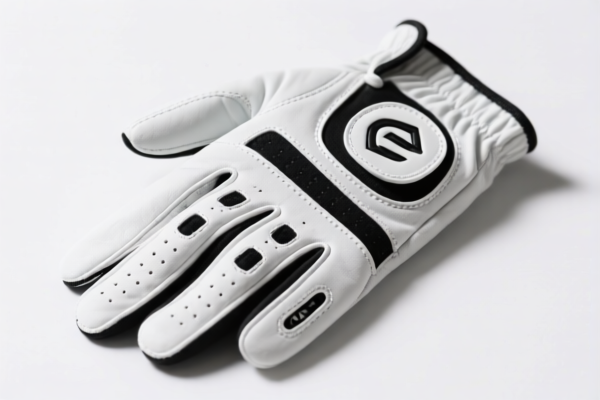
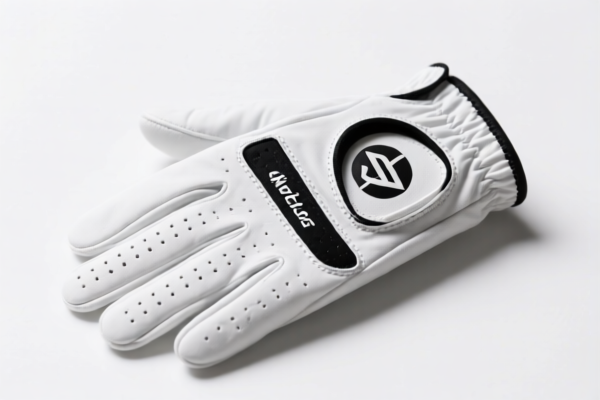
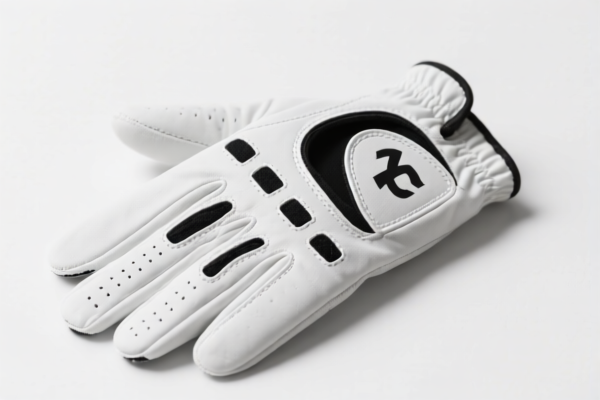
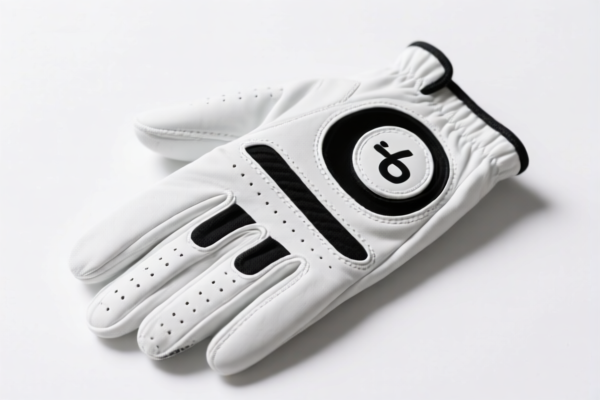
AI Analysis
🏌️♂️ Golf Training Club Gloves (Golf Gloves)
🌐 HS Code Reference & Customs Clearance Guide | 2026 Latest Tariff Analysis | Professional-Level Clearance Strategy
📌 I. Product Definition & Classification: Do You Really Understand "Golf Gloves"?
Golf gloves are specialized protective gear designed to enhance grip, prevent blisters, and improve precision during the swing. In international trade, they are primarily classified under Chapter 61 (Knitted or Crocheted) or Chapter 62 (Non-Knitted) depending on their material composition and manufacturing process.
Based on common industry standards and the provided data, these gloves typically fall into two main categories: 1. Knitted/Crocheted Gloves (Chapter 61): Usually made from synthetic fibers, cotton, or wool blends, often with coating treatments for grip. 2. Non-Knitted Gloves (Chapter 62): Typically made from leather (goat, pig, cow) or artificial materials, often impregnated, coated, or covered with plastic/rubber for durability.
⚠️ Key Distinction Point:
- If the glove is knitted or crocheted (common for training gloves made of synthetic blends) → Look at 6116.xxxxxx.xx
- If the glove is non-knitted (e.g., leather, artificial leather, or rubber-coated fabric) → Look at 6216.xxxxxx.xx
📦 II. HS Code Classification Details (2026 Latest Tariff Authority Match)
| HS Code | Product Description | Application Scenario | Material/Structure Inference |
|---|---|---|---|
6216.00.08.00 |
Gloves, impregnated, coated or covered with plastics or rubber | Sports training gloves with plastic/rubber coating for enhanced grip | ✅ Non-knitted; Coated with plastic/rubber |
6116.10.08.00 |
Gloves, knitted or crocheted, impregnated, coated, covered with plastics or rubber | Training gloves that are knitted but have a plastic/rubber coating layer | ✅ Knitted/Crocheted; Coated |
6216.00.46.00 |
Other gloves of artificial textile materials or leather | Golf gloves made from synthetic fiber or leather | ✅ Non-knitted; Artificial textile/Leather |
6116.92.64.40 |
Other gloves of cotton, knitted or crocheted | Premium training gloves made primarily of cotton, knitted | ✅ Knitted/Crocheted; Cotton |
🔍 Important Note:
- Chapter 62 (Non-Knitted) generally applies to leather or non-knitted synthetic gloves.
- Chapter 61 (Knitted) applies to knit fabric gloves, even if they have a light coating.
- The total tax rate varies significantly between these codes due to different Base Tariffs and Section 301/122 Clause Surcharges.
💰 III. 2026 Latest Tariff Rate Breakdown (Including Surcharges & Policy Add-ons)
✅ Applicable Country: United States (US)
✅ Origin: China (CN)
✅ Effective Date: Including imports after 2025/11/10 (subject to current enforcement)
🎯 1. 6216.00.08.00 —— Gloves, Impregnated/Coated with Plastic/Rubber (Non-Knitted)
| Item | Content |
|---|---|
| Base Tariff | 0.8% |
| Section 301 Surcharge | +7.5% |
| 122 Clause Surcharge | +10% |
| Total Tax Rate | 18.3% |
| Tax Calculation | CIF Value × 18.3% |
| De Minimis Eligibility | ❌ No (Denied de minimis for goods subject to Section 301/122) |
| Legal Basis Path | Base Tariff: 6216.00.08.00 → Section 301: 7.5% → 122 Clause: 10% |
📌 Explanation:
- This code often applies to synthetic leather or rubber-coated sports gloves.
- The base tariff is low (0.8%), but the surcharges (17.5%) are fixed, resulting in a moderate total rate of 18.3%.
- Advantage: Lower total tax compared to knitted cotton options.
🎯 2. 6116.10.08.00 —— Knitted/Crocheted Gloves, Coated with Plastic/Rubber
| Item | Content |
|---|---|
| Base Tariff | 2.8% |
| Section 301 Surcharge | +7.5% |
| 122 Clause Surcharge | +10% |
| Total Tax Rate | 20.3% |
| Tax Calculation | CIF Value × 20.3% |
| De Minimis Eligibility | ❌ No |
| Legal Basis Path | Base Tariff: 6116.10.08.00 → Section 301: 7.5% → 122 Clause: 10% |
📌 Note:
- Applies to knitted gloves with a plastic/rubber coating (common for training gloves).
- Total tax is 20.3%, slightly higher than the non-knitted coated version due to a higher base tariff.
🎯 3. 6216.00.46.00 —— Other Gloves of Artificial Textile Materials or Leather
| Item | Content |
|---|---|
| Base Tariff | 2.8% |
| Section 301 Surcharge | +7.5% |
| 122 Clause Surcharge | +10% |
| Total Tax Rate | 20.3% |
| Tax Calculation | CIF Value × 20.3% |
| De Minimis Eligibility | ❌ No |
| Legal Basis Path | Base Tariff: 6216.00.46.00 → Section 301: 7.5% → 122 Clause: 10% |
📌 Note:
- Commonly used for leather or artificial leather golf gloves.
- Same total tax as6116.10.08.00, but different material classification.
🎯 4. 6116.92.64.40 —— Other Gloves of Cotton, Knitted or Crocheted
| Item | Content |
|---|---|
| Base Tariff | 23.5% |
| Section 301 Surcharge | +7.5% |
| 122 Clause Surcharge | +10% |
| Total Tax Rate | 41.0% |
| Tax Calculation | CIF Value × 41.0% |
| De Minimis Eligibility | ❌ No |
| Legal Basis Path | Base Tariff: 6116.92.64.40 → Section 301: 7.5% → 122 Clause: 10% |
⚠️ High Risk Alert:
- If your golf training glove is made primarily of cotton and is knitted, it falls under this high-base-tariff category.
- Total tax is 41.0%, which is more than double the coated synthetic options.
- Recommendation: Avoid classifying cotton gloves here if possible; consider material substitution or proper labeling.
🛠️ IV. Customs Clearance Practical Advice (Real-World Pitfall Guide)
✅ 1. Preparation Checklist (Must-Haves)
| Document | Mandatory? | Description |
|---|---|---|
| ✅ Product Specification Sheet | ✔️ | Must specify material composition (e.g., "85% Polyester, 15% Cotton"), coating type (plastic/rubber), and knitting method. |
| ✅ Product Photos (Clear) | ✔️ | Show texture, seams, and any coatings. Crucial for distinguishing between knitted vs. non-knitted. |
| ✅ Commercial Invoice | ✔️ | Clearly state "Golf Training Glove" and material breakdown. Avoid vague terms like "Sports Accessories." |
| ✅ Packing List | ✔️ | Detail quantity per box, weight, and dimensions. |
| ✅ Certificate of Origin (CO) | ✔️ | Required for origin determination (China origin triggers surcharges). |
| ✅ Test Report (Optional but Recommended) | ✔️ | If claiming specific material properties (e.g., waterproof coating), provide lab tests. |
✅ 2. Declaration Tips (Key Mantra)
🔥 "Material Defines Code, Coating Changes Rate, Cotton is Expensive!"
| Scenario | Correct Classification | Wrong Practice |
|---|---|---|
| Synthetic/Leather Glove with Plastic Coating | 6216.00.08.00 (18.3%) |
Misdeclare as "Cotton Glove" → 41.0% |
| Knitted Glove with Rubber Grip | 6116.10.08.00 (20.3%) |
Misdeclare as "Non-knitted" → May be rejected if texture shows knitting |
| 100% Cotton Knitted Glove | 6116.92.64.40 (41.0%) |
Try to hide material composition → Customs will penalize for misdeclaration |
| Artificial Leather Glove | 6216.00.46.00 (20.3%) |
Declare as "Textile" without specifying "Artificial Leather" → Risk of reclassification |
✅ 3. Special Circumstances Handling
| Situation | Handling Suggestion |
|---|---|
| Mixed Material Gloves | Declare the principal material (e.g., if 80% synthetic, declare as synthetic). If mixed 50/50, consult HS General Rules of Interpretation. |
| Training vs. Professional Gloves | HS classification is based on material and structure, not function. However, labeling as "Training" may help in risk assessment but doesn't change the code. |
| Packaging Included | Gloves in retail boxes are still classified as gloves. Do not split-box declare. |
| Origin Tracing | Ensure the country of origin is correctly stated. If re-packed in Vietnam/Malaysia without substantial transformation, origin remains China. |
🌍 V. Global Market Comparison (2026 Latest)
| Country/Region | Recommended HS Code | Tariff (China Origin) | Certification | Notes |
|---|---|---|---|---|
| 🇺🇸 USA | 6216.00.08.00 / 6116.10.08.00 |
18.3% - 20.3% | None specific | Highly sensitive to Section 301 & 122 Clause |
| 🇨🇳 China | 6216.00.08.00 |
12% - 15% | None | Lower base tariffs, no US surcharges |
| 🇪🇺 EU | 6116.92.00 / 6216.00.00 |
4% - 12% | CE (if safety-related) | No Section 301 equivalent, but anti-dumping may apply in some cases |
| 🇬🇧 UK | 6116.92.00 / 6216.00.00 |
4% - 12% | UKCA | Post-Brexit rules apply |
| 🇯🇵 Japan | 6116.92.00 / 6216.00.00 |
10% - 15% | None | Stable tariffs, no major surcharges |
📌 Conclusion:
- USA is the most challenging market due to the 17.5% total surcharge (7.5% Section 301 + 10% 122 Clause).
- Cotton gloves are the most expensive to import into the US (41.0% total).
- Coated synthetic/non-knitted gloves (18.3%) are the most cost-effective for US imports.
📌 VI. Common Errors & Pitfalls Guide (Lessons Learned)
❌ Error 1: Declaring a knitted cotton glove as non-knitted leather
👉 Consequence: Customs inspection reveals knitting → Reclassification to 6116.92.64.40 (41.0%) + Penalties!
❌ Error 2: Ignoring the 122 Clause
👉 Consequence: Underpaying tariffs → Back taxes + Interest + Possible seizure
❌ Error 3: Vague description "Sports Gloves"
👉 Consequence: Customs uses catch-all high rates or delays for material testing → Clearance delay
❌ Error 4: Assuming "De Minimis" applies
👉 Consequence: Small shipments (<$800) are NOT exempt from Section 301/122 surcharges for China-origin goods → Unexpected taxes at border
✅ Correct Practice:
"Golf Training Glove, 1 Pair, 85% Polyester, 15% Cotton, Knitted, Rubber-coated palm, Model GT-100, Made in China"
🎯 VII. Conclusion: Precision Classification, Cost Control!
🎯 Remember the Mantra:
🔹 "Coated Synthetics: 18.3% | Knitted Coated: 20.3% | Artificial Leather: 20.3% | Cotton Knitted: 41.0%"
🔹 "122 Clause + 301 = 17.5% Extra, Always!"
🔹 "Cotton is a Tax Trap, Synthetic is Your Friend!"
📌 Pro Tip:
- If you can, switch material from 100% cotton to polyester/synthetic blends to save 20.7% in taxes.
- Ensure your HS Code pre-ruling is filed with US CBP if importing large volumes.
- Always declare material composition accurately to avoid costly reclassifications.
📣 Action Now:
📞 Contact a Licensed Customs Broker + Provide Material Specs + Apply for Pre-Ruling
🚀 Optimize Your Tariff, Streamline Your Clearance, Maximize Your Profit!
✨ Professional Clearance Starts with Accurate Classification!
💼 Every Percent Saved is Profit Gained!
Customer Reviews
About HS Code Classification
The Harmonized System (HS) is an internationally standardized nomenclature developed by the World Customs Organization (WCO) to classify traded products. Over 200 countries use the HS system as the basis for customs tariffs, trade statistics, and import/export regulations.
Each HS code follows a hierarchical structure:
- Chapter (2 digits) — Broad category of goods (e.g., Chapter 84: Machinery and Mechanical Appliances)
- Heading (4 digits) — More specific grouping within the chapter
- Subheading (6 digits) — Internationally standardized breakdown, used by all WCO member countries
- National subdivisions (8-10 digits) — Country-specific extensions for further classification, such as US HTSUS 10-digit codes
Correct HS code classification is essential for smooth customs clearance, accurate duty payment, and compliance with trade regulations. Misclassification can lead to customs delays, overpayment of duties, or penalties.
When importing from CN to US, the applicable tariff rates may include:
- Most-Favored-Nation (MFN) rate — The standard duty rate applied to WTO members
- General rate — Applied to countries without trade agreements
- Trade remedy duties — Additional tariffs such as Section 301 (anti-dumping), Section 232 (national security), or countervailing duties
The information provided on this page is for reference purposes only. For official classification, please consult with your local customs authority or a licensed customs broker.