Grain Cleaning Machine
CN → US| HS Code | Tariff Rate | Origin | Destination | Doc |
|---|---|---|---|---|
| 8433600010 | 35.0% | CN | US | Official Doc |
| 8433905080 | 35.0% | CN | US | Official Doc |
Product Images
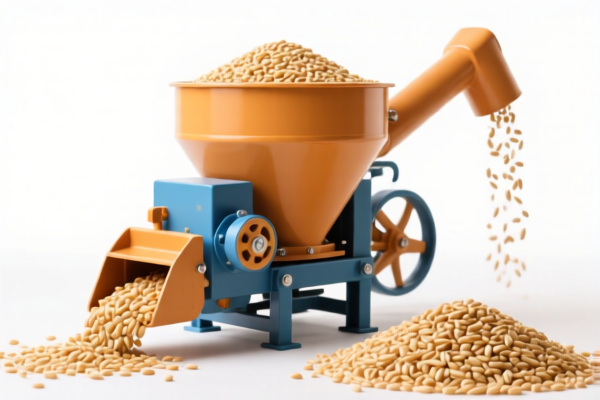
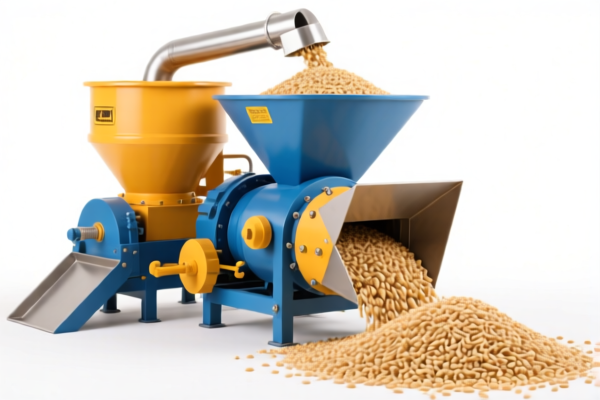
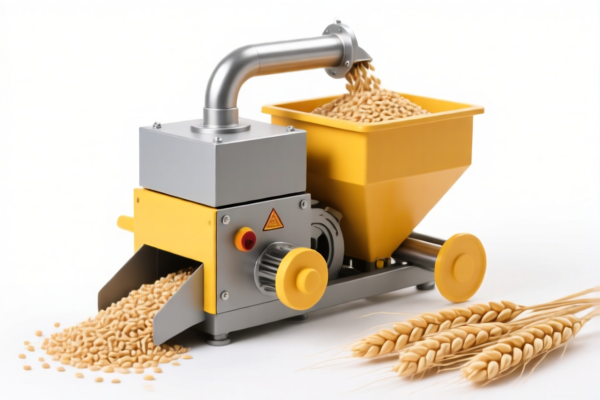
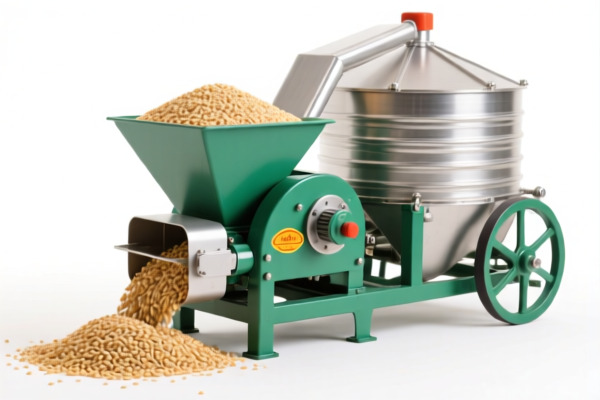
AI Analysis
🌾 Grain Cleaning Machine (Agricultural Sorting & Cleaning Equipment)
🌐 HS Code Reference & Customs Clearance Guide | 2026 Latest Tariff Analysis | Professional Clearance Strategy
📌 I. Product Definition & Classification: What Exactly is a "Grain Cleaning Machine"?
Grain Cleaning Machines are specialized agricultural processing equipment designed to remove impurities (such as chaff, dust, stones, or immature grains) from harvested crops. In international trade, these machines are primarily classified under Chapter 84 (Nuclear reactors, boilers, machinery and mechanical appliances).
Key Distinction: 1. Main Unit (Machine): The complete functional unit capable of cleaning, sorting, or grading eggs, fruit, or other agricultural produce (including grains). 2. Parts: Specific components dedicated to these machines, such as sieves, fans, or control panels, not covered by other specific headings.
⚠️ Critical Classification Point:
- If the item is the entire machine used for cleaning/sorting agricultural produce → Go to 8433.60.00.10.
- If the item is a spare part specifically for such machines → Go to 8433.90.50.80.
- Do not confuse with general "parts of machinery" (Chapter 84, Heading 8431), as specific parts for agricultural sorting machines have their own subheadings.
📦 II. HS Code Classification Details (2026 Latest Tariff Authority Cross-Reference)
Based on the provided data <DATA>, here are the precise classifications and tax implications for your shipment:
| HS Code | Product Description | Applicability | Tax Rate (Total) | Tax Breakdown |
|---|---|---|---|---|
8433.60.00.10 |
Machines for cleaning, sorting or grading eggs, fruit or other agricultural produce (Specifically: Machines for cleaning, sorting or grading eggs) |
Complete Grain Cleaning Machines, Egg Graders, Fruit Sorters | 25.0% | Base: 0.0% Additional: 25.0% |
8433.90.50.80 |
Parts: Other Of machines for cleaning, sorting or grading fruit or other agricultural produce | Spare parts, components, or attachments for the above machines | 25.0% | Base: 0.0% Additional: 25.0% |
🔍 Important Note:
- Both the main machine and its specific parts fall under the same total tax rate of 25.0% in this dataset.
- However, misclassification (e.g., declaring a machine as "parts" or vice versa) can lead to customs holds, as the physical nature of the goods (complete unit vs. component) must match the legal definition.
💰 III. 2026 Latest Tariff Rate Details (Including Additional Taxes)
✅ Applicable Country: USA (US) (Inferred from typical 25% additional tariff structures for Chinese agricultural machinery, though exact origin not specified in data, the 25% "Additional Tax" is explicitly stated)
✅ Effective Time: As per current tariff schedules reflected in<DATA>
🎯 1. 8433.60.00.10 —— Grain/Agricultural Cleaning Machine (Main Unit)
| Item | Content |
|---|---|
| Base Tariff Rate | 0% (ad valorem) |
| Additional Tariff | +25.0% |
| Total Tax Rate | 25.0% |
| Tax Calculation | CIF Value × 25% |
| Legal Basis | Harmonized Tariff Schedule (HTSUS) Chapter 84, Heading 8433 |
📌 Explanation:
- The 0% base tariff indicates that agricultural machinery often enjoys preferential base rates to support food security and farming.
- The 25% additional tariff is the critical cost driver. This likely represents Section 301 tariffs or other trade remedy measures applicable to Chinese-made agricultural equipment entering the US market.
- Total Liability: You must budget for 25% of the CIF value as pure tariff cost.
🎯 2. 8433.90.50.80 —— Parts for Agricultural Cleaning Machines
| Item | Content |
|---|---|
| Base Tariff Rate | 0% (ad valorem) |
| Additional Tariff | +25.0% |
| Total Tax Rate | 25.0% |
| Tax Calculation | CIF Value × 25% |
| Legal Basis | Harmonized Tariff Schedule (HTSUS) Chapter 84, Heading 8433 |
📌 Explanation:
- Spare parts for these specific machines are not exempt from the additional tariff.
- Even though base duty is 0%, the 25% additional levy applies fully.
- Key Risk: If you declare a complete machine as "parts" to try and lower value, or vice versa, customs may reclassify and apply penalties. Ensure your Bill of Lading matches the HS Code description.
🛠️ IV. Customs Clearance Practical Advice (Battle-Tested Pitfall Guide)
✅ 1. Documentation Checklist (Non-Negotiable)
| Document | Required? | Description |
|---|---|---|
| ✅ Commercial Invoice | ✔️ | Must clearly state "Grain Cleaning Machine" or "Parts for Grain Cleaning Machine". Avoid vague terms like "Agri-Equipment". |
| ✅ Packing List | ✔️ | Detail contents. If shipping parts, list each component separately. |
| ✅ Product Specifications | ✔️ | Include capacity (tons/hour), power consumption, dimensions, and weight. |
| ✅ Certificate of Origin | ✔️ | Essential for verifying origin and applying any potential exemptions (if applicable to specific regions). |
| ✅ Test Reports | ✔️ | CE, UL, or other safety certifications may be required depending on the destination country's regulations. |
✅ 2. Declaration Strategy (Key Tips)
🔥 Golden Rule: "Exact Description, Correct HS, No Ambiguity!"
| Scenario | Correct Declaration | Common Mistake |
|---|---|---|
| Shipping a Complete Machine | 8433.60.00.10 – "Machine for cleaning/grading agricultural produce" |
Declaring as "Industrial Cleaner" or "Sifting Equipment" → Potential reclassification & delay |
| Shipping Spare Parts | 8433.90.50.80 – "Parts for machines for cleaning/sorting agricultural produce" |
Declaring as "General Machinery Parts" → May trigger higher base duties or wrong HS |
| Mixed Shipment (Machine + Parts) | Declare Separately | Combining into one line item → Customs may reject or apply the highest applicable tax to the whole batch |
✅ 3. Special Considerations
| Situation | Recommendation |
|---|---|
| Original Destination | Confirm if the product is made in a country subject to the 25% additional tax. If not, the rate may differ. |
| Valuation | Ensure the CIF value includes insurance and freight. Under-declaring value can lead to severe penalties. |
| Parts Identification | For 8433.90.50.80, ensure parts are specifically for cleaning/sorting machines. Generic parts (e.g., standard bolts) might fall under different headings. |
🌍 V. Global Market Comparison (2026 Overview)
| Region | Recommended HS Code | Estimated Tariff | Key Requirements |
|---|---|---|---|
| 🇺🇸 USA | 8433.60.00.10 / 8433.90.50.80 |
25.0% (Total) | CE/UL Certs, Accurate Origin Labeling |
| 🇪🇺 EU | 8433.60.00 / 8433.90.00 |
~0-4% (Varies) | CE Marking, RoHS Compliance |
| 🇨🇳 China | 8433.60.00 / 8433.90.00 |
~0-10% | CCC Certification (if applicable) |
📌 Conclusion:
- The USA presents a significant cost barrier due to the 25% additional tariff.
- EU and China generally have lower base duties for agricultural machinery, making them more competitive markets from a tariff perspective.
📌 VI. Common Mistakes & Pitfalls (Lessons Learned)
❌ Mistake 1: Declaring a complete machine as "Parts" to lower the declared value.
👉 Consequence: Customs may reject the declaration, impose fines, or charge the higher tax rate for the machine plus penalties.
❌ Mistake 2: Using generic terms like "Farmer's Tool" or "Cleaning Device".
👉 Consequence: Delays while customs investigates the correct HS Code. Use precise industry terms.
❌ Mistake 3: Ignoring the "Additional Tax" component.
👉 Consequence: Profit margins are wiped out. A 25% tax is significant and must be factored into your pricing strategy.
✅ Correct Approach:
"Model XYZ Grain Cleaning Machine, 10 Tons/Hour Capacity, AC 380V, HS 8433.60.00.10, Made in China"
🎯 VII. Conclusion: Precision is Profit!
🎯 Remember:
🔹 "Machine or Part? Know the Code. 25% Tax? Budget It."
🔹 "HS Code 8433 is the key, misclassification is the fee."
📌 Pro Tip:
If you are shipping recurring spare parts, consider establishing a Pre-Ruling with customs to validate the HS Code 8433.90.50.80 and the 25% tax application, ensuring smooth future clearances.
📣 Immediate Action:
📞 Verify Origin: Confirm if your specific manufacturer's country of origin qualifies for any exemptions.
📄 Prepare Docs: Ensure your commercial invoice clearly references the HS Code and product description.
🚀 Plan for Cost: Include the 25% total tax in your landed cost calculation to avoid unexpected expenses.
✨ Professional Clearance, Starts with Accurate Classification!
💼 Your Profit Margin Depends on Your Paperwork!
Customer Reviews
About HS Code Classification
The Harmonized System (HS) is an internationally standardized nomenclature developed by the World Customs Organization (WCO) to classify traded products. Over 200 countries use the HS system as the basis for customs tariffs, trade statistics, and import/export regulations.
Each HS code follows a hierarchical structure:
- Chapter (2 digits) — Broad category of goods (e.g., Chapter 84: Machinery and Mechanical Appliances)
- Heading (4 digits) — More specific grouping within the chapter
- Subheading (6 digits) — Internationally standardized breakdown, used by all WCO member countries
- National subdivisions (8-10 digits) — Country-specific extensions for further classification, such as US HTSUS 10-digit codes
Correct HS code classification is essential for smooth customs clearance, accurate duty payment, and compliance with trade regulations. Misclassification can lead to customs delays, overpayment of duties, or penalties.
When importing from CN to US, the applicable tariff rates may include:
- Most-Favored-Nation (MFN) rate — The standard duty rate applied to WTO members
- General rate — Applied to countries without trade agreements
- Trade remedy duties — Additional tariffs such as Section 301 (anti-dumping), Section 232 (national security), or countervailing duties
The information provided on this page is for reference purposes only. For official classification, please consult with your local customs authority or a licensed customs broker.