Grain Cleaning and Sorting Machine
CN → US| HS Code | Tariff Rate | Origin | Destination | Doc |
|---|---|---|---|---|
| 8437100000 | 35.0% | CN | US | Official Doc |
| 8437800010 | 35.0% | CN | US | Official Doc |
| 8433600010 | 35.0% | CN | US | Official Doc |
| 8433905045 | 35.0% | CN | US | Official Doc |
| 8479820080 | 35.0% | CN | US | Official Doc |
| 8479820040 | 35.0% | CN | US | Official Doc |
Product Images
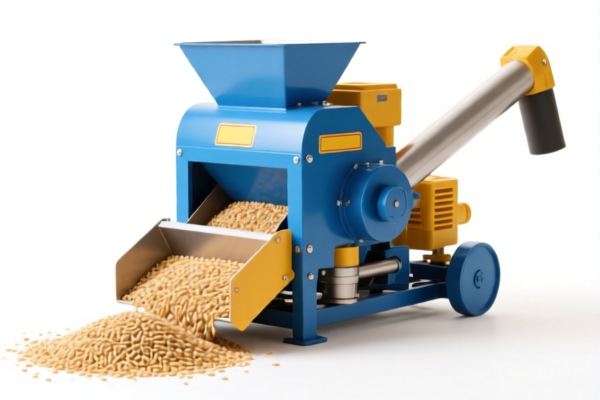
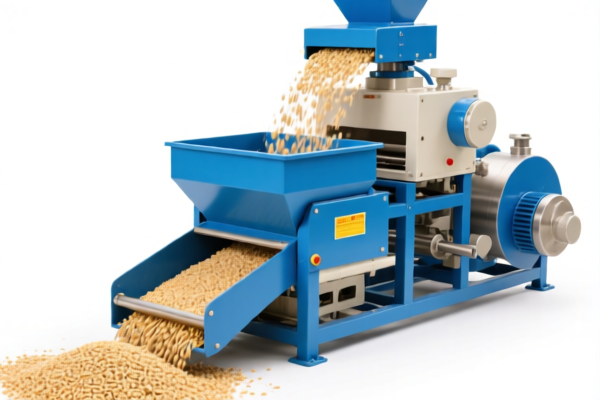
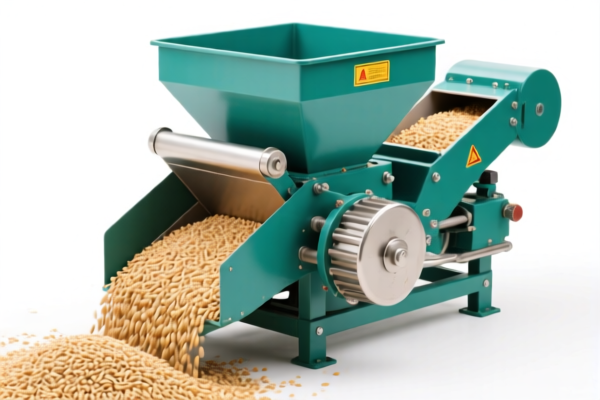
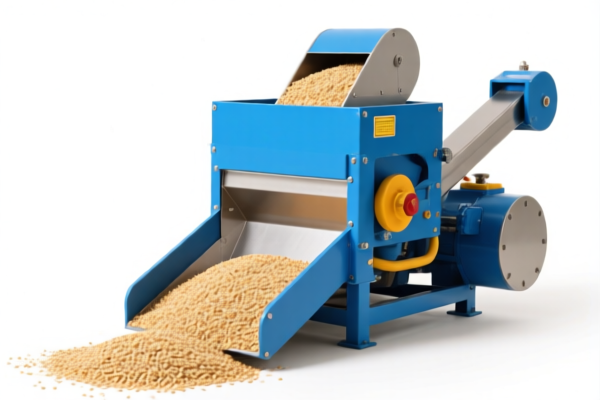
AI Analysis
🌾 Grain Cleaning & Sorting Machinery (The "Golden Harvest" Guardians)
🌐 HS Code Reference & Customs Clearance Guide | 2026 Latest Tariff Analysis | Professional Clearance Strategy
📌 I. Product Definition & Classification: Do You Really Understand "Grain Cleaning"?
Grain cleaning and sorting machinery represents the critical preprocessing stage in the agricultural supply chain, ensuring seed, grain, and leguminous vegetables meet strict quality standards before milling or export. In international trade, these machines are strictly categorized by their primary function and mechanism.
Seed/Grain Cleaners (Aspirators & Sieves): Machines primarily using air currents (aspiration) and gravity/sieves to remove light impurities (dust, chaff, straw).
Color Sorters/Graders: Machines using optical sensors, near-infrared (NIR), or mechanical sizing to separate grains based on color, size, or density.
⚠️ Key Distinction Point:
- If the machine is designed specifically for cleaning, sorting, or grading seeds, grain, or dried leguminous vegetables → It falls under 8437.10.00.00.
- If the machine is a flour mill, grain mill, or used for general milling industry processing (not just cleaning/sorting) → It may fall under 8437.80.00.10.
- Crucial Note: The data provided in<DATA>explicitly links Egg Cleaning to a different code (8433.60.00.10). While often confused, grain cleaning and egg cleaning are distinct functions. Grain = 8437; Eggs = 8433.
📦 II. HS Code Classification Details (2026 Latest Tariff Authority Comparison)
| HS Code | Product Description | Application Scenario | Tax Rate (Total) | Key Features |
|---|---|---|---|---|
8437.10.00.00 |
Machines for cleaning, sorting or grading seed, grain or dried leguminous vegetables | Primary cleaning lines, aspiration units, gravity sieves for wheat/corn/soy | 25.0% | Dedicated to cleaning/sorting of cereals/legumes. No milling action. |
8437.80.00.10 |
Other machinery: Flour mill and grain mill machines | Hammer mills, roller mills, general milling equipment for cereals | 25.0% | Used for processing/milling, not just cleaning. Includes "Other" milling machinery. |
8433.60.00.10 |
Machines for cleaning, sorting or grading eggs | Egg washing, egg candling, egg size sorting lines | 25.0% | NOT for grain. Specific to avian products. Do not confuse with grain cleaners. |
8479.82.00.80 |
Other machines: Mixing, kneading, crushing, grinding, etc. | General industrial mixers, homogenizers, grinders not specific to grain cleaning | 25.0% | Generic industrial machinery. Not specific to agricultural preprocessing. |
8479.82.00.40 |
Other machines: Mixing, kneading or stirring machines | Industrial mixers for food/feed/chemicals | 25.0% | Generic mixing equipment. |
8433.90.50.45 |
Parts: Other of other mowers, harvesting machines | Spare parts for harvesters (not cleaners) | 25.0% | Replacement parts for harvesting, not cleaning/sorting. |
🔍 Important Reminder:
- Grain Cleaners vs. Millers: A machine that only removes husks/dust is 8437.10. A machine that grinds grain into flour is 8437.80.
- Eggs vs. Grain: Never classify egg cleaning machines under 8437. They are distinct chapters.
- Parts: Specific parts for grain cleaners are generally classified with the machine unless specified otherwise. The data shows generic parts under8433.90and8479.82, which may apply to other machinery types. For grain cleaner parts, refer to Chapter 84 notes.
💰 III. 2026 Latest Tariff Rate Details (Including Surcharges & Policy Add-ons)
✅ Applicable Country: United States (US)
✅ Origin: China (CN)
✅ Effective Date: 2025年11月10日起 (From Nov 10, 2025)
🎯 1. 8437.10.00.00 – Machines for Cleaning, Sorting or Grading Seed, Grain or Dried Leguminous Vegetables
| Item | Content |
|---|---|
| Base Tariff | 0.0% |
| Section 301 Surcharge | +25.0% |
| Total Tariff | 25.0% |
| Tax Calculation | CIF Value × 25% |
| De Minimis Exemption | ❌ Not Eligible (Deny De Minimis) |
| Legal Basis Path | USITC:8437.10.00.00 → SECTION_301:25% |
📌 Explanation:
- Base Tariff 0%: This is a standard duty-free rate for many agricultural processing machines under the Harmonized Tariff Schedule (HTS).
- 25% Surcharge: This is the Section 301 tariff imposed on goods from China. It is a flat additional duty.
- Total Impact: Importers must pay 25% of the CIF value (Cost, Insurance, Freight) as duty. There is no base tariff to offset this; it is an additive surcharge.
🎯 2. 8437.80.00.10 – Flour Mill and Grain Mill Machines
| Item | Content |
|---|---|
| Base Tariff | 0.0% |
| Section 301 Surcharge | +25.0% |
| Total Tariff | 25.0% |
| Tax Calculation | CIF Value × 25% |
| De Minimis Exemption | ❌ Not Eligible |
📌 Note:
- Same tax structure as8437.10.
- Distinguish carefully: If your machine mills grain, use this. If it cleans grain, use8437.10. Misclassification can lead to audits.
🎯 3. 8433.60.00.10 – Machines for Cleaning Eggs (Comparison)
| Item | Content |
|---|---|
| Base Tariff | 0.0% |
| Section 301 Surcharge | +25.0% |
| Total Tariff | 25.0% |
📌 Caution:
- If you are exporting egg cleaning machines, do NOT use8437.10. Use8433.60.00.10.
- The tax rate is identical (25%), but the HS code is different. Correct classification is vital for customs data integrity and potential future duty exemptions or anti-dumping duties specific to eggs.
🛠️ IV. Customs Clearance Practical Advice (Battle-Tested Pitfall Guide)
✅ 1. Required Documentation Checklist (Missing Items Will Cause Delays)
| Document | Mandatory? | Description |
|---|---|---|
| ✅ Product Specifications | ✔️ | Must clearly state capacity (tons/hr), dimensions, motor power, and intended use (e.g., "Wheat Cleaning," not just "Machine"). |
| ✅ Product Photos | ✔️ | Clear images of the entire machine, control panel, and any labels showing model number. |
| ✅ Bill of Lading / Invoice | ✔️ | Must match the HS Code description precisely. Use terms like "Grain Cleaning Machine" or "Seed Sorter." |
| ✅ Certificate of Origin (CO) | ✔️ | If shipped from China, CO is standard. No preferential duty available for US-China trade currently. |
| ✅ User Manual | ✔️ | May be requested to verify the machine's function (cleaning vs. milling). |
| ✅ Electrical Compliance | ✔️ | UL, NEMA, or IEEE standards compliance certificates for electrical components. |
✅ 2. Declaration Tips (Key Mantra)
🔥 "Function is King: Clean = 8437.10, Mill = 8437.80, Eggs = 8433.60."
| Scenario | Correct Declaration | Wrong Declaration | Consequence |
|---|---|---|---|
| Wheat Aspirator | 8437.10.00.00 |
8433.90.50.45 |
Misclassification risk; potential penalty. |
| Rice Color Sorter | 8437.10.00.00 |
8479.82.00.80 |
Wrong chapter; customs may reclassify and charge extra. |
| Egg Washer | 8433.60.00.10 |
8437.10.00.00 |
Clear error; delays for clarification. |
| Parts for Cleaner | 8437.90 (Check Notes) |
8433.90.50.45 |
Generic parts code may not apply. |
⚠️ Note on Parts: The provided
<DATA>list includes8433.90.50.45for parts of mowers/harvesters. For grain cleaner parts, the correct HS Code is typically 8437.90. Ensure you are not using the wrong chapter for spare parts.
✅ 3. Special Handling
| Scenario | Advice |
|---|---|
| Multi-function Machines | If a machine both cleans AND mills, it is often classified as the principal function. If milling dominates, use 8437.80. If cleaning dominates, use 8437.10. Provide a technical explanation. |
| OEM Customization | Clearly label the machine with the intended commodity (e.g., "For Corn Cleaning"). Generic labeling increases scrutiny. |
| Pre-Arrival Review | Apply for a Binding Tariff Information (BTI) or pre-ruling from US Customs if the machine is complex. |
🌍 V. Global Market Clearance Comparison (2026 Latest)
| Country/Region | Recommended HS Code | Total Tariff | Certification | Notes |
|---|---|---|---|---|
| 🇺🇸 USA | 8437.10.00.00 |
25% | UL, NEMA | 25% surcharge applies. No de minimis. |
| 🇨🇳 China | 8437.10.00.00 |
0% | CCC | Import duty-free for agricultural equipment. |
| 🇪🇺 EU | 8437.10.00 |
0% - 4.5% | CE, RoHS | Varies by country. Generally low tariff. |
| 🇦🇺 Australia | 8437.10.00 |
5% | RCM | Standard import duty. |
| 🇯🇵 Japan | 8437.10.00 |
0% | PSE | No duty for agricultural machinery. |
📌 Conclusion:
- USA is the highest-cost market due to the 25% Section 301 surcharge.
- China and Japan offer duty-free entry, making them attractive for re-export or domestic use.
- EU and Australia have moderate tariffs but require strict CE/RoHS compliance.
📌 VI. Common Mistakes & Pitfall Guide (Lessons Learned)
❌ Mistake 1: Classifying a Color Sorter as 8479.82.00.80 (General Machine)
👉 Consequence: Wrong chapter. Color sorters for grain are specifically covered under 8437.10.
✅ Fix: Use 8437.10.00.00.
❌ Mistake 2: Confusing Egg Cleaners with Grain Cleaners
👉 Consequence: Customs may flag for anti-dumping or specific agricultural product regulations.
✅ Fix: Eggs go to 8433.60.00.10. Grain goes to 8437.10.00.00.
❌ Mistake 3: Claiming De Minimis for small spare parts shipped via courier
👉 Consequence: Denied. The data indicates these products are subject to Section 301, and de minimis exemptions are often waived for Section 301 goods.
✅ Fix: Declare fully as a commercial shipment.
❌ Mistake 4: Vague Description "Agricultural Machine"
👉 Consequence: Customs will assign a default code, often with a higher tariff or requiring extra documentation.
✅ Fix: Use precise descriptions: "Gravity Separator for Soybean Cleaning."
🎯 VII. Conclusion: Precise Classification, Profitable Clearance!
🎯 Remember the Mantra:
🔹 "Grain Clean = 8437.10, Mill = 8437.80, Eggs = 8433.60."
🔹 "25% Tax in US, No De Minimis, Be Specific."
📌 Pro Tip:
If your machinery is partially assembled or shipped in CKD (Completely Knocked Down) kits, the HS Code may still be 8437.10.00.00, but ensure the kit is "substantially complete" to avoid parts classification.
Always verify if the machine includes computer-controlled optical sorting (which might sometimes be debated) vs. mechanical sorting (clearly 8437.10). For grain, optical sorters are still generally considered cleaning/sorting machines under 8437.10.
📣 Immediate Action:
📞 Contact a customs broker with the technical specification sheet.
🚀 Pre-approve the HS Code to avoid 25% surprises at the port!
✨ Professional Clearance Starts with Accurate Classification!
💼 Your Margins Depend on Getting the HS Code Right!
Customer Reviews
About HS Code Classification
The Harmonized System (HS) is an internationally standardized nomenclature developed by the World Customs Organization (WCO) to classify traded products. Over 200 countries use the HS system as the basis for customs tariffs, trade statistics, and import/export regulations.
Each HS code follows a hierarchical structure:
- Chapter (2 digits) — Broad category of goods (e.g., Chapter 84: Machinery and Mechanical Appliances)
- Heading (4 digits) — More specific grouping within the chapter
- Subheading (6 digits) — Internationally standardized breakdown, used by all WCO member countries
- National subdivisions (8-10 digits) — Country-specific extensions for further classification, such as US HTSUS 10-digit codes
Correct HS code classification is essential for smooth customs clearance, accurate duty payment, and compliance with trade regulations. Misclassification can lead to customs delays, overpayment of duties, or penalties.
When importing from CN to US, the applicable tariff rates may include:
- Most-Favored-Nation (MFN) rate — The standard duty rate applied to WTO members
- General rate — Applied to countries without trade agreements
- Trade remedy duties — Additional tariffs such as Section 301 (anti-dumping), Section 232 (national security), or countervailing duties
The information provided on this page is for reference purposes only. For official classification, please consult with your local customs authority or a licensed customs broker.