Granular Activated Carbon
CN → US| HS Code | Tariff Rate | Origin | Destination | Doc |
|---|---|---|---|---|
| 3802100050 | 39.8% | CN | US | Official Doc |
| 3802100010 | 39.8% | CN | US | Official Doc |
| 4402900100 | 35.0% | CN | US | Official Doc |
| 8421290065 | 35.0% | CN | US | Official Doc |
Product Images
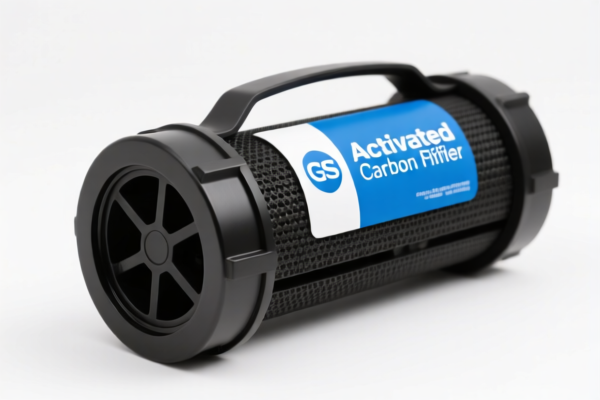
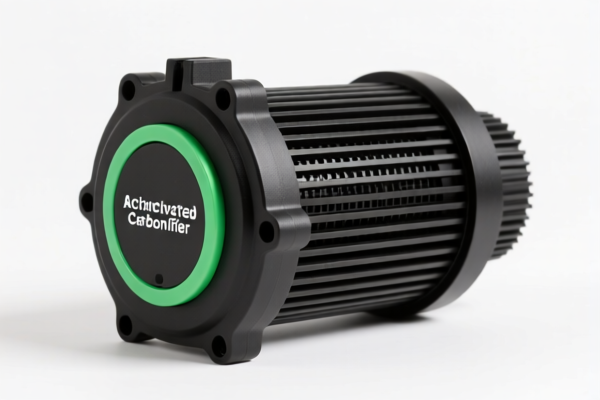
AI Analysis
🌑 Granular Activated Carbon (GAC)
🌐 HS Code Reference & Customs Clearance Guide | 2026 Latest Tariff Analysis | Professional Clearance Strategy
📌 I. Product Definition & Classification: Do You Really Understand "Granular Activated Carbon"?
Activated Carbon is a porous form of carbon that has been processed to have small, low-volume pores that increase the surface area available for adsorption or chemical reactions. "Granular Activated Carbon (GAC)" specifically refers to carbon particles typically ranging from 0.2mm to 5mm in size, used widely in water purification, air filtration, and gold recovery.
In international trade, GAC is often confused with other carbon forms. The key distinction lies in its processing state and physical form:
- Activated Carbon (HS 3802): Carbon that has undergone chemical/thermal activation to develop porosity. This is the standard classification for commercial GAC.
- Wood Charcoal/Bio-char (HS 4402): Unactivated or simply carbonized wood. If the carbon is not activated (no porosity development), it falls here.
- Filtration Equipment (HS 8421): The carbon inside a cartridge or filter housing. If the carbon is sold as a loose medium, it is not machinery.
⚠️ Key Distinction Point:
- If the product is activated (high adsorption capacity) and sold as loose granules/powder → HS 3802.10.00
- If the product is unactivated wood char or lump charcoal → HS 4402.90.01
- If the carbon is packed in a filter cartridge ready for use → HS 8421.29.00
📦 II. HS Code Classification Details (2026 Latest Tariff Authority Comparison)
| HS Code | Product Description | Application Scenario | Key Feature |
|---|---|---|---|
3802.10.00.50 |
Other activated carbon (Granular) | Water treatment plants, industrial air filters, gold recovery | ✅ Activated, Granular Form, "Other" category |
3802.10.00.10 |
Activated carbon (Granular/Powder) | Standard water filtration, food/beverage decolorization | ✅ Activated, Matches "Granular" physical form exactly |
4402.90.01.00 |
Other vegetable carbon (Charcoal) | BBQ charcoal, non-activated carbon blocks, biomass fuel | ❌ Unactivated (or low activation), Block/Lump form |
3802.10.00.50 |
Activated carbon (Block form) | If GAC is compressed into blocks but still activated | ✅ Activated, Block Form (less common for GAC, but possible) |
3802.10.00.10 |
Activated carbon (Block form) | Alternative form of activated carbon | ✅ Activated, Block Form |
8421.29.00.65 |
Filtration/Clarifying Apparatus Parts | Carbon media inside a filter housing | ✅ Component of a filtration device, not loose media |
🔍 Critical Reminder:
- All "Activated" Carbon (regardless of source: coconut shell, coal, wood) generally falls under Chapter 38 (3802), provided it has the adsorption property. - "Granular" specifically fits 3802.10.00.10 or .50 best. - Do NOT confuse with4402(Wood Charcoal). If the product is advertised as "Activated," it must be 3802. Misclassification leads to severe penalties. - Loose vs. Packed: Loose granules are3802. If packed in a cartridge for immediate installation, it may be8421.
💰 III. 2026 Latest Tariff Rate Breakdown (Including Surtaxes & Policy Add-ons)
✅ Applicable Country: United States (US)
✅ Origin: China (CN)
✅ Effective Date: November 10, 2025 onwards (and subsequent imports)
🎯 1. 3802.10.00.10 & 3802.10.00.50 —— Activated Carbon (Most Common for GAC)
| Item | Details |
|---|---|
| Base Tariff Rate | 4.8% (Standard MFN rate for activated carbon) |
| Section 301 Surcharge | +25.0% (USITC Footnote 9903.38.01.10/50) |
| IEEPA Surcharge | +10.0% (Targeting China/HK products under IEEPA authority) |
| Total Effective Tax | 39.8% |
| Tax Calculation | CIF Value × 39.8% |
| De Minimis Exemption | ❌ Not Eligible (deny_de_minimis) |
| Legal Basis Path | IEEPA:9903.01.24 → USITC:3802.10.00.10/50 → FOOTNOTE:9903.38.01 |
📌 Explanation:
- The 4.8% base rate is the standard import duty for activated carbon. - The 25% Section 301 tariff is the significant "trade war" tariff applied to Chinese chemical products. - The 10% IEEPA tariff is an additional layer for Chinese-origin goods. - Total 39.8% is a high-cost barrier. Importers must calculate landed costs carefully.
🎯 2. 4402.90.01.00 —— Vegetable Carbon / Charcoal (If Misclassified or Unactivated)
| Item | Details |
|---|---|
| Base Tariff Rate | 0.0% (Duty-free for many vegetable carbon products) |
| Section 301 Surcharge | +25.0% |
| IEEPA Surcharge | +10.0% |
| Total Effective Tax | 35.0% |
| Tax Calculation | CIF Value × 35.0% |
| De Minimis Exemption | ❌ Not Eligible |
| Legal Basis Path | IEEPA:9903.01.24 → USITC:4402.90.01.00 → FOOTNOTE:9903.38.01 |
📌 Warning:
- If your product is Activated Carbon but declared as4402to avoid higher tariffs, this is smuggling/misdeclaration. - The tax difference is only 4.8% (39.8% vs 35.0%), which is negligible compared to the risk of seizure, fines, and legal action. - Customs may test the carbon's adsorption capacity to prove it is "activated."
🎯 3. 8421.29.00.65 —— Filtration Parts (If Sold as Filter Cartridges)
| Item | Details |
|---|---|
| Base Tariff Rate | 0.0% |
| Section 301 Surcharge | +25.0% |
| IEEPA Surcharge | +10.0% |
| Total Effective Tax | 35.0% |
| Tax Calculation | CIF Value × 35.0% |
| De Minimis Exemption | ❌ Not Eligible |
| Legal Basis Path | IEEPA:9903.01.24 → USITC:8421.29.00.65 → FOOTNOTE:9903.38.01 |
📌 Note:
- This applies if the carbon is pre-packed in a housing (e.g., a Brita filter or industrial cartridge). - If you sell loose granules, you cannot use this code.
🛠️ IV. Customs Clearance Practical Advice (Pitfall Avoidance Guide)
✅ 1. Required Documentation Checklist (Non-negotiable)
| Document | Required | Description |
|---|---|---|
| ✅ Product Specification Sheet | ✔️ | Must explicitly state "Activated Carbon", adsorption capacity (e.g., Iodine Number ≥ 900 mg/g), and source (Coconut/Coal/Wood). |
| ✅ Safety Data Sheet (SDS) | ✔️ | Chapter 15 must confirm it is non-hazardous (UN3077 or general goods). |
| ✅ Commercial Invoice | ✔️ | Must clearly describe: "Granular Activated Carbon, Coconut Shell/Coal Based, Loosely Packed." |
| ✅ Packing List | ✔️ | Detail net/gross weight, package count (bags/cartons). |
| ✅ Certificate of Origin (CO) | ✔️ | Mandatory for proving origin to apply correct tariffs. |
| ✅ Test Report | ✔️ | Optional but recommended: Proof of activation process to defend against 4402 misclassification. |
✅ 2. Declaration Tips (Critical Keywords)
🔥 “Activate is Key, Granular is Clear, Don’t Mix Charcoal!”
| Scenario | Correct Declaration | Wrong Declaration |
|---|---|---|
| Loose GAC | Activated Carbon, Granular, Coconut Shell |
Charcoal, Fuel, Filter Powder |
| Unactivated Wood Char | Vegetable Carbon, Unactivated, Block |
Activated Carbon |
| Filter Cartridge | Water Filter Cartridge containing Activated Carbon |
Activated Carbon (Loose) |
📌 Why this matters:
- Using vague terms like "Carbon" or "Filter Media" invites customs scrutiny. - Explicitly stating "Activated" triggers HS 3802. - Explicitly stating "Granular" confirms the physical form for sub-classification.
✅ 3. Special Cases Handling
| Scenario | Handling Advice |
|---|---|
| OEM Custom GAC | Provide customer specs showing adsorption capacity. If capacity < 500 mg/g, Customs may reject "Activated" status. |
| Mixed Packaging | If GAC is in drums, ensure no residual pressure (hazardous classification risk). |
| Origin Fraud | Do not transship through Vietnam/Malaysia to hide Chinese origin. USCBP tracks supply chains closely. IEEPA tariffs still apply if substantial transformation isn't proven. |
| Low-Value Shipments | Even under $800, GAC is not eligible for de minimis exemption due to specific HTSUS exclusions. |
🌍 V. Global Market Comparison (2026 Latest)
| Country/Region | Recommended HS Code | Tariff (China Origin) | Certifications | Notes |
|---|---|---|---|---|
| 🇺🇸 USA | 3802.10.00.10/50 |
39.8% | FDA (if food/water contact) | Highest duty due to 301+IEEPA |
| 🇨🇳 China | 3802.10.00 |
4.8% | ISO | Base duty only |
| 🇪🇺 EU | 3802.10 |
0% - 2.5% | REACH | No major surcharges, but REACH registration required |
| 🇬🇧 UK | 3802.10 |
0% - 2.5% | UKCA | Post-Brexit rules apply |
| 🇨🇦 Canada | 3802.10 |
0% | CFIA | Often duty-free, but requires safety data |
📌 Conclusion:
- USA is the most expensive market due to 39.8% total tax. - EU/UK/Canada are much more favorable for carbon trade. - If shipping to the US, consider supply chain diversification or value-added processing abroad to mitigate duties.
📌 VI. Common Errors & Pitfalls (Lessons from Blood and Tears)
❌ Error 1: Declaring "Activated Carbon" as "Charcoal" to save tax.
👉 Consequence: Customs lab test shows high adsorption capacity → Penalty + Back Taxes + Seizure.
❌ Error 2: Mixing "Granular" GAC with "Pelletized" carbon in one shipment.
👉 Consequence: Classification confusion → Delays. Separate or clarify in invoice.
❌ Error 3: Ignoring IEEPA 10% surcharge.
👉 Consequence: Underpayment of 10% → Audit and Fines. Always include IEEPA in cost calculations.
❌ Error 4: Claiming "De Minimis" for shipments < $800.
👉 Consequence: GAC is excluded → Detention and Return.
✅ Correct Practice:
"Granular Activated Carbon, Coconut Shell Based, Iodine Number 1100 mg/g, Loosely Packed in 25kg Bags, HS 3802.10.00.10"
🎯 VII. Conclusion: Professional Declaration, Cost Control, Efficiency!
🎯 Remember the Mantra:
🔹 "Activate = 3802, Granular = 10/50, Charcoal = 4402."
🔹 "USA Tax is 39.8%, Don’t Guess, Check the Adsorption!"
🔹 "De Minimis Doesn’t Apply, Get Your Docs Ready!"
📌 Pro Tip:
If your activated carbon is food-grade or water-treatment grade for drinking water, ensure it has NSF/ANSI 42 or 53 certification. US Customs may request this proof for health-related clearances.
For US Imports, consider applying for an Advance Ruling if you have large volumes, to lock in the classification and avoid surprises.
📣 Immediate Action:
📞 Contact your customs broker + Provide SDS + Verify IEEPA exemptions if applicable
🚀 Clear Customs Smoothly, Reduce Tariff Burden, Maximize Profit!
✨ Professional Clearance Starts with Precise Classification!
💼 Every Dollar of Tariff Must Be Justified and Optimized!
Customer Reviews
About HS Code Classification
The Harmonized System (HS) is an internationally standardized nomenclature developed by the World Customs Organization (WCO) to classify traded products. Over 200 countries use the HS system as the basis for customs tariffs, trade statistics, and import/export regulations.
Each HS code follows a hierarchical structure:
- Chapter (2 digits) — Broad category of goods (e.g., Chapter 84: Machinery and Mechanical Appliances)
- Heading (4 digits) — More specific grouping within the chapter
- Subheading (6 digits) — Internationally standardized breakdown, used by all WCO member countries
- National subdivisions (8-10 digits) — Country-specific extensions for further classification, such as US HTSUS 10-digit codes
Correct HS code classification is essential for smooth customs clearance, accurate duty payment, and compliance with trade regulations. Misclassification can lead to customs delays, overpayment of duties, or penalties.
When importing from CN to US, the applicable tariff rates may include:
- Most-Favored-Nation (MFN) rate — The standard duty rate applied to WTO members
- General rate — Applied to countries without trade agreements
- Trade remedy duties — Additional tariffs such as Section 301 (anti-dumping), Section 232 (national security), or countervailing duties
The information provided on this page is for reference purposes only. For official classification, please consult with your local customs authority or a licensed customs broker.