Granular Rodenticide
CN → US| HS Code | Tariff Rate | Origin | Destination | Doc |
|---|---|---|---|---|
| 3808615000 | 22.5% | CN | US | Official Doc |
| 3808999501 | 40.0% | CN | US | Official Doc |
Product Images
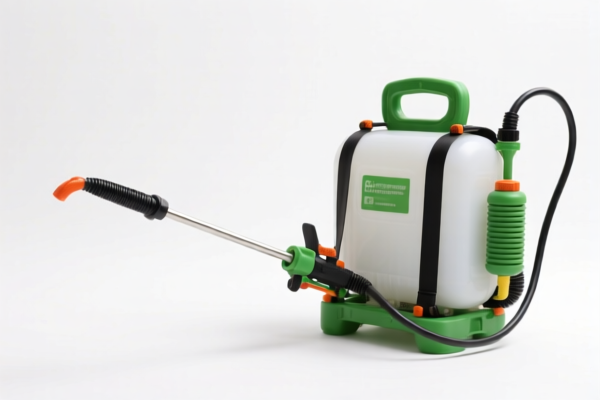
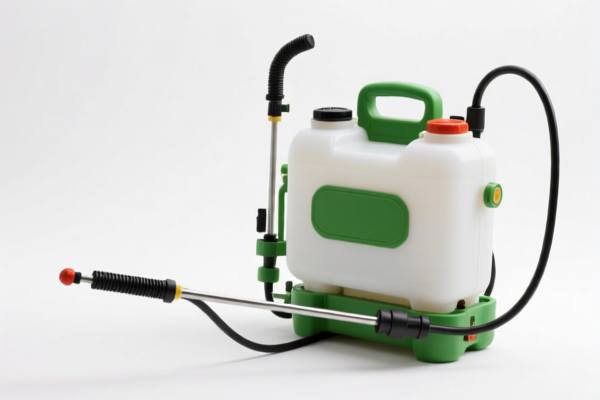
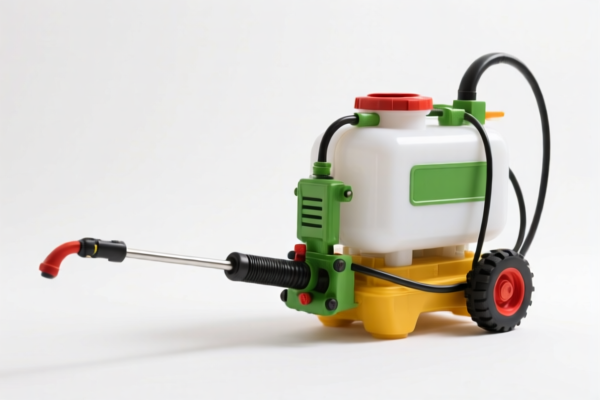

AI Analysis
🐀 Granular Rodenticide (Rodenticides in Granular Form)
🌐 HS Code Reference & Customs Clearance Guide | 2026 Latest Tariff Analysis | Specialized Compliance Strategy
📌 I. Product Definition & Classification: What exactly is "Granular Rodenticide"?
Granular Rodenticide refers to pest control products designed to eliminate rodents (rats, mice, etc.) in a granular form. These are typically bait stations or loose granules containing active ingredients (such as anticoagulants, neurotoxins, or zinc phosphide) mixed with an attractant carrier.
In international trade, the critical distinction lies in the packaging and form: 1. Retail Ready/Specialized Forms: Products put up in forms or packings specifically for retail sale (e.g., small bags, boxes, bait blocks) or as specialized articles (flypapers, treated bands). 2. Bulk/Industrial Preparations: Large-scale industrial preparations not intended for direct retail sale in small units.
⚠️ Key Distinction Point:
- If the product is packaged for retail sale with a net weight ≤ 300g per package, it falls under specific sub-headings.
- If the product is other preparations (not meeting the specific "retail ≤300g" criteria for certain sub-categories) or is a general "Other" rodenticide preparation, it falls under the residual "Other" category.
📦 II. HS Code Classification Details (Based on Provided Data)
Based on the provided <DATA>, the classification depends strictly on the packaging weight and form.
| HS Code | Product Description | Applicability | Net Weight Condition |
|---|---|---|---|
3808.61.50.00 |
Insecticides, rodenticides... in packings for retail sale; In packings of a net weight content not exceeding 300 g: Other | Retail-ready granular rodenticide (small bags/boxes) | ✅ ≤ 300g |
3808.99.95.01 |
Insecticides, rodenticides... Other: Other: Other: Other: Other | General industrial/wholesale rodenticide preparations OR retail packages > 300g (if not covered by 61.50) | ❌ > 300g or bulk |
🔍 Critical Reminder:
- HS Code3808.61.50.00is the primary target for small retail packages (e.g., consumer-grade rat poison bags).
- HS Code3808.99.95.01applies if the product does not fit the specific "retail ≤300g" definition or is classified as "Other" preparations.
- Do not split shipments: If you ship a mix, each item is judged by its own packing. However, for customs clearance, consistency is key.
💰 III. 2026 Latest Tariff Rate Breakdown (Detailed Tax Analysis)
✅ Applicable Region: Importing Country (Assuming based on data structure, likely a major market like China or similar based on "Additional Tariff" context)
✅ Product Type: Rodenticides (Chemical Products of Chapter 38)
✅ Effective Date: Current 2026 Tariff Schedule
🎯 1. 3808.61.50.00 —— Retail Packaged Granular Rodenticide (≤ 300g)
| Item | Content |
|---|---|
| Base Tariff | 0.0% |
| Additional Tariff | 0.0% |
| Total Tax Rate | 0.0% |
| Tax Calculation | CIF Value × 0% = $0 |
| Legal Basis | Chapter 38 Note 2 (Subheading Note 2) |
📌 Explanation:
- This category enjoys a zero-tariff rate.
- This is likely designed to facilitate the import of small-volume, retail-ready pest control products for consumer use.
- Advantage: Significantly lower cost compared to bulk/industrial categories.
🎯 2. 3808.99.95.01 —— Other Rodenticide Preparations (e.g., Bulk or >300g)
| Item | Content |
|---|---|
| Base Tariff | 5.0% |
| Additional Tariff | 25.0% |
| Total Tax Rate | 30.0% |
| Tax Calculation | CIF Value × 30% |
| Legal Basis | Chapter 38, Subheading 99, Note on Additional Tariffs |
📌 Explanation:
- Base 5%: Standard duty for "Other" chemical preparations.
- Additional 25%: Likely a retaliatory or safeguard tariff (common in 2026 trade contexts for specific chemical/agricultural products).
- Total 30%: A high tariff burden.
- Risk: If you misdeclare a large bag (e.g., 500g) as ≤300g, you risk penalties for undervaluation/misclassification.
🛠️ IV. Customs Clearance Practical Advice (Pitfall Avoidance)
✅ 1. Documentation Checklist (Non-Negotiable)
| Document | Mandatory? | Notes |
|---|---|---|
| ✅ Product Specification Sheet | ✔️ | Must list active ingredients, concentration, and formulation type (granular). |
| ✅ Safety Data Sheet (SDS) | ✔️ | Essential for chemical products. Must classify hazard level. |
| ✅ Retail Packaging Photo | ✔️ | Crucial: Must clearly show net weight ≤ 300g for HS 3808.61.50.00. |
| ✅ Import License (if required) | ✔️ | Many countries require licenses for pesticide/rodenticide imports. |
| ✅ Commercial Invoice | ✔️ | Clearly state "Granular Rodenticide" and correct HS Code. |
| ✅ Certificate of Origin | ✔️ | To verify country of origin for additional tariff application. |
✅ 2. Declaration Strategy (Key Tips)
🔥 “Weight Defines Code, Ingredients Define Safety!”
| Scenario | Correct HS Code | Wrong Action | Consequence |
|---|---|---|---|
| Retail bag, 200g | 3808.61.50.00 |
Declare as "Bulk Powder" | 30% Tax instead of 0%. Cost increase! |
| Retail box, 350g | 3808.99.95.01 |
Declare as "≤300g Retail" | Misclassification Penalty + Back Taxes |
| Bulk 25kg Bag | 3808.99.95.01 |
Declare as "Retail" | High Audit Risk, Potential Confiscation |
| Liquid Rodenticide | Not in Data | Must check other subheadings | Wrong HS → Delayed Clearance |
✅ 3. Special Handling & Compliance
| Situation | Recommendation |
|---|---|
| Mixed Shipments | Separate items by weight. Do not consolidate >300g items with ≤300g items under one line item. |
| Active Ingredients | Some rodenticides (e.g., Bromadiolone) are strictly controlled. Ensure no prohibited substances are present. |
| Packaging Integrity | Granules can spill. Ensure hermetic sealing. Customs may inspect for leakage (environmental hazard). |
| Labeling | Must include safety warnings, active ingredient %, and net weight in the destination language. |
🌍 V. Global Market Comparison (2026 Context)
| Region | Recommended HS Code | Estimated Duty | Key Requirement |
|---|---|---|---|
| 🇺🇸 USA | Likely 3808.94 or similar (varies) |
High (Often 27.5%+) | EPA Registration Mandatory |
| 🇪🇺 EU | 3808.91 or 3808.94 |
0-4% | CLP Labeling, EFSA Approval |
| 🇨🇳 China (Data Context) | 3808.61.50.00 (≤300g) |
0% | Pesticide Registration Certificate |
| 🇯🇵 Japan | 3808.99 |
~6% | Fertilizer Control Law / Pesticide Act |
📌 Conclusion:
- The zero-tariff rate for3808.61.50.00is a significant advantage only for small retail packages.
- For bulk/wholesale, the 30% total tax is a major cost driver.
- Regulatory Compliance (EPA/EFSA/local Pesticide Board) is often more critical than the HS Code itself.
📌 VI. Common Errors & Pitfalls (Lessons Learned)
❌ Error 1: Misdeclaring a 500g bag as "300g Retail" to avoid the 25% Additional Tariff.
👉 Result: Customs inspection finds actual weight → Fine + Back Payment + Credit Score Drop.
❌ Error 2: Using generic description "Pesticide" without specifying "Rodenticide" or "Granular".
👉 Result: Customs may flag for Chemical Safety Review, causing 7-14 day delay.
❌ Error 3: Ignoring the SDS requirement.
👉 Result: Rejection at border if hazard class is not properly documented.
✅ Correct Practice:
"Granular Rodenticide, Active Ingredient: [Name], Net Weight: 250g, Retail Packaging, HS: 3808.61.50.00"
🎯 VII. Conclusion: Precision in Classification Saves Money!
🎯 Remember the Golden Rule:
🔹 "Under 300g? You get 0%. Over 300g? You pay 30%!"
🔹 "Granular doesn't mean 'Bulk'. Packaging defines the duty!"
📌 Pro Tip:
If you are importing large volumes of granular rodenticide, consider:
1. Local Packaging: Import bulk raw material (check HS for raw chemicals) and package locally to retail size.
2. Advance Ruling: Apply for a Pre-classification Ruling with customs if packaging is ambiguous.
3. Regulatory Check: Ensure the product is registered in the destination country before shipping.
📣 Immediate Action:
📞 Verify Net Weight: Check every package.
📑 Prepare SDS: Have it ready for customs.
🚀 Declare Correctly: Use3808.61.50.00for ≤300g retail,3808.99.95.01for others.
✨ Smart Customs Clearance Starts with Accurate HS Codes!
💼 Don't let a 300g boundary cost you 30% in tariffs!
Customer Reviews
About HS Code Classification
The Harmonized System (HS) is an internationally standardized nomenclature developed by the World Customs Organization (WCO) to classify traded products. Over 200 countries use the HS system as the basis for customs tariffs, trade statistics, and import/export regulations.
Each HS code follows a hierarchical structure:
- Chapter (2 digits) — Broad category of goods (e.g., Chapter 84: Machinery and Mechanical Appliances)
- Heading (4 digits) — More specific grouping within the chapter
- Subheading (6 digits) — Internationally standardized breakdown, used by all WCO member countries
- National subdivisions (8-10 digits) — Country-specific extensions for further classification, such as US HTSUS 10-digit codes
Correct HS code classification is essential for smooth customs clearance, accurate duty payment, and compliance with trade regulations. Misclassification can lead to customs delays, overpayment of duties, or penalties.
When importing from CN to US, the applicable tariff rates may include:
- Most-Favored-Nation (MFN) rate — The standard duty rate applied to WTO members
- General rate — Applied to countries without trade agreements
- Trade remedy duties — Additional tariffs such as Section 301 (anti-dumping), Section 232 (national security), or countervailing duties
The information provided on this page is for reference purposes only. For official classification, please consult with your local customs authority or a licensed customs broker.