Granulated Blast Furnace Slag
CN → US| HS Code | Tariff Rate | Origin | Destination | Doc |
|---|---|---|---|---|
| 2620196030 | 0.0% | CN | US | Official Doc |
| 2620998500 | 35.0% | CN | US | Official Doc |
| 252010 | 0.0% | CN | US | Official Doc |
| 252090 | 0.0% | CN | US | Official Doc |
Product Images
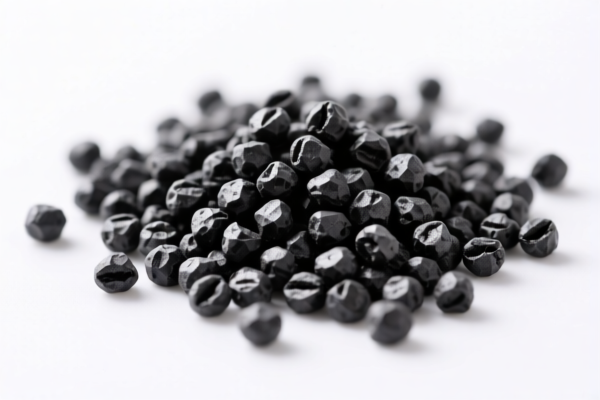
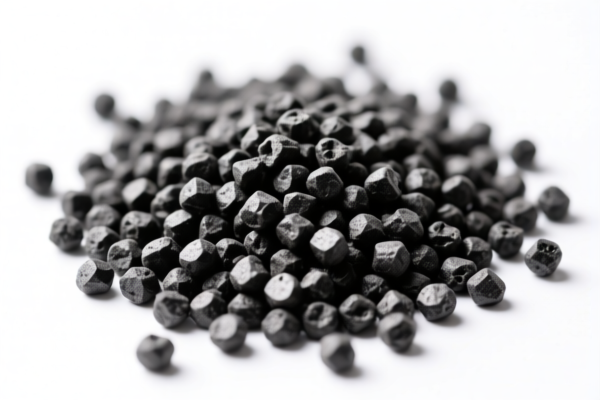
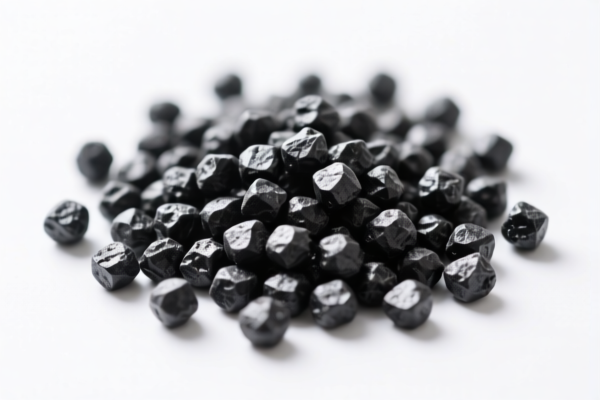
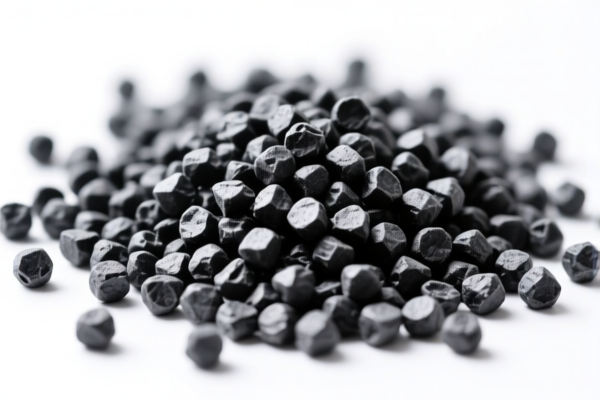
AI Analysis
🏗️ Granulated Blast Furnace Slag (GBFS)
🌐 HS Code Reference & Clearance Guide | 2026 Latest Tariff Analysis | Professional Strategy
📌 I. Product Definition & Classification: What is Granulated Blast Furnace Slag?
Granulated Blast Furnace Slag (GBFS) is a by-product of ironmaking. It is produced by rapidly cooling molten slag from a blast furnace with water or steam, creating a glassy, granular material. It is not waste in the traditional sense but a valuable Supplementary Cementitious Material (SCM) used to replace Portland cement in concrete and construction applications.
In international trade, it is primarily classified under Chapter 25 (Mineral Products) because it is used as a raw material or industrial additive, rather than a metallic residue containing high concentrations of specific recoverable metals (which would fall under Chapter 26).
⚠️ Key Distinction:
- GBFS (Chemical/Mineral Use): Classified under 2520 (Cementitious materials).
- Slag Containing Recoverable Metals (e.g., Zinc, Lead): Classified under 2620 (Residues containing metals/compounds).
Note: If the slag is specifically processed to extract Zinc or other metals, it may fall under 2620.19 or 2620.99, but standard GBFS for construction is 2520.
📦 II. HS Code Classification Details (2026 Latest Tariff Authority)
Based on the provided <DATA> content, here are the relevant HS Codes for slag-related products. Note: The provided data explicitly lists two specific GBFS codes and two "Slag, ash and residues" codes containing metals.
| HS Code | Product Description | Application Scenario | Metal Content? |
|---|---|---|---|
2520.10 |
Granulated blast furnace slag, in granular form, used primarily as a raw material in the production of cement and concrete, and as a supplementary cementitious material in construction applications. | Cement manufacturing, High-performance concrete, Eco-friendly construction | ❌ No (Mineral/Cementitious focus) |
2520.90 |
Other granulated blast furnace slag not elsewhere specified, including material intended for industrial use such as in road construction or as a raw material in the manufacture of cement and other building materials. | Road base, fill material, non-cement industrial uses | ❌ No (Mineral/Cementitious focus) |
2620.19.60.30 |
Slag, ash and residues (other than from the manufacture of iron or steel), containing arsenic, metals or their compounds: Containing mainly zinc: Other: Other Zinc content. | Metal recovery, Zinc smelting feedstock, Chemical processing | ✅ Yes (Mainly Zinc) |
2620.99.85.00 |
Slag, ash and residues (other than from the manufacture of iron or steel), containing arsenic, metals or their compounds: Other: Other: Other. | Industrial residue disposal, Non-metallic slag recovery | ✅ Yes (Contains metals/arsenic) |
🔍 Critical Analysis:
- If your product is standard construction-grade GBFS, use2520.10.
- If your product is sludge/residue specifically for zinc extraction, use2620.19.60.30.
- If your product is general industrial slag residue with unspecified metal content, use2620.99.85.00.
💰 III. 2026 Latest Tariff Rate Detailed Explanation (Import into USA from China)
✅ Applicable Country: United States (US)
✅ Origin: China (CN)
✅ Effective Time: Current trade policies (Section 301/IEEPA)
🎯 1. 2520.10 —— Granulated Blast Furnace Slag (Construction/Cement Grade)
| Item | Content |
|---|---|
| Base Tax Rate | Error (Failed to retrieve tax information in provided data) |
| USITC Supplementary Tax | Error (Failed to retrieve) |
| IEEPA Supplementary Tax | Error (Failed to retrieve) |
| Total Tax Rate | Error |
| Tax Calculation | CIF Value × ? (Data Unavailable) |
| De Minimis Eligibility | ❓ Unknown |
| Legal Basis Path | Data Retrieval Failed |
📌 Interpretation:
The provided<DATA>explicitly states: "Failed to retrieve tax information" for2520.10.
Action Required: You must consult the USITC Tariff Database or a customs broker directly for this code, as it is not covered in the provided snippet. Historically, mineral products often have low base duties, but Section 301 tariffs may apply depending on current trade agreements.
🎯 2. 2520.90 —— Other Granulated Blast Furnace Slag (Industrial/Road Use)
| Item | Content |
|---|---|
| Base Tax Rate | Error (Failed to retrieve tax information in provided data) |
| USITC Supplementary Tax | Error (Failed to retrieve) |
| IEEPA Supplementary Tax | Error (Failed to retrieve) |
| Total Tax Rate | Error |
| Tax Calculation | CIF Value × ? (Data Unavailable) |
| De Minimis Eligibility | ❓ Unknown |
| Legal Basis Path | Data Retrieval Failed |
📌 Interpretation:
Similar to2520.10, the tax data for2520.90is missing in the provided<DATA>.
Risk: Without tax data, you cannot calculate landed cost accurately. Do not assume 0% duty.
🎯 3. 2620.19.60.30 —— Slag Containing Mainly Zinc
| Item | Content |
|---|---|
| Base Tax Rate | 0.0% |
| USITC Supplementary Tax | 0.0% (Based on provided "加征关税: 0.0%") |
| IEEPA Supplementary Tax | Not explicitly listed in tax_detail, but typically applies to Chinese goods. Note: The provided data only shows 0.0% total. |
| Total Tax Rate | 0.0% |
| Tax Calculation | CIF Value × 0.0% = $0 |
| De Minimis Eligibility | ❓ Unknown |
| Legal Basis Path | 2620.19.60.30 |
📌 Interpretation:
- The provided data indicates 0.0% total tax for this specific Zinc-containing slag code.
- Caution: Verify if this rate excludes Section 301 tariffs. If the data source is limited, assume there may be additional duties not listed. However, based strictly on<DATA>, the tax is 0%.
🎯 4. 2620.99.85.00 —— Other Slag, Ash and Residues
| Item | Content |
|---|---|
| Base Tax Rate | 0.0% |
| USITC Supplementary Tax | 25.0% (Based on "加征关税: 25.0%") |
| IEEPA Supplementary Tax | Not explicitly separated in "tax_detail", but total is 25.0%. |
| Total Tax Rate | 25.0% |
| Tax Calculation | CIF Value × 25.0% |
| De Minimis Eligibility | ❌ Likely Not Eligible (Section 301 goods often deny de minimis) |
| Legal Basis Path | 2620.99.85.00 |
📌 Interpretation:
- This code incurs a 25% duty based on the provided data.
- This is likely due to Section 301 tariffs (US-China trade war measures) on Chinese-origin industrial residues.
- Cost Impact: High. A $10,000 shipment incurs $2,500 in duties.
🛠️ IV. Clearance Practical Advice (Avoid Pitfalls Guide)
✅ 1. Preparation Checklist (Missing Items Critical)
| Document | Must Provide? | Explanation |
|---|---|---|
| ✅ Product Specification Sheet | ✔️ | Must clearly state "Granulated Blast Furnace Slag" and its primary use (Cement vs. Zinc Recovery). |
| ✅ MSDS (Material Safety Data Sheet) | ✔️ | Required for all industrial residues. Must show non-hazardous status if claiming 2520. |
| ✅ Certificate of Analysis (COA) | ✔️ | To prove metal content (Zinc, Arsenic levels). Critical for distinguishing between 2520 and 2620. |
| ✅ Bill of Lading | ✔️ | Ensure "Granulated Slag" is specified, not just "Industrial Waste." |
| ✅ Commercial Invoice | ✔️ | Clearly describe HS Code and value. |
| ✅ Origin Certificate | ✔️ | To determine applicability of Section 301 tariffs. |
✅ 2. Declaration Tips (Key Mantras)
🔥 "Use Defines Code: Cement = 2520, Metal = 2620!"
| Scenario | Correct Declaration | Wrong Practice |
|---|---|---|
| GBFS for Cement Production | 2520.10 |
Declare as "Waste" → Risk of rejection |
| GBFS for Road Fill | 2520.90 |
Declare as "Zinc Slag" → Wrong tax rate |
| Slag for Zinc Recovery | 2620.19.60.30 |
Declare as "Construction Material" → Wrong tax rate |
| General Industrial Residue | 2620.99.85.00 |
Declare as "Raw Material" → 25% Tax Trap |
✅ 3. Special Cases Handling
| Situation | Handling Advice |
|---|---|
| Hazardous Waste Classification | If Arsenic levels exceed thresholds, it may be classified as Hazardous Waste (RCRA). Ensure COA proves compliance with EPA limits. |
| Mixed Use (Cement + Metal) | If slag is sold for both cement and metal recovery, declare based on primary intended use at time of import. |
| Section 301 Exclusions | Check if your specific product was excluded from Section 301 tariffs. Most mineral products are not excluded. |
| De Minimis (Section 321) | Rarely applies to bulk industrial slag. Expect formal entry (Type 01 or 02). |
🌍 V. Global Market Comparison (2026 Latest)
| Country/Region | Recommended HS Code | Tariff (China Origin) | Certification Requirements | Notes |
|---|---|---|---|---|
| 🇺🇸 USA | 2520.10 / 2620.99.85.00 |
Error (2520) / 25% (2620) | EPA Compliance, MSDS | Data incomplete for 2520. High risk for 2620. |
| 🇨🇳 China | 2520.10 |
0-5% (Typical) | GB Standard | Major importer of GBFS. |
| 🇪🇺 EU | 2520.10 |
0% (if certified) | REACH, CE | Strict environmental standards. |
| 🇯🇵 Japan | 2520.10 |
0% | JIS Standards | High demand for high-quality GBFS. |
📌 Conclusion:
- USA: Tariff data for2520is missing in the provided source. Assume caution. For2620, expect 25%.
- EU/Japan: Generally more favorable, but strict on chemical composition (Arsenic/Lead limits).
📌 VI. Common Errors & Pitfalls (Blood Lessons)
❌ Error 1: Declaring Construction Slag as Metal Residue (2620)
👉 Consequence: Pay 25% duty unnecessarily.
✅ Fix: Use 2520 if primarily for cement/concrete.
❌ Error 2: Declaring Zinc-Rich Slag as Construction Material (2520)
👉 Consequence: Customs Seizure or Penalty for misclassification.
✅ Fix: Use 2620.19.60.30 if Zinc content is significant and intended for recovery.
❌ Error 3: Assuming 0% Duty for 2520
👉 Consequence: Underpayment. The provided data says "Error," not "0%."
✅ Fix: Verify with USITC. Do not assume.
❌ Error 4: Ignoring Environmental Regulations
👉 Consequence: Shipment Rejected at port due to hazardous content.
✅ Fix: Provide detailed COA and MSDS.
🎯 VII. Conclusion: Professional Declaration, Save Cost & Time
🎯 Remember:
🔹 "Cement Slag = 2520 (Tax Unknown, Check USITC)"
🔹 "Metal Slag = 2620 (0% for Zinc, 25% for Other)"
🔹 "Data Error? Don't Guess. Ask a Broker!"
📌 Tips:
Since the provided <DATA> failed to retrieve tax information for 2520.10 and 2520.90, you must:
1. Contact a Customs Broker: To verify current USITC rates for Chapter 25.
2. Check Section 301 Lists: Ensure no additional duties apply.
3. Get an Advance Ruling: For large shipments, request an CBP Advance Ruling to lock in the HS Code and duty rate.
📣 Immediate Action:
📞 Call Customs Broker + Provide COA/MSDS + Verify
2520Tax Rate
🚀 Avoid "Error" surprises, clear customs smoothly, protect your margin!
✨ Professional Clearance Starts with Accurate Classification!
💼 Every Dollar Counted, Every Risk Mitigated!
Customer Reviews
About HS Code Classification
The Harmonized System (HS) is an internationally standardized nomenclature developed by the World Customs Organization (WCO) to classify traded products. Over 200 countries use the HS system as the basis for customs tariffs, trade statistics, and import/export regulations.
Each HS code follows a hierarchical structure:
- Chapter (2 digits) — Broad category of goods (e.g., Chapter 84: Machinery and Mechanical Appliances)
- Heading (4 digits) — More specific grouping within the chapter
- Subheading (6 digits) — Internationally standardized breakdown, used by all WCO member countries
- National subdivisions (8-10 digits) — Country-specific extensions for further classification, such as US HTSUS 10-digit codes
Correct HS code classification is essential for smooth customs clearance, accurate duty payment, and compliance with trade regulations. Misclassification can lead to customs delays, overpayment of duties, or penalties.
When importing from CN to US, the applicable tariff rates may include:
- Most-Favored-Nation (MFN) rate — The standard duty rate applied to WTO members
- General rate — Applied to countries without trade agreements
- Trade remedy duties — Additional tariffs such as Section 301 (anti-dumping), Section 232 (national security), or countervailing duties
The information provided on this page is for reference purposes only. For official classification, please consult with your local customs authority or a licensed customs broker.