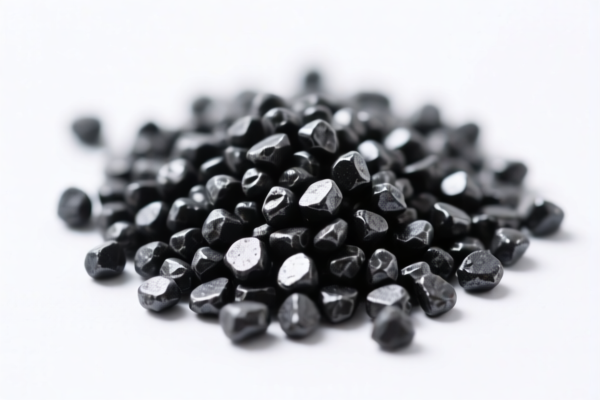
Granulated iron slag
CN → US| HS Code | Tariff Rate | Origin | Destination | Doc |
|---|---|---|---|---|
| 2621100000 | 17.5% | CN | US | Official Doc |
| 2621900000 | 35.0% | CN | US | Official Doc |
Product Images


AI Analysis
🏭 Granulated Iron Slag (Iron Slag)
🌐 HS Code Reference & Customs Clearance Guide | 2026 Latest Tariff Analysis | Professional Clearance Strategy
📌 I. Product Definition and Classification: What is "Granulated Iron Slag"?
Granulated iron slag is a by-product of steelmaking processes, specifically the non-metallic material separated from molten iron or steel. When the molten slag is rapidly quenched with water or steam, it forms granulated slag (also known as blast furnace slag or steel slag granules).
In international trade, this product is broadly categorized under Chapter 26 (Ores, slag and ash). The key distinction lies in its source: 1. Municipal Waste Incineration Ash: Ash/residue from burning household/urban waste. 2. Industrial Slag/Ash: Slag from metallurgical processes (iron/steel) or other industrial incineration.
⚠️ Critical Distinction:
- If the material is slag/ash from metallurgical processes (e.g., blast furnace, electric arc furnace) → It is NOT municipal waste incineration ash.
- If the material is slag/ash from incinerating municipal waste → It falls under 2621.10.00.00.
- Granulated Iron Slag typically falls under 2621.90.00.00 ("Other") because it is industrial slag, not municipal waste ash.
📦 II. HS Code Classification Details (2026 Latest Tariff Authority Comparison)
| HS Code | Product Description | Application Scenario | Classification Logic |
|---|---|---|---|
2621.10.00.00 |
Ash and residues from the incineration of municipal waste | Ash from city waste-to-energy plants | ❌ Not Applicable to Iron Slag |
2621.90.00.00 |
Other slag and ash (including seaweed ash) | Iron slag, steel slag, blast furnace slag, granulated slag | ✅ Correct for Granulated Iron Slag |
🔍 Key Reminder:
- Granulated Iron Slag is NOT "municipal waste ash." It is an industrial by-product of metal smelting.
- Therefore, it must be classified under 2621.90.00.00 ("Other"), NOT 2621.10.00.00.
- Misclassification as2621.10.00.00could lead to incorrect tariff application (see below).
💰 III. 2026 Latest Tariff Rate Details (Including Additional Taxes & Policy Add-ons)
✅ Applicable Country: United States (US)
✅ Origin: China (CN)
✅ Effective Date: From November 10, 2025 (including subsequent imports)
🎯 1. 2621.90.00.00 —— Other slag and ash (Including Granulated Iron Slag)
| Item | Content |
|---|---|
| Base Tariff Rate | 0.0% (ad valorem) |
| USITC Additional Tariff | +25.0% (Under USITC Footnote 9903.88.01) |
| IEEPA Additional Tariff | +7.5% (Note: See explanation below for 25% vs 7.5%) |
| Total Tax Rate | 25.0% |
| Tax Calculation | CIF Value × 25% |
| De Minimis Exemption | ❌ Not Available (deny_de_minimis) |
| Legal Basis Path | IEEPA:9903.01.25 → IEEPA:9903.01.24 → USITC:2621.90.00.00 → FOOTNOTE:9903.88.01 |
📌 Explanation:
- The USITC Additional Tariff of 25% applies to most industrial slags and ashes under 2621.90.00.00.
- Note on IEEPA Tax: According to the provided data, the tax detail for2621.90.00.00is "Base: 0.0%, Additional: 25.0%", totaling 25.0%. This implies that the total additional tariff (including any IEEPA components) is already 25% for this code under the current rules for Chinese origin.
- Contrast with 2621.10.00.00: That code has a total tax of 7.5% (Base 0% + Additional 7.5%).
- Conclusion: Granulated Iron Slag (industrial) is taxed at 25%, NOT 7.5%. The 7.5% rate is for municipal waste ash, which is a different product.⚠️ Critical Warning:
- Do NOT misclassify granulated iron slag as2621.10.00.00to save 17.5% (25% - 7.5%).
- Customs authorities will verify the source of the slag. If it is steel/iron slag, it must be2621.90.00.00.
- Misclassification can result in back taxes, penalties, and shipment delays.
🛠️ IV. Customs Clearance Practical Advice (Real-World Pitfall Guide)
✅ 1. Required Documentation Checklist (Non-Negotiable)
| Document | Must Provide | Notes |
|---|---|---|
| ✅ Product Specification Sheet | ✔️ | Must clearly state: "Granulated Iron Slag," "Blast Furnace Slag," or "Steel Slag." |
| ✅ Certificate of Origin | ✔️ | To confirm Chinese origin and apply correct tariffs. |
| ✅ MSDS (Material Safety Data Sheet) | ✔️ | Proves the material is non-hazardous (if applicable) and confirms composition. |
| ✅ Bill of Lading | ✔️ | Must match the HS Code 2621.90.00.00 and description. |
| ✅ Commercial Invoice | ✔️ | Clearly describe as "Granulated Iron Slag for Industrial Use," NOT "Municipal Waste Ash." |
| ✅ Test Report | ✔️ | Chemical composition analysis (e.g., CaO, SiO2, MgO content) to prove it is metallurgical slag. |
✅ 2. Declaration Tips (Key Mnemonic)
🔥 "Industrial Slag = 2621.90 (25%), Municipal Ash = 2621.10 (7.5%)! Do Not Mix!"
| Scenario | Correct HS Code | Incorrect HS Code | Consequence |
|---|---|---|---|
| Granulated Iron Slag (from steel mill) | 2621.90.00.00 |
2621.10.00.00 |
25% Tax vs 7.5% → Underpayment Penalty! |
| Ash from Waste-to-Energy Plant | 2621.10.00.00 |
2621.90.00.00 |
Overpayment, but less risk than misdeclaration |
| Seaweed Ash (Kelp) | 2621.90.00.00 |
2621.10.00.00 |
Correct if declared as "Other" |
| Mixed Waste Slag | Varies | High Risk | Requires detailed source documentation |
✅ 3. Special Cases Handling
| Scenario | Handling Advice |
|---|---|
| Granulated Slag Used for Cement | Declare as raw material for cement production. Provide end-use declaration if applicable. |
| Slag Containing Heavy Metals | Ensure MSDS confirms non-hazardous status. If hazardous, different HS Code and EPA regulations may apply. |
| Blast Furnace Slag vs. Electric Arc Furnace Slag | Both are 2621.90.00.00. No difference in tariff, but specify in documentation to avoid confusion. |
| Import for Construction (Aggregate) | Still 2621.90.00.00. No special duty reduction for construction use unless specified by other laws. |
🌍 V. Global Market Comparison (2026 Latest)
| Country/Region | Recommended HS Code | Tariff | Certification Requirements | Notes |
|---|---|---|---|---|
| 🇺🇸 United States | 2621.90.00.00 |
25% | MSDS, Certificate of Origin | High tariff due to trade policies. |
| 🇨🇳 China | 2621.90.00.00 |
0% | N/A | Zero duty for imports into China. |
| 🇪🇺 European Union | 2621.90.00.00 |
0% | REACH, SDS | Generally duty-free for industrial slag. |
| 🇬🇧 United Kingdom | 2621.90.00.00 |
0% | UK REACH | Post-Brexit, aligned with EU standards. |
| 🇦🇺 Australia | 2621.90.00.00 |
5% | None | Moderate tariff. |
| 🇯🇵 Japan | 2621.90.00.00 |
0% | JIS Standard | Often duty-free for industrial use. |
📌 Conclusion:
- US Market: 25% tariff is a significant cost. Ensure accurate classification to avoid penalties.
- Other Markets: Mostly 0% or low tariffs. US is the only market with the high additional tariff for this category.
📌 VI. Common Errors & Pitfall Guide (Lessons Learned)
❌ Error 1: Declaring "Granulated Iron Slag" as "Municipal Waste Ash" (2621.10.00.00) to pay 7.5% instead of 25%.
👉 Consequence: Customs will reject based on MSDS and product description. Back taxes + 25% penalty for underpayment.
❌ Error 2: Providing only a generic "Slag" description without specifying "Iron/Steel" or "Granulated."
👉 Consequence: Customs may classify under a default "Other" code with higher scrutiny or additional duties.
❌ Error 3: Ignoring MSDS for granulated slag.
👉 Consequence: If slag is considered hazardous due to heavy metals, it may require EPA approval and different HS Code.
✅ Correct Practice:
"Granulated Iron Slag, Blast Furnace By-product, Non-Hazardous, Chemical Composition: CaO 40%, SiO2 35%, for Industrial Aggregates, Origin: China"
🎯 VII. Conclusion: Precise Classification Saves Money!
🎯 Remember the Rule:
🔹 "Iron Slag = Industrial = 2621.90 (25%)"
🔹 "Municipal Ash = Waste = 2621.10 (7.5%)"
🔹 "Do Not Confuse! 17.5% Difference is Too High!"
📌 Tip:
If your granulated iron slag is produced in Vietnam, Thailand, or Malaysia, you may still be subject to US tariffs if the substantial transformation did not occur in those countries. Chinese origin triggers the 25% duty.
📣 Immediate Action:
📞 Confirm Origin: Ensure your supplier provides a Certificate of Origin.
📄 Prepare MSDS: Obtain a non-hazardous MSDS to prove it is industrial slag, not municipal waste.
🚀 Declare Correctly: Use 2621.90.00.00 to avoid costly penalties.
✨ Professional Clearance Starts with Accurate Classification!
💼 Your Cost Control Depends on Correct HS Code!
Customer Reviews
About HS Code Classification
The Harmonized System (HS) is an internationally standardized nomenclature developed by the World Customs Organization (WCO) to classify traded products. Over 200 countries use the HS system as the basis for customs tariffs, trade statistics, and import/export regulations.
Each HS code follows a hierarchical structure:
- Chapter (2 digits) — Broad category of goods (e.g., Chapter 84: Machinery and Mechanical Appliances)
- Heading (4 digits) — More specific grouping within the chapter
- Subheading (6 digits) — Internationally standardized breakdown, used by all WCO member countries
- National subdivisions (8-10 digits) — Country-specific extensions for further classification, such as US HTSUS 10-digit codes
Correct HS code classification is essential for smooth customs clearance, accurate duty payment, and compliance with trade regulations. Misclassification can lead to customs delays, overpayment of duties, or penalties.
When importing from CN to US, the applicable tariff rates may include:
- Most-Favored-Nation (MFN) rate — The standard duty rate applied to WTO members
- General rate — Applied to countries without trade agreements
- Trade remedy duties — Additional tariffs such as Section 301 (anti-dumping), Section 232 (national security), or countervailing duties
The information provided on this page is for reference purposes only. For official classification, please consult with your local customs authority or a licensed customs broker.