Graphite Corrosion Resistant Material
CN → US| HS Code | Tariff Rate | Origin | Destination | Doc |
|---|---|---|---|---|
| 3801105010 | 35.0% | CN | US | Official Doc |
| 6815110000 | 35.0% | CN | US | Official Doc |
| 6909195095 | 39.0% | CN | US | Official Doc |
| 3801105090 | 35.0% | CN | US | Official Doc |
| 6815190000 | 35.0% | CN | US | Official Doc |
Product Images
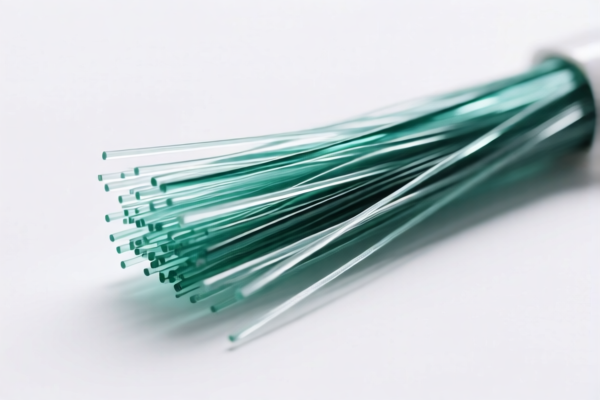
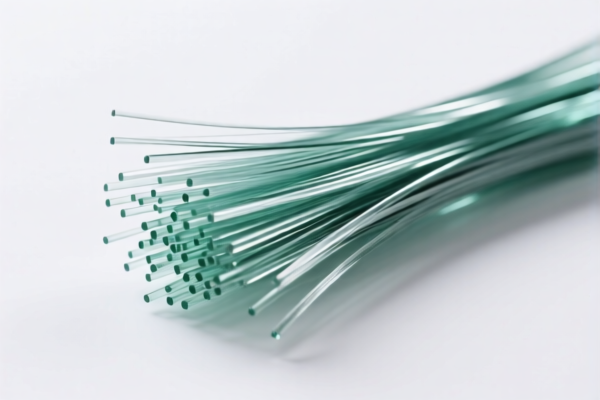
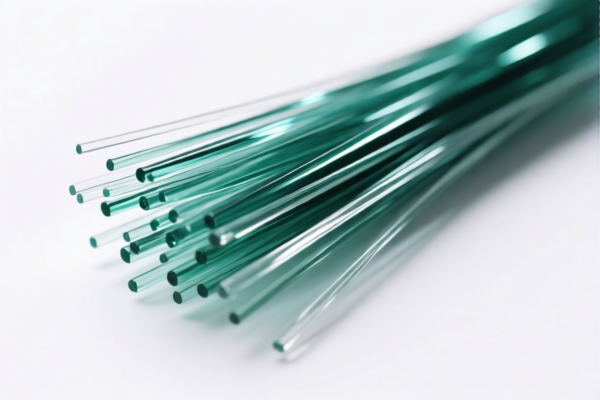
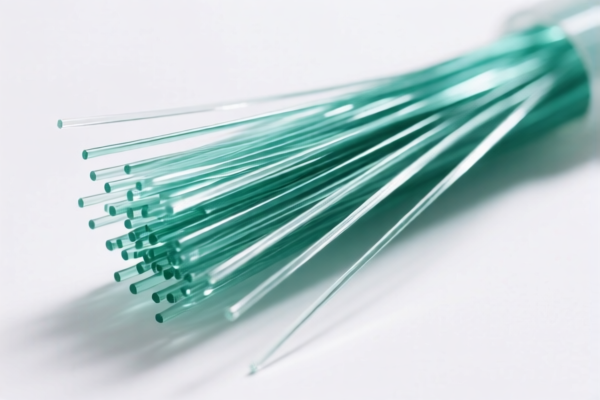
AI Analysis
🛡️ Graphite Corrosion Resistant Material (GCRM)
🌐 HS Code Reference & Customs Clearance Guide | 2026 Latest Tariff Analysis | Specialized Customs Strategy 📌 I. Product Definition & Classification: Do You Truly Understand "Graphite Corrosion Resistant Material"?
Graphite Corrosion Resistant Materials are critical components in chemical processing, semiconductor manufacturing, and high-corrosion industrial environments. In international trade, these materials are not monolithic; their classification depends entirely on material origin (artificial vs. natural/graphite products) and physical form (ceramic vs. non-electrical carbon products).
International customs authorities scrutinize these items heavily due to their dual-use potential and high-value supply chains. Misclassification can lead to severe penalties, delays, or total seizure.
⚠️ Key Distinction Point:
- Artificial Graphite Products (synthetic, high purity, specific mechanical properties) → Classified under 3801 or 6815 depending on specific sub-heading nuances.
- Ceramic-Infused or Carbon-Ceramic Composites → If the matrix is ceramic, it falls under 6909.
- General Graphite/Carbon Articles (non-electrical) → Classified under 6815.
📦 II. HS Code Classification Matrix (2026 Latest Tariff Authority Cross-Check)
Based on the provided data, here are the four potential classifications for Graphite Corrosion Resistant Material, along with their specific rationales and tax implications.
| HS Code | Product Description & Rationale | Tax Rate | Key Classification Logic |
|---|---|---|---|
| 3801.10.50.10 | Graphite base corrosion-resistant material, made of artificial graphite, unspecified form, classified under other headings. | 35.0% | Rationale: Specifically targets "artificial graphite" where the form is not explicitly defined as a standard electrode or brush, falling into residual categories. |
| 6815.11.00.00 | Graphite base corrosion-resistant material, material is graphite articles, fits the classification of other graphite or carbon articles for non-electrical uses. | 35.0% | Rationale: Broad category for graphite/carbon articles not elsewhere specified. Assumes standard graphite composition without ceramic binding. |
| 6909.19.50.95 | Graphite base corrosion-resistant material, inferred as ceramic material scope, purpose fits ceramic articles for chemical or technical uses. | 39.0% | Rationale: Highest Risk. If the material contains a ceramic binder or matrix (graphite-ceramic composite), it is classified as ceramic. This carries a higher base duty. |
| 3801.10.50.90 | Graphite base corrosion-resistant material, made of artificial graphite, unspecified specific form, classified under other headings. | 35.0% | Rationale: Similar to 3801.10.50.10, but falls into the "Other" residual bucket for artificial graphite articles not otherwise specified. |
| 6815.19.00.00 | Graphite base corrosion-resistant material, material is graphite, falls under the scope of non-electrical carbon articles. | 35.0% | Rationale: General residual heading for graphite articles not electrical, not specifically "artificial" in the strict 3801 sense, or broader carbon articles. |
🔍 Critical Warning:
- The Ceramic Trap: If your material is a graphite-ceramic composite (common in high-temp corrosion resistance), declaring it under 6815 or 3801 is incorrect and risky. It must be declared under 6909 (Ceramics), which triggers a higher duty (39%).
- Artificial vs. Natural: "Artificial Graphite" (synthetic) often falls under 3801, while generic "Graphite Articles" fall under 6815. Precision in the commercial invoice is vital.
💰 III. 2026 Latest Tariff Rate Breakdown (Including Surcharges & Policy Add-ons)
✅ Applicable Country: United States (US)
✅ Origin: China (CN)
✅ Effective Date: November 10, 2025 (and subsequent imports)
All classifications below share a common tariff structure due to US-China trade policies.
🎯 1. Classification under 3801.10.50.10 & 3801.10.50.90 (Artificial Graphite)
| Item | Detail |
|---|---|
| Base Duty Rate | 0.0% (Ad Valorem) |
| Section 301 Surcharge | +25.0% (USITC Footnote) |
| IEEPA Surcharge | +10.0% (Specific to China-origin goods under Section 122) |
| Total Effective Duty | 35.0% |
| Calculation Base | CIF Value × 35% |
| De Minimis Exemption | ❌ NOT APPLICABLE (deny_de_minimis) |
| Legal Authority Chain | IEEPA:9903.01.25 → USITC:3801.10.50.10 → FOOTNOTE:301-Surcharges |
📌 Explanation:
- Despite a 0% base duty, the 35% total effective rate makes these goods expensive to import.
- Section 122 Tariff (10%): This is a specific surcharge applied to certain industrial materials from China.
- Section 301 Tariff (25%): The standard high tariff on Chinese industrial goods.
🎯 2. Classification under 6815.11.00.00 & 6815.19.00.00 (Other Graphite/Carbon Articles)
| Item | Detail |
|---|---|
| Base Duty Rate | 0.0% |
| Section 301 Surcharge | +25.0% |
| IEEPA Surcharge | +10.0% |
| Total Effective Duty | 35.0% |
| Calculation Base | CIF Value × 35% |
| De Minimis Exemption | ❌ NOT APPLICABLE |
| Legal Authority Chain | IEEPA:9903.01.25 → USITC:6815.1x.xx → FOOTNOTE:301-Surcharges |
📌 Note:
- These rates apply to standard graphite corrosion-resistant plates, blocks, or seals.
- Crucial: Ensure the description explicitly states "Artificial Graphite" if using 3801, or "Graphite/Carbon Articles" if using 6815. Ambiguity leads to customs delays.
🎯 3. Classification under 6909.19.50.95 (Ceramic-Based Composite)
| Item | Detail |
|---|---|
| Base Duty Rate | 4.0% |
| Section 301 Surcharge | +25.0% |
| IEEPA Surcharge | +10.0% |
| Total Effective Duty | 39.0% |
| Calculation Base | CIF Value × 39% |
| De Minimis Exemption | ❌ NOT APPLICABLE |
| Legal Authority Chain | IEEPA:9903.01.25 → USITC:6909.19.50.95 → FOOTNOTE:301-Surcharges |
📌 Critical Alert:
- If your product is a graphite-ceramic composite, it MUST be classified under 6909.
- Trying to classify it under 6815 or 3801 to save 4% is fraudulent misclassification and can result in penalties, audits, and cargo holds.
- The 39% rate reflects the higher base duty for ceramics, which are not always duty-free.
🛠️ IV. Customs Clearance Operational Advice (Practical Pitfall Avoidance Guide)
✅ 1. Essential Documentation Checklist (Non-Negotiable)
| Document | Required | Description |
|---|---|---|
| ✅ Product Spec Sheet | ✔️ | Must detail: Material Composition (e.g., "95% Artificial Graphite, 5% Ceramic Binder"), Purity, Density, and Corrosion Resistance Rating. |
| ✅ Technical Drawings | ✔️ | Show the physical form. Is it a block, sheet, or complex shape? This helps determine if it’s "unspecified" (3801) or "standard article" (6815). |
| ✅ Product Photos | ✔️ | Clear images showing the texture (graphite vs. ceramic glaze), labeling, and any certifications. |
| ✅ Third-Party Test Report | ✔️ | Crucial for 6909: If claiming ceramic content, provide a material analysis report proving the ceramic matrix. If pure graphite, provide purity reports. |
| ✅ Commercial Invoice | ✔️ | Must explicitly state: "Graphite Corrosion Resistant Material, [Artificial/Composite], HS Code: [Insert Code]". Avoid vague terms like "Industrial Part." |
| ✅ Packing List | ✔️ | Ensure net/gross weights are accurate. Discrepancies trigger inspections. |
✅ 2. Declaration Strategy (Key Mantras)
🔥 "Material Defines HS, Form Defines Subheading, Origin Defines Tax!"
| Scenario | Correct Declaration | Incorrect Practice |
|---|---|---|
| Pure Artificial Graphite Block | HS: 3801.10.50.10 Desc: "Artificial Graphite Corrosion Resistant Block" |
Declaring as "Carbon Fiber" or "Ceramic" → 35% risk or penalty |
| Graphite-Ceramic Composite Plate | HS: 6909.19.50.95 Desc: "Ceramic-Graphite Composite Corrosion Resistant Plate" |
Declaring as "Graphite" to avoid 39% → High Audit Risk |
| Generic Graphite Seal | HS: 6815.11.00.00 Desc: "Graphite Seal Ring, Non-Electrical" |
Using vague "Corrosion Resistant Material" → Customs may reclassify |
| Unspecified Artificial Graphite Part | HS: 3801.10.50.90 Desc: "Artificial Graphite Part, Unclassified" |
Over-specifying as "Electrode" (if not electrical) → Wrong HS |
✅ 3. Special Handling for High-Risk Items
| Situation | Handling Advice |
|---|---|
| Dual-Use Concerns | Graphite can be used in nuclear/defense applications. Provide a End-Use Declaration stating it is for chemical/industrial corrosion resistance only. |
| Composite Materials | If the ratio of graphite to ceramic is borderline, consult a customs broker before shipment. Misclassification of 6909 vs. 6815 is a top audit trigger. |
| OEM Custom Parts | Provide the original design file and customer specification. Proves the item is not a standard commodity but a specialized industrial part. |
| Small Sample Shipments | NO DE MINIMIS. Even small shipments are subject to the 35-39% duty. Do not mark as "Sample, No Value." |
🌍 V. Global Market Comparison (2026 Context)
| Country/Region | Recommended HS Code | Total Duty (China Origin) | Key Certification | Note |
|---|---|---|---|---|
| 🇺🇸 USA | 6815 / 3801 / 6909 |
35% - 39% | None specifically for graphite, but FCC/UL if electronic component | Highest Barrier. 301 + IEEPA tariffs apply. |
| 🇨🇳 China | 6815 / 3801 |
0% - 5% | RoHS (if applicable) | No surcharges. Ideal for domestic processing. |
| 🇪🇺 EU | 6815 / 6909 |
0% - 4% | REACH / RoHS | Lower base duties. No Section 301 equivalent. |
| 🇯🇵 Japan | 6815 |
0% - 3% | JIS Standards | Generally favorable, but strict quality checks. |
📌 Conclusion:
- USA is the most challenging market for Graphite Corrosion Resistant Materials due to the 35-39% effective duty.
- EU and Japan offer significantly better tax environments, but quality certifications (REACH, JIS) are stringent.
📌 VI. Common Mistakes & Pitfall Guide (Lessons Learned)
❌ Mistake 1: Declaring a Graphite-Ceramic Composite under 6815.11.00.00 to save 4%.
👉 Consequence: Customs requests a material analysis. If found guilty, penalty = 50-100% of duty owed + cargo hold.
❌ Mistake 2: Using vague descriptions like "Industrial Graphite" without specifying Artificial vs. Natural or Composite.
👉 Consequence: Customs may assign the highest possible duty (39%) or classify as "Other Chemical Products" with unpredictable rates.
❌ Mistake 3: Assuming small shipments are tax-free (De Minimis).
👉 Consequence: All shipments under 3801/6815/6909 from China are subject to duty. No $800 exemption.
✅ Correct Approach:
"Graphite Corrosion Resistant Plate, Artificial Graphite, Non-Electrical, Model GCR-2026, For Chemical Processing Use Only, HS Code: 3801.10.50.10"
🎯 VII. Conclusion: Precision in Classification Saves Money
🎯 Remember the Mantra:
🔹 "Ceramic Matrix = 39%, Pure Graphite = 35%, Vague Description = Audit!"
🔹 "301 + IEEPA = 35% Minimum. Don't Gamble."
🔹 "Specify 'Artificial' for 3801, 'Other' for 6815, 'Ceramic' for 6909."
📌 Pro Tip:
If your product is originating from Vietnam, Malaysia, or Thailand (after substantial transformation), you may apply for IEEPA Exemption, potentially reducing the duty to 0-5%.
Action Plan:
1. Obtain a Certificate of Origin from the non-China country.
2. Request a Pre-Ruling (Advance Ruling) from US Customs (CBP) if the material composition is complex.
3. Ensure your supplier provides a Detailed Bill of Materials (BOM).
📣 Immediate Action Required:
📞 Contact a licensed customs broker before shipping.
📄 Provide full technical specs and material composition.
🚀 Ensure Compliance, Avoid Seizure, Maximize Profit Margin!
✨ Professional Classification Starts Here!
💼 Every Percent of Duty Saved is Pure Profit!
Customer Reviews
About HS Code Classification
The Harmonized System (HS) is an internationally standardized nomenclature developed by the World Customs Organization (WCO) to classify traded products. Over 200 countries use the HS system as the basis for customs tariffs, trade statistics, and import/export regulations.
Each HS code follows a hierarchical structure:
- Chapter (2 digits) — Broad category of goods (e.g., Chapter 84: Machinery and Mechanical Appliances)
- Heading (4 digits) — More specific grouping within the chapter
- Subheading (6 digits) — Internationally standardized breakdown, used by all WCO member countries
- National subdivisions (8-10 digits) — Country-specific extensions for further classification, such as US HTSUS 10-digit codes
Correct HS code classification is essential for smooth customs clearance, accurate duty payment, and compliance with trade regulations. Misclassification can lead to customs delays, overpayment of duties, or penalties.
When importing from CN to US, the applicable tariff rates may include:
- Most-Favored-Nation (MFN) rate — The standard duty rate applied to WTO members
- General rate — Applied to countries without trade agreements
- Trade remedy duties — Additional tariffs such as Section 301 (anti-dumping), Section 232 (national security), or countervailing duties
The information provided on this page is for reference purposes only. For official classification, please consult with your local customs authority or a licensed customs broker.