Graphite Heat Sink
CN → US| HS Code | Tariff Rate | Origin | Destination | Doc |
|---|---|---|---|---|
| 3801105010 | 35.0% | CN | US | Official Doc |
| 3801105090 | 35.0% | CN | US | Official Doc |
| 6815190000 | 35.0% | CN | US | Official Doc |
| 3926909989 | 22.8% | CN | US | Official Doc |
| 6815130000 | 10.0% | CN | US | Official Doc |
Product Images
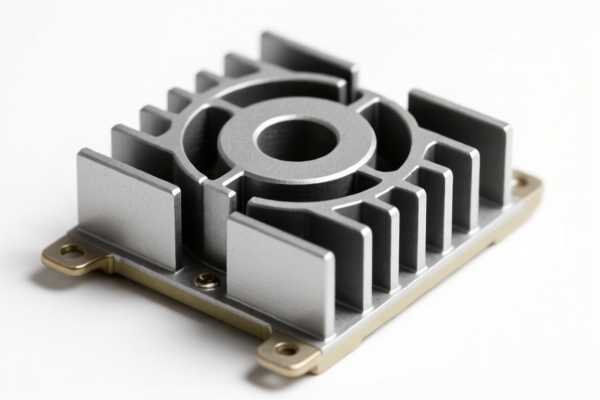
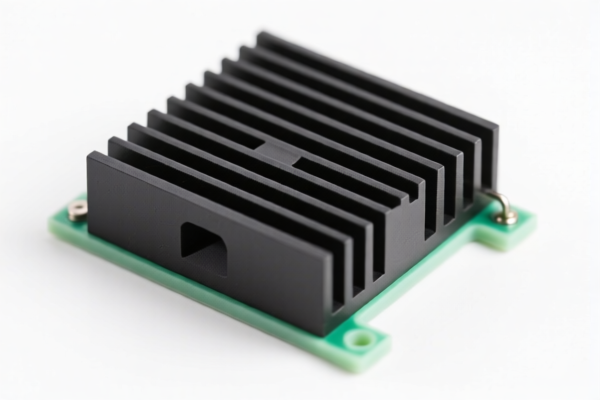
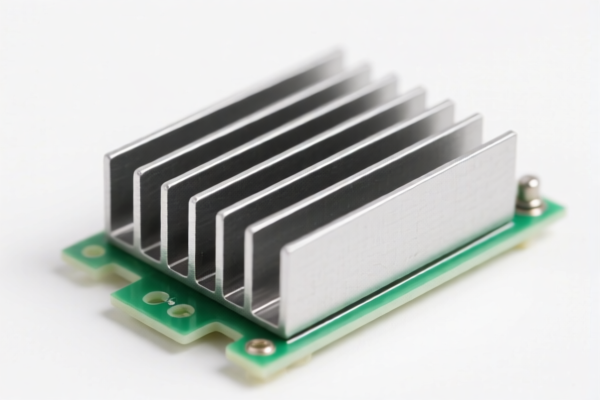
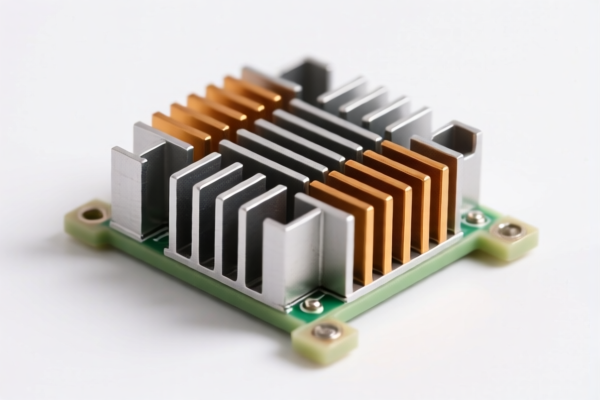
AI Analysis
🖥️ Graphite Heat Sink (Graphite Thermal Dissipation Sheet)
🌐 HS Code Reference & Customs Clearance Guide | 2026 Latest Tariff Analysis | Professional Clearance Strategy
📌 I. Product Definition & Classification: Do You Really Understand "Graphite Heat Sink"?
Graphite heat sinks, also known as graphite thermal dissipation sheets or artificial graphite heat spreaders, are high-performance thermal management components. Due to their unique layered structure and isotropic thermal conductivity, they are widely used in consumer electronics (smartphones, tablets), automotive electronics, LED lighting, and 5G base stations.
In international trade, the classification of "Graphite Heat Sink" is highly controversial because it depends on: 1. Material Composition: Natural graphite vs. artificial (synthetic) graphite. 2. Form and Function: Pure sheet vs. composite with other materials. 3. Intended Use: General thermal dissipation vs. specific structural component.
⚠️ Key Classification Point:
- If it is pure artificial graphite in sheet form, it often falls under Carbon Articles (Chapter 68) or Prepared Graphite (Chapter 38).
- If it is combined with resins or other binders, it may fall under Plastics/Resins (Chapter 39) or Other Carbon Articles (Chapter 38/68).
- Misclassification Risk: Declaring as "Plastic Part" when it is "Carbon" can lead to severe penalties due to different tax rates and anti-dumping measures.
📦 II. HS Code Classification Details (2026 Latest Tariff Authority Comparison)
Based on the provided data, here are the 5 possible HS Codes for "Graphite Heat Sink" with their corresponding tax implications:
| HS Code | Product Description | Applicable Scenario | Material/State | Total Tax Rate (CN Origin → US) |
|---|---|---|---|---|
3801.10.50.10 |
Graphite Heat Sink, matching graphite form and heat sink use | Artificial graphite sheets, specific thermal application | Artificial Graphite | 35.0% |
3801.10.50.90 |
Graphite Heat Sink, compliant with artificial graphite material and spare parts category | General artificial graphite thermal parts | Artificial Graphite | 35.0% |
6815.19.00.00 |
Graphite Heat Sink, belonging to carbon products or mineral material products | Mineral-based or composite carbon/graphite articles | Carbon/Mineral Composite | 35.0% |
3926.90.99.89 |
Graphite Heat Sink, classified as other articles of non-metallic materials (Plastic Resin) | Graphite-resin composite, plastic-bound graphite | Resin/Plastic Composite | 22.8% |
6815.13.00.00 |
Graphite Heat Sink, compliant with carbon/graphite articles and sheet form | Pure artificial graphite sheet, standard form | Pure Artificial Graphite | 10.0% |
🔍 Key Insight:
- Most Favorable Rate:6815.13.00.00(10% Total Tax). This is the best-case scenario if the product is purely artificial graphite in sheet form.
- Highest Risk Rate:3801.10.50.10,3801.10.50.90, and6815.19.00.00all carry a 35% total tax. This is due to the combination of Section 301 tariffs (25%) and IEEPA tariffs (10%) on top of base rates.
- Middle Ground:3926.90.99.89(22.8%) applies if the graphite is bound in a resin/plastic matrix, changing its chapter from 68 to 39.
💰 III. 2026 Latest Tariff Rate Details (Including Surcharges, Policy Additions)
✅ Applicable Country: United States (US)
✅ Origin: China (CN)
✅ Effective Date: Post-November 2025 (Current Trade War Era)
🎯 1. 3801.10.50.10 & 3801.10.50.90 —— Prepared Graphite / Artificial Graphite
| Item | Content |
|---|---|
| Base Tariff | 0.0% (ad valorem) |
| Section 301 Surcharge | +25.0% (From USITC Footnote 9903.88.01 / Section 301 List 4A) |
| IEEPA Surcharge | +10.0% (Targeting Chinese/HK products, effective since 2025-11-10) |
| Total Tax Rate | 35.0% |
| Tax Calculation | CIF Value × 35% |
| De Minimis Exemption | ❌ Not Eligible (deny_de_minimis) |
| Legal Basis Path | IEEPA:9903.01.25 → USITC:3801.10.50.10 → FOOTNOTE:9903.88.01 |
📌 Explanation:
- "Section 301 Surcharge 25%": From the "Section 301 Tariffs" on Chinese goods.
- "IEEPA 10%": From the "International Emergency Economic Powers Act" additional tariffs.
- Total 35%: This is a high tariff category. Even though the base tariff is 0%, the surcharges make it expensive.
🎯 2. 6815.19.00.00 —— Other Carbon Articles / Mineral Products
| Item | Content |
|---|---|
| Base Tariff | 0.0% |
| Section 301 Surcharge | +25.0% |
| IEEPA Surcharge | +10.0% |
| Total Tax Rate | 35.0% |
| Tax Calculation | CIF × 35% |
| De Minimis Exemption | ❌ Not Eligible |
| Legal Basis Path | IEEPA:9903.01.24 → USITC:6815.19.00.00 → FOOTNOTE:9903.88.01 |
📌 Note:
- If the graphite heat sink is made from natural graphite or mineral composites, it may fall here. The tax impact is identical to the artificial graphite category above.
🎯 3. 3926.90.99.89 —— Other Articles of Plastic/Resin
| Item | Content |
|---|---|
| Base Tariff | 5.3% |
| Section 301 Surcharge | +7.5% |
| IEEPA Surcharge | +10.0% |
| Total Tax Rate | 22.8% |
| Tax Calculation | CIF × 22.8% |
| De Minimis Exemption | ❌ Not Eligible |
| Legal Basis Path | IEEPA:9901.25 → USITC:3926.90.99.89 |
📌 Critical Warning:
- This rate is lower (22.8%) than the carbon categories. However, it requires the product to be plastic-bound.
- If customs determine your "plastic-bound" graphite is primarily graphite, they may reclassify it to Chapter 38 or 68, leading to back taxes + penalties.
🎯 4. 6815.13.00.00 —— Artificial Graphite Articles (Best Case)
| Item | Content |
|---|---|
| Base Tariff | 0.0% |
| Section 301 Surcharge | 0.0% |
| IEEPA Surcharge | +10.0% |
| Total Tax Rate | 10.0% |
| Tax Calculation | CIF × 10% |
| De Minimis Exemption | ❌ Not Eligible |
| Legal Basis Path | IEEPA:9903.01.25 → USITC:6815.13.00.00 |
📌 Why is this better?
-6815.13.00.00refers to Artificial Graphite in specific forms (blocks, rods, sheets) that are not prepared for technical uses covered in 3801.
- No Section 301 Surcharge (25%) applies here! This is a massive savings (25% less than other categories).
- Condition: Must be pure artificial graphite without additional binders that would push it to Chapter 39 or 38.
🛠️ IV. Customs Clearance Practical Advice (Real-World Pitfall Guide)
✅ 1. Preparation Checklist (No Exceptions)
| Document | Mandatory? | Description |
|---|---|---|
| ✅ Technical Data Sheet | ✔️ | Must specify: Material (% Artificial vs. Natural), Density, Thermal Conductivity, Form (Sheet/Block). |
| ✅ Composition Analysis | ✔️ | Lab report proving % of Graphite vs. Binders (Resin/Oil). Critical for Chapter 38 vs. 68 vs. 39. |
| ✅ Product Photos | ✔️ | Clear shots of the sheet, edges, and any packaging labeling. |
| ✅ Commercial Invoice | ✔️ | Description must be precise: "Artificial Graphite Heat Dissipation Sheet, Model XYZ." |
| ✅ Packing List | ✔️ | Show weight, dimensions, and quantity. |
| ✅ Certificate of Origin | ✔️ | If claiming preferential rates (not applicable here for China-US, but required for record). |
✅ 2. Declaration Strategy (Key Mnemonic)
🔥 "Pure Graphite Low Tariff, Composite High Tariff, Don't Split!"
| Scenario | Correct Declaration | Wrong Practice |
|---|---|---|
| Pure Artificial Graphite Sheet | 6815.13.00.00 (10%) |
Declaring as 3801... → 35% |
| Graphite Resin Composite | 3926.90.99.89 (22.8%) |
Declaring as 6815... → Risk of audit & back taxes |
| Natural Graphite Sheet | 6815.19.00.00 (35%) |
Declaring as 6815.13.00.00 → False declaration |
| Graphite Heat Sink with Adhesive/Backing | 3926... or 3801... depending on primary material |
Splitting into "Graphite" + "Adhesive" → Complex valuation, high risk |
✅ 3. Special Handling
| Situation | Advice |
|---|---|
| OEM Custom Shapes | Provide CAD drawings and material specs. Ensure "Artificial Graphite" is declared if applicable to qualify for 6815.13.00.00. |
| Composite Materials | If the product is >50% resin by volume/value, consider 3926.... If >50% graphite, consider 6815... or 3801.... |
| Pre-Ruling (Advance Ruling) | Highly Recommended. Apply for a Binding Tariff Information (BTI) or US CBP Advance Ruling before shipping. This locks in the HS Code and prevents disputes at customs. |
| De Minimis ($800) | ❌ Not Applicable. All HS Codes listed above are not eligible for the $800 de minimis exemption for China-origin goods. Full formal entry is required. |
🌍 V. Global Market Customs Comparison (2026 Latest)
| Country/Region | Recommended HS Code | Tariff (China Origin) | Certification Requirements | Notes |
|---|---|---|---|---|
| 🇺🇸 USA | 6815.13.00.00 |
10.0% | FCC (if active electronics), RoHS | Best Option. Avoid 3801 (35%) if possible. |
| 🇪🇺 EU | 6815.13.00.00 |
0% - 2.5% | CE, RoHS, REACH | Low base tariff, but strict REACH compliance for carbon black/graphite. |
| 🇨🇳 China | 6815.13.00.00 |
0% - 5% | CCC (if applicable) | Domestic trade benefits from low base rates. |
| 🇯🇵 Japan | 6815.13.00.00 |
0% - 2.5% | PSE, JIS | Strict quality standards for electronic components. |
📌 Conclusion:
- USA is the most challenging market due to Section 301 and IEEPA tariffs.
- Optimization Strategy: Ensure your product qualifies for6815.13.00.00(10%) by using pure artificial graphite without resin binders that would shift it to Chapter 39.
- Avoid3801(35%) unless necessary (e.g., specific prepared graphite powders or non-sheet forms).
📌 VI. Common Errors & Pitfalls (Blood Lessons)
❌ Error 1: Declaring "Graphite Heat Sink" as "Plastic Part" (3926) without resin content proof
👉 Consequence: Customs may reclassify to 3801 or 6815, imposing 25-35% tariffs + penalties.
❌ Error 2: Using "Graphite" description but declaring under "Carbon Fiber" (6801)
👉 Consequence: Wrong HS Code, leading to customs seizure or delayed clearance.
❌ Error 3: Assuming De Minimis ($800) applies
👉 Consequence: Failed entry. All these HS codes require formal commercial entry with bond.
❌ Error 4: Not disclosing "Artificial vs. Natural" graphite
👉 Consequence: Misclassification. Natural graphite (6815.19.00.00) has 35% tax, while Artificial (6815.13.00.00) has 10%.
✅ Correct Practice:
"Artificial Graphite Thermal Dissipation Sheet, Pure Carbon, No Resin Binder, Model XYZ, Used in Electronics Cooling, 100% Artificial Graphite Content"
🎯 VII. Conclusion: Professional Declaration, Cost Savings, Efficiency!
🎯 Remember the Mnemonic:
🔹 "Pure Artificial Graphite: 10% (6815.13), The Sweet Spot!"
🔹 "Composite/Resin: 22.8% (3926.90), Be Careful!"
🔹 "Prepared/Other Carbon: 35% (3801/6815.19), Avoid if Possible!"
📌 Pro Tip:
- If your graphite heat sink is manufactured in Vietnam, Malaysia, or Thailand, you may qualify for zero Section 301 tariffs.
- Apply for Advance Ruling (CBP Ruling Letter) before shipping. This provides legal certainty on the HS Code and tax rate.
- Document your material composition meticulously. Lab reports are your best defense.
📣 Immediate Action:
📞 Contact a professional customs broker.
📤 Provide Material Safety Data Sheet (MSDS) and Composition Report.
🚀 Optimize your supply chain to qualify for6815.13.00.00(10% Tax) to maximize profit margins.
✨ Professional Customs Clearance Starts with Accurate Classification!
💼 Every percentage point in tariff is your bottom line!
Customer Reviews
About HS Code Classification
The Harmonized System (HS) is an internationally standardized nomenclature developed by the World Customs Organization (WCO) to classify traded products. Over 200 countries use the HS system as the basis for customs tariffs, trade statistics, and import/export regulations.
Each HS code follows a hierarchical structure:
- Chapter (2 digits) — Broad category of goods (e.g., Chapter 84: Machinery and Mechanical Appliances)
- Heading (4 digits) — More specific grouping within the chapter
- Subheading (6 digits) — Internationally standardized breakdown, used by all WCO member countries
- National subdivisions (8-10 digits) — Country-specific extensions for further classification, such as US HTSUS 10-digit codes
Correct HS code classification is essential for smooth customs clearance, accurate duty payment, and compliance with trade regulations. Misclassification can lead to customs delays, overpayment of duties, or penalties.
When importing from CN to US, the applicable tariff rates may include:
- Most-Favored-Nation (MFN) rate — The standard duty rate applied to WTO members
- General rate — Applied to countries without trade agreements
- Trade remedy duties — Additional tariffs such as Section 301 (anti-dumping), Section 232 (national security), or countervailing duties
The information provided on this page is for reference purposes only. For official classification, please consult with your local customs authority or a licensed customs broker.