Graphite Rubber Composite Material
CN → US| HS Code | Tariff Rate | Origin | Destination | Doc |
|---|---|---|---|---|
| 3801105090 | 35.0% | CN | US | Official Doc |
| 6815190000 | 35.0% | CN | US | Official Doc |
| 3801105010 | 35.0% | CN | US | Official Doc |
| 6815130000 | 35.0% | CN | US | Official Doc |
| 3921905050 | 39.8% | CN | US | Official Doc |
Product Images
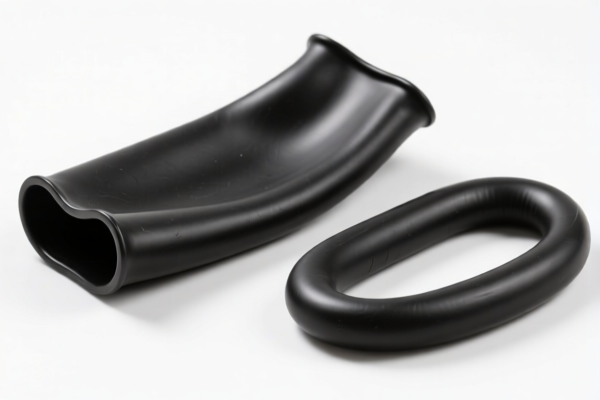
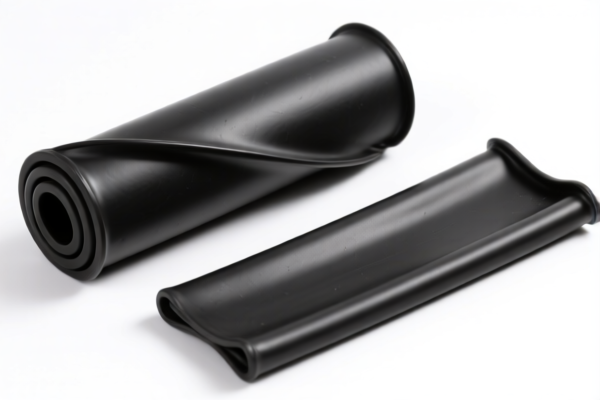
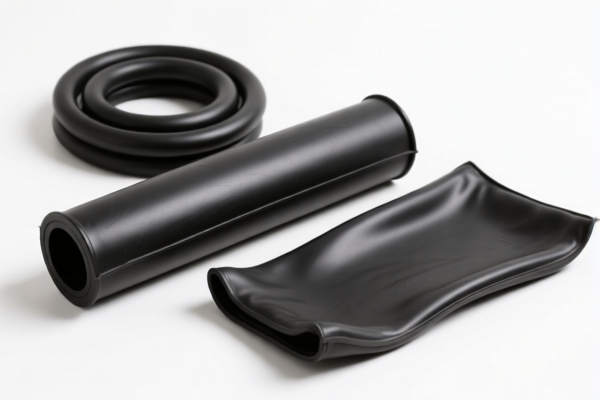
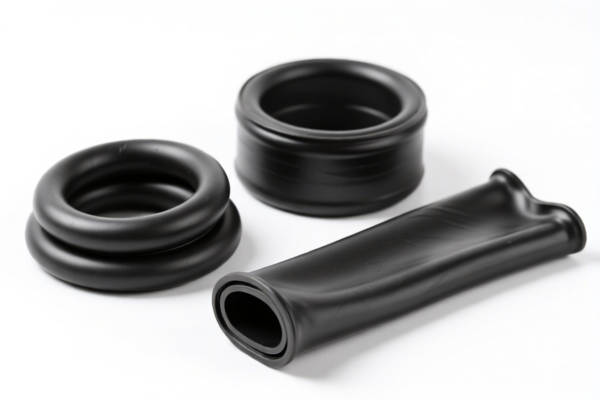
AI Analysis
🔥 Graphite Rubber Composite Material: HS Code Classification & Customs Clearance Guide (2026)
🌐 HS Code Reference & Customs Strategy | 2026 Latest Tariff Analysis | Professional Clearance Protocol
📌 I. Product Definition & Classification: Do You Really Understand "Graphite Rubber Composite"?
Graphite Rubber Composite Material is a specialized engineered material combining graphite’s thermal conductivity, lubricity, and electrical properties with rubber’s elasticity, sealing capability, and resilience. It is widely used in: - High-temperature seals and gaskets - Thermal management components (e.g., heat sinks, thermal pads) - Electrical grounding strips - Industrial sliding bearings - EMI/RFI shielding components
In international trade, classification depends on material composition ratio, primary function, and physical form. The key question is: Is it primarily a rubber product or a carbon/graphite product?
⚠️ Critical Distinction:
- If graphite is the functional filler and rubber is the matrix/binder → Often classified under Chapter 39 (Plastics/Rubber) or Chapter 68 (Carbon/Graphite制品)
- If graphite content is high and provides primary structural/functional properties → May fall under Chapter 38 (Miscellaneous Chemical Products) or Chapter 68 (Non-electrical carbon/graphite articles)
- No single HS Code fits all – selection depends on specific formulation, graphite type, and application.
📦 II. HS Code Classification Details (2026 Official Tariff Matching)
Based on the provided data, here are the five possible HS Codes with detailed explanations:
| HS Code | Product Description | Application Scenario | Material Match | Tax Rate (China to US) |
|---|---|---|---|---|
3801.10.50.90 |
Graphite composite, synthetic graphite category, catch-all for other unspecified forms | Graphite rubber sheets, films, or irregular shapes not specifically listed elsewhere | ✅ Graphite-based; rubber matrix accepted as composite | 35.0% |
6815.19.00.00 |
Graphite composite, non-electrical carbon/graphite articles | Thermal pads, gaskets, seals where graphite provides thermal/lubricity function | ✅ Explicit graphite material; no electrical use | 35.0% |
3801.10.50.10 |
Graphite composite, synthetic graphite, ambiguous use – catch-all principle | Graphite-rubber blends where primary use is not clearly defined | ✅ Graphite material matches; rubber binder acceptable | 35.0% |
6815.13.00.00 |
Graphite composite, carbon/graphite articles, other shapes | Graphite rubber boards, blocks, or molded parts without electrical function | ✅ Graphite matches; composite form compatible | 35.0% |
3921.90.50.50 |
Graphite fiber-reinforced composite, plastic/resin matrix | Graphite-reinforced rubber sheets if classified under plastic/rubber composites | ✅ Rubber/plastic matrix with graphite reinforcement | 39.8% |
🔍 Key Insight:
- HS Codes3801.10.50.90,6815.19.00.00,3801.10.50.10, and6815.13.00.00all carry a 35.0% total tax rate
-3921.90.50.50carries a 39.8% total tax rate – slightly higher due to plastic/rubber composite classification
- All codes exclude de minimis exemption for shipments from China
💰 III. 2026 Tariff Rate Breakdown (Detailed Tax Clause Explanation)
✅ Applicable Country: United States (US)
✅ Origin: China (CN)
✅ Effective Date: November 10, 2025 onwards
🎯 1. 3801.10.50.90 / 3801.10.50.10 – Synthetic Graphite Composites (Catch-All)
| Item | Detail |
|---|---|
| Base Tariff | 0% (ad valorem) |
| USITC Additional Tariff (Section 301) | +25% |
| IEEPA Additional Tariff (China-specific) | +10% |
| Total Tariff | 35.0% |
| Calculation Basis | CIF Value × 35% |
| De Minimis Exemption? | ❌ Denied (deny_de_minimis) |
| Legal Path | IEEPA:9903.01.25 → IEEPA:9903.01.24 → USITC:3801.10.50.90 → FOOTNOTE:9903.88.01 |
📌 Explanation:
- 25% Section 301 tariff applies to most Chinese-manufactured goods, including graphite composites;
- 10% IEEPA tariff specifically targets Chinese-origin products under emergency economic powers;
- No de minimis exemption means even small shipments are fully taxed.
🎯 2. 6815.19.00.00 / 6815.13.00.00 – Non-Electrical Carbon/Graphite Articles
| Item | Detail |
|---|---|
| Base Tariff | 0% |
| USITC Additional Tariff (Section 301) | +25% |
| IEEPA Additional Tariff (China-specific) | +10% |
| Total Tariff | 35.0% |
| Calculation Basis | CIF Value × 35% |
| De Minimis Exemption? | ❌ Denied |
| Legal Path | IEEPA:9903.01.25 → IEEPA:9903.01.24 → USITC:6815.19.00.00 → FOOTNOTE:9903.88.01 |
📌 Note:
- These codes cover non-electrical graphite/carbon products;
- Rubber binders do not disqualify the product from Chapter 68 if graphite is functionally dominant;
- Thermal greases, gaskets, seals, and pads commonly fall here.
🎯 3. 3921.90.50.50 – Plastic/Rubber Composite Articles
| Item | Detail |
|---|---|
| Base Tariff | 4.8% |
| USITC Additional Tariff (Section 301) | +25% |
| IEEPA Additional Tariff (China-specific) | +10% |
| Total Tariff | 39.8% |
| Calculation Basis | CIF Value × 39.8% |
| De Minimis Exemption? | ❌ Denied |
| Legal Path | IEEPA:9903.01.25 → IEEPA:9903.01.24 → USITC:3921.90.50.50 → FOOTNOTE:9903.88.01 |
📌 Warning:
- This code is applied if customs determines the rubber/plastic matrix is dominant rather than graphite;
- Higher total rate (39.8%) makes this less favorable;
- Avoid this classification unless graphite content is minimal.
🛠️ IV. Customs Clearance Operational Advice (Practical Pitfall Avoidance)
✅ 1. Required Documentation Checklist
| Document | Required | Purpose |
|---|---|---|
| ✅ Product Specification Sheet | ✔️ | Graphite content %, rubber type, thermal conductivity, tensile strength |
| ✅ Material Safety Data Sheet (MSDS) | ✔️ | Confirms non-hazardous nature |
| ✅ Third-Party Test Report | ✔️ | ASTM D395 (rubber hardness), thermal conductivity test |
| ✅ Product Photos (including label) | ✔️ | Shows form factor, thickness, marking |
| ✅ Commercial Invoice | ✔️ | Clear description: “Graphite-Rubber Composite Sheet, 30% Graphite by weight” |
| ✅ Packing List | ✔️ | Weight, dimensions, quantity |
| ✅ Certificate of Origin (CO) | ✔️ | Mandatory for Section 301 compliance |
✅ 2. Declaration Best Practices
🔥 Golden Rule:
“Be specific, be consistent, be prepared!”
| Scenario | Correct Declaration | Incorrect Declaration |
|---|---|---|
| Graphite rubber sheet, 30% graphite | “Graphite-Rubber Composite Sheet, Graphite Content: 30%, for Thermal Sealing” | “Rubber Sheet” → Misclassification Risk |
| Graphite rubber gasket | “Non-Electrical Graphite Composite Gasket, HS 6815.19.00.00” | “Gasket” → Customs may reclassify |
| Graphite thermal pad | “Graphite-Rubber Thermal Conductive Pad, 5W/mK” | “Thermal Pad” → Too vague |
📌 Tip: Always include graphite percentage, primary function, and HS Code reference in the commercial invoice.
✅ 3. Special Scenarios
| Scenario | Handling Advice |
|---|---|
| OEM Custom Composites | Provide customer specs + formulation ratio; avoid generic names |
| Mixed Shipments (Graphite Rubber + Other Items) | Declare separately; do not bundle |
| Low-Graphite Content (<10%) | May be classified under Chapter 40 (Rubber); consult customs broker |
| High-Graphite Content (>50%) | Strong case for Chapter 68 or 38; provide test reports |
| Used for Military/Aerospace | May require additional export controls (EAR/ITAR); declare explicitly |
🌍 V. Global Market Comparison (2026 Latest)
| Country/Region | Recommended HS Code | Tariff Rate | Certification | Notes |
|---|---|---|---|---|
| 🇺🇸 United States | 6815.19.00.00 or 3801.10.50.90 |
35.0% | None specific | IEEPA + Section 301 apply |
| 🇨🇳 China | 6815.19.00.00 |
~0–5% | None | No additional tariffs |
| 🇪🇺 European Union | 6815.19.00.00 |
0–2% (if compliant) | REACH, RoHS | No Section 301 equivalent |
| 🇬🇧 United Kingdom | 6815.19.00.00 |
0–2% | UKCA, RoHS | Post-Brexit rules apply |
| 🇯🇵 Japan | 6815.19.00.00 |
0–2.5% | PSE (if electrical) | Low tariffs |
📌 Conclusion:
- US is the most tariff-intensive market for graphite rubber composites from China;
- EU, UK, Japan, and China have significantly lower or zero tariffs;
- Consider third-country manufacturing (e.g., Vietnam, Thailand) for US-bound shipments to avoid 35% tariff.
📌 VI. Common Errors & Pitfall Guide (Lessons Learned)
❌ Error 1: Declaring as “Rubber Sheet” without graphite specification
👉 Consequence: Customs reclassifies → 35% tariff + penalties
❌ Error 2: Bundling graphite rubber with non-composite items
👉 Consequence: Mixed classification → Audit risk, delays
❌ Error 3: Ignoring IEEPA Section 301 applicability
👉 Consequence: Underpayment → Back taxes + interest
❌ Error 4: Using vague terms like “Composite Material” without details
👉 Consequence: Customs requests additional info → Clearance delay 7–14 days
✅ Correct Practice:
“Graphite-Rubber Composite Sheet, 30% Synthetic Graphite by Weight, Thermal Conductivity 5 W/mK, For High-Temperature Sealing, HS Code 6815.19.00.00”
🎯 VII. Conclusion: Precise Classification Saves Costs
🎯 Key Takeaways:
🔹 “Graphite dominates → Chapter 68/38 → 35% tariff”
🔹 “Rubber dominates → Chapter 39 → 39.8% tariff”
🔹 “No de minimis → All shipments taxed”
🔹 “Be specific → Avoid reclassification”📌 Pro Tip:
If your graphite rubber composite originates from Vietnam, Thailand, or Mexico, you may qualify for Section 301 exemptions → Tariff drops to 0–5%.
Consider pre-ruling (Advance Ruling) from US CBP to lock in favorable classification.
📣 Immediate Action Steps:
📞 Contact a licensed customs broker + Provide material specs + Apply for HS Code Advance Ruling
🚀 Ensure smooth clearance, avoid 35% surprise, maximize profit margins!
✨ Professional clearance starts with precise classification!
💼 Every percentage point matters – get it right the first time!
Customer Reviews
About HS Code Classification
The Harmonized System (HS) is an internationally standardized nomenclature developed by the World Customs Organization (WCO) to classify traded products. Over 200 countries use the HS system as the basis for customs tariffs, trade statistics, and import/export regulations.
Each HS code follows a hierarchical structure:
- Chapter (2 digits) — Broad category of goods (e.g., Chapter 84: Machinery and Mechanical Appliances)
- Heading (4 digits) — More specific grouping within the chapter
- Subheading (6 digits) — Internationally standardized breakdown, used by all WCO member countries
- National subdivisions (8-10 digits) — Country-specific extensions for further classification, such as US HTSUS 10-digit codes
Correct HS code classification is essential for smooth customs clearance, accurate duty payment, and compliance with trade regulations. Misclassification can lead to customs delays, overpayment of duties, or penalties.
When importing from CN to US, the applicable tariff rates may include:
- Most-Favored-Nation (MFN) rate — The standard duty rate applied to WTO members
- General rate — Applied to countries without trade agreements
- Trade remedy duties — Additional tariffs such as Section 301 (anti-dumping), Section 232 (national security), or countervailing duties
The information provided on this page is for reference purposes only. For official classification, please consult with your local customs authority or a licensed customs broker.