Graphite Substrate Flakes
CN → US| HS Code | Tariff Rate | Origin | Destination | Doc |
|---|---|---|---|---|
| 6815190000 | 35.0% | CN | US | Official Doc |
| 6815130000 | 35.0% | CN | US | Official Doc |
Product Images

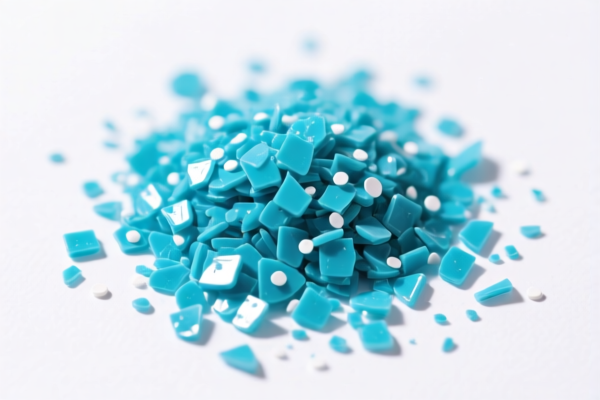
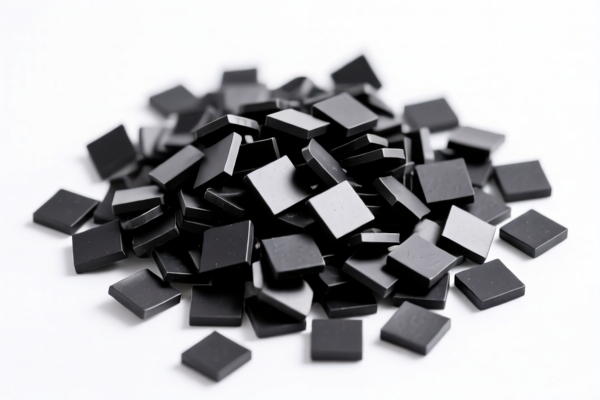
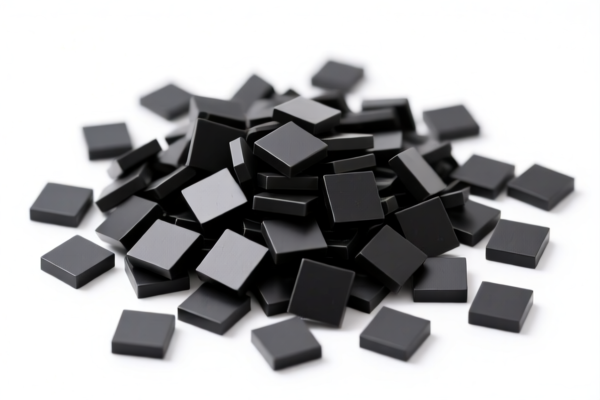
AI Analysis
🖋️ Graphite Substrate Flakes (Carbon Articles)
🌐 HS Code Reference & Customs Clearance Guide | 2026 Latest Tariff Analysis | Professional Customs Strategy
📌 Part 1: Product Definition & Classification: Do You Truly Understand "Graphite Substrate Flakes"?
Graphite Substrate Flakes, often referred to in international trade under the broader category of Carbon Fibers or Articles of Graphite/Other Carbon, are specialized mineral-based materials. They are not mere "stones" but engineered or processed carbonaceous substances used in high-tech applications such as semiconductors, battery anodes, thermal management systems, and nuclear energy.
In the context of the provided data, these products fall under Chapter 68 (Articles of Stone or of Other Mineral Substances), specifically focusing on Carbon Fibers and Other Articles of Graphite/Other Carbon for Non-Electrical Uses.
⚠️ Key Distinction:
- If the product is pure carbon fibers intended for non-electrical structural or composite uses → It falls under 6815.13.00.00 or 6815.19.00.00 depending on form.
- If it is processed graphite flakes used as a substrate (non-electrical application) → It is classified as "Other articles of graphite or other carbon for non-electrical uses."
📦 Part 2: HS Code Classification Details (2026 Latest Tariff Authority Comparison)
Based on the provided data, there are two primary HS Codes applicable to these carbon/graphite articles:
| HS Code | Product Description | Application Scenario | Electrical vs. Non-Electrical |
|---|---|---|---|
6815.13.00.00 |
Other articles of carbon fibers | Carbon fiber mats, preforms, or shaped components for non-electrical structural/composite use. | ❌ Non-Electrical |
6815.19.00.00 |
Other (under Carbon Fibers & Other Graphite Articles) | Other graphite flakes, substrates, or carbon articles not specified elsewhere (e.g., pure graphite blocks, seals, or specialized substrates). | ❌ Non-Electrical |
🔍 Critical Note:
- Both codes explicitly state "for non-electrical uses."
- If these flakes/substrates are used for electrical purposes (e.g., electrodes, brushes), they would be classified under Chapter 85 (Electrical Machinery), which has different tax treatments.
- Do NOT misclassify as general "Graphite" (e.g., 3801 or 6815.99) if they meet the definition of Carbon Fibers or Graphite Articles under 6815.1x.
💰 Part 3: 2026 Latest Tariff Rate Breakdown (Including Additional Taxes & Policy Add-ons)
✅ Applicable Country: United States (US)
✅ Origin: China (CN) (Note: Tax details reflect typical US-China trade context based on the 25% additional duty mentioned)
✅ Effective Date: Current trade rules (as per data)
🎯 1. 6815.13.00.00 —— Other Articles of Carbon Fibers
| Item | Content |
|---|---|
| Base Duty Rate | 0.0% (ad valorem) |
| Additional Duty (Section 301 / Retaliatory) | +25.0% |
| Total Duty Rate | 25.0% |
| Tax Calculation | CIF Value × 25% |
| De Minimis Exemption | ❌ Not Eligible (Section 301 duties generally apply to all commercial shipments) |
| Legal Basis Path | HTSUS:6815.13.00.00 → USITC:Footnote 9903.88.01 (or equivalent Section 301 listing) |
📌 Explanation:
- The 0% base rate reflects the fact that carbon fibers are often considered high-tech industrial materials with low baseline tariffs.
- The 25% additional duty is imposed due to trade tensions (e.g., Section 301 tariffs on Chinese carbon/graphite products).
- Total Cost Impact: 25% is significant for high-value carbon substrates.
🎯 2. 6815.19.00.00 —— Other (Graphite/Carbon Articles)
| Item | Content |
|---|---|
| Base Duty Rate | 0.0% (ad valorem) |
| Additional Duty (Section 301 / Retaliatory) | +25.0% |
| Total Duty Rate | 25.0% |
| Tax Calculation | CIF Value × 25% |
| De Minimis Exemption | ❌ Not Eligible |
| Legal Basis Path | HTSUS:6815.19.00.00 → USITC:Footnote 9903.88.01 |
📌 Note:
- Even if the product is a "flake" or "substrate" and not a "fiber," it still incurs the same 25% additional duty.
- There is no base tariff, so the entire tax burden comes from the additional duty.
🛠️ Part 4: Customs Clearance Practical Advice (Real-World Pitfall Guide)
✅ 1. Preparation Checklist (Essential Documents)
| Document | Mandatory? | Purpose |
|---|---|---|
| ✅ Product Specification Sheet | ✔️ | Must clearly state: "Non-Electrical Use," composition (e.g., 99% Carbon), form (flakes, sheets, etc.). |
| ✅ Material Safety Data Sheet (MSDS) | ✔️ | Confirms material is non-hazardous and defines physical properties. |
| ✅ Usage Declaration | ✔️ | Explicitly state: "For Non-Electrical Uses Only." If used for electrodes, reclassify! |
| ✅ Commercial Invoice | ✔️ | Must match HS Code description exactly. Avoid vague terms like "Graphite Powder." |
| ✅ Photos of Product & Packaging | ✔️ | Show flake structure, labeling, and any branding. |
| ✅ Certificate of Origin | ✔️ | To prove origin and apply correct trade remedy duties. |
✅ 2. Declaration Tips (Key Phrases for Accuracy)
🔥 "Be Specific: Carbon Fiber vs. Graphite Flake"
| Scenario | Correct Declaration | Wrong Declaration |
|---|---|---|
| Carbon fiber preforms/mats | "Carbon Fiber Articles, Non-Electrical Use, HS 6815.13.00.00" |
"Graphite Flakes" |
| Graphite substrate sheets | "Graphite Articles, Non-Electrical Use, HS 6815.19.00.00" |
"Mineral Stones" |
| Electrical electrodes | NOT COVERED IN DATA | Must use Chapter 85 codes (e.g., 8545) |
📌 Warning:
- If you declare "Graphite Flakes" but the customs officer determines they are Carbon Fibers, they may reclassify to 6815.13.00.00 or 6815.19.00.00 anyway.
- If they determine the use is Electrical, the classification changes entirely, potentially leading to different duty rates and import restrictions.
✅ 3. Special Cases & Handling
| Case | Handling Advice |
|---|---|
| Mixed Shipment (Fibers + Flakes) | Declare separately. Do not combine under one HS Code unless identical. |
| High-Purity Graphite (>99%) | Emphasize purity in specs. May qualify for specific sub-headings. |
| Used in Battery Manufacturing | If non-electrical (e.g., substrate before coating), use 6815.19.00.00. If electrode, use 8545. |
| Carbon Fiber Composite Preforms | Use 6815.13.00.00. |
🌍 Part 5: Global Market Comparison (2026 Latest)
| Country/Region | Recommended HS Code | Duty Rate | Notes |
|---|---|---|---|
| 🇺🇸 USA | 6815.13.00.00 / 6815.19.00.00 |
25% | Base 0% + 25% additional. High risk of audit. |
| 🇨🇳 China | 6815.13.00.00 / 6815.19.00.00 |
0%~5% | Lower base duty. No additional Section 301. |
| 🇪🇺 EU | 6815.13.00.00 / 6815.19.00.00 |
0% | Generally low duty. No significant add-ons. |
| 🇯🇵 Japan | 6815.13.00.00 / 6815.19.00.00 |
0% | Free trade agreement may apply. |
📌 Conclusion:
- The USA is the most challenging market due to the 25% additional duty.
- EU, Japan, and China have minimal or zero tariffs, making them more favorable for carbon/graphite imports.
📌 Part 6: Common Mistakes & Pitfall Guide (Lessons Learned)
❌ Mistake 1: Declaring "Graphite" instead of "Carbon Fibers"
👉 Consequence: Customs may reclassify to a higher-tariff code or request additional documentation.
👉 Fix: Use exact terms from HS Code descriptions.
❌ Mistake 2: Omitting "Non-Electrical Use" in description
👉 Consequence: Customs may suspect electrical use (e.g., electrodes) and apply Chapter 85 rates (which may be higher or restricted).
👉 Fix: Always include "Non-Electrical" in the commercial invoice and declaration.
❌ Mistake 3: Confusing "Flakes" with "Powder"
👉 Consequence: Flakes may be classified under 6815.19, while powder might fall under 3801 (Anthracite/Graphite Powder) with different duties.
👉 Fix: Provide particle size distribution data.
✅ Correct Declaration Example:
"Graphite Substrate Flakes, Non-Electrical Use, 99% Carbon, for Thermal Management Systems, HS 6815.19.00.00, Origin: China"
🎯 Part 7: Conclusion: Precision in Classification Saves Costs!
🎯 Remember These Key Points:
🔹 Base Duty is 0%, but Additional Duty is 25% for US imports from China.
🔹 Non-Electrical Use is critical. If electrical, reclassify to Chapter 85.
🔹 Be Specific: "Carbon Fiber Articles" vs. "Other Graphite Articles" affects the sub-code but not the rate in this data.
🔹 Document Everything: Specs, usage, and origin proofs are essential for smooth clearance.
📌 Pro Tip:
If your graphite flakes are high-value carbon fiber precursors, consider applying for a Pre-Ruling from US Customs to confirm the HS Code before shipment. This avoids delays and unexpected duties.
📣 Immediate Action:
📞 Consult a licensed customs broker.
📄 Prepare detailed product specifications.
🚀 Ensure accurate HS Code declaration to avoid 25% surprise taxes!
✨ Professional customs clearance starts with precise classification!
💼 Every duty dollar counts—optimize your supply chain today!
Customer Reviews
About HS Code Classification
The Harmonized System (HS) is an internationally standardized nomenclature developed by the World Customs Organization (WCO) to classify traded products. Over 200 countries use the HS system as the basis for customs tariffs, trade statistics, and import/export regulations.
Each HS code follows a hierarchical structure:
- Chapter (2 digits) — Broad category of goods (e.g., Chapter 84: Machinery and Mechanical Appliances)
- Heading (4 digits) — More specific grouping within the chapter
- Subheading (6 digits) — Internationally standardized breakdown, used by all WCO member countries
- National subdivisions (8-10 digits) — Country-specific extensions for further classification, such as US HTSUS 10-digit codes
Correct HS code classification is essential for smooth customs clearance, accurate duty payment, and compliance with trade regulations. Misclassification can lead to customs delays, overpayment of duties, or penalties.
When importing from CN to US, the applicable tariff rates may include:
- Most-Favored-Nation (MFN) rate — The standard duty rate applied to WTO members
- General rate — Applied to countries without trade agreements
- Trade remedy duties — Additional tariffs such as Section 301 (anti-dumping), Section 232 (national security), or countervailing duties
The information provided on this page is for reference purposes only. For official classification, please consult with your local customs authority or a licensed customs broker.