Graphite based Carbon Paste
CN → US| HS Code | Tariff Rate | Origin | Destination | Doc |
|---|---|---|---|---|
| 381090 | 0.0% | CN | US | Official Doc |
| 382499 | 0.0% | CN | US | Official Doc |
Product Images
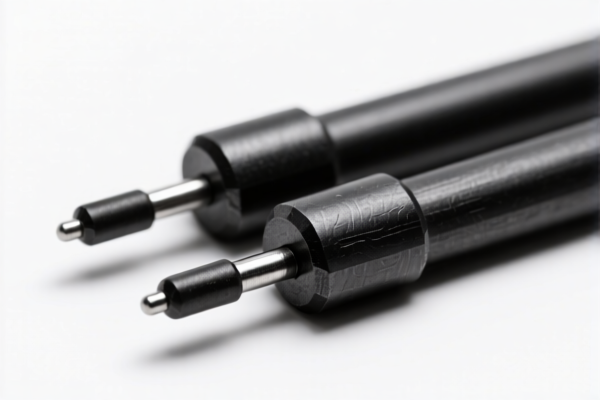
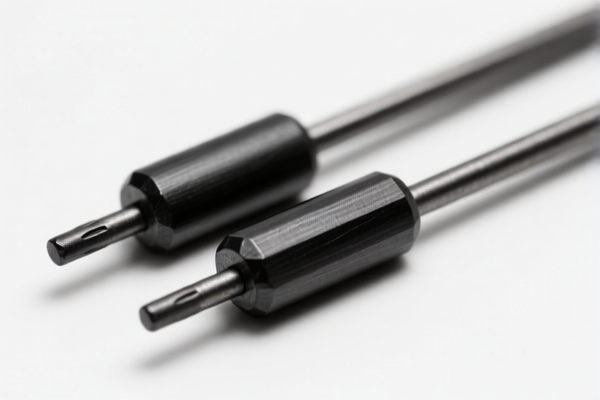
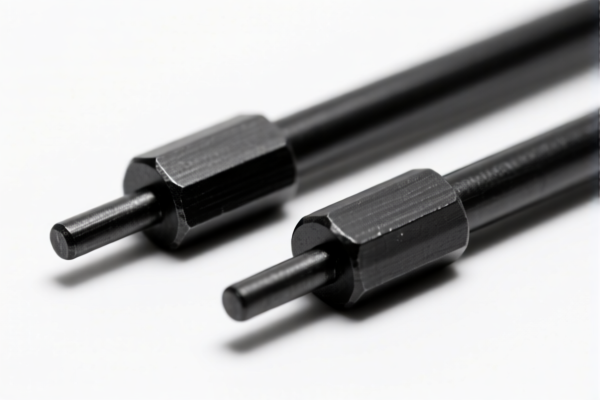
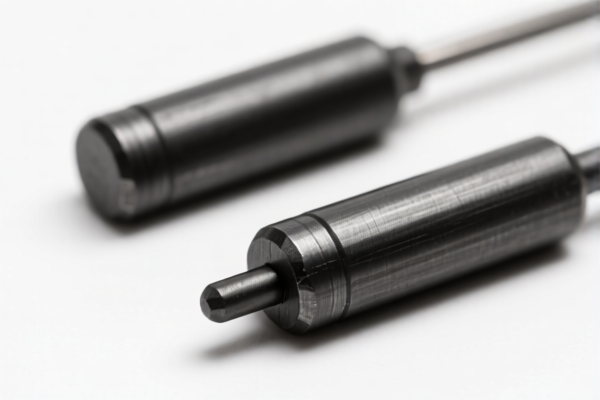
AI Analysis
🧪 Graphite-Based Carbon Paste: The Industrial Conductor's Dilemma
🌐 HS Code Classification & Customs Clearance Guide | 2026 Tariff Analysis | Professional Compliance Strategy
📌 I. Product Definition & Classification: Do You Really Understand "Graphite Carbon Paste"?
Graphite-based Carbon Paste is a specialized industrial preparation consisting of powdered graphite suspended in a binder (often oil, resin, or solvent). It is primarily used for electrical conduction, lubrication, or as a component in battery/anode production.
In international trade, its classification hinges on its primary function and chemical composition:
- Industrial Paste (Heading 3810): If it is primarily used for cleaning, degreasing, or surface preparation (e.g., cleaning contacts before brazing), it falls under "Preparations for cleaning, degreasing, etc."
- Chemical Preparation (Heading 3824): If it is a specific chemical mixture not elsewhere specified (e.g., used as an electrode paste in specialized electrochemical processes, or a niche lubricant additive), it falls under "Chemical products and preparations... not elsewhere specified or included."
⚠️ Critical Distinction Point:
- If the paste is functional for cleaning/degrossing surfaces → 3810.90
- If the paste is a general chemical preparation or has no specific industrial cleaning function → 3824.99
📦 II. HS Code Classification Details (2026 Latest Tariff Authority)
| HS Code | Product Description | Applicable Scenario | Key Feature |
|---|---|---|---|
3810.90 |
Preparations for cleaning, degreasing, etc., or for other industrial uses (Other) | Industrial surface prep, contact cleaning, degreasing pastes | ✅ Functional: Cleaning/Degreasing |
3824.99 |
Chemical products and preparations of the chemical or allied industries (Other, Other) | Niche chemical pastes, electrode mixes, general-purpose chemical compounds | ✅ Chemical: Not elsewhere specified |
🔍 Key Reminder:
- Do NOT classify under 8545 (Graphite Electrodes) unless it is in solid block/form for direct electrical use. Pastes are preparations, not raw materials. - The choice between 3810 and 3824 depends on the Technical Data Sheet (TDS): Is the primary purpose cleaning/prep or chemical reaction/conduction?
💰 III. 2026 Tariff Rate Analysis (Note: Data Retrieval Failed)
✅ Applicable Countries: Global (Base)
✅ Origin: China (CN) (Assumed for illustration; adjust if different)
✅ Status: ⚠️ TAX INFO FAILED TO RETRIEVEImportant: The provided data source indicates "Failed to retrieve tax information" and "Total Tax: Error" for both headings.
However, based on general global trade patterns (Non-USA):
- 3810.90: Typically 0% – 5% duty in most FTAs (EU, ASEAN).
- 3824.99: Typically 0% – 6.5% duty.⚠️ Critical Warning for US Imports:
If importing into the United States, check Section 301 and IEEPA lists. While 38xx chapters are not always subject to high additional tariffs, chemical preparations can sometimes be scrutinized. Always verify current USITC and USTR data.📌 Interpretation:
- Due to the "Error" in tax retrieval, you must consult a licensed customs broker to obtain the exact duty rate for your specific country of import.
- Do not assume 0% duty without confirmation.
🛠️ IV. Customs Clearance Practical Advice (Avoid Pitfalls)
✅ 1. Documentation Checklist (Essential)
| Document | Required? | Details |
|---|---|---|
| ✅ Technical Data Sheet (TDS) | ✔️ | Must clearly state: Composition %, Viscosity, Primary Use (e.g., "Conductive Paste" vs. "Cleaning Paste") |
| ✅ Safety Data Sheet (SDS) | ✔️ | Required for hazardous substances. Check if graphite or binders are classified as hazardous. |
| ✅ Product Photos | ✔️ | Show packaging, label, and physical form (paste consistency) |
| ✅ Commercial Invoice | ✔️ | Must use correct HS Code and describe product as "Graphite-Based Carbon Paste, Industrial Grade" |
| ✅ Certificate of Origin (CO) | ✔️ | To claim any preferential tariffs (if applicable) |
| ✅ Declaration of Non-Hazardous (if applicable) | ✔️ | If not classified as hazardous, provide proof to avoid unnecessary testing |
✅ 2. Classification Strategy (Key Tips)
🔥 "Function Dictates Code, TDS is King!"
| Scenario | Recommended HS Code | Reasoning |
|---|---|---|
| Paste used to clean electrical contacts before assembly | 3810.90 |
Primary function is cleaning/degrossing |
| Paste used as electrode material in batteries or industrial cells | 3824.99 |
Considered a chemical preparation not elsewhere specified |
| Paste used as lubricant | 3824.99 |
Lubricants often fall under 3824 unless specifically for cleaning |
| Unclear purpose | 3824.99 |
Default to "Other Chemical Products" if function is ambiguous |
✅ 3. Special Cases
| Scenario | Handling Advice |
|---|---|
| Hazardous Substance? | Check SDS. If classified as hazardous, additional handling fees and safety declarations apply. |
| Small Quantity (Sample) | Still requires correct HS Code. De minimis thresholds vary by country (e.g., US $800). |
| Bulk vs. Retail Packaging | Packaging type does not change HS code, but must be declared accurately. |
🌍 V. Global Market Comparison (2026 General Trends)
| Country/Region | Recommended HS Code | Typical Duty (Non-FTA) | Certification Requirements | Notes |
|---|---|---|---|---|
| 🇺🇸 USA | 3810.90 or 3824.99 |
Varies (Check Section 301) | None generally, but hazardous if applicable | Tax Info Error: Verify with CBP |
| 🇪🇺 EU | 3810.90 or 3824.99 |
0% – 5% | REACH Compliance Required | REACH registration may be needed for chemicals |
| 🇨🇳 China | 3810.90 or 3824.99 |
5% – 7% | CCC (if applicable) | No additional tariffs generally |
| 🇮🇳 India | 3810.90 or 3824.99 |
10% – 15% | BIS (if applicable) | High duty range; verify carefully |
📌 Conclusion:
- EU and China generally have lower duties for these codes.
- USA requires careful verification due to data retrieval failure; consult a broker.
- REACH compliance is critical for EU imports.
📌 VI. Common Mistakes & Pitfalls (Lessons Learned)
❌ Mistake 1: Classifying as 8545 (Graphite Electrodes)
👉 Consequence: Wrong code → 10%+ higher duty + clearance delay. Pastes are preparations, not solid electrodes.
❌ Mistake 2: Using vague description "Graphite Paste"
👉 Consequence: Customs may reclassify under 3824.99 (higher scrutiny) or request additional documentation.
❌ Mistake 3: Ignoring SDS
👉 Consequence: If the paste contains hazardous binders, refusal of entry or fines.
❌ Mistake 4: Assuming 0% duty without verification
👉 Consequence: Due to tax retrieval error, you may face unexpected bills upon arrival.
✅ Correct Approach:
"Graphite-Based Carbon Paste, Industrial Grade, Viscosity: XX cP, Primary Use: [Cleaning/Electrode], SDS Available"
🎯 VII. Conclusion: Precision Classification Saves Costs
🎯 Key Takeaways:
🔹 "Function First: Cleaning? → 3810. Chemical? → 3824."
🔹 "TDS is Your Best Friend: Ensure it clearly states the primary use."
🔹 "Tax Error Alert: ALWAYS verify duty rates with a local broker due to data retrieval failure."
📌 Pro Tip:
If you are importing into the US, consider applying for a Binding Ruling from CBP to lock in the correct HS Code and avoid surprises.
📣 Immediate Action:
📞 Contact a Customs Broker → Provide TDS & SDS → Verify Duty Rates → Clear Customs Smoothly
🚀 Avoid Delays, Fines, and Unexpected Costs!
✨ Professional Clearance Starts with Accurate Classification!
💼 Your Cost Efficiency Depends on Precision!
Customer Reviews
About HS Code Classification
The Harmonized System (HS) is an internationally standardized nomenclature developed by the World Customs Organization (WCO) to classify traded products. Over 200 countries use the HS system as the basis for customs tariffs, trade statistics, and import/export regulations.
Each HS code follows a hierarchical structure:
- Chapter (2 digits) — Broad category of goods (e.g., Chapter 84: Machinery and Mechanical Appliances)
- Heading (4 digits) — More specific grouping within the chapter
- Subheading (6 digits) — Internationally standardized breakdown, used by all WCO member countries
- National subdivisions (8-10 digits) — Country-specific extensions for further classification, such as US HTSUS 10-digit codes
Correct HS code classification is essential for smooth customs clearance, accurate duty payment, and compliance with trade regulations. Misclassification can lead to customs delays, overpayment of duties, or penalties.
When importing from CN to US, the applicable tariff rates may include:
- Most-Favored-Nation (MFN) rate — The standard duty rate applied to WTO members
- General rate — Applied to countries without trade agreements
- Trade remedy duties — Additional tariffs such as Section 301 (anti-dumping), Section 232 (national security), or countervailing duties
The information provided on this page is for reference purposes only. For official classification, please consult with your local customs authority or a licensed customs broker.