Graphite based Corrosion Resistant Material
CN → US| HS Code | Tariff Rate | Origin | Destination | Doc |
|---|---|---|---|---|
| 6815110000 | 35.0% | CN | US | Official Doc |
| 3801105010 | 35.0% | CN | US | Official Doc |
| 3801105090 | 35.0% | CN | US | Official Doc |
| 6909195095 | 39.0% | CN | US | Official Doc |
| 6815190000 | 35.0% | CN | US | Official Doc |
Product Images
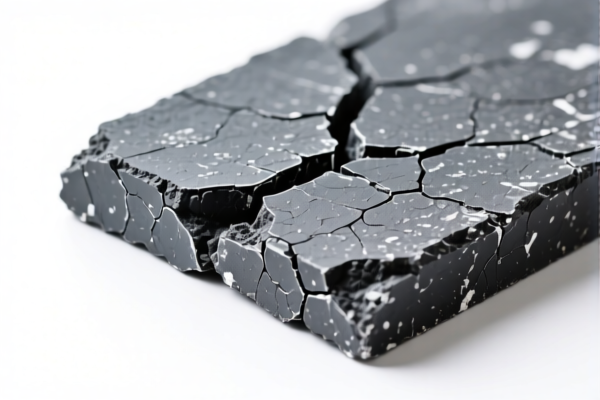
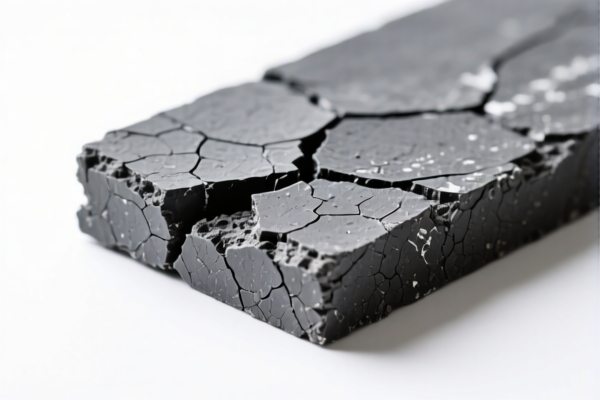
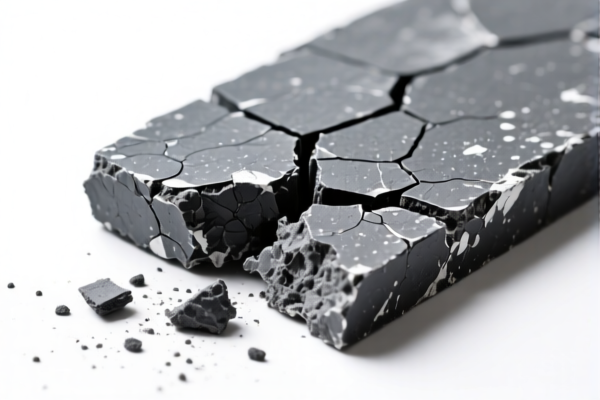
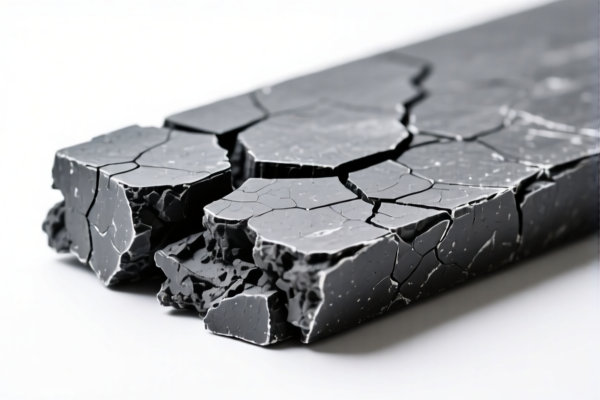
AI Analysis
🧪 Graphite Based Corrosion Resistant Materials: The Ultimate 2026 US Import Guide
🌐 HS Code Classification & Customs Clearance Strategy | High-Tariff Warning | Professional Logistics Solution
📌 Product Overview: What Are We Dealing With?
Graphite-based corrosion-resistant materials are high-performance industrial components used in chemical processing, metallurgy, and power generation. These materials withstand extreme acidity, alkalinity, and high temperatures.
However, in US customs classification, "Graphite" is a tricky keyword. Depending on the precise material composition (natural vs. synthetic) and physical form (block, sheet, ceramic composite), these goods fall into drastically different HS codes with varying tax implications.
⚠️ CRITICAL WARNING:
All HS Codes listed below are subject to Section 301 Tariffs (+25%) and Section 122/IEEPA Tariffs (+10%) for products originating from China.
Total Additional Duty Load: 35% on top of base duty.
Misclassification can lead to severe penalties, cargo detention, or retroactive tax assessments.
📦 1. HS Code Classification Matrix (Based on Provided Data)
Below is the authoritative breakdown of the 5 HS Codes derived from the specific product descriptions. Note the nuances between "Graphite Products," "Synthetic Graphite," and "Ceramic-based Graphite."
| HS Code | Product Description & Logic | Material Focus | Base Duty | Add. Tariffs | Total Effective Rate |
|---|---|---|---|---|---|
| 6815.11.00.00 | Graphite Articles: Non-electrical graphite/carbon articles. Matches "Graphite-based corrosion resistant material" as a general graphite product. | General Graphite (Natural or Processed) |
0.0% | 35.0% (25% Sec 301 + 10% Sec 122) |
35.0% |
| 6815.19.00.00 | Graphite Articles: Other non-electrical graphite articles. Fits when the material is explicitly defined as graphite but doesn't fit the "block/plate" specificity of .11. | Explicit Graphite (Various Forms) |
0.0% | 35.0% (25% Sec 301 + 10% Sec 122) |
35.0% |
| 3801.10.50.10 | Colloidal & Semi-Colloidal Graphite: Synthetic graphite, unspecified form. Matches "Synthetic Graphite" where specific morphology is unclear, falling into "Other" categories. | Synthetic Graphite (Unspecified Form) |
0.0% | 35.0% (25% Sec 301 + 10% Sec 122) |
35.0% |
| 3801.10.50.90 | Colloidal & Semi-Colloidal Graphite: Synthetic graphite,兜底 (Catch-all) category. Used when the form is not specified, following the logic of other unspecified synthetic graphite items. | Synthetic Graphite (Catch-all/Other) |
0.0% | 35.0% (25% Sec 301 + 10% Sec 122) |
35.0% |
| 6909.19.50.95 | Ceramic Ware: Inferred as "Ceramic-based" due to corrosion resistance properties. Fits chemical/technical ceramic articles. | Ceramic Composite (Graphite-Ceramic Mix) |
4.0% | 35.0% (25% Sec 301 + 10% Sec 122) |
39.0% |
💰 2. Detailed Tariff Breakdown & Legal Basis
✅ Applicable Country: United States (US)
✅ Origin: China (CN)
✅ Effective Timeline: 2025–2026 (Current Trade War Period)
🎯 Group A: The "Pure/Semi-Graphite" Cluster (HS: 6815.11, 6815.19, 3801.10)
HS Codes: 6815.11.00.00, 6815.19.00.00, 3801.10.50.10, 3801.10.50.90
| Item | Details |
|---|---|
| Base Tariff (MFN) | 0.0% Graphite articles and certain synthetic graphite forms often enjoy duty-free entry under normal MFN rates. |
| Section 301 Tariff | +25.0% Applied to all Chinese-origin goods under USITC Footnote 9903.88.01 (and specific subheadings). This is the standard trade war tariff. |
| Section 122 / IEEPA Tariff | +10.0% Additional duty levied under the International Emergency Economic Powers Act (IEEPA) or related executive orders targeting specific strategic materials. |
| Total Landed Cost Impact | 35.0% Calculation: $ \text{Duty} = \text{CIF Value} \times 35\% $ |
| De Minimis Exemption | ❌ NOT APPLICABLE Section 301 and IEEPA tariffs cannot be waived under the $800 de minimis rule (Section 321). Every shipment is taxed. |
| Legal Path | USITC:6815.11/6815.19 or USITC:3801.10 → FOOTNOTE:9903.88.01 → IEEPA:9903.01.25 |
📌 Why This Matters:
Even though the base duty is 0%, the 35% additional tax makes this a high-cost import. You must budget for this in your landed cost model.
🎯 Group B: The "Ceramic-Inferred" Cluster (HS: 6909.19)
HS Code: 6909.19.50.95
| Item | Details |
|---|---|
| Base Tariff (MFN) | 4.0% Ceramic ware generally carries a small base duty. |
| Section 301 Tariff | +25.0% Same Section 301 applicability as above. |
| Section 122 / IEEPA Tariff | +10.0% Same IEEPA applicability. |
| Total Landed Cost Impact | 39.0% Calculation: $ \text{Duty} = \text{CIF Value} \times 39\% $ |
| De Minimis Exemption | ❌ NOT APPLICABLE |
| Legal Path | USITC:6909.19 → FOOTNOTE:9903.88.01 → IEEPA:9903.01.25 |
📌 Strategic Note:
If your product is technically a graphite-ceramic composite, US Customs might classify it under Chapter 69 (Ceramics) rather than Chapter 68 (Graphite). This results in a 4% higher total duty (39% vs 35%). Always provide technical datasheets to argue for Chapter 68 if the primary material is graphite.
🛠️ 3. Customs Clearance Strategy & Risk Mitigation
✅ 1. Documentation Checklist (Non-Negotiable)
| Document | Requirement | Purpose |
|---|---|---|
| Technical Data Sheet (TDS) | ✔️ Mandatory | Must explicitly state material composition (e.g., "99% Synthetic Graphite" vs. "Graphite-Ceramic Composite"). This determines the HS Code. |
| Material Safety Data Sheet (MSDS) | ✔️ Mandatory | Confirms chemical stability and safety handling. |
| Commercial Invoice | ✔️ Mandatory | Must clearly describe the item as "Graphite-Based Corrosion Resistant Component" and specify Country of Origin: China. |
| Packing List | ✔️ Mandatory | Detail net/gross weights. Graphite is dense; accurate weight is crucial for freight calculation. |
| Statement of Composition | ✔️ Recommended | A signed letter from the manufacturer detailing whether the product is Natural, Synthetic, or Composite. |
✅ 2. Classification Decision Tree (Do This Before Shipping)
- Is it a pure graphite block/plate?
- Yes → Use 6815.11.00.00 (Safest, 35% Total).
- Is it synthetic graphite powder/paste/unspecified form?
- Yes → Use 3801.10.50.10 or 3801.10.50.90 (35% Total).
- Is it a graphite-ceramic mix (e.g., Impregnated Ceramic)?
- Yes → Risk of 6909.19.50.95 (39% Total). Try to argue for 6815 if graphite is the functional component.
✅ 3. Common Pitfalls & "Blood and Tears" Lessons
❌ Pitfall 1: Vague Description
Mistake: Shipping as "Industrial Parts" or "Corrosion Resistors."
Result: CBP issues a Request for Information (RFI), delaying clearance by 2-4 weeks. If they classify it themselves, they may choose the highest duty rate.
Fix: Always use the exact technical name: "Graphite-Based Corrosion Resistant Seal/Gasket/Block."
❌ Pitfall 2: Ignoring the "Ceramic" Trap
Mistake: Assuming all corrosion-resistant graphite is Chapter 68.
Result: If the product has a ceramic matrix, CBP may reclassify to 6909, adding 4% extra duty plus potential penalties for misdeclaration.
Fix: Provide a lab report showing the matrix material.
❌ Pitfall 3: Underestimating Section 122
Mistake: Calculating duty based only on Section 301 (25%).
Result: Unexpected 10% IEEPA bill at the port of entry.
Fix: Budget for 35% (or 39%) total duty, not just 25%.
✅ 4. Pro-Tips for Smooth Clearance
- Advance Ruling: If importing large volumes, apply for a US Customs Binding Ruling in advance. This provides legal certainty on whether your specific graphite-ceramic mix falls under 6815 or 6909.
- Country of Origin Marking: Every package must clearly state "Made in China." Failure to do so results in fines and potential seizure.
- Anti-Dumping Checks: While graphite typically doesn't face AD/CVD like steel or solar panels, verify if any specific synthetic graphite anti-dumping duties apply to your manufacturer’s specific facility. (Check the US ITC database).
🌍 4. Global Context & Alternative Markets
| Market | HS Code Trend | Duty Rate (China Origin) | Notes |
|---|---|---|---|
| 🇺🇸 USA | 6815 or 6909 |
35% - 39% | High Barrier. Section 301 + IEEPA apply. |
| 🇪🇺 EU | 6815 or 6909 |
0% - 4% | No Section 301. Standard MFN rates apply. |
| 🇨🇳 China | 6815 |
0% - 5% | Import duty low. VAT 13% applies. |
| 🇻🇳 Vietnam | 6815 |
0% | If re-exported to US, must prove substantial transformation to avoid US duties. |
💡 Strategic Insight:
For the US market, the 35% duty is a fixed cost. To mitigate this, some companies consider re-packaging or minor processing in non-China countries (e.g., Vietnam, Thailand). However, this is risky. If US Customs determines the "essence" is still Chinese graphite, they will still apply the 301/122 tariffs. Only substantial manufacturing transformation (e.g., turning graphite blocks into complex ceramic-graphite implants) might change the origin rule.
📌 5. Final Checklist for Importers
- [ ] Confirm Material: Is it Natural, Synthetic, or Ceramic-Composite?
- [ ] Select HS Code:
- Graphite →
6815.11/6815.19(35% Total) - Synthetic Unspecified →
3801.10(35% Total) - Ceramic-Composite →
6909.19(39% Total)
- Graphite →
- [ ] Calculate Landed Cost: CIF Value × (1 + 0.35 or 0.39) + Freight + Insurance + Port Fees.
- [ ] Prepare Docs: TDS, MSDS, Invoice with "China" origin.
- [ ] Declare Accurately: Do not hide the Chinese origin. The tariffs are unavoidable, but misclassification causes delays.
🎯 Conclusion
Graphite-based corrosion-resistant materials from China face a significant 35%–39% duty burden in the US due to ongoing trade policies.
✅ Key Takeaway:
Optimize Description: Ensure your TDS supports a Chapter 68 (Graphite) classification over Chapter 69 (Ceramic) to save 4%.
Budget for Taxes: Do not forget the 10% IEEPA tariff on top of the 25% Section 301.
Compliance is King*: Accurate documentation prevents customs holds.
🚀 Action Item:
Contact your customs broker before shipping with the Technical Data Sheet to confirm the final HS Code. A pre-shipping consultation can save thousands in potential penalties and demurrage fees.
✨ Precision Classification = Predictable Costs
💼 Don't let vague descriptions cost you profit!
Customer Reviews
About HS Code Classification
The Harmonized System (HS) is an internationally standardized nomenclature developed by the World Customs Organization (WCO) to classify traded products. Over 200 countries use the HS system as the basis for customs tariffs, trade statistics, and import/export regulations.
Each HS code follows a hierarchical structure:
- Chapter (2 digits) — Broad category of goods (e.g., Chapter 84: Machinery and Mechanical Appliances)
- Heading (4 digits) — More specific grouping within the chapter
- Subheading (6 digits) — Internationally standardized breakdown, used by all WCO member countries
- National subdivisions (8-10 digits) — Country-specific extensions for further classification, such as US HTSUS 10-digit codes
Correct HS code classification is essential for smooth customs clearance, accurate duty payment, and compliance with trade regulations. Misclassification can lead to customs delays, overpayment of duties, or penalties.
When importing from CN to US, the applicable tariff rates may include:
- Most-Favored-Nation (MFN) rate — The standard duty rate applied to WTO members
- General rate — Applied to countries without trade agreements
- Trade remedy duties — Additional tariffs such as Section 301 (anti-dumping), Section 232 (national security), or countervailing duties
The information provided on this page is for reference purposes only. For official classification, please consult with your local customs authority or a licensed customs broker.