Graphite based Lubricating Slurry
CN → US| HS Code | Tariff Rate | Origin | Destination | Doc |
|---|---|---|---|---|
| 3824994900 | 41.5% | CN | US | Official Doc |
| 6815190000 | 35.0% | CN | US | Official Doc |
| 6909195010 | 39.0% | CN | US | Official Doc |
| 3801105010 | 35.0% | CN | US | Official Doc |
| 3801105090 | 35.0% | CN | US | Official Doc |
Product Images
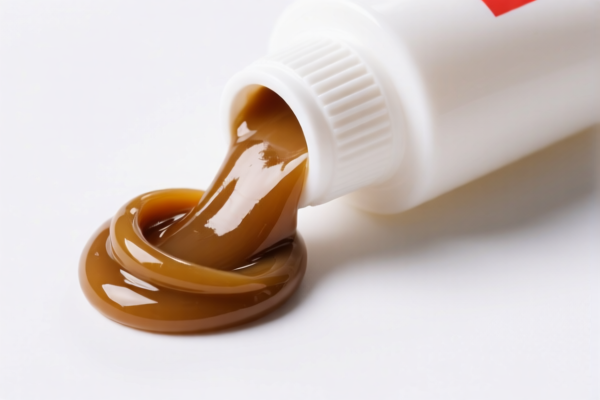
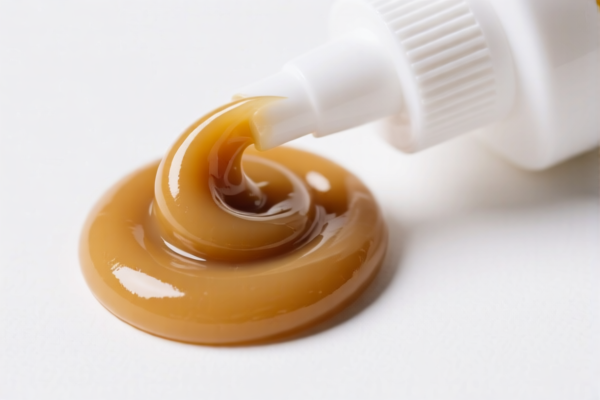
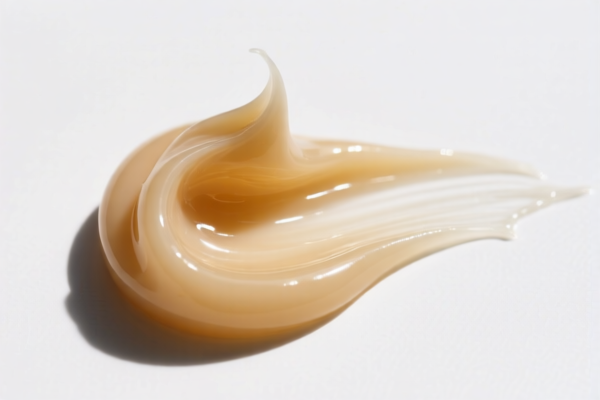

AI Analysis
🖋️ Graphite-Based Lubricating Slurry (High-Performance Industrial Lubricant)
🌐 HS Code Reference & Customs Clearance Guide | 2026 Latest Tariff Analysis | Professional Clearance Strategy
📌 I. Product Definition & Classification: What Exactly is "Graphite-Based Lubricating Slurry"?
Graphite-based lubricating slurry is a specialized industrial chemical mixture used to reduce friction and wear in high-temperature or high-load mechanical systems. In international trade, its classification is critical because it straddles the line between chemical preparations and carbon/graphite articles.
Key Distinctions: * Chemical Preparation (Ch. 38): If the product is primarily defined by its chemical composition (e.g., hydrocarbons, organic compounds, binders) with graphite acting as an additive for lubrication, it falls under Chapter 38. This is the most common classification for "greases" and "slurries." * Carbon/Graphite Articles (Ch. 68 or 3801): If the product is explicitly defined by its material form as a non-electrical graphite article (e.g., blocks, sheets, or specific corrosion-resistant materials), it may fall under Chapter 68 or HS 3801.
⚠️ Critical Classification Point:
- If the slurry is a paste/grease with a hydrocarbon/organic base → HS 3824.99.49.00
- If the slurry is specifically marketed as a corrosion-resistant material made of graphite → HS 6815.19.00.00 or HS 3801.10.xxxx
- If the slurry is considered a ceramic-like non-mineral product → HS 6909.19.50.10
📦 II. HS Code Classification Details (2026 Latest Tariff Authority Comparison)
| HS Code | Product Description | Applicable Scenario | Primary Basis |
|---|---|---|---|
3824.99.49.00 |
Colloidal graphite lubricating grease/paste | Chemical preparations, lubricants based on hydrocarbons or organic compounds | Chemical Prep. (Base: Hydrocarbon/Organic) |
6815.19.00.00 |
Graphite-based corrosion-resistant material | Non-electrical carbon articles, explicitly graphite-based | Carbon Article (Explicit Graphite) |
6909.19.50.10 |
Graphite-based corrosion-resistant material | Ceramic-like properties, non-metallic mineral attributes, corrosion resistance | Ceramic/Mineral (Logical Consistency) |
3801.10.50.10 |
Graphite-based corrosion-resistant material | Synthetic/Artificial graphite, "Other" category matching principle | Artificial Graphite ("Other" Match) |
3801.10.50.90 |
Graphite-based corrosion-resistant material | Artificial graphite, "Other" residual category | Artificial Graphite (Fallback "Other") |
🔍 Key Reminder:
- The base of the slurry determines the chapter. If it’s a "grease" or "slurry" used for lubrication, Ch. 38 is most likely.
- If the product is sold as a corrosion-resistant coating with specific graphite content, Ch. 68 or Ch. 3801 may apply depending on the exact material specification.
- Do not classify a lubricating slurry as a simple graphite powder unless it is in a dry form.
💰 III. 2026 Latest Tariff Rate Breakdown (Including Additional Taxes & Policy Surcharges)
✅ Applicable Country: USA (US)
✅ Origin: China (CN)
✅ Effective Date: Post-2025.11.10 (Includes subsequent imports)
🎯 1. 3824.99.49.00 — Colloidal Graphite Lubricating Grease/Paste
| Item | Content |
|---|---|
| Base Tariff | 6.5% (ad valorem) |
| Section 301 Tariff | +25.0% |
| Section 122 Tariff | +10.0% |
| Total Tax Rate | 41.5% |
| Tax Calculation | CIF Value × 41.5% |
| De Minimis Eligibility | ❌ Not Eligible (High tax rate prevents de minimis exemption) |
| Legal Basis Path | USITC:3824.99.49.00 → SEC301:25% → SEC122:10% |
📌 Explanation:
- This code classifies the product as a chemical preparation (lubricant).
- The base 6.5% is standard for chemical preparations.
- The 25% Section 301 tariff is heavily applied to Chinese chemical products.
- The 10% Section 122 tariff adds an additional layer for specific trade remedies.
- Total 41.5% is a significant cost factor. Proper documentation proving "lubricating slurry" is crucial to avoid misclassification into higher-tax categories.
🎯 2. 6815.19.00.00 — Graphite-Based Corrosion-Resistant Material
| Item | Content |
|---|---|
| Base Tariff | 0.0% (ad valorem) |
| Section 301 Tariff | +25.0% |
| Section 122 Tariff | +10.0% |
| Total Tax Rate | 35.0% |
| Tax Calculation | CIF Value × 35.0% |
| De Minimis Eligibility | ❌ Not Eligible |
| Legal Basis Path | USITC:6815.19.00.00 → SEC301:25% → SEC122:10% |
📌 Note:
- This code classifies the product as a carbon article (non-electrical).
- The base 0% makes this more attractive than Ch. 38 if the product can be legally justified as a "graphite article" rather than a "chemical."
- However, the 25% + 10% additional tariffs still apply, bringing the total to 35%.
- Risk: If customs determines the product is a lubricant, not a structural graphite item, they may reclassify it to Ch. 38 (41.5%).
🎯 3. 6909.19.50.10 — Graphite-Based Corrosion-Resistant Material
| Item | Content |
|---|---|
| Base Tariff | 4.0% (ad valorem) |
| Section 301 Tariff | +25.0% |
| Section 122 Tariff | +10.0% |
| Total Tax Rate | 39.0% |
| Tax Calculation | CIF Value × 39.0% |
| De Minimis Eligibility | ❌ Not Eligible |
| Legal Basis Path | USITC:6909.19.50.10 → SEC301:25% → SEC122:10% |
📌 Note:
- This code places the product under ceramics/non-metallic minerals.
- The logic is that graphite-based corrosion-resistant materials share logical consistency with ceramic properties.
- Total 39% is a middle ground between Ch. 38 and Ch. 68.
- Justification: Requires strong technical data showing the product behaves like a ceramic/coating rather than a simple grease.
🎯 4 & 5. 3801.10.50.10 & 3801.10.50.90 — Graphite-Based Corrosion-Resistant Material
| Item | Content |
|---|---|
| Base Tariff | 0.0% (ad valorem) |
| Section 301 Tariff | +25.0% |
| Section 122 Tariff | +10.0% |
| Total Tax Rate | 35.0% |
| Tax Calculation | CIF Value × 35.0% |
| De Minimis Eligibility | ❌ Not Eligible |
| Legal Basis Path | USITC:3801.10.50.xx → SEC301:25% → SEC122:10% |
📌 Note:
- These codes fall under Artificial Graphite in Chapter 38.
- They are used when the product is explicitly defined as graphite-based but doesn’t fit the "lubricant" description of Ch. 3824.
- Total 35% is the same as Ch. 6815.
- Differentiation: Ch. 3801 focuses on the material (graphite), while Ch. 3824 focuses on the function (lubrication).
🛠️ IV. Customs Clearance Practical Advice (Real-World Pitfall Avoidance Guide)
✅ 1. Required Documentation Checklist (All Mandatory)
| Document | Mandatory? | Description |
|---|---|---|
| ✅ Product Specification Sheet | ✔️ | Must detail composition: % Graphite, % Binder, Viscosity, Base Chemical |
| ✅ Technical Data Sheet (TDS) | ✔️ | Shows application: Lubrication vs. Corrosion Resistance |
| ✅ Product Photos | ✔️ | Clear images of packaging, label, and product state (slurry/paste) |
| ✅ Third-Party Test Report | ✔️ | ASTM, ISO, or other standards proving viscosity, lubricity, or corrosion resistance |
| ✅ Commercial Invoice | ✔️ | Must accurately describe product as "Graphite-Based Lubricating Slurry" or "Corrosion-Resistant Material" |
| ✅ Bill of Lading/Air Waybill | ✔️ | Standard shipping documents |
✅ 2. Declaration Tips (Key Mantras)
🔥 "Define Base, Define Function, Avoid Ambiguity!"
| Scenario | Correct Declaration | Wrong Practice |
|---|---|---|
| Lubricating Grease/Paste | 3824.99.49.00 - "Colloidal Graphite Lubricating Grease" |
Mislabeling as "Graphite Powder" → Higher scrutiny |
| Corrosion-Resistant Coating | 6815.19.00.00 or 3801.10.50.xx |
Mislabeling as "Lubricant" → Potential reclassification |
| Mixed Use (Lube + Corrosion) | Provide TDS showing primary function | Vague description "Graphite Mix" → Delays |
| Ceramic-Like Slurry | 6909.19.50.10 |
Not declaring ceramic properties → Missed optimization |
✅ 3. Special Cases & Handling
| Scenario | Handling Advice |
|---|---|
| OEM Custom Slurry | Provide client order + technical drawings to prove specific formulation |
| High Graphite Content (>50%) | Strong case for Ch. 3801 or Ch. 6815 (lower base rate) |
| High Organic Binder Content | Strong case for Ch. 3824 (41.5% total) |
| Used in High-Temp Engines | Emphasize "Lubrication" and "Heat Resistance" → Ch. 3824 |
| Used in Chemical Pipelines | Emphasize "Corrosion Resistance" → Ch. 6815 or Ch. 3801 |
🌍 V. Global Market Clearance Comparison (2026 Latest)
| Country/Region | Recommended HS Code | Tariff Rate (China Origin) | Certification Req. | Notes |
|---|---|---|---|---|
| 🇺🇸 USA | 3824.99.49.00 |
41.5% (Lubricant) | No specific certs | High tariffs due to Sec 301 & 122 |
| 🇺🇸 USA | 6815.19.00.00 |
35.0% (Carbon Article) | No specific certs | Lower base rate, but same additional tariffs |
| 🇨🇳 China | 3824.99.49.00 |
6.5% (Export) | N/A | China exports, US imports |
| 🇪🇺 EU | 3824.99.90 |
6.5% (Standard) | REACH | No Section 301 equivalent |
| 🇬🇧 UK | 3824.99.90 |
6.5% (Standard) | UKCA | Post-Brexit standards apply |
📌 Conclusion:
- USA is the most challenging market due to Section 301 and 122 tariffs.
- Classification Strategy is Key: Shifting from "Lubricant" (41.5%) to "Carbon Article" (35.0%) can save 6.5% on the base rate, but requires strong technical justification.
- EU/UK offer significantly lower tariffs (no 25% or 10% surcharges).
📌 VI. Common Errors & Pitfall Guide (Blood & Tears Lessons)
❌ Error 1: Classifying a lubricating slurry as graphite powder (HS 3801.90)
👉 Consequence: Customs may reject due to functional mismatch (powder vs. slurry) → Delays + Re-inspection
❌ Error 2: Ignoring Section 122 Tariff
👉 Consequence: Underpayment of 10% → Back taxes + Penalties
❌ Error 3: Vague Description "Graphite Slurry"
👉 Consequence: Customs unsure if it’s a lubricant or corrosion material → Audit Risk
❌ Error 4: Assuming "De Minimis" Exemption Applies
👉 Consequence: Shipments under $800 are not exempt due to high tariff rates → Immediate seizure or forced entry filing
✅ Correct Approach:
"Graphite-Based Lubricating Slurry, Colloidal, Viscosity 500-1000 cP, Base: Synthetic Hydrocarbon, Application: High-Temp Bearings, Model XYZ, ASTM D217 Certified"
🎯 VII. Conclusion: Precise Declaration, Save Costs, Ensure Smooth Clearance!
🎯 Remember the Mantra:
🔹 "Lubricant = 3824 (41.5%), Carbon = 6815/3801 (35%), Ceramic = 6909 (39%)"
🔹 "Base Rate Matters, Additional Tariffs Kill, Documentation Saves!"
🔹 "If it’s a paste, it’s likely a chemical. If it’s a coating, it might be carbon!"
📌 Pro Tip:
If your product is primarily for corrosion resistance in chemical environments, argue for HS 6815.19.00.00 or HS 3801.10.50.xx to save the 6.5% base tariff.
If it’s primarily for friction reduction, stick with HS 3824.99.49.00 but ensure all lubricant specs are documented.
Always request an Advance Ruling from US Customs (CBP) if the classification is borderline.
📣 Immediate Action:
📞 Contact a licensed customs broker + Provide Technical Data Sheet + Apply for CBP Advance Ruling
🚀 Ensure your Graphite-Based Lubricating Slurry clears customs efficiently, minimizes tax liability, and avoids delays!
✨ Professional Customs Clearance Starts with Accurate Classification!
💼 Every Percent Saved in Tariffs is Pure Profit!
Customer Reviews
About HS Code Classification
The Harmonized System (HS) is an internationally standardized nomenclature developed by the World Customs Organization (WCO) to classify traded products. Over 200 countries use the HS system as the basis for customs tariffs, trade statistics, and import/export regulations.
Each HS code follows a hierarchical structure:
- Chapter (2 digits) — Broad category of goods (e.g., Chapter 84: Machinery and Mechanical Appliances)
- Heading (4 digits) — More specific grouping within the chapter
- Subheading (6 digits) — Internationally standardized breakdown, used by all WCO member countries
- National subdivisions (8-10 digits) — Country-specific extensions for further classification, such as US HTSUS 10-digit codes
Correct HS code classification is essential for smooth customs clearance, accurate duty payment, and compliance with trade regulations. Misclassification can lead to customs delays, overpayment of duties, or penalties.
When importing from CN to US, the applicable tariff rates may include:
- Most-Favored-Nation (MFN) rate — The standard duty rate applied to WTO members
- General rate — Applied to countries without trade agreements
- Trade remedy duties — Additional tariffs such as Section 301 (anti-dumping), Section 232 (national security), or countervailing duties
The information provided on this page is for reference purposes only. For official classification, please consult with your local customs authority or a licensed customs broker.