Graphite based Sealing Gasket
CN → US| HS Code | Tariff Rate | Origin | Destination | Doc |
|---|---|---|---|---|
| 6815994110 | 35.0% | CN | US | Official Doc |
| 8484100000 | 37.5% | CN | US | Official Doc |
| 8484900000 | 37.5% | CN | US | Official Doc |
| 6815190000 | 35.0% | CN | US | Official Doc |
| 3926909989 | 22.8% | CN | US | Official Doc |
Product Images
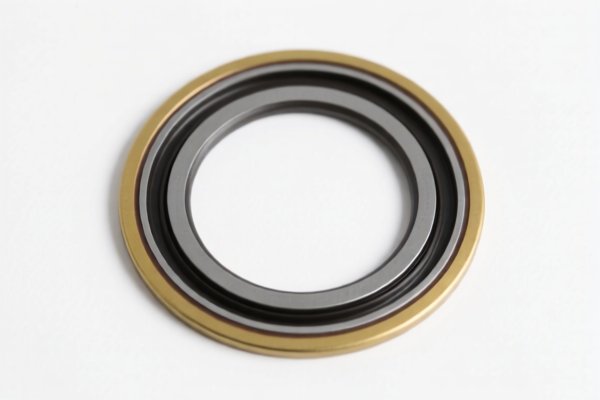
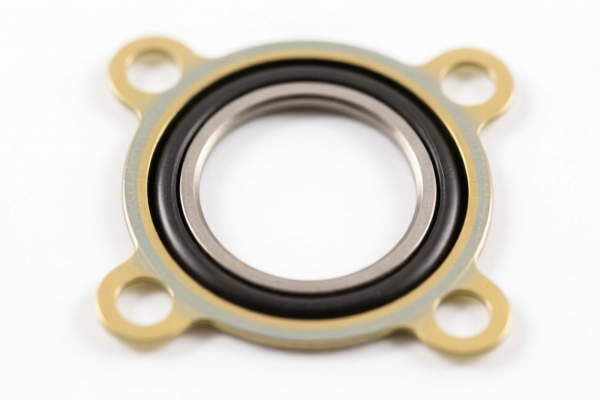
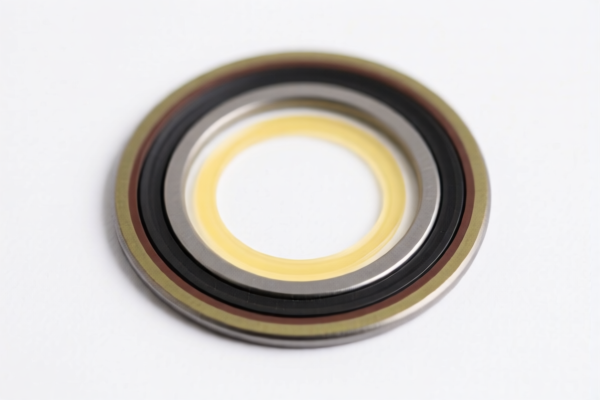
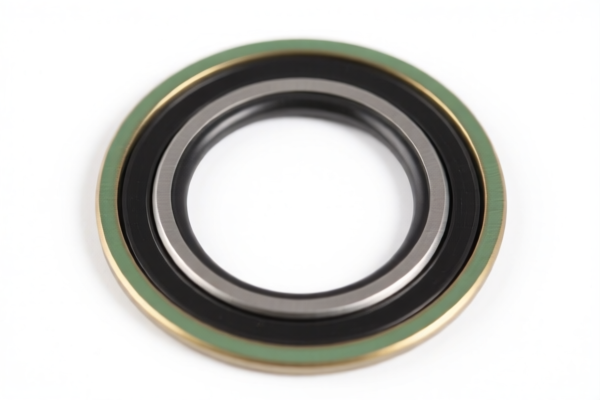
AI Analysis
⚙️ Graphite-Based Sealing Gaskets: HS Code Classification & 2026 US Customs Strategy
🌐 HS Code Reference & Customs Clearance Guide | 2026 Latest Tariff Analysis | Professional Compliance Strategy
📌 I. Product Definition & Classification: Do You Really Understand "Graphite Gaskets"?
Graphite sealing gaskets are critical components in industrial fluid control systems, used in pumps, valves, flanges, and heat exchangers to prevent leaks under high pressure and temperature. In international trade, their classification is complex because they can be viewed from three different angles: 1. Material-Based: They are made of graphite (a mineral/carbon product). 2. Form-Based: They are flat sealing elements (gaskets/washers). 3. Composite-Based: They often involve bonding graphite with other materials (metal or non-metal) to enhance strength or sealing performance.
⚠️ Key Distinction Point:
- Pure graphite sheets vs. Composite gaskets (Graphite + Metal/Non-metal);
- Electrical vs. Non-electrical applications;
- Specific vs. General industrial use.
Misclassification can lead to massive tariff differences (from 22.8% to 37.5%) and potential regulatory penalties.
📦 II. HS Code Classification Details (2026 Latest Tariff Authority Comparison)
Based on the provided data, here are the five most probable HS Codes for Graphite-Based Sealing Gaskets, along with the logic for each:
| HS Code | Product Description | Application Scenario | Classification Logic |
|---|---|---|---|
3926.90.99.89 |
Other articles of plastics and other materials of heading 3901 to 3914, not elsewhere specified | Non-metallic gaskets, industrial parts made of graphite-like synthetic materials | Classified as "Other articles of plastics/materials" because graphite is treated as a non-metallic material in this context. |
6815.99.41.10 |
Other articles of carbon or graphite, not elsewhere specified or included | Pure graphite gaskets, carbon-based mineral products | Classified as "Mineral/Carbon Articles" because graphite contains carbon and is derived from mineral sources. |
6815.19.00.00 |
Articles of graphite or other carbon, not elsewhere specified or included (Non-electrical) | Non-electrical graphite制品 (gaskets, seals) | Matches Material (Graphite) + Non-Electrical Use. Specifically for graphite articles not covered by electrical headings. |
8484.10.00.00 |
Gaskets and similar joints, of metal sheeting combined with other materials or of two or more layers of metal | Composite gaskets (Graphite + Metal) | Classified as "Composite Metal Gaskets" if graphite is bonded with metal sheets, treating it as a layered metal product. |
8484.90.00.00 |
Other gaskets and similar joints (not elsewhere specified) | General industrial gaskets, including complex composite seals | Classified as "Other Gaskets" based on function and common industry practice for composite sealing elements. |
🔍 Critical Reminder:
- Pure Graphite Gaskets: Should likely fall under 6815 categories (0% Base Tariff, but high Add-ons).
- Graphite-Metal Composite: Likely falls under 8484 (2.5% Base Tariff, but high Add-ons).
- Non-Metallic/Plastic-like: Falls under 3926 (5.3% Base Tariff, but lower Add-ons).
💰 III. 2026 Latest Tariff Rate Details (Including Surcharges & Policy Add-ons)
✅ Applicable Country: United States (US)
✅ Origin: China (CN)
✅ Effective Time: 2025 Nov 10 onwards (including subsequent imports)
🎯 1. 3926.90.99.89 —— Other Articles of Plastics/Other Materials (Non-metallic Category)
| Item | Content |
|---|---|
| Base Tariff | 5.3% |
| Section 301 Add-on | +7.5% |
| Section 122 Tariff | +10% |
| Total Tariff Rate | 22.8% |
| Tax Calculation | CIF Value × 22.8% |
| De Minimis Exemption | ❌ Not Eligible (Deny De Minimis) |
| Legal Basis Path | Standard USITC Code + Section 301 Footnotes + Section 122 Regulations |
📌 Explanation:
- This is the lowest tariff option among the listed codes.
- It assumes the graphite gasket is treated as a "plastic-like" or "non-metallic material article."
- Risk: If customs authorities determine graphite is strictly a mineral/carbon product (Section 68), this classification may be challenged, leading to re-classification and back taxes.
🎯 2. 6815.99.41.10 & 6815.19.00.00 —— Carbon/Graphite Articles (Mineral Category)
| Item | Content |
|---|---|
| Base Tariff | 0.0% |
| Section 301 Add-on | +25.0% |
| Section 122 Tariff | +10% |
| Total Tariff Rate | 35.0% |
| Tax Calculation | CIF Value × 35.0% |
| De Minimis Exemption | ❌ Not Eligible (Deny De Minimis) |
| Legal Basis Path | USITC:6815.19.00.00/6815.99.41.10 + Section 301 Footnote 9903.88.01 + Section 122 |
📌 Explanation:
- Base tariff is 0%, but the Section 301 surcharge is 25% (standard for many Chinese goods).
- Total 35% is significantly higher than the 22.8% option.
- This classification is technically accurate for pure graphite/carbon products under Chapter 68.
- Key Insight: The low base rate does not offset the high Section 301 tax.
🎯 3. 8484.10.00.00 & 8484.90.00.00 —— Gaskets & Similar Joints (Composite/General Category)
| Item | Content |
|---|---|
| Base Tariff | 2.5% |
| Section 301 Add-on | +25.0% |
| Section 122 Tariff | +10% |
| Total Tariff Rate | 37.5% |
| Tax Calculation | CIF Value × 37.5% |
| De Minimis Exemption | ❌ Not Eligible (Deny De Minimis) |
| Legal Basis Path | USITC:8484.10.00.00/8484.90.00.00 + Section 301 + Section 122 |
📌 Explanation:
- This is the highest tariff option at 37.5%.
- Applies if the gasket is viewed as a composite metal/gasket assembly (e.g., graphite bonded to metal rings).
- Even though the base tariff is low (2.5%), the 25% Section 301 surcharge pushes the total high.
- Warning: Customs often scrutinizes "gaskets" heavily. If declared as8484but lacks proper metal-laminate proof, they may reclassify to6815or3926.
🛠️ IV. Customs Clearance Practical Advice (Real-World Pitfall Guide)
✅ 1. Documentation Checklist (Missing Items = Delays)
| Document | Mandatory? | Description |
|---|---|---|
| ✅ Product Specification Sheet | ✔️ | Must detail: Material composition (e.g., 95% Graphite, 5% Binder), Density, Temp Resistance, Pressure Rating. |
| ✅ Composition Analysis Report | ✔️ | Third-party lab report proving graphite content. Crucial for distinguishing between 6815 (Mineral) and 3926 (Non-metal/Plastic). |
| ✅ Product Photos (Clear) | ✔️ | Show cross-section if composite. Label must say "Graphite Gasket" or "Carbon Seal." |
| ✅ Bill of Lading & Commercial Invoice | ✔️ | Invoice must explicitly state "Graphite-Based Sealing Gasket" and HS Code. |
| ✅ Certificate of Origin (CO) | ✔️ | Required for US origin determination. |
| ✅ Test Reports | ✔️ | ASTM/ISO standards for sealing performance, corrosion resistance. |
✅ 2. Declaration Tips (Key Mnemonics)
🔥 "Material First, Form Second; Composite Needs Proof; Graphite is Mineral!"
| Scenario | Correct Declaration | Incorrect Declaration | Consequence |
|---|---|---|---|
| Pure Graphite Sheet/Cut Gasket | 6815.19.00.00 (35.0%) |
3926.90.99.89 (22.8%) |
High Audit Risk. Customs will demand proof of "non-plastic" nature. If proven mineral, you pay 35% + penalties. |
| Graphite + Metal Jacket Gasket | 8484.10.00.00 (37.5%) |
8484.90.00.00 (37.5%) |
Less risky, but ensure "Metal Sheet" layer is visible in photos. |
| Synthetic Graphite (Plastic-like) | 3926.90.99.89 (22.8%) |
6815.99.41.10 (35.0%) |
Best Cost Option. Requires proof that binder makes it "plastic-like." |
| Electrical Graphite Gasket | Not listed in data | 6815 |
If used in electrical arcs, different code may apply. Ensure Non-Electrical Use. |
✅ 3. Special Case Handling
| Situation | Handling Advice |
|---|---|
| OEM Custom Gaskets | Provide customer drawings. If shape is unique, emphasize "Custom Industrial Part" to support 8484 or 3926. |
| High-Temp/High-Pressure Seals | Highlight performance specs. If it replaces metal, argue for 8484. If it is purely carbon, argue for 6815. |
| Small Samples (De Minimis) | ❌ Not Eligible. All listed HS codes have deny_de_minimis. Even $50 shipments are taxed. Do not use 80.01/80.02 for these. |
| Mixed Shipment (Graphite + Rubber) | Split shipment. Rubber parts may have lower tariffs. Avoid mixing unless clear segregation is possible. |
🌍 V. Global Market Clearance Comparison (2026 Latest)
| Country/Region | Recommended HS Code | Tariff Rate | Certification Requirements | Notes |
|---|---|---|---|---|
| 🇺🇸 USA | 6815.19.00.00 or 3926.90.99.89 |
22.8% - 37.5% | None Specific | Section 301 (25%) + Section 122 (10%) apply to all. No de minimis. |
| 🇨🇳 China | 6815.19.00.00 |
~0% - 5% | None | Export from China usually has no VAT on export. |
| 🇪🇺 EU | 6815.10.00 or 8484.10.90 |
0% - 4% | REACH, RoHS | No Section 301 equivalent. Lower total duty than US. |
| 🇬🇧 UK | 6815.10.00 |
0% - 5% | UKCA | Post-Brexit rules similar to EU but separate certification. |
📌 Conclusion:
- The US market is the most expensive due to Section 301 and Section 122 tariffs.
- China-origin graphite gaskets face a 22.8% to 37.5% total tax burden.
- Strategy: If possible, source from Vietnam, Thailand, or Mexico to potentially avoid Section 301 tariffs (subject to OFAC/USITC rules on transshipment).
📌 VI. Common Errors & Pitfall Guide (Lessons Learned)
❌ Error 1: Declaring "Graphite Gasket" as 3926 without proof of plastic-like composition.
👉 Consequence: Customs reclassifies to 6815 → Back taxes of 12.2% + Interest + Penalties.
❌ Error 2: Ignoring Section 122 Tariff (10%).
👉 Consequence: Under-declared value → Seizure or Heavy Fines. Section 122 applies to all Chinese goods in most categories.
❌ Error 3: Assuming De Minimis ($800) applies.
👉 Consequence: Shipment Blocked. All listed HS codes are explicitly denied de minimis. Every single unit is taxed.
❌ Error 4: Mixing "Graphite" with "Graphite Foil" without clarity.
👉 Consequence: Different HS codes may apply. Foil might be 7607 (if backed with metal) or 6815. Ambiguity = Delay.
✅ Correct Approach:
"Graphite Sealing Gasket, Non-Electrical, Composite/Non-Composite, ASTM Dxxx Standard, Made in China"
Always provide a Certificate of Composition from a 3rd Party Lab.
🎯 VII. Conclusion: Professional Declaration Saves Money!
🎯 Key Takeaway:
🔹 "Graphite is Mineral (6815), Not Plastic (3926) – Unless Proven Otherwise!"
🔹 "Section 301 (25%) + Section 122 (10%) = 35-37.5% Tax. No De Minimis!"
🔹 "Best Case: 22.8% via 3926 (Risky). Standard Case: 35% via 6815. Worst Case: 37.5% via 8484."
📌 Pro Tip:
If you are importing large volumes, consider:
1. Advance Ruling (CBP Ruling): Request a binding classification from US Customs before shipping.
2. Supply Chain Shift: Source from non-China countries to avoid Section 301/122 tariffs.
3. Material Optimization: If using synthetic binders, ensure documentation supports 3926 classification for the 22.8% rate.
📣 Immediate Action:
📞 Contact Your Freight Forwarder + Provide Lab Reports + Apply for CBP Advance Ruling
🚀 Ensure Your Graphite Gaskets Clear US Customs Smoothly and Cost-Effectively!
✨ Professional Clearance Starts with Accurate Classification!
💼 Your Margins Depend on Precision!
Customer Reviews
About HS Code Classification
The Harmonized System (HS) is an internationally standardized nomenclature developed by the World Customs Organization (WCO) to classify traded products. Over 200 countries use the HS system as the basis for customs tariffs, trade statistics, and import/export regulations.
Each HS code follows a hierarchical structure:
- Chapter (2 digits) — Broad category of goods (e.g., Chapter 84: Machinery and Mechanical Appliances)
- Heading (4 digits) — More specific grouping within the chapter
- Subheading (6 digits) — Internationally standardized breakdown, used by all WCO member countries
- National subdivisions (8-10 digits) — Country-specific extensions for further classification, such as US HTSUS 10-digit codes
Correct HS code classification is essential for smooth customs clearance, accurate duty payment, and compliance with trade regulations. Misclassification can lead to customs delays, overpayment of duties, or penalties.
When importing from CN to US, the applicable tariff rates may include:
- Most-Favored-Nation (MFN) rate — The standard duty rate applied to WTO members
- General rate — Applied to countries without trade agreements
- Trade remedy duties — Additional tariffs such as Section 301 (anti-dumping), Section 232 (national security), or countervailing duties
The information provided on this page is for reference purposes only. For official classification, please consult with your local customs authority or a licensed customs broker.