Graphite or other carbon articles for industrial use
CN → US| HS Code | Tariff Rate | Origin | Destination | Doc |
|---|---|---|---|---|
| 8545192000 | 35.0% | CN | US | Official Doc |
| 8545110010 | 35.0% | CN | US | Official Doc |
| 6815110000 | 35.0% | CN | US | Official Doc |
| 6815190000 | 35.0% | CN | US | Official Doc |
Product Images
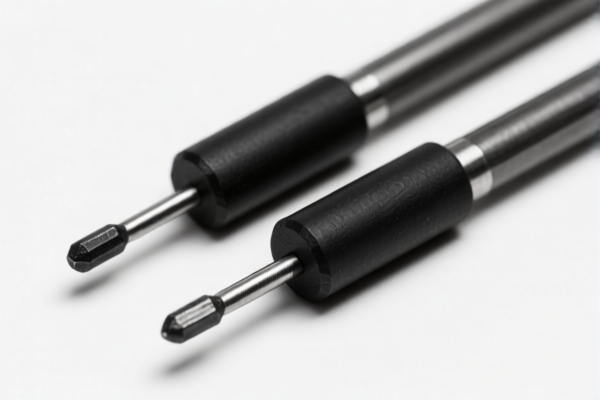
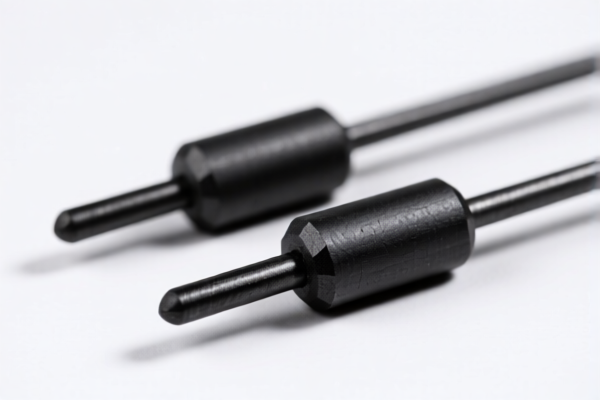
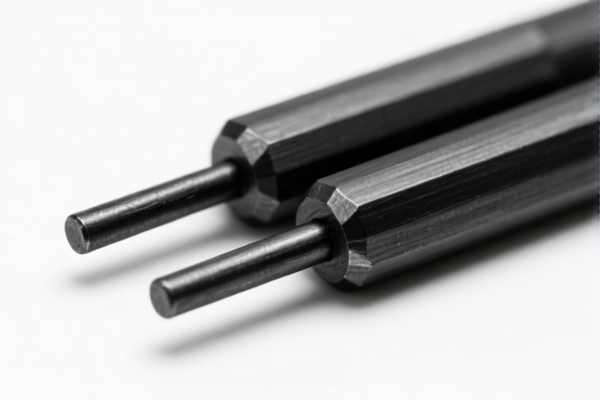
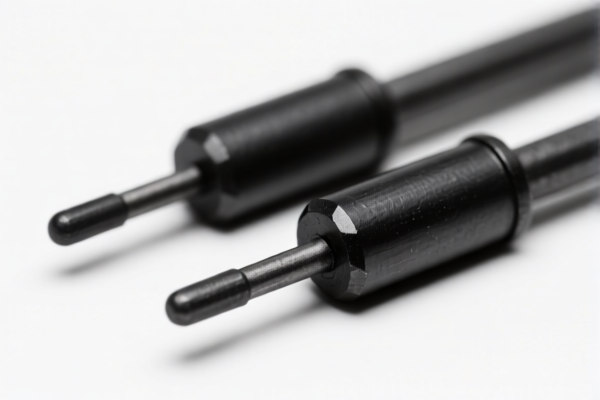
AI Analysis
⚡ Graphite & Carbon Articles for Industrial Use
🌐 HS Code Reference & Customs Clearance Guide | 2026 Latest Tariff Analysis | Professional Clearance Strategy
📌 1. Product Definition & Classification: What Exactly Are We Talking About?
Graphite and other carbon articles for non-electrical uses constitute a specialized category of industrial materials. These are primarily used in high-temperature environments, as lubricants, in metallurgy, or as structural components in harsh chemical environments.
In international trade, this category is broadly split into two main branches based on form and specific application:
A. Carbon Fibers & Articles (HS Chapter 68):
Raw carbon fibers and finished articles made from carbon fibers that are not used for electrical purposes (e.g., structural reinforcements, aerospace components, sporting goods).
B. Graphite/Carbon Electrodes & Articles (HS Chapter 85):
Articles of graphite or other carbon, with or without metal, specifically of a kind used for electrical purposes (e.g., furnace electrodes, brushes, electrolytic electrodes).
⚠️ Key Distinction Point:
- If the article is non-electrical (structural, abrasive, pure carbon fiber) → Generally falls under Chapter 68 (6815).
- If the article is used for electrical purposes (conducting current, generating heat via resistance, electrolysis) → Generally falls under Chapter 85 (8545).
📦 2. HS Code Classification Details (2026 Latest Tariff Authority Cross-Reference)
Based on the provided data, here are the specific HS Codes and their corresponding tax implications. Note that for the items listed in the source data, the total import duty to the US (from China) is uniformly high due to Section 301 tariffs.
| HS Code | Product Description | Application Scenario | Electrical Use? |
|---|---|---|---|
6815.11.00.00 |
Carbon Fibers | Raw carbon fibers for composite materials, aerospace, automotive | ❌ No |
6815.19.00.00 |
Other Articles of Carbon Fibers | Finished carbon fiber parts (e.g., drone frames, bike frames) for non-electrical use | ❌ No |
8545.19.20.00 |
Carbon Electrodes for Electrolytic Purposes | Graphite electrodes specifically used in electrolytic cells (chemical/industrial production) | ✅ Yes |
8545.11.00.10 |
Graphite Electrodes for Furnaces (≤425mm) | Large graphite electrodes for electric arc furnaces (steelmaking), diameter not exceeding 425 mm | ✅ Yes |
🔍 Crucial Note:
- Although6815(Stone/Mineral Articles) and8545(Carbon Articles for Electrical Purposes) are in different chapters, the source data indicates they share the same tariff structure for this specific trade context. - The classification heavily depends on the final use and physical form. For example, a carbon fiber rod used as a structural support is6815.19.00.00, but if it were part of an electrical heating element, it might fall under8545.
💰 3. 2026 Latest Tariff Rate Breakdown (Including Surtaxes)
✅ Applicable Country: United States (US)
✅ Country of Origin: China (CN)
✅ Effective Date: Current as of 2026, based on the provided data which shows a consistent total tax rate.
🎯 All Listed HS Codes (6815.11.00.00, 6815.19.00.00, 8545.19.20.00, 8545.11.00.10)
| Item | Content |
|---|---|
| Base Tariff Rate | 0.0% (ad valorem) |
| Additional Tariff (Section 301) | +25.0% |
| Total Tariff Rate | 25.0% |
| Tax Calculation | CIF Value × 25% |
| De Minimis Exemption | ❌ Not Applicable (Section 301 tariffs typically do not apply to de minimis shipments for China-origin goods in this context) |
📌 Explanation:
- Base Rate (0%): Many industrial mineral and carbon products have a low or zero base MFN (Most Favored Nation) tariff. - Additional Tariff (+25%): This is the critical cost driver. Under US Trade Act Section 301, many Chinese-origin graphite and carbon products are subject to a 25% surcharge. - Total Burden: Despite the 0% base, the effective duty is 25% on the CIF value. This must be factored into your landed cost calculation immediately.
🛠️ 4. Customs Clearance Practical Advice (Real-World Pitfall Guide)
✅ 1. Documentation Checklist (Indispensable)
| Document | Required | Explanation |
|---|---|---|
| Product Specification Sheet | ✔️ | Must clearly state material composition (e.g., "100% Carbon Fiber," "Graphite Grade X") |
| Statement of Non-Electrical Use | ✔️ | For HS 6815 codes, explicitly state the article is not used for electrical conduction or heating. |
| Statement of Electrical Use | ✔️ | For HS 8545 codes, specify the exact electrical function (e.g., "Electrolytic electrode," "Furnace electrode"). |
| Commercial Invoice | ✔️ | Must match the HS code description precisely. Avoid vague terms like "Carbon Parts." |
| Country of Origin Certificate | ✔️ | Crucial for verifying China origin and applying/removing surtaxes. |
| Packing List | ✔️ | Detail dimensions (especially for HS 8545.11.00.10 where diameter ≤425mm is a key classifier). |
✅ 2. Classification Strategy (Key Mnemonics)
🔥 "Electrical is 8545, Structural is 6815, Both 25% Tax!"
| Scenario | Correct HS Code | Error to Avoid |
|---|---|---|
| Raw Carbon Fibers | 6815.11.00.00 |
Misclassifying as "Textile" (54) |
| Carbon Fiber Bike Frame | 6815.19.00.00 |
Misclassifying as "Sporting Goods" (95) |
| Graphite Rod for Heating Element | 8545 (Check specific subheading) |
Misclassifying as "Mineral Article" (68) |
| Large Furnace Electrode (<425mm) | 8545.11.00.10 |
Misclassifying as "Other Electrodes" (8545.19) if dimensions fit the specific limit |
| Electrolytic Graphite Electrode | 8545.19.20.00 |
Overlooking the specific "electrolytic" purpose |
✅ 3. Special Handling Cases
| Situation | Handling Advice |
|---|---|
| Hybrid Articles | If a product contains both electrical and non-electrical components, classify based on the principal function. If it conducts electricity, Chapter 85 likely applies. |
| Dimension-Specific | For 8545.11.00.10, ensure the diameter is strictly not exceeding 425 mm. If it is 426 mm, it may fall under a different subheading with potentially different (though likely still high) tax implications. |
| Graphite vs. Carbon Fiber | Do not confuse Graphite (crystalline carbon) with Carbon Fiber (polymer-derived). They have different HS headings and testing requirements. |
🌍 5. Global Market Comparison (2026 Overview)
| Country/Region | Recommended HS Code | Tariff Impact | Note |
|---|---|---|---|
| 🇺🇸 USA | See above | 25% Total | High barrier due to Section 301. |
| 🇨🇳 China | 6815 / 8545 |
Low (0-10%) | Importing into China for re-export may be different. |
| 🇪🇺 EU | 6815 / 8545 |
Varies (0-15%) | No blanket 25% surcharge, but anti-dumping duties may apply to graphite electrodes. |
| 🇮🇳 India | 6815 / 8545 |
~7.5-10% | Check for specific BIS standards for electrical carbon products. |
📌 Conclusion:
The USA market is the most challenging due to the uniform 25% surcharge on these industrial carbon/graphite articles. Supply chain diversification or value-add processing outside China may be necessary to mitigate this cost.
📌 6. Common Mistakes & Pitfalls (Lessons Learned)
❌ Mistake 1: Classifying a graphite brush (electrical) under 6815 (non-electrical).
👉 Consequence: Potential underpayment if duties differ, but more importantly, misdeclaration of use can lead to seizures. Electrical products require stricter certification.
❌ Mistake 2: Ignoring the "≤425mm" dimension for HS 8545.11.00.10.
👉 Consequence: Incorrect classification leads to audit flags and potential penalties.
❌ Mistake 3: Assuming "Carbon Fiber" is a textile.
👉 Consequence: Wrong HS code (Chapter 54/55 vs 68), leading to clearance delays.
✅ Best Practice:
"Graphite Electrode, High-Graphite Content, Diameter 400mm, for Steel Electric Arc Furnace, Model X, Origin China"
🎯 7. Conclusion: Precision in Classification Saves Money
🎯 Remember the Mantra:
🔹 "Non-Electric = 6815, Electric = 8545, Both = 25% Tax!"
🔹 "Dimension Matters for 8545.11, Purpose Matters for 8545.19."
📌 Pro Tip:
If you are importing Carbon Fibers or Electrodes from China to the US, budget for a 25% duty on top of the CIF value.
Consider applying for an Exclusion if available (though rare for industrial minerals now), or explore Third-Country Sourcing (e.g., Brazil, India) for graphite electrodes to avoid the Section 301 surcharge.
📣 Immediate Action:
📞 Consult with a licensed customs broker.
📄 Provide detailed technical specifications (Material, Form, Electrical/Non-Electrical Use, Dimensions).
🚀 Clear customs efficiently, avoid delays, and protect your margin!
✨ Professional Customs Clearance Starts with Accurate Classification!
💼 Every Percentage Point of Duty is a Percentage Point of Profit!
Customer Reviews
About HS Code Classification
The Harmonized System (HS) is an internationally standardized nomenclature developed by the World Customs Organization (WCO) to classify traded products. Over 200 countries use the HS system as the basis for customs tariffs, trade statistics, and import/export regulations.
Each HS code follows a hierarchical structure:
- Chapter (2 digits) — Broad category of goods (e.g., Chapter 84: Machinery and Mechanical Appliances)
- Heading (4 digits) — More specific grouping within the chapter
- Subheading (6 digits) — Internationally standardized breakdown, used by all WCO member countries
- National subdivisions (8-10 digits) — Country-specific extensions for further classification, such as US HTSUS 10-digit codes
Correct HS code classification is essential for smooth customs clearance, accurate duty payment, and compliance with trade regulations. Misclassification can lead to customs delays, overpayment of duties, or penalties.
When importing from CN to US, the applicable tariff rates may include:
- Most-Favored-Nation (MFN) rate — The standard duty rate applied to WTO members
- General rate — Applied to countries without trade agreements
- Trade remedy duties — Additional tariffs such as Section 301 (anti-dumping), Section 232 (national security), or countervailing duties
The information provided on this page is for reference purposes only. For official classification, please consult with your local customs authority or a licensed customs broker.