Grass Woven Shopping Basket
CN → US| HS Code | Tariff Rate | Origin | Destination | Doc |
|---|---|---|---|---|
| 4602191800 | 39.5% | CN | US | Official Doc |
| 4602191700 | 35.0% | CN | US | Official Doc |
| 9403893010 | 35.0% | CN | US | Official Doc |
| 4602191200 | 40.8% | CN | US | Official Doc |
| 4602198000 | 37.3% | CN | US | Official Doc |
Product Images
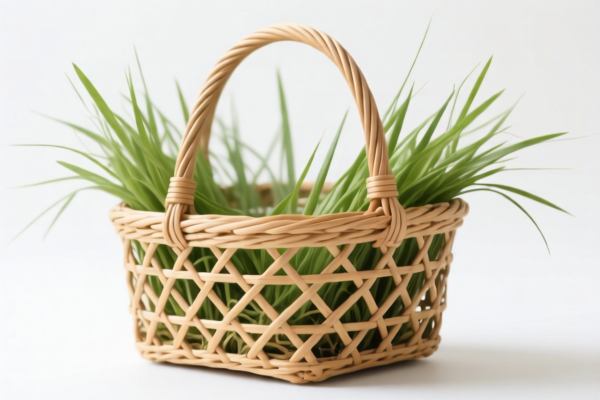
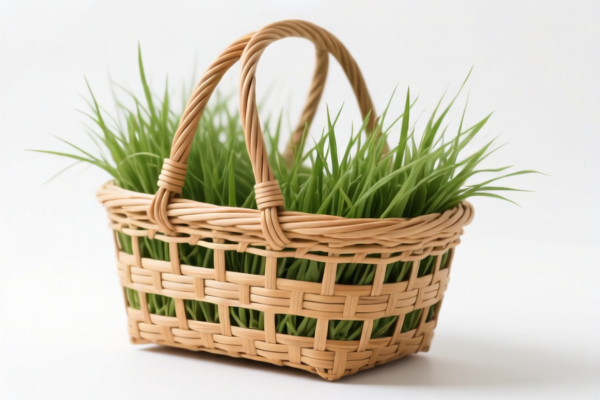
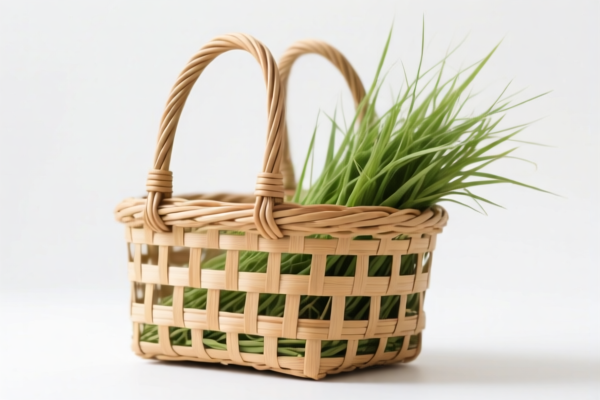
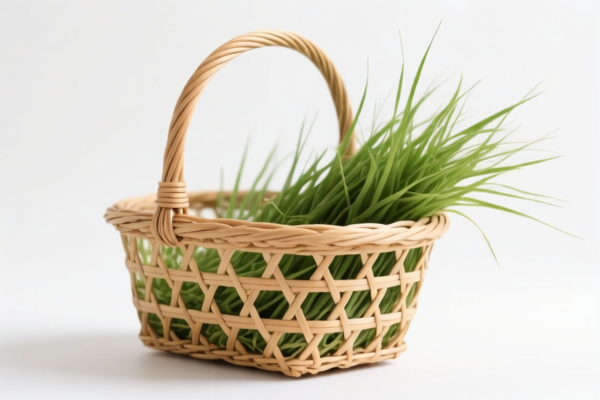
AI Analysis
🧺 Grass Woven Shopping Basket | Hemp & Plant Fiber Baskets
🌐 HS Code Reference & Customs Clearance Guide | 2026 Latest Tariff Analysis | Professional Entry Strategy
📌 I. Product Definition & Classification: What Exactly Are You Importing?
The term "Grass Woven Shopping Basket" is a broad commercial description that covers a range of items depending on the raw material (e.g., straw, hemp, jute, rattan) and the specific form/function (e.g., cosmetic organizer, grocery tote, decorative basket).
In international trade, these are primarily classified under Chapter 46 (Basketwork, wickerwork, and other articles of plaiting materials) or Chapter 94 (Furniture, unless specified otherwise). The critical distinction lies in:
1. Material Composition: Is it natural grass/straw (4602) or hemp/jute (4602 or 9403)?
2. Function/Use: Is it a general-purpose basket (4602) or a specific household storage unit (9403)?
⚠️ Key Distinction:
- If the item is a general-purpose woven basket made of vegetable materials (straw, grass, reed), it typically falls under 4602.
- If the item is made of hemp or similar materials and used for shopping/totes, it may still fall under 4602 but with different subheadings based on the exact fiber.
- If the item is considered furniture (e.g., a large storage bin with specific structural features resembling a crate/chest), it might be argued under 9403, though this is less common for simple woven baskets.
📦 II. HS Code Classification Details (2026 Latest Tariff Authority Reference)
| HS Code | Product Description | Application Scenario | Material/Form |
|---|---|---|---|
4602.19.18.00 |
Grass Woven Cosmetic Storage Basket, Material: Plant Material, Form: Basket | Small decorative/organizer baskets for cosmetics | ✅ Plant Material (General Grass/Straw) |
4602.19.17.00 |
Grass Woven Cosmetic Storage Basket, Material: Plant Material, Form: Basket | Similar to above, but potentially different sub-material classification | ✅ Plant Material (General Grass/Straw) |
9403.89.30.10 |
Grass Woven Cosmetic Storage Basket, Material: Similar Material, Use: Household Storage | Larger household storage units, potentially classified as furniture-like storage | ✅ Similar Material (Household Storage) |
4602.19.12.00 |
Hemp Woven Shopping Tote Basket, Material: Hemp, Form: Basket | Durable shopping bags/totes made from hemp or similar bast fibers | ✅ Hemp (Specific Bast Fiber) |
4602.19.80.00 |
Hemp Woven Shopping Tote Basket, Material: Hemp, Form: Hand Basket | General hand-held woven baskets, less specific sub-classification | ✅ Hemp (General Hand Basket) |
🔍 Important Note:
- HS Code4602.19.xx.xxis the most accurate category for woven baskets made of vegetable plaiting materials (straw, grass, hemp, jute).
- HS Code9403.89.30.10is a potential alternative if the basket is large, rigid, and primarily considered household furniture/storage, but customs may challenge this if it’s clearly a “basket.”
- The difference between4602.19.18.00and4602.19.17.00often lies in specific material nuances or sub-subheadings defined by national customs authorities (e.g., US ITA).
💰 III. 2026 Latest Tariff Rate Breakdown (Including Additional Taxes, Policy Surcharges)
✅ Applicable Country: United States (US)
✅ Origin: China (CN)
✅ Effective Date: 2025-11-10 onwards (including subsequent imports)
🎯 1. 4602.19.18.00 – Grass Woven Cosmetic Basket (Plant Material)
| Item | Content |
|---|---|
| Base Duty Rate | 4.5% (ad valorem) |
| Section 301 Additional Duty | +25.0% (USITC Footnote 9903.02.01) |
| Section 122 Duty (IEEPA) | +10.0% (Targeting China/Hong Kong products, effective from 2025-11-10) |
| Total Duty Rate | 39.5% |
| Duty Calculation | CIF Value × 39.5% |
| De Minimis Eligibility | ❌ No (Denied under de minimis rules for Section 301/122 items) |
| Legal Basis Path | IEEPA:9903.01.25 → IEEPA:9903.01.24 → USITC:4602.19.18.00 → FOOTNOTE:9903.02.01 |
📌 Explanation:
- The 4.5% base duty is the standard MFN rate for basketry products.
- The 25% Section 301 tariff applies to most Chinese-origin goods.
- The 10% Section 122 tariff is a new surcharge under the International Emergency Economic Powers Act (IEEPA) targeting specific Chinese imports.
- Total 39.5% is a significant cost burden.
🎯 2. 4602.19.17.00 – Grass Woven Cosmetic Basket (Plant Material)
| Item | Content |
|---|---|
| Base Duty Rate | 0.0% (ad valorem) |
| Section 301 Additional Duty | +25.0% |
| Section 122 Duty (IEEPA) | +10.0% |
| Total Duty Rate | 35.0% |
| Duty Calculation | CIF Value × 35.0% |
| De Minimis Eligibility | ❌ No |
| Legal Basis Path | IEEPA:9903.01.25 → IEEPA:9903.01.24 → USITC:4602.19.17.00 → FOOTNOTE:9903.02.01 |
📌 Note:
- Even with a 0% base duty, the 35% total rate remains high due to additional tariffs.
- This code may apply if the specific plant material is classified under a different subheading with a lower base rate.
🎯 3. 9403.89.30.10 – Grass Woven Household Storage Basket
| Item | Content |
|---|---|
| Base Duty Rate | 0.0% (ad valorem) |
| Section 301 Additional Duty | +25.0% |
| Section 122 Duty (IEEPA) | +10.0% |
| Total Duty Rate | 35.0% |
| Duty Calculation | CIF Value × 35.0% |
| De Minimis Eligibility | ❌ No |
| Legal Basis Path | IEEPA:9903.01.25 → IEEPA:9903.01.24 → USITC:9403.89.30.10 → FOOTNOTE:9903.02.01 |
📌 Risk Warning:
- Classifying a woven basket under Chapter 94 (Furniture) can be controversial.
- Customs may reclassify it to 4602 if it’s clearly a “basket.”
- However, if accepted, the 35% rate is slightly lower than the 39.5% for4602.19.18.00.
🎯 4. 4602.19.12.00 – Hemp Woven Shopping Tote
| Item | Content |
|---|---|
| Base Duty Rate | 5.8% (ad valorem) |
| Section 301 Additional Duty | +25.0% |
| Section 122 Duty (IEEPA) | +10.0% |
| Total Duty Rate | 40.8% |
| Duty Calculation | CIF Value × 40.8% |
| De Minimis Eligibility | ❌ No |
| Legal Basis Path | IEEPA:9903.01.25 → IEEPA:9903.01.24 → USITC:4602.19.12.00 → FOOTNOTE:9903.02.01 |
📌 Observation:
- Hemp-specific baskets have a higher base duty (5.8%) compared to general grass baskets (0-4.5%).
- Total rate is the highest at 40.8%.
- Ensure your invoice clearly states “Hemp” if using this code; mislabeling as “Grass” could lead to penalties.
🎯 5. 4602.19.80.00 – Hemp Woven Hand Basket (General)
| Item | Content |
|---|---|
| Base Duty Rate | 2.3% (ad valorem) |
| Section 301 Additional Duty | +25.0% |
| Section 122 Duty (IEEPA) | +10.0% |
| Total Duty Rate | 37.3% |
| Duty Calculation | CIF Value × 37.3% |
| De Minimis Eligibility | ❌ No |
| Legal Basis Path | IEEPA:9903.01.25 → IEEPA:9903.01.24 → USITC:4602.19.80.00 → FOOTNOTE:9903.02.01 |
📌 Note:
- This is a “catch-all” for hemp baskets not specified elsewhere.
- 37.3% is mid-range.
- Use this only if the specific subheading (4602.19.12.00) doesn’t accurately describe your product.
🛠️ IV. Customs Clearance Practical Advice (Avoiding Pitfalls)
✅ 1. Required Documentation Checklist
| Document | Must Provide? | Description |
|---|---|---|
| ✅ Product Specifications | ✔️ | Detailed material composition (e.g., “100% Natural Straw,” “Hemp Fiber”), dimensions, weight. |
| ✅ Product Photos | ✔️ | Clear images showing the woven texture, handles, and any labels. |
| ✅ Commercial Invoice | ✔️ | Must accurately describe the item as “Woven Basket” or “Shopping Tote” and specify material. |
| ✅ Packing List | ✔️ | Item count, gross/net weight, packaging type. |
| ✅ Certificate of Origin (CO) | ✔️ | If applicable for non-China origins, but for China-origin, it’s for verification. |
| ✅ Third-Party Test Report | ❌ (Optional) | Not usually required for natural fiber baskets, but useful if claiming organic/non-toxic. |
✅ 2. Declaration Tips (Key Mnemonic)
🔥 “Material First, Form Second, Tariff Depends on Code!”
| Scenario | Correct Declaration | Wrong Practice |
|---|---|---|
| General Grass/Straw Basket | 4602.19.18.00 or 4602.19.17.00 |
Misdeclaring as “Plastic Basket” → Severe penalty |
| Hemp Shopping Tote | 4602.19.12.00 or 4602.19.80.00 |
Calling it “Textile Bag” → Misclassification |
| Large Household Storage Bin | 9403.89.30.10 |
Using 9403 for small baskets → Customs dispute |
📌 Critical Advice:
- Do NOT use “Plastic” or “Synthetic” if the product is natural.
- Do NOT omit “Woven” from the description.
- Specify Material: Clearly state “Hemp,” “Straw,” “Reed,” or “Palm Leaf” to justify the HS code.
✅ 3. Special Cases
| Situation | Handling Advice |
|---|---|
| Mixed Materials | If basket has plastic handles or metal accents, still generally 4602 if >50% is woven plant material. |
| OEM/Custom Brands | Provide brand authorization if selling under a trademark, but this doesn’t affect HS code. |
| De Minimis (Section 321) | ❌ Not Eligible for these HS codes if originating from China due to Section 301/122 tariffs. |
| Pre-Ruling | Highly recommended for new product lines. Apply for an Advance Ruling from US Customs to confirm HS code and duty rate. |
🌍 V. Global Market Comparison (2026 Latest)
| Country/Region | Recommended HS Code | Duty Rate | Certification | Notes |
|---|---|---|---|---|
| 🇺🇸 USA | 4602.19.xx.xx |
35-40.8% | None usually | High tariffs due to Section 301/122 |
| 🇨🇳 China | 4602.19.xx.xx |
5-8% | None | Low export duty |
| 🇪🇺 EU | 4602.19.xx.xx |
0-6% | CE (if applicable) | Lower base duty, no Section 301 |
| 🇬🇧 UK | 4602.19.xx.xx |
0-6% | UKCA (if applicable) | Post-Brexit tariffs similar to EU |
| 🇨🇦 Canada | 4602.19.xx.xx |
0-5% | None | CUSMA preferential if originating in NA |
📌 Conclusion:
- USA is the most expensive market for Chinese-origin woven baskets due to Section 301 and 122 tariffs.
- Consider supply chain diversification (e.g., sourcing from Vietnam, India, or Mexico) if targeting the US market to avoid high duties.
📌 VI. Common Errors & Pitfalls (Lessons Learned)
❌ Error 1: Declaring as “Plastic Basket” to avoid high duties
👉 Consequence: Fraud charges, seizure, heavy fines.
❌ Error 2: Using 9403 for small woven baskets without justification
👉 Consequence: Customs reclassification, delay, potential penalty.
❌ Error 3: Ignoring Section 122 tariffs (10%)
👉 Consequence: Underpayment of duties, interest charges.
❌ Error 4: Misidentifying “Hemp” as “General Grass”
👉 Consequence: Wrong base duty rate, audit risk.
✅ Correct Practice:
“Handmade Woven Basket, 100% Natural Hemp Fiber, for Shopping/Storage, Model XYZ, Origin: China”
🎯 VII. Conclusion: Precise Classification for Cost Efficiency
🎯 Remember the Mantra:
🔹 “Material Matters, Form Follows, Tariff is Key!”
🔹 “35-40% Duty is Real, Pre-Ruling is Safe!”
📌 Pro Tip:
If your baskets are originating from Vietnam, India, or Mexico, you may qualify for 0-5% duty in the US.
Apply for an Advance Ruling before shipping to ensure accurate HS code classification and avoid unexpected costs.
📣 Immediate Action:
📞 Consult a licensed customs broker
📤 Provide product samples + material specs
🚀 Clear Customs Smoothly, Maximize Profit!
✨ Professional Clearance Starts with Accurate Classification!
💼 Every Dollar Saved Counts!
Customer Reviews
About HS Code Classification
The Harmonized System (HS) is an internationally standardized nomenclature developed by the World Customs Organization (WCO) to classify traded products. Over 200 countries use the HS system as the basis for customs tariffs, trade statistics, and import/export regulations.
Each HS code follows a hierarchical structure:
- Chapter (2 digits) — Broad category of goods (e.g., Chapter 84: Machinery and Mechanical Appliances)
- Heading (4 digits) — More specific grouping within the chapter
- Subheading (6 digits) — Internationally standardized breakdown, used by all WCO member countries
- National subdivisions (8-10 digits) — Country-specific extensions for further classification, such as US HTSUS 10-digit codes
Correct HS code classification is essential for smooth customs clearance, accurate duty payment, and compliance with trade regulations. Misclassification can lead to customs delays, overpayment of duties, or penalties.
When importing from CN to US, the applicable tariff rates may include:
- Most-Favored-Nation (MFN) rate — The standard duty rate applied to WTO members
- General rate — Applied to countries without trade agreements
- Trade remedy duties — Additional tariffs such as Section 301 (anti-dumping), Section 232 (national security), or countervailing duties
The information provided on this page is for reference purposes only. For official classification, please consult with your local customs authority or a licensed customs broker.