Gray Baby Carrier
CN → US| HS Code | Tariff Rate | Origin | Destination | Doc |
|---|---|---|---|---|
| 9503000090 | 10.0% | CN | US | Official Doc |
| 4202923131 | 52.6% | CN | US | Official Doc |
| 4202923900 | 52.6% | CN | US | Official Doc |
Product Images
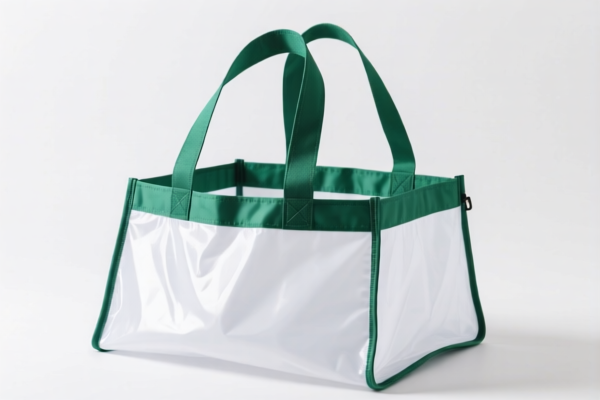
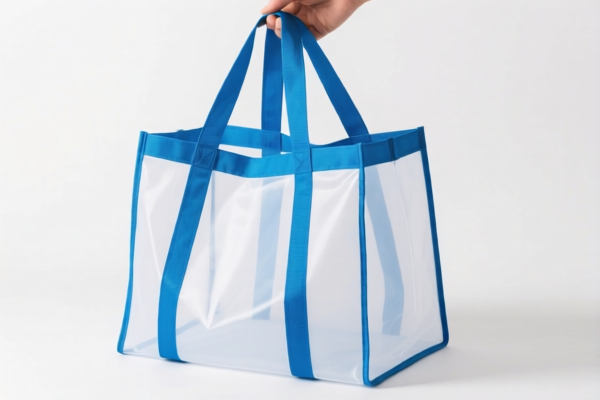
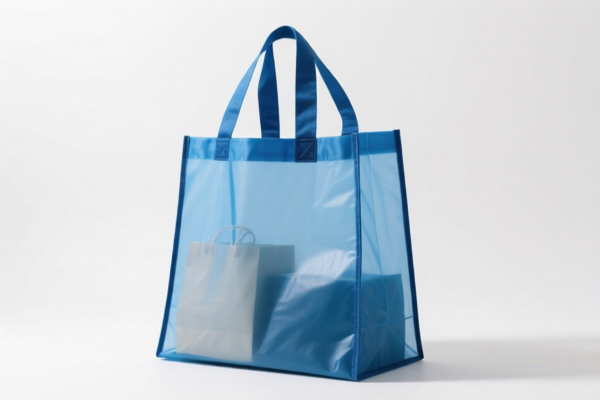
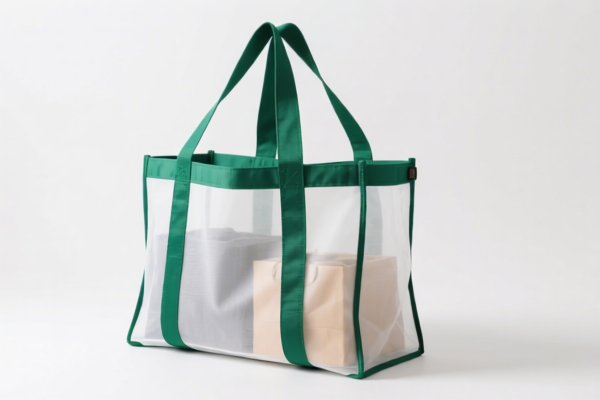
AI Analysis
👶 Gray Baby Carrier (Infant Sling & Transport Bag)
🌐 HS Code Reference & Customs Clearance Guide | 2026 Latest Tariff Analysis | Professional Strategy
📌 I. Product Definition & Classification: What is a "Gray Baby Carrier"?
A Gray Baby Carrier is a wearable device designed to carry an infant or toddler close to the parent’s body. In international trade, it is primarily classified under Chapter 42 (Articles of Leather; Travel Goods, Handbags...), specifically as a type of bag or satchel due to its structure (straps, compartments, and fabric construction).
Key Distinction: - Is it a Toy? ❌ No. Unless it is a small, non-functional doll accessory, a functional baby carrier is not classified as a toy (Chapter 95). - Is it a Garment? ❌ No. It is not worn on the body as clothing (like a shirt) but carries the baby. Therefore, it falls under "Travel/Sports Goods" rather than "Apparel" (Chapter 61/62). - Material Matters: Most baby carriers are made of textile materials (nylon, polyester, cotton blends). This directs classification to subheadings requiring "Outer surface of textile materials."
📦 II. HS Code Classification Details (2026 Latest Tariff Authority Comparison)
| HS Code | Product Description | Applicability | Material Constraint |
|---|---|---|---|
9503.00.00.90 |
Other Toys; Dolls' Accessories | ❌ Incorrect (Usually) | Applies only if item is a toy or doll accessory. A functional carrier for live infants is excluded. |
4202.92.31.31 |
Other Travel, Sports, and Similar Bags; Of Textile Materials; Other | ✅ Correct | Matches the "bag-like" structure with textile outer surface. Used for general inference when specific infant carrier codes are ambiguous. |
4202.92.39.00 |
Other Travel, Sports, and Similar Bags; Of Textile Materials; Other | ✅ Correct | Most Common Fit. Specifically targets items like baby slings/carriers that fit the "travel/sports bag" logic but may have specific nuances distinguishing them from general luggage. |
🔍 Critical Logic:
- The Customs Authority looks at Function and Form. A baby carrier is structurally a "bag" (with straps and a main compartment for the child). - It is not a toy (Chapter 95) because its primary use is utility/care, not play. - It is not apparel (Chapter 61/62) because it is not worn by the adult for warmth or fashion, but to transport another person. - Therefore, it falls under Chapter 42 (Travel Goods), specifically 4202.92 (Of Textile Materials).
💰 III. 2026 Latest Tariff Rate Breakdown (Including Surtaxes & Policy Surcharges)
✅ Applicable Country: United States (US)
✅ Origin: China (CN)
✅ Effective Date: November 10, 2025 (including subsequent imports)
🎯 1. 9503.00.00.90 —— Incorrect Classification (Toy/Doll Accessory)
| Item | Content |
|---|---|
| Base Rate | 0% (ad valorem) |
| Section 301 Surtax | 0% |
| IEEPA Surtax (122 Clause) | +10% |
| Total Tax Rate | 10.0% |
| Tax Calculation | CIF Value × 10% |
| De Minimis Eligibility | ❌ No (Denied) |
| Legal Basis | IEEPA:9903.01.25 → IEEPA:9903.01.24 → USITC:9503.00.00.90 |
📌 Explanation:
- If incorrectly classified as a "Toy" or "Doll Accessory," the base tariff is 0%.
- However, due to the 122 Clause (a subset of IEEPA powers targeting specific Chinese imports), a 10% surtax applies.
- ⚠️ Risk: Misclassifying a functional carrier as a toy may trigger audits for Undervaluation of Duties if the true nature is discovered, but the base rate appears low. Do not use this unless it is truly a toy.
🎯 2. 4202.92.31.31 —— General Textile Bag Classification
| Item | Content |
|---|---|
| Base Rate | 17.6% |
| Section 301 Surtax | +25.0% |
| IEEPA Surtax (122 Clause) | +10% |
| Total Tax Rate | 52.6% |
| Tax Calculation | CIF Value × 52.6% |
| De Minimis Eligibility | ❌ No (Denied) |
| Legal Basis | IEEPA:9903.01.24 → USITC:4202.92.31.31 → FOOTNOTE:9903.88.01 |
📌 Explanation:
- This code applies to "Other Travel/Sports Bags" made of textile materials. - The Base Rate of 17.6% is significant. - Adding 25% (Section 301) and 10% (IEEPA 122) results in a high effective duty. - This is a safe, conservative classification for generic textile bags.
🎯 3. 4202.92.39.00 —— Specific Infant Carrier / Soft Bag Classification
| Item | Content |
|---|---|
| Base Rate | 17.6% |
| Section 301 Surtax | +25.0% |
| IEEPA Surtax (122 Clause) | +10% |
| Total Tax Rate | 52.6% |
| Tax Calculation | CIF Value × 52.6% |
| De Minimis Eligibility | ❌ No (Denied) |
| Legal Basis | IEEPA:9903.01.24 → USITC:4202.92.39.00 → FOOTNOTE:9903.88.01 |
📌 Explanation:
- This is the most accurate functional fit for baby carriers. - It explicitly covers "Other" textile bags that don't fit into luggage or handbags. - Same Tax Rate as above (52.6%), but legally more defensible for a baby carrier than general luggage codes. - Why not lower? Because it originates from China, triggering the full suite of punitive tariffs (301 + IEEPA).💡 Key Insight:
Whether you use31.31or39.00, the tax burden is identical (52.6%). However,4202.92.39.00is customs-friendly for baby carriers because the description "Other travel/sports... bags" aligns better with the "carrier" morphology than general luggage codes.
🛠️ IV. Customs Clearance Practical Advice (Pitfall Avoidance Guide)
✅ 1. Documentation Checklist (Mandatory)
| Document | Required | Purpose |
|---|---|---|
| ✅ Product Specification Sheet | ✔️ | Must detail: Material (e.g., 100% Polyester), Weight, Dimensions, Strap type. |
| ✅ Product Photos | ✔️ | Clear images of the carrier with a dummy/infant to prove utility. Must show "Baby Carrier" on label. |
| ✅ Commercial Invoice | ✔️ | Must explicitly state: "Baby Carrier, Textile Material, for Transport of Infants." DO NOT write "Toy" or "Doll Accessory." |
| ✅ Material Composition Label | ✔️ | Photo of the tag showing fabric content (e.g., Outer: 90% Nylon, 10% Spandex). |
| ✅ Safety Certifications (Optional but Helpful) | ✔️ | ASTM F2236, JPMA, or CE marking. Proves it is a regulated safety item, not a toy. |
✅ 2. Declaration Tips (Key Mantras)
🔥 “Function First, Material Second, Never Call It Toy!”
| Scenario | Correct Declaration | Wrong Declaration | Consequence |
|---|---|---|---|
| Functional Baby Carrier | 4202.92.39.00 (Baby Carrier, Textile) |
9503.00.00.90 (Toy) |
Risk of audit; if caught, retroactive tax + penalties. |
| Grey Cotton Carrier | 4202.92.39.00 |
6117.10.00.00 (Clothing Accessory) |
Misclassification; Chapter 42 is correct for "Bags/Carriers." |
| Baby Carrier + Toy | Split Declaration | Combined as One Item | Must separate value. Toy part → 10%; Carrier part → 52.6%. |
📌 Crucial Warning:
- Do NOT declare as "Toy" to get the lower 10% rate. US Customs and Border Protection (CBP) is aggressively targeting this misclassification.
- The 52.6% rate is unavoidable for Chinese-made textile baby carriers under current 2026 rules. Plan your pricing accordingly.
✅ 3. Special Circumstances
| Situation | Handling Advice |
|---|---|
| OEM Private Label | Ensure the invoice clearly states the manufacturer’s name and country (China). Hidden origins will lead to seizures. |
| Kit Components (Straps + Pouch) | Declare as a single "Baby Carrier" under 4202.92.39.00. Do not split into "fabric rolls" and "plastic buckles." |
| Materials with Leather Trim | If the outer surface is >50% leather, it may shift to 4202.91. Check material % carefully. Most carriers are textile. |
| De Minimis (Section 321) | ❌ Not Eligible. Even if under $800, Section 301/IEEPA surtaxes exclude de minimis relief for Chinese goods in these chapters. |
🌍 V. Global Market Comparison (2026 Latest)
| Country/Region | Recommended HS Code | Tariff (China Origin) | Certification Req. | Note |
|---|---|---|---|---|
| 🇺🇸 USA | 4202.92.39.00 |
52.6% | None (Voluntary ASTM) | Highest duty due to 301+IEEPA. |
| 🇨🇳 China | 4202.92.39.00 |
~10-15% (Import Duty) | CCC (Optional) | Domestic market has lower entry barriers. |
| 🇪🇺 EU | 4202.92.39.00 |
2.7% | CE + EN 13209-2 | No 301 surtax. Much more competitive. |
| 🇬🇧 UK | 4202.92.39.00 |
5.0% | UKCA | Post-Brexit rules apply. |
| 🇨🇦 Canada | 4202.92.39.00 |
0% - 15% | CCPS (Voluntary) | Check FTA/CUSMA if assembled elsewhere. |
📌 Strategic Conclusion:
- US Market is the most expensive due to the 52.6% effective tariff.
- EU/UK/Canada are far more cost-effective for Chinese-made baby carriers (2.7% - 5%).
- Recommendation: If targeting the US, consider supply chain diversification (e.g., manufacturing in Vietnam or Mexico) to avoid Section 301/IEEPA tariffs, or absorb the cost into premium pricing.
📌 VI. Common Errors & Pitfalls (Blood Lesson Guide)
❌ Error 1: Declaring as 9503 (Toy) to save tax
👉 Consequence: CBP audit → Retroactive tax assessment of $42.6% difference + penalties + potential loss of importing privileges.
❌ Error 2: Ignoring the "122 Clause"
👉 Consequence: Assuming only 301 (25%) applies. The additional 10% IEEPA tax is now active. Total 52.6% is correct. Missing this leads to underpayment.
❌ Error 3: Splitting a Carrier into "Clothing" + "Bag"
👉 Consequence: Complex classification. A baby carrier is a single utility item. Splitting it may confuse customs and lead to delays.
❌ Error 4: No Photo of the Product
👉 Consequence: CBP requests "Entry Summary" delay because they cannot verify if it's a toy, a bag, or clothing. Adds 2-4 weeks to clearance.
✅ Correct Approach:
"Gray Baby Carrier, Model XYZ, 100% Polyester Exterior, with Adjustable Straps, Designed for Infant Transport, HS Code 4202.92.39.00, Origin: China"
🎯 VII. Conclusion: Professional Declaration, Save Costs, Avoid Risks!
🎯 Remember the Mantra:
🔹 “Carrier is a Bag, Not a Toy.”
🔹 “China Origin = 52.6% (17.6% Base + 25% 301 + 10% IEEPA).”
🔹 “Always provide Photos and Spec Sheets.”
📌 Pro Tip:
If your volume is high, apply for a Binding Ruling (CBP Ruling) with a sample of your specific gray baby carrier. A pre-approved ruling from CBP locks in the classification and protects you from retroactive changes for 5 years.
📣 Immediate Action:
📞 Consult a licensed US Customs Broker.
📤 Submit your product photos and spec sheets.
🚀 Budget for 52.6% duty if shipping from China to the US. Consider alternative sourcing for the American market to remain competitive.
✨ Professional Clearance Starts with Accurate Classification!
💼 Your Margins Depend on the HS Code!
Customer Reviews
About HS Code Classification
The Harmonized System (HS) is an internationally standardized nomenclature developed by the World Customs Organization (WCO) to classify traded products. Over 200 countries use the HS system as the basis for customs tariffs, trade statistics, and import/export regulations.
Each HS code follows a hierarchical structure:
- Chapter (2 digits) — Broad category of goods (e.g., Chapter 84: Machinery and Mechanical Appliances)
- Heading (4 digits) — More specific grouping within the chapter
- Subheading (6 digits) — Internationally standardized breakdown, used by all WCO member countries
- National subdivisions (8-10 digits) — Country-specific extensions for further classification, such as US HTSUS 10-digit codes
Correct HS code classification is essential for smooth customs clearance, accurate duty payment, and compliance with trade regulations. Misclassification can lead to customs delays, overpayment of duties, or penalties.
When importing from CN to US, the applicable tariff rates may include:
- Most-Favored-Nation (MFN) rate — The standard duty rate applied to WTO members
- General rate — Applied to countries without trade agreements
- Trade remedy duties — Additional tariffs such as Section 301 (anti-dumping), Section 232 (national security), or countervailing duties
The information provided on this page is for reference purposes only. For official classification, please consult with your local customs authority or a licensed customs broker.