Gray Small Short and Long Distance Hand Shoulder Bag
CN → US| HS Code | Tariff Rate | Origin | Destination | Doc |
|---|---|---|---|---|
| 4202923131 | 52.6% | CN | US | Official Doc |
| 4202923120 | 52.6% | CN | US | Official Doc |
| 4202122120 | 55.0% | CN | US | Official Doc |
| 4202128910 | 52.6% | CN | US | Official Doc |
| 4202923131 | 52.6% | CN | US | Official Doc |
Product Images
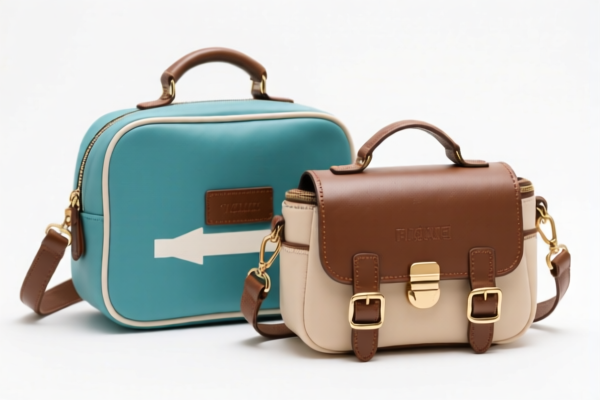
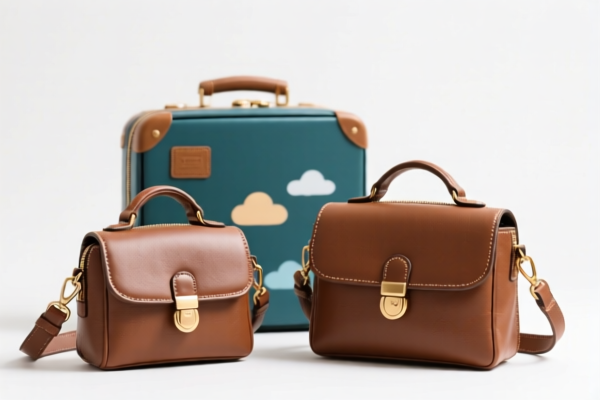
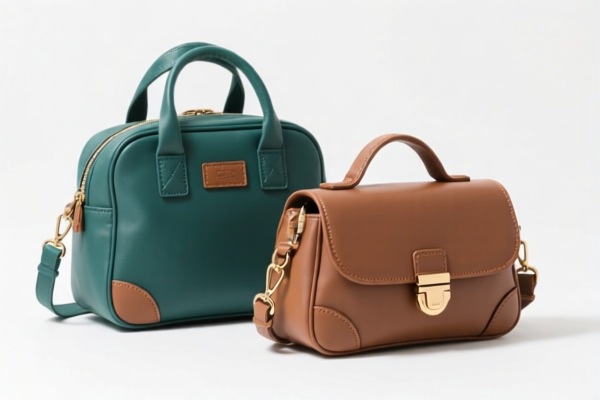
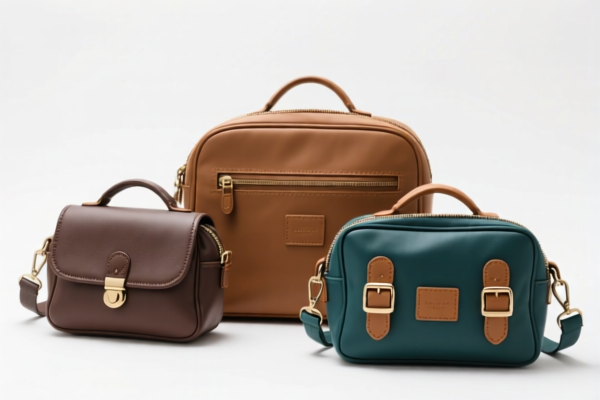
AI Analysis
🎒 Gray Small Short and Long Distance Hand Shoulder Bag (Travel & Luggage Tote)
🌐 HS Code Reference & Customs Clearance Guide | 2026 Latest Tariff Analysis | Professional Entry Strategy 📌 I. Product Definition & Classification: Do You Really Understand This Bag?
This product is a versatile Gray Small Short and Long Distance Hand Shoulder Bag, designed for both daily commuting and travel. It falls under the category of Luggage Articles or Travel Bags.
Key Classification Factors: * Shape/Function: Suitcase-style shoulder bag / Tote for short and long-distance travel. * Material Inference: The classification depends heavily on the outer surface material (Textile vs. Plastic/Vinyl vs. Leather). * Size: Small size (typically fits within cabin luggage dimensions).
⚠️ Critical Distinction Point: * If the outer surface is Textile Materials (nylon, polyester, etc.) → Typically falls under 4202.92 or 4202.12 (depending on specific structure). * If the outer surface is Plastic Sheet/Sheeting → Falls under 4202.12. * Note: Based on the provided data, the item is treated as a "Travel Bag" or "Suitcase" variant.
📦 II. HS Code Classification Details (2026 Latest Tariff Authoritative Comparison)
Based on the provided data, there are four potential HS Codes depending on the precise material inference and structural classification.
| HS Code | Product Description | Applicable Scenario | Material Inference |
|---|---|---|---|
4202.92.31.31 |
Short & Long Distance Luggage Shoulder Bag, Gray, Small | Travel Bags / Suitcase Alternatives | Artificial Fiber Textile Material |
4202.92.31.20 |
Short & Long Distance Luggage Shoulder Bag, Gray, Small | Travel/Sports Bags | Textile Material or Plastic Sheeting |
4202.12.21.20 |
Long & Short Distance Hand/Suitcase Shoulder Bag, Gray, Small | Handbags / Shoulder Bags | Plastic or Leather (Outer Surface) |
4202.12.89.10 |
Long & Short Distance Hand/Suitcase Shoulder Bag, Gray, Small | Suitcase/Shoulder Bag Form | Textile Material (Outer Surface) |
🔍 Key Insight: * Chapters 42 covers Articles of Leather; Articles of Traveling Goods, Handbags and Similar Containers. * Heading 4202 specifically covers travel bags, suitcase covers, and similar containers. * The distinction between
4202.92(Other) and4202.12(Shallowness/Shape-based) often hinges on whether the bag is considered a "suitcase" type (often rigid or semi-rigid) or a general "handbag/shoulder bag." The provided data suggests ambiguity between these subheadings, leading to varying tariff outcomes.
💰 III. 2026 Latest Tariff Rate Breakdown (Including Surcharges & Policy Add-ons)
✅ Applicable Country: United States (US) ✅ Country of Origin: China (CN) ✅ Effective Date: 2025 November 10 onwards (Including subsequent imports)
🎯 1. Codes Starting with 4202.92...
(Includes 4202.92.31.31 and 4202.92.31.20)
Description: Textile-based Travel/Luggage Bags
| Item | Content |
|---|---|
| Base Tariff | 17.6% (Ad Valorem) |
| Section 301 Tariff (USITC) | +25.0% |
| Section 122 Tariff (IEEPA) | +10.0% |
| Total Tariff Rate | 52.6% |
| Tax Calculation | CIF Value × 52.6% |
| De Minimis Exemption? | ❌ No (Deny De Minimis) |
| Legal Basis Path | Section 301 → Section 122 → USITC:4202.92 |
📌 Explanation: * 17.6% Base: Standard MFN duty for textile/plastic travel goods from China. * 25% Section 301: Retaliatory tariffs on Chinese goods (List 3/4). * 10% Section 122: Specific tariffs related to national security/international emergency powers. * Total: 52.6% is a HIGH tariff rate. Cost management is critical.
🎯 2. Code 4202.12.21.20
Description: Plastic/Leather Outer Surface Hand/Shoulder Bag
| Item | Content |
|---|---|
| Base Tariff | 20.0% (Ad Valorem) |
| Section 301 Tariff (USITC) | +25.0% |
| Section 122 Tariff (IEEPA) | +10.0% |
| Total Tariff Rate | 55.0% |
| Tax Calculation | CIF Value × 55.0% |
| De Minimis Exemption? | ❌ No (Deny De Minimis) |
| Legal Basis Path | Section 301 → Section 122 → USITC:4202.12 |
📌 Note: * This code has the highest base rate (20%) among the options, resulting in the highest total burden. * Likely applies if the bag is classified as a "handbag" made of plastic/leather rather than a "travel bag" made of textile.
🎯 3. Code 4202.12.89.10
Description: Textile Outer Surface Suitcase/Shoulder Bag
| Item | Content |
|---|---|
| Base Tariff | 17.6% (Ad Valorem) |
| Section 301 Tariff (USITC) | +25.0% |
| Section 122 Tariff (IEEPA) | +10.0% |
| Total Tariff Rate | 52.6% |
| Tax Calculation | CIF Value × 52.6% |
| De Minimis Exemption? | ❌ No (Deny De Minimis) |
| Legal Basis Path | Section 301 → Section 122 → USITC:4202.12 |
📌 Note: * Same total rate as the
4202.92group, but classified under the "Suitcase/Handbag" subheading (12) rather than "Other" (92). * Requires strong evidence that the outer surface is Textile.
🛠️ IV. Customs Clearance Practical Advice (Combat Pitfall Guide)
✅ 1. Required Documentation Checklist (Non-Negotiable)
| Document | Must Provide? | Explanation |
|---|---|---|
| ✅ Product Specification Sheet | ✔️ | Must detail dimensions, material composition (e.g., "100% Polyester Outer"), lining material, and closure type. |
| ✅ Material Declaration | ✔️ | Crucial for distinguishing between 4202.92 (Textile) and 4202.12 (Plastic/Leather). Misclassification leads to back taxes. |
| ✅ Product Photos (Clear & Detailed) | ✔️ | Show the exterior texture. Is it woven fabric? PVC plastic? Leather? This is the primary evidence for HS code selection. |
| ✅ Commercial Invoice | ✔️ | Must state: "Gray Small Shoulder Bag, Textile Material, For Travel/Personal Use." Avoid vague terms like "Accessory." |
| ✅ Packing List | ✔️ | Itemize contents. If the bag comes with a removable dust bag or tag, include them. |
| ✅ Origin Certificate (if applicable) | ✔️ | While China origin incurs tariffs, accurate origin declaration prevents penalties for misrepresentation. |
✅ 2. Declaration Strategy (Key Mantra)
🔥 "Material Dictates Code, Travel Function Supports 4202, Avoid Ambiguity!"
| Scenario | Correct Declaration | Wrong Action |
|---|---|---|
| Outer is Fabric/Nylon | Use 4202.92.31.31 or 4202.12.89.10 (Textile). Total Tax: 52.6% |
Classify as Plastic (4202.12.21.20) → Tax jumps to 55% |
| Outer is PVC/Vinyl | Use 4202.12.21.20 (Plastic). Total Tax: 55% |
Claim it's Textile → Customs audit & penalty |
| Outer is Leather | Use 4202.12.21.20 (Leather). Total Tax: 55% |
Use Textile code → Significant underpayment risk |
| Not for Travel? | If used purely as a fashion handbag not for luggage, review if 4202 is still the best fit vs. 4203 (Leather apparel) or 6213/6217 (Textile accessories). | Assume all bags are 4202 |
⚠️ Critical Warning: * The difference between 52.6% and 55.0% is small, but the legal risk of misclassifying material (e.g., calling PVC "Textile") is high. * Section 122 and Section 301 tariffs are non-negotiable for Chinese-origin goods in this category.
✅ 3. Special Handling Tips
| Situation | Recommendation |
|---|---|
| Mixed Material Bag | If the bag has a leather patch or plastic zipper pull, the principal material (usually the outer surface) determines the code. |
| Sample vs. Bulk | Ensure the sample declared matches the bulk import exactly. Changes in material composition can trigger customs holds. |
| Pre-Import Ruling | Highly Recommended. File a Prior Ruling Request with CBP using photos and material specs to lock in the HS Code (preferably 4202.92.31.31 if textile) before shipping. |
🌍 V. Global Market Comparison (2026 Latest)
| Country/Region | Recommended HS Code (Textile Example) | Tariff (China Origin) | Key Certification | Notes |
|---|---|---|---|---|
| 🇺🇸 USA | 4202.92.31.31 |
52.6% | None specific, but Accurate Description is key | High tariffs due to Section 301 & 122. |
| 🇨🇳 China | 4202.92.31.31 |
15-20% (Estimated) | CCC (if applicable) | Domestic market, lower export complexity. |
| 🇪🇺 EU | 4202.92 |
4-12% (VAT + Duty) | CE (if electronic components) | No Section 301/122 equivalents, but stricter product safety laws. |
| 🇬🇧 UK | 4202.92 |
4-12% | UKCA | Post-Brexit rules apply. |
📌 Conclusion: * The US market is the most costly due to the叠加 (stacking) of Base, Section 301, and Section 122 tariffs. * Material accuracy is your best defense. Ensure the "Textile" claim is supported by test reports (fiber composition analysis) if using
4202.92or4202.12.89.10.
📌 VI. Common Errors & Pitfalls (Lessons Learned)
❌ Error 1: Declaring a PVC bag as "Textile" to save on base tariff.
👉 Consequence: Customs lab tests the bag, finds 100% PVC, reclassifies to 4202.12.21.20 or higher, and issues a penalty for fraud. Tax paid: 52.6% → Must pay 55% + fines.
❌ Error 2: Using vague descriptions like "Bag" or "Accessory" on the Invoice. 👉 Consequence: Customs cannot determine the function. May classify under general "Other" categories with higher scrutiny or different (potentially higher) duties.
❌ Error 3: Ignoring Section 122 Tariffs. 👉 Consequence: Many importers forget the additional 10% on top of the 301 tariffs. This leads to unexpected costs at port, delaying release.
✅ Correct Practice:
"Luggage Shoulder Bag, Model XYZ, Gray, Outer: 100% Recycled Polyester, Inner: Lining, Function: Travel/Commute, Origin: China"
🎯 VII. Conclusion: Professional Declaration, Save Costs, Clear Faster!
🎯 Remember the Mantra:
🔹 "Textile is Key, 52.6% is the Target, Plastic is 55%, Avoid the 55% if Possible!" 🔹 "Section 301 + 122 = 35% Extra. Base is 17.6-20%. Total is High." 🔹 "Material Test Report is Your Best Friend in US Customs."
📌 Pro Tip:
If you can prove the bag is made of non-China origin materials (e.g., fabric made in Vietnam, assembled in Vietnam), you may avoid Section 301 and 122 tariffs. However, this requires strict Country of Origin documentation and supply chain transparency.
📣 Immediate Action:
📞 Contact a Licensed Customs Broker + Provide Material Test Report + Apply for Advance Ruling. 🚀 Let your bags clear smoothly, maximize margin, and reach US shelves efficiently!
✨ Professional Customs Clearance Starts with Accurate Classification! 💼 Every cent of tariff cost deserves precise calculation!
Customer Reviews
About HS Code Classification
The Harmonized System (HS) is an internationally standardized nomenclature developed by the World Customs Organization (WCO) to classify traded products. Over 200 countries use the HS system as the basis for customs tariffs, trade statistics, and import/export regulations.
Each HS code follows a hierarchical structure:
- Chapter (2 digits) — Broad category of goods (e.g., Chapter 84: Machinery and Mechanical Appliances)
- Heading (4 digits) — More specific grouping within the chapter
- Subheading (6 digits) — Internationally standardized breakdown, used by all WCO member countries
- National subdivisions (8-10 digits) — Country-specific extensions for further classification, such as US HTSUS 10-digit codes
Correct HS code classification is essential for smooth customs clearance, accurate duty payment, and compliance with trade regulations. Misclassification can lead to customs delays, overpayment of duties, or penalties.
When importing from CN to US, the applicable tariff rates may include:
- Most-Favored-Nation (MFN) rate — The standard duty rate applied to WTO members
- General rate — Applied to countries without trade agreements
- Trade remedy duties — Additional tariffs such as Section 301 (anti-dumping), Section 232 (national security), or countervailing duties
The information provided on this page is for reference purposes only. For official classification, please consult with your local customs authority or a licensed customs broker.