Grease Residue Cleaner
CN → US| HS Code | Tariff Rate | Origin | Destination | Doc |
|---|---|---|---|---|
| 3402905030 | 38.7% | CN | US | Official Doc |
| 3402905010 | 38.7% | CN | US | Official Doc |
| 3402905030 | 38.7% | CN | US | Official Doc |
| 3402905010 | 38.7% | CN | US | Official Doc |
| 3402905030 | 38.7% | CN | US | Official Doc |
Product Images
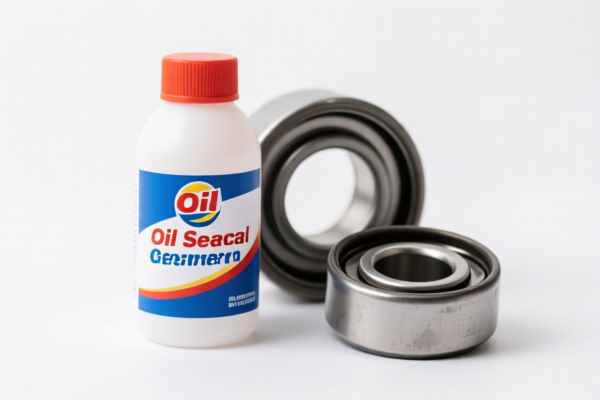
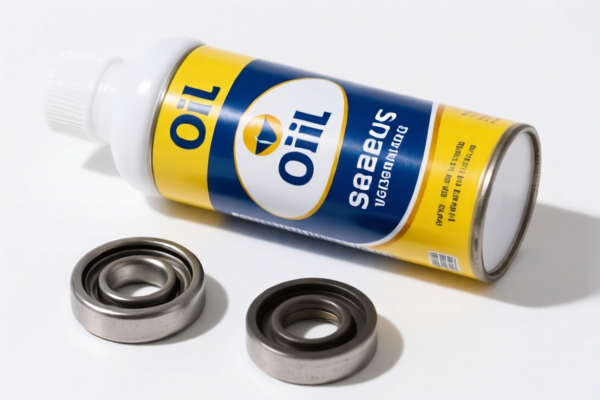
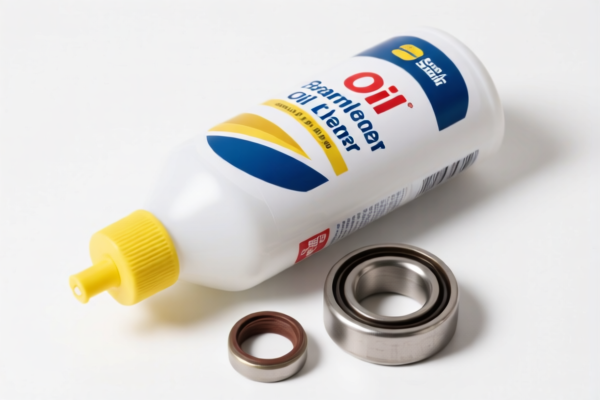
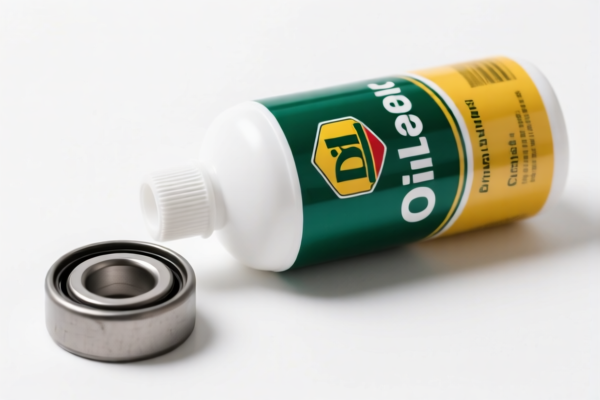
AI Analysis
🧼 Grease Residue Cleaner (Industrial Degreaser)
🌐 HS Code Reference & Customs Clearance Guide | 2026 Latest Tariff Analysis | Professional-Level Strategy
📌 1. Product Definition & Classification: What Exactly is a "Grease Residue Cleaner"?
Grease Residue Cleaners are specialized chemical formulations designed to remove oil, grease, and hydrocarbon deposits from industrial machinery, automotive parts, and manufacturing equipment. In international trade, these products fall under Chapter 34: Soap, Organic Surface-Active Agents, Washing Preparations, Lubricating Preparations..., specifically targeting Cleaning Preparations and Surfactant-based Chemical Agents.
⚠️ Key Distinction:
- If the product is primarily a surfactant-based cleaning agent → It falls under 3402.90.
- If it is primarily a solvent-based degreaser (e.g., pure acetone or petroleum distillates) → It may fall under Chapter 29 or 3824, but most commercial "cleaning preparations" are classified under 3402.90 as "Other."
📦 2. HS Code Classification Details (2026 Latest Tariff Authority Comparison)
Based on the provided data, the product is consistently classified under HS Code 3402.90.50.x0, specifically splitting between two sub-headings based on precise chemical composition and usage description.
| HS Code | Product Description | Key Characteristic | Tax Rate (Total) |
|---|---|---|---|
3402.90.50.30 |
Fast-acting grease removal cleaner; cleaning preparation | Matches 3402.90 category for "Cleaning Preparations" | 38.7% |
3402.90.50.10 |
Rapid oil-removal cleaner; surfactant-based chemical agent | Classified as Surfactant Chemical Agents under 3402.90 | 38.7% |
🔍 Critical Note:
- Both.50.30and.50.10share the same total tax rate of 38.7%.
- The distinction lies in the legal description:
-.50.30: Emphasizes "Cleaning Preparation" (general use).
-.50.10: Emphasizes "Surfactant" (chemical composition).
- Customs Preference: If your product’s Safety Data Sheet (SDS) highlights surfactant content as the primary active ingredient,.50.10is more accurate. If it’s a multi-component cleaning formulation,.50.30is safer.
💰 3. 2026 Latest Tariff Rate Breakdown (Including Surtaxes & Policy Surcharges)
✅ Applicable Country: United States (US)
✅ Origin: China (CN)
✅ Effective Date: 2025 November 10 (and subsequent imports)
🎯 1. 3402.90.50.10 & 3402.90.50.30 —— Grease/Cleaning Cleaners (Surfactant/Cleaning Prep)
| Item | Content |
|---|---|
| Base Tariff | 3.7% (ad valorem) |
| Section 301 Surtax | +25.0% (USITC Footnote: Section 301 Trade Remedies) |
| Section 122 Surtax | +10.0% (IEEPA: International Emergency Economic Powers Act) |
| Total Tax Rate | 38.7% |
| Tax Calculation | CIF Value × 38.7% |
| De Minimis Eligibility | ❌ Not Eligible (High-value chemical imports are excluded from Section 321 de minimis benefits) |
| Legal Basis Path | Base: 3.7% → Section 301: 25% → Section 122: 10% → Total: 38.7% |
📌 Explanation:
- "Base Tariff 3.7%": Standard Most Favored Nation (MFN) rate for cleaning preparations under 3402.
- "Section 301 Surtax 25%": Imposed on Chinese-origin chemical preparations due to trade tensions.
- "Section 122 Tariff 10%": Additional duty on specific Chinese imports, often applied to industrial chemicals.
- Total 38.7%: This is a significant cost burden. Importers must factor this into pricing.
🛠️ 4. Customs Clearance Practical Advice (Battle-Proven Pitfall Guide)
✅ 1. Required Documentation Checklist (Non-negotiable)
| Document | Mandatory? | Notes |
|---|---|---|
| ✅ Safety Data Sheet (SDS) | ✔️ | Must clearly list surfactant components and hazard classification (e.g., GHS). |
| ✅ Commercial Invoice | ✔️ | Must describe product as "Grease Cleaner, Surfactant-Based" or "Cleaning Preparation". |
| ✅ Packing List | ✔️ | Include net/gross weight, volume, and container number. |
| ✅ Certificate of Origin | ✔️ | To prove CN origin for surtax calculation. |
| ✅ Product Formula/Composition | ✔️ | Customs may request breakdown of active ingredients to confirm HS Code accuracy. |
| ✅ FCC/CPSC Certification | ✔️ | If marketed for consumer use, safety compliance is required. |
✅ 2. Declaration Strategy (Key Mantras)
🔥 "Be Precise, Be Consistent, Avoid Ambiguity!"
| Scenario | Correct Declaration | Wrong Declaration |
|---|---|---|
| Surfactant-heavy formula | 3402.90.50.10 - "Surfactant Chemical Cleaning Agent" |
Vague: "Chemical Cleaner" → Risk of reclassification |
| General industrial degreaser | 3402.90.50.30 - "Cleaning Preparation for Grease Removal" |
Vague: "Detergent" → May trigger scrutiny |
| Consumer-grade spray | 3402.90.50.30 + CPSC Compliance |
Without compliance → Seizure Risk |
| Bulk industrial drum | 3402.90.50.10 + SDS |
Without SDS → Delayed Release |
📌 Tip:
- Do NOT simply write "Cleaner" or "Degreaser" on the invoice.
- DO specify: "Grease Residue Cleaner, Surfactant-Based, for Industrial Use, HS 3402.90.50.x0".
✅ 3. Special Situations
| Situation | Handling Advice |
|---|---|
| Mixed Chemical Content | If the product contains solvents >10%, customs may challenge the 3402 classification. Provide SDS to prove surfactant is dominant. |
| Hazmat Classification | Grease cleaners are often Class 3 Flammable Liquids or Class 8 Corrosive. Ensure IMDG/IATA compliance for shipping. |
| Section 122 Exemption | No current exemptions for Chinese-origin cleaning preparations. Plan for 38.7%. |
| Pre-Ruling Request | Highly recommended. Submit a Customs Ruling Request (CBP) with SDS and samples to get a binding HS Code determination. |
🌍 5. Global Market Comparison (2026 Latest)
| Country/Region | Recommended HS Code | Tariff (China Origin) | Certification | Notes |
|---|---|---|---|---|
| 🇺🇸 USA | 3402.90.50.10 / .30 |
38.7% (3.7% + 25% + 10%) | CPSC, EPA (if pesticide claims) | High tariffs due to Section 301 & 122 |
| 🇨🇳 China | 3402.90.50 |
5–10% | None | Lower import barrier |
| 🇪🇺 EU | 3402.90.90 |
6.5% | REACH, CLP | No surtax, but strict chemical registration |
| 🇬🇧 UK | 3402.90.90 |
6.5% | UK REACH | Post-Brexit alignment with EU standards |
| 🇯🇵 Japan | 3402.90.90 |
5.0% | JIS | Low tariff, but strict labeling |
📌 Conclusion:
- USA is the highest-cost market due to layered surtaxes (301 + 122).
- EU/UK/Japan offer more favorable tariff structures but require strict chemical compliance (REACH/CLP).
- Profit Margins: US importers must price in 38.7% duty or seek alternative origins (e.g., Vietnam, India) if possible.
📌 6. Common Mistakes & Pitfall Guide (Lessons Learned)
❌ Mistake 1: Using "Degreaser" without specifying "Surfactant-Based"
👉 Consequence: Customs may misclassify as 3814 (Industrial Solvents) → Different tax rate & compliance requirements.
❌ Mistake 2: Ignoring Section 122 & 301 Surtaxes
👉 Consequence: Under-declaration of duty → Penalties, Seizure, and Back Taxes.
❌ Mistake 3: Failing to provide SDS
👉 Consequence: Customs cannot verify chemical composition → Hold for Inspection, Delays.
❌ Mistake 4: Claiming "Consumer Product" for Industrial Use
👉 Consequence: Violation of CPSC/EPA regulations → Product Recall & Fines.
✅ Correct Approach:
"Grease Residue Cleaner, Surfactant-Based, Non-Flammable, for Industrial Machinery Cleaning, HS 3402.90.50.10, CBP Ruling Pending"
🎯 7. Conclusion: Professional Declaration, Cost Optimization, Risk Mitigation!
🎯 Remember the Mantra:
🔹 "Surfactant First, HS 3402 Clear, Section 301 & 122 Apply, 38.7% is the Reality!"
🔹 "SDS is Key, Invoice is King, Pre-Ruling is Your Safety Net!"
📌 Pro Tip:
- If your product originates from Vietnam, Thailand, or India, it may avoid Section 301 (25%) and Section 122 (10%) surtaxes, reducing the tariff to just 3.7% (Base) + local VAT/GST.
- Strongly Recommend: File a CBP Pre-Ruling with your supplier’s SDS and commercial sample to lock in the 3402.90.50.x0 classification before shipment.
📣 Immediate Action:
📞 Contact a Licensed Customs Broker + Provide SDS + Apply for Pre-Ruling
🚀 Ensure your Grease Cleaner clears customs smoothly, avoids penalties, and maximizes profit!
✨ Professional Clearance Starts with Accurate Classification!
💼 Every Percent of Tariff Matters!
Customer Reviews
About HS Code Classification
The Harmonized System (HS) is an internationally standardized nomenclature developed by the World Customs Organization (WCO) to classify traded products. Over 200 countries use the HS system as the basis for customs tariffs, trade statistics, and import/export regulations.
Each HS code follows a hierarchical structure:
- Chapter (2 digits) — Broad category of goods (e.g., Chapter 84: Machinery and Mechanical Appliances)
- Heading (4 digits) — More specific grouping within the chapter
- Subheading (6 digits) — Internationally standardized breakdown, used by all WCO member countries
- National subdivisions (8-10 digits) — Country-specific extensions for further classification, such as US HTSUS 10-digit codes
Correct HS code classification is essential for smooth customs clearance, accurate duty payment, and compliance with trade regulations. Misclassification can lead to customs delays, overpayment of duties, or penalties.
When importing from CN to US, the applicable tariff rates may include:
- Most-Favored-Nation (MFN) rate — The standard duty rate applied to WTO members
- General rate — Applied to countries without trade agreements
- Trade remedy duties — Additional tariffs such as Section 301 (anti-dumping), Section 232 (national security), or countervailing duties
The information provided on this page is for reference purposes only. For official classification, please consult with your local customs authority or a licensed customs broker.