Green Jacquard Ribbon
CN → US| HS Code | Tariff Rate | Origin | Destination | Doc |
|---|---|---|---|---|
| 6307904020 | 17.5% | CN | US | Official Doc |
| 6307904010 | 17.5% | CN | US | Official Doc |
Product Images
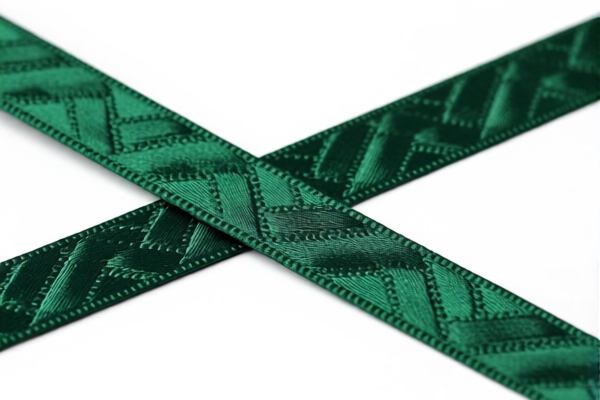
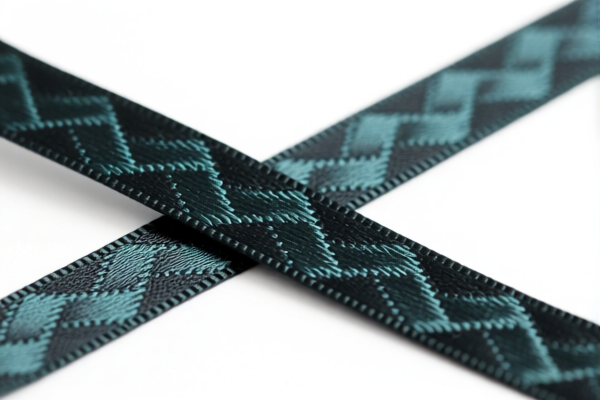
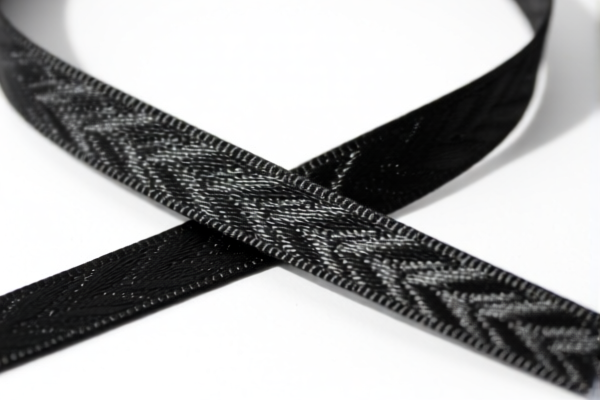
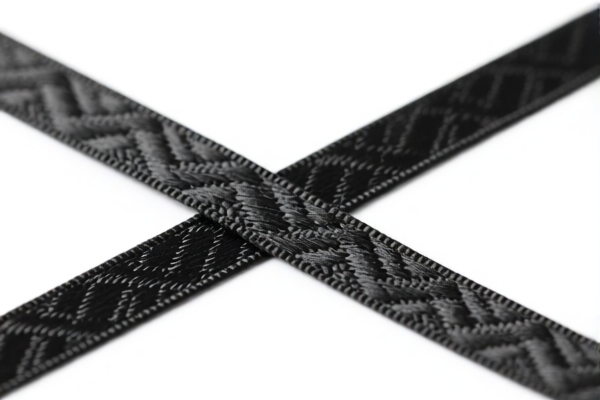
AI Analysis
🎀 Green Jacquard Ribbon (Woven Trim & Decoration)
🌐 HS Code Reference & Customs Clearance Guide | 2026 Latest Tariff Analysis | Professional Strategy
📌 I. Product Definition & Classification: What Exactly is "Green Jacquard Ribbon"?
Jacquard ribbon is a type of decorative fabric trim produced on a Jacquard loom, allowing for complex, woven-in patterns and designs. It is widely used in fashion (dress hems, waistbands), crafts, gift wrapping, and home decor.
In international trade, this product falls under the category of "Other made up articles, including dress patterns." It is not considered a raw fabric (Chapter 50-55) nor a simple textile accessory like elastic (Chapter 39/62), but rather a specific "made-up" article intended for decoration or structural reinforcement in garments.
⚠️ Key Distinction:
- If the ribbon is made of Cotton → It belongs to the sub-category "Of cotton".
- If the ribbon is made of other materials (e.g., Polyester, Nylon, Silk, or a blend where cotton is not dominant) → It belongs to the general sub-category "Other".
- Note: "Green" is a color attribute and does not affect the HS Code classification, only the visual description.
📦 II. HS Code Classification Details (2026 Latest Tariff Authority Cross-Reference)
Based on the provided data, there are two specific HS Codes depending on the fiber content:
| HS Code | Product Description | Material Composition | Specific Attribute |
|---|---|---|---|
6307.90.40.10 |
Other made up articles, including dress patterns: Other: Cords and tassels | Of Cotton | Green Jacquard Ribbon (Cotton base) |
6307.90.40.20 |
Other made up articles, including dress patterns: Other: Cords and tassels | Other Materials | Green Jacquard Ribbon (Polyester, Silk, Blends, etc.) |
🔍 Critical Clarification:
- The parent heading 6307.90.40 covers "Cords and tassels" and related dress patterns.
- Sub-heading.10is exclusively for Cotton products.
- Sub-heading.20is the "Catch-all" for Non-Cotton products (including synthetic fibers like polyester, which are common in jacquard ribbons).
- Do not guess: You must determine the exact fiber composition. If it is 100% cotton, use.10. If it is 100% polyester, 50/50 blend, or silk, use.20.
💰 III. 2026 Latest Tariff Rate Details (Including Additional Duties)
✅ Applicable Country: China (CN)
✅ Export Destination: United States (US)
✅ Effective Time: Current rates as per provided data
✅ Total Tax Rate: 7.5%
Both HS Codes share the same tariff structure in this dataset.
🎯 1. 6307.90.40.10 (Cotton Jacquard Ribbon)
| Item | Content |
|---|---|
| Base Tariff | 0.0% (ad valorem) |
| Additional Tariff (Section 301/Trade War) | 7.5% |
| Total Tax Rate | 7.5% |
| Tax Calculation | CIF Value × 7.5% |
| De Minimis Eligibility | ⚠️ Check Local Policy: Generally, small packages may be exempt, but for commercial shipments, this applies fully. |
📌 Explanation:
- The Base Rate is 0%, reflecting that this is a finished accessory rather than a raw material.
- The 7.5% Additional Tariff is likely due to Section 301 tariffs imposed on specific categories of Chinese goods.
- Total Cost Impact: For every $1,000 of goods, you pay $75 in duties.
🎯 2. 6307.90.40.20 (Non-Cotton Jacquard Ribbon)
| Item | Content |
|---|---|
| Base Tariff | 0.0% (ad valorem) |
| Additional Tariff (Section 301/Trade War) | 7.5% |
| Total Tax Rate | 7.5% |
| Tax Calculation | CIF Value × 7.5% |
| De Minimis Eligibility | ⚠️ Check Local Policy: Same as above. |
📌 Note:
- Despite being "Other" materials, the tariff is identical to the cotton version in this specific dataset.
- Whether it is Polyester, Nylon, or Silk, if it is a jacquard ribbon classified under "cords and tassels/dress patterns," it attracts the 7.5% surcharge.
🛠️ IV. Customs Clearance Practical Advice (Pitfall Avoidance Guide)
✅ 1. Document Checklist (Non-negotiable)
| Document | Required? | Explanation |
|---|---|---|
| ✅ Commercial Invoice | ✔️ | Must clearly state: "Green Jacquard Ribbon, [Cotton/Polyester], Woven, Decorative Trim" |
| ✅ Packing List | ✔️ | Detail roll weight, length, and dimensions per roll. |
| ✅ Fiber Content Label | ✔️ | Crucial! Must explicitly state the percentage of each fiber (e.g., "100% Cotton" or "100% Polyester"). This determines .10 vs .20. |
| ✅ Product Photos | ✔️ | Show the woven pattern, edge finish (cut edge, hemmed, etc.), and any brand labels. |
| ✅ Bill of Lading/Air Waybill | ✔️ | Standard shipping document. |
✅ 2. Declaration Tips (Key Mantra)
🔥 "Fiber Defines the Code, Pattern Defines the Purpose!"
| Scenario | Correct HS Code | Wrong Approach |
|---|---|---|
| 100% Cotton Jacquard Ribbon | 6307.90.40.10 |
Using .20 (Under-reporting risk) |
| 100% Polyester Jacquard Ribbon | 6307.90.40.20 |
Using .10 (Misclassification) |
| Blend (e.g., 50% Cotton/50% Poly) | Determine Dominant Fiber | If cotton is >50%, often .10; if not, .20. Consult lab test if uncertain. |
| Raw Tape (not jacquard patterned) | May differ (e.g., 5806) | Declaring as "Jacquard Ribbon" when it's plain tape → Penalty Risk |
📌 Warning:
- Do not simply declare "Ribbon." Be specific: "Jacquard Woven Ribbon."
- If the ribbon is used for industrial purposes (e.g., heavy-duty lifting), it might not fall under "dress patterns." Ensure it is marketed/used for garments, crafts, or decoration to justify Chapter 63.
✅ 3. Special Cases
| Case | Handling Advice |
|---|---|
| Mixed Containers | If a container has both Cotton and Polyester ribbons, split the declaration into two entries with respective HS Codes to avoid disputes. |
| Sample Shipments | Even for samples, declare correctly. Low value doesn't exempt you from classification accuracy, but may waive de minimis taxes if under $800 (US). |
| Custom Dyes/Prints | "Green" is just a color. If the ribbon is embroidered on top of woven jacquard, it may still be 6307. If it is purely printed on plain fabric, it might be 5807 (Labels, Badges, etc.) or 5907 (Textile Coated). Ensure it is woven pattern for 6307. |
🌍 V. Global Market Comparison (2026)
| Country/Region | Recommended HS Code | Base Duty | Additional Tariff (China) | Total Est. Duty | Notes |
|---|---|---|---|---|---|
| 🇺🇸 USA | 6307.90.40.10 / .20 |
0% | 7.5% | 7.5% | High compliance need for fiber content. |
| 🇨🇳 China (Import) | 6307.90.40.10 / .20 |
Varies | None | ~0-10% | Import duties vary; check latest China tariff. |
| 🇪🇺 EU | 5806.32 or 6307.90 |
0-4% | None | ~0-4% | EU often classifies woven ribbons under Ch 58. |
| 🇬🇧 UK | 6307.90.90 |
0-5% | None | ~0-5% | Post-Brexit rules apply; check UK Trade Tariff. |
📌 Conclusion:
- The 7.5% US tariff is the primary cost driver for China-origin goods.
- No anti-dumping or countervailing duties are indicated in this dataset for this specific item.
- Compliance Focus: The biggest risk is misidentifying the fiber content, leading to incorrect HS Code selection.
📌 VI. Common Mistakes & Pitfalls (Lessons Learned)
❌ Mistake 1: Assuming all ribbons are the same.
👉 Consequence: Using 6307.90.40.10 for polyester ribbons can lead to rejection or requests for correction by customs if fiber tests prove otherwise.
❌ Mistake 2: Ignoring the "Jacquard" aspect.
👉 Consequence: If the item is a printed ribbon (not woven pattern), it may belong to Chapter 58 (Textile Fabrics) or 5907 (Coated), not 6307. Misclassification can lead to different duty rates and regulatory checks.
❌ Mistake 3: Vague Description "Green Ribbon."
👉 Consequence: Customs may classify it as "Other textile articles" (higher base duty) or hold it for fiber testing.
✅ Correct Description:
"Jacquard Woven Ribbon, 2cm Width, Green, 100% Cotton, for Dress Decoration, Model GRN-001"
🎯 VII. Conclusion: Professional Declaration, Save Costs & Time
🎯 Remember the Mantra:
🔹 "Cotton is .10, Other is .20, Pattern is Key, Fiber is Law!"
🔹 "7.5% Total Duty, No Base Tax, Just Check the Blend!"
📌 Pro Tip:
- If you are exporting to the US, ensure your Supplier's Declaration matches the Fiber Content on your Invoice.
- For high-value bulk shipments, consider applying for an ISF (Import Security Filing) 24 hours before loading.
- If your ribbon is recycled polyester, it may still fall under .20, but check for any green trade incentives in your specific destination.
📣 Immediate Action:
📞 Verify Fiber Content: Get a lab test report if unsure.
📄 Label Correctly: Ensure physical labels on rolls match the declaration.
🚀 Ship with Confidence: Accurate classification means smooth clearance and predictable costs!
✨ Professional Customs Clearance Starts with Precise Classification!
💼 Your Margins Depend on Your HS Code Accuracy!
Customer Reviews
About HS Code Classification
The Harmonized System (HS) is an internationally standardized nomenclature developed by the World Customs Organization (WCO) to classify traded products. Over 200 countries use the HS system as the basis for customs tariffs, trade statistics, and import/export regulations.
Each HS code follows a hierarchical structure:
- Chapter (2 digits) — Broad category of goods (e.g., Chapter 84: Machinery and Mechanical Appliances)
- Heading (4 digits) — More specific grouping within the chapter
- Subheading (6 digits) — Internationally standardized breakdown, used by all WCO member countries
- National subdivisions (8-10 digits) — Country-specific extensions for further classification, such as US HTSUS 10-digit codes
Correct HS code classification is essential for smooth customs clearance, accurate duty payment, and compliance with trade regulations. Misclassification can lead to customs delays, overpayment of duties, or penalties.
When importing from CN to US, the applicable tariff rates may include:
- Most-Favored-Nation (MFN) rate — The standard duty rate applied to WTO members
- General rate — Applied to countries without trade agreements
- Trade remedy duties — Additional tariffs such as Section 301 (anti-dumping), Section 232 (national security), or countervailing duties
The information provided on this page is for reference purposes only. For official classification, please consult with your local customs authority or a licensed customs broker.