Greeting Cards
CN → US| HS Code | Tariff Rate | Origin | Destination | Doc |
|---|---|---|---|---|
| 4909004000 | 10.0% | CN | US | Official Doc |
| 4911998000 | 17.5% | CN | US | Official Doc |
| 4909002000 | 17.5% | CN | US | Official Doc |
| 4911914040 | 17.5% | CN | US | Official Doc |
Product Images
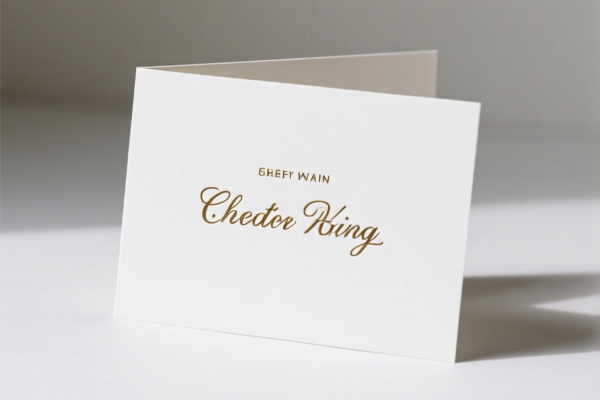
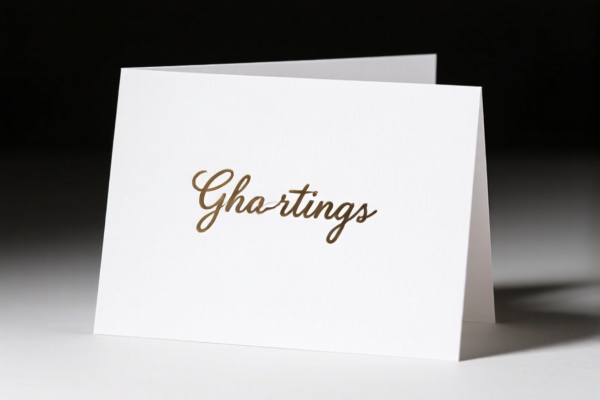
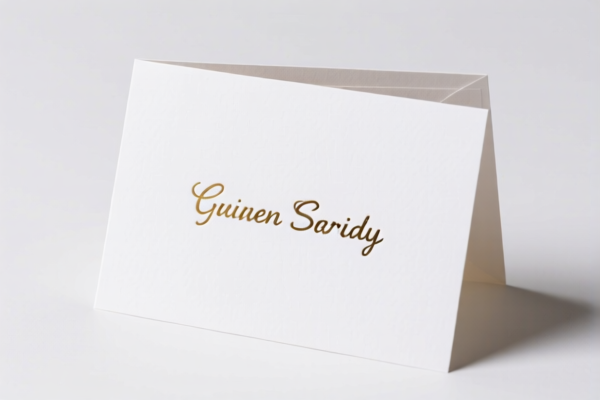
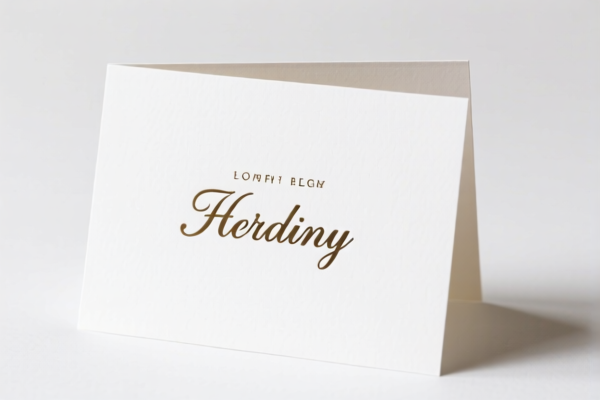
AI Analysis
🎨 Greeting Cards (Printed Cards for Personal Greetings)
🌐 HS Code Reference & Customs Clearance Guide | 2024/2025 Latest Tariff Analysis | Professional Entry Strategy
📌 Part 1: Product Definition and Classification: Do You Truly Understand “Greeting Cards”?
Greeting cards are a fundamental category in printed goods, used for conveying personal greetings, messages, or announcements. In international trade, they are primarily classified under Chapter 49 (Printed Books, Newspapers, Pictures and Other Products of the Printing Industries).
The classification hinges on two key factors: 1. Format: Are they standard "Greeting Cards" (Chapter 4909) or other general "Printed Materials" (Chapter 4911)? 2. Origin & Trade Policy: Since the provided data implies a context involving US-China trade tensions (indicated by "Section 122 tariffs" and "Additional Tariffs"), the country of origin is critical.
⚠️ Key Distinction:
- Standard Greeting Cards (4909): Specifically defined as printed cards for personal greetings. Often benefits from lower base tariffs but may still face trade war levies. - Other Printed Materials (4911): A "catch-all" for printed items that do not fit specific subheadings. If customs interprets your product as "general printed matter" rather than a specific "greeting card," it may fall here.
📦 Part 2: HS Code Classification Details (Latest Tariff Reference)
Based on the provided data, here are the four potential HS Codes and their corresponding tax implications. Note the significant difference in total tax liability between Code 4909.00.40.00 and the others.
| HS Code | Product Description / Logic | Total Tax Rate | Tax Breakdown |
|---|---|---|---|
4909.00.40.00 |
Greeting Cards Specifically defined as printed cards with personal greetings/messages. Material inferred as paper. |
10.0% | Base: 0% Addl: 0% Sec 122: 10% |
4911.99.80.00 |
Other Printed Materials Printed items not elsewhere specified. Fits the logic of "other printed products." |
17.5% | Base: 0% Addl: 7.5% Sec 122: 10% |
4909.00.20.00 |
Greeting Cards (Alternative Subheading) Core definition: Printed cards for personal greetings/messages. |
17.5% | Base: 0% Addl: 7.5% Sec 122: 10% |
4911.91.40.40 |
Printed Images/Photos Printed pictures, designs, and photographs. Inferred as paper-based prints. |
17.5% | Base: 0% Addl: 7.5% Sec 122: 10% |
🔍 Critical Insight:
-4909.00.40.00is the most favorable code with a total tax of only 10%. - The other three codes (4911.99.80.00,4909.00.20.00,4911.91.40.40) all carry a total tax of 17.5%. - The difference comes from an Additional Tariff of 7.5% applied to three of the codes, while4909.00.40.00appears exempt from this specific additional levy (likely due to specific trade agreement exemptions or specific product listing exclusions). - All codes include a 10% "Section 122 Tariff" (likely referring to U.S. Section 301 or similar trade remedy tariffs on Chinese goods).
💰 Part 3: Detailed Tax Analysis (2024/2025 Latest Rules)
✅ Context: The tax details explicitly mention "Section 122 Tariffs", which typically refers to U.S. trade actions. The structure suggests imports from China (or origin subject to these specific levies).
🎯 1. 4909.00.40.00 — The Optimal Choice (Greeting Cards)
| Item | Detail |
|---|---|
| Base Tariff | 0% |
| Additional Tariff | 0% (Exempt) |
| Section 122 Tariff | 10% |
| Total Effective Rate | 10% |
| Calculation | CIF Value × 10% |
📌 Explanation:
- This code specifically identifies the product as a "Greeting Card." - It avoids the 7.5% Additional Tariff that applies to other subheadings. - The 10% Section 122 tariff is the only levy. - Strategy: Always argue for this classification if the product is clearly a greeting card with personal messages.
🎯 2. 4911.99.80.00 — Other Printed Materials (Catch-All)
| Item | Detail |
|---|---|
| Base Tariff | 0% |
| Additional Tariff | 7.5% |
| Section 122 Tariff | 10% |
| Total Effective Rate | 17.5% |
| Calculation | CIF Value × 17.5% |
📌 Explanation:
- This is a generic "Other Printed Materials" code. - It attracts both the 7.5% Additional Tariff and the 10% Section 122 Tariff. - Risk: If you misclassify a greeting card as "other printed materials," you pay an extra 7.5%.
🎯 3. 4909.00.20.00 — Greeting Cards (Other Subheading)
| Item | Detail |
|---|---|
| Base Tariff | 0% |
| Additional Tariff | 7.5% |
| Section 122 Tariff | 10% |
| Total Effective Rate | 17.5% |
| Calculation | CIF Value × 17.5% |
📌 Explanation:
- Even though this is under Chapter 4909 (Greeting Cards), this specific subheading (...20) incurs the 7.5% Additional Tariff. - Crucial:4909.00.40.00(10% total) is significantly cheaper than4909.00.20.00(17.5% total). Do not use this code if...40.00is applicable.
🎯 4. 4911.91.40.40 — Printed Images/Photos
| Item | Detail |
|---|---|
| Base Tariff | 0% |
| Additional Tariff | 7.5% |
| Section 122 Tariff | 10% |
| Total Effective Rate | 17.5% |
| Calculation | CIF Value × 17.5% |
📌 Explanation:
- Only use if the item is primarily a printed photo or artistic design on paper/cardstock, not primarily a "greeting card" with text/messages. - Same high tax burden as the other generic codes.
🛠️ Part 4: Customs Clearance Practical Advice
✅ 1. Documentation Checklist
| Document | Required? | Notes |
|---|---|---|
| Product Description | ✅ | Must clearly state "Greeting Card" with "Personal Greeting/Message." |
| Material Composition | ✅ | Specify "Paper/Cardstock." |
| Sample Photo | ✅ | Show front/back with greeting text to prove it’s a "greeting card." |
| Commercial Invoice | ✅ | Accurate HS Code 4909.00.40.00 to secure 10% rate. |
| Packing List | ✅ | Include quantity and weight. |
✅ 2. Classification Strategy (How to Avoid 17.5%)
🔥 Golden Rule:
"If it has a personal message, it's a Greeting Card (4909). If it's just art, it's Printed Material (4911)."
| Scenario | Recommended HS Code | Tax Rate | Why? |
|---|---|---|---|
| Card with "Happy Birthday" text | 4909.00.40.00 |
10% | Specific definition of "Greeting Card." Avoids 7.5% addl tariff. |
| Blank decorative card with no message | 4911.99.80.00 or 4911.91.40.40 |
17.5% | Lacks "personal greeting" function. |
| Art print on cardstock (no greeting) | 4911.91.40.40 |
17.5% | Classified as "Printed Photo/Image." |
| Card with complex pop-up mechanism | 4909.00.40.00* |
10% | *If main feature is still greeting, argue for 4909. |
⚠️ Warning:
- Do not use4911.99.80.00for greeting cards unless you have no other option. The 7.5% Additional Tariff is a significant cost increase. - Ensure your invoice description is precise: "Paper Greeting Cards with Personalized Messages."
✅ 3. Special Considerations
- Section 122 Tariffs: All codes incur 10%. This is non-negotiable for goods from affected origins (likely China). Focus on minimizing the Additional Tariff.
- De Minimis: Check if your shipment qualifies for de minimis entry (e.g., $800 in the US) to avoid paying these duties entirely for small parcels.
- Pre-Ruling: For large volumes, apply for a US CBP Binding Ruling to confirm
4909.00.40.00is correct for your specific product design.
🌍 Part 5: Market Comparison (Brief)
| Market | Key HS Code | Est. Duty | Notes |
|---|---|---|---|
| 🇺🇸 USA | 4909.00.40.00 |
10% | Best option. Avoids 7.5% addl tariff. |
| 🇨🇳 China (Import) | 4909.00.40.00 |
~6-10% | Check current FTA status. |
| 🇪🇺 EU | 4909.00.90 |
6.5% | No Section 122 tariffs. |
📌 Conclusion:
For US imports,4909.00.40.00is the clear winner at 10% total duty. Using any other code increases your cost by 7.5%.
📌 Part 6: Common Mistakes & Pitfalls
❌ Mistake 1: Using 4911.99.80.00 for a standard greeting card.
👉 Result: You pay 17.5% instead of 10%. Cost up 75%!
❌ Mistake 2: Misidentifying "Blank Decorative Cards" as "Greeting Cards."
👉 Result: If it lacks a personal message, 4909.00.40.00 may be rejected. You might be forced to 4911 codes (17.5%) or risk penalties.
✅ Correct Practice:
"Custom-made paper greeting cards featuring personal holiday messages, 5x7 inches."
🎯 Part 7: Conclusion: Save Money with Precise Classification
🎯 Key Takeaway:
🔹 Always choose
4909.00.40.00for greeting cards with messages.
🔹 Avoid4911subheadings to save 7.5%.
🔹 All codes have 10% Section 122 Tariff—focus on the 7.5% difference.
📌 Pro Tip:
If your product is high-value or high-volume, consult a customs broker to confirm the "personal greeting" criterion is met for
4909.00.40.00. A small misclassification can cost thousands in overpaid duties.
✨ Smart Customs, Smarter Profits!
💼 Get the right code, pay the right tax, ship with confidence.
Customer Reviews
About HS Code Classification
The Harmonized System (HS) is an internationally standardized nomenclature developed by the World Customs Organization (WCO) to classify traded products. Over 200 countries use the HS system as the basis for customs tariffs, trade statistics, and import/export regulations.
Each HS code follows a hierarchical structure:
- Chapter (2 digits) — Broad category of goods (e.g., Chapter 84: Machinery and Mechanical Appliances)
- Heading (4 digits) — More specific grouping within the chapter
- Subheading (6 digits) — Internationally standardized breakdown, used by all WCO member countries
- National subdivisions (8-10 digits) — Country-specific extensions for further classification, such as US HTSUS 10-digit codes
Correct HS code classification is essential for smooth customs clearance, accurate duty payment, and compliance with trade regulations. Misclassification can lead to customs delays, overpayment of duties, or penalties.
When importing from CN to US, the applicable tariff rates may include:
- Most-Favored-Nation (MFN) rate — The standard duty rate applied to WTO members
- General rate — Applied to countries without trade agreements
- Trade remedy duties — Additional tariffs such as Section 301 (anti-dumping), Section 232 (national security), or countervailing duties
The information provided on this page is for reference purposes only. For official classification, please consult with your local customs authority or a licensed customs broker.