Grey Board Coated Paper
CN → US| HS Code | Tariff Rate | Origin | Destination | Doc |
|---|---|---|---|---|
| 4823906700 | 35.0% | CN | US | Official Doc |
| 4823908680 | 35.0% | CN | US | Official Doc |
Product Images
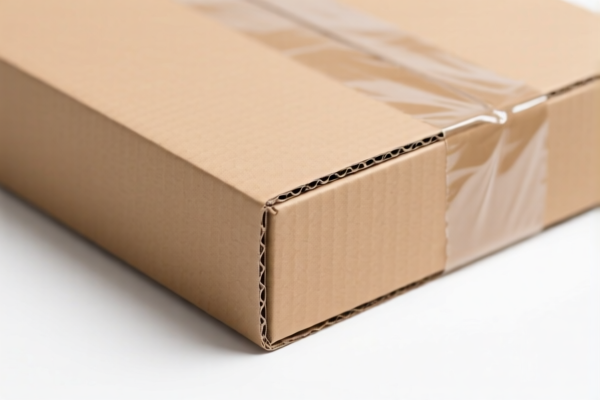
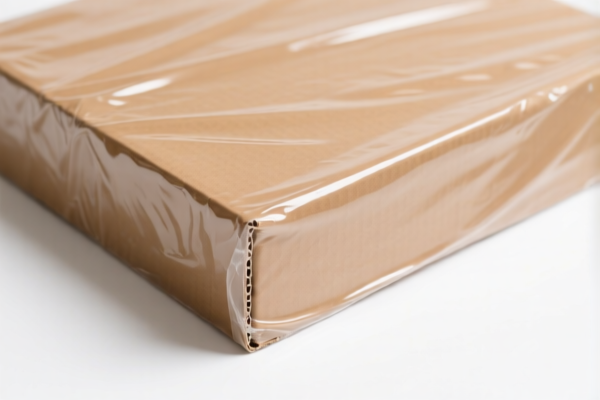
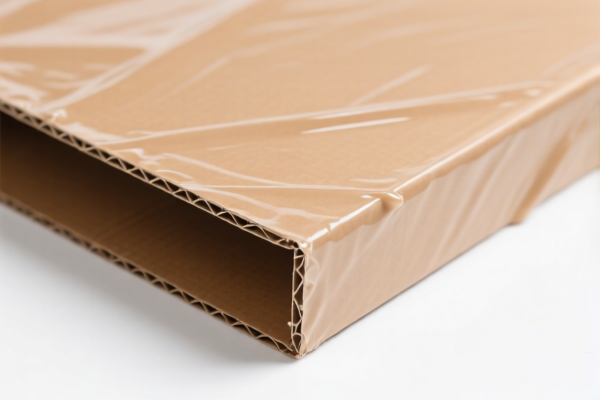

AI Analysis
📜 Grey Board Coated Paper (Cover Stock)
🌐 HS Code Reference & Customs Clearance Guide | 2026 Latest Tariff Analysis | Professional Entry Strategy
📌 I. Product Definition & Classification: Do You Truly Understand "Grey Board"?
Grey Board Coated Paper, often referred to as "Cover Stock" or "Greyback," is a heavy-weight paper product characterized by a grey (usually recycled) middle layer and a smooth, coated white or colored top surface. It is widely used in premium packaging for cosmetics, pharmaceuticals, electronics, and luxury goods.
In international trade, its classification depends on whether it is coated and its final form. The data provided focuses on specific sub-categories under Heading 4823:
- Coated Paper/Board Cut to Size/Shape: Finished pieces ready for printing or folding.
- Other Articles: Cut shapes not otherwise specified, or other coated variants.
⚠️ Critical Distinction:
- Coated vs. Uncoated: If the top surface is coated (clay/coating layer) for printability, it falls under specific sub-headings of 4823.90.
- Cut to Size: Rolls are generally classified under Heading 4810 or 4804/4805. However, once cut into specific sizes or shapes for packaging, they fall under 4823.
- Sub-type Differentiation: The data provided distinguishes between "Coated Paper/Board" and "Other" articles. Misclassification here can lead to significant tariff discrepancies if additional duties (like Section 301) apply differently to coated vs. uncoated stocks in other contexts, though here both carry the same surcharge.
📦 II. HS Code Classification Details (2026 Latest Tariff Authority)
Based on the provided data, Grey Board Coated Paper is classified under Heading 4823. Here is the precise breakdown:
| HS Code | Product Description | Application Scenario | Key Characteristics |
|---|---|---|---|
4823.90.67.00 |
Other coated paper or paperboard (cut to size/shape) | Cosmetic boxes, luxury gift boxes, rigid packaging inserts | ✅ Coated Surface ✅ Cut to specific size/shape |
4823.90.86.80 |
Other articles of paper pulp/paper/board (Other) | General packaging components, non-specific coated articles, industrial paper goods | ✅ Other/Unspecified ✅ May include coated or other variants not fitting 67.00 |
🔍 Key Reminder:
- Both codes fall under the "Other" category of Heading 4823.
-4823.90.67.00is specifically for Coated paper/board. If your grey board is coated on one or both sides (common for premium packaging), this is the most accurate description.
-4823.90.86.80is a broader "Other" category. Use this only if the product does not fit the specific "coated" definition of 67.00 or is an "other article" (e.g., shaped inserts) not covered elsewhere.
- Do not classify rolls under 4823. Rolls must be classified under 4804, 4805, or 4810. This data applies only to cut pieces.
💰 III. 2026 Latest Tariff Rate Details (Including Surcharges)
✅ Applicable Country: United States (US)
✅ Country of Origin: China (CN)
✅ Effective Date: Current 2026 Tariff Regime
🎯 1. HS Code 4823.90.67.00 —— Coated Paper/Board (Cut to Size)
| Item | Detail |
|---|---|
| Base Tariff Rate | 0.0% (Ad Valorem) |
| Additional Tariff (Section 301 / USITC) | +25.0% |
| Total Tariff Rate | 25.0% |
| Tax Calculation | CIF Value × 25% |
| De Minimis Exemption | ❌ Not Applicable (Subject to full duty assessment) |
| Legal Basis Path | HTSUS 4823.90.67.00 → Footnote 9903.88.01 (Section 301) |
📌 Explanation:
- The 0% base rate reflects the standard MFN (Most Favored Nation) duty for this paper product.
- The 25% surcharge is due to US trade actions (Section 301) on Chinese-made goods, specifically targeting paper products and packaging materials.
- Total Cost Impact: For every $10,000 of imported coated grey board, you will pay $2,500 in duties.
🎯 2. HS Code 4823.90.86.80 —— Other Paper Articles (Other)
| Item | Detail |
|---|---|
| Base Tariff Rate | 0.0% (Ad Valorem) |
| Additional Tariff (Section 301 / USITC) | +25.0% |
| Total Tariff Rate | 25.0% |
| Tax Calculation | CIF Value × 25% |
| De Minimis Exemption | ❌ Not Applicable |
| Legal Basis Path | HTSUS 4823.90.86.80 → Footnote 9903.88.01 (Section 301) |
📌 Note:
- Although the description is "Other," the tariff burden is identical (25%) to the coated variant.
- Ensure your product description matches the "Other" category if it is not strictly "coated paperboard" (e.g., if it is uncoated or a composite material not fully meeting the coating definition). However, for Grey Board Coated Paper,4823.90.67.00is more precise.
🛠️ IV. Customs Clearance Practical Advice (Avoid Pitfalls)
✅ 1. Essential Documentation Checklist
| Document | Mandatory? | Notes |
|---|---|---|
| ✅ Commercial Invoice | ✔️ | Must specify "Grey Board Coated Paper, Cut to Size" |
| ✅ Packing List | ✔️ | Detail dimensions, weight, and number of pieces |
| ✅ Product Specification Sheet | ✔️ | Include: Weight (GSM), Coating Type (Clay/Kraft), Color, Finish (Matte/Gloss) |
| ✅ Photos of Product | ✔️ | Show cut edges, coated surface, and packaging |
| ✅ Country of Origin Certificate | ✔️ | Crucial for determining Section 301 applicability |
✅ 2. Declaration Tips (Key Phrases)
🔥 "Precise Description, Correct Classification, Avoid Delays!"
| Scenario | Correct Declaration | Common Mistake |
|---|---|---|
| Coated Grey Board, Cut to Size | 4823.90.67.00 – "Coated Paper Board, Cut to Size" |
Misclassifying as "Cartons" (9619) or "Uncoated" (4805) |
| Rolls of Grey Board | NOT 4823! Use 4804/4805/4810 | Attempting to force rolls into 4823 → Rejection |
| Uncoated Grey Board | 4805.24 or similar (NOT in provided data) |
Using 4823 for uncoated → Incorrect HTS |
| Printed Packaging Boxes | 4823.90.67.00 (if coated) or 4823.90.86.80 |
Classifying as "Textiles" or "Plastics" |
✅ 3. Special Considerations
| Situation | Recommendation |
|---|---|
| Partial Coating | If only one side is coated, it still generally qualifies as "Coated" under 4823.90.67.00 if the coating is significant for printability. |
| Recycled Content | Grey board is often recycled. This does not change the HS code but may affect ESG reporting requirements. |
| Hybrid Products | If the product includes plastic windows or adhesives, it may be classified as "Mixed Material," potentially changing the HS code entirely. Consult a specialist. |
🌍 V. Global Market Comparison (2026 Latest)
| Country/Region | Recommended HS Code | Tariff (China Origin) | Certification | Notes |
|---|---|---|---|---|
| 🇺🇸 USA | 4823.90.67.00 |
25.0% (Section 301) | N/A | High duty burden |
| 🇪🇺 EU | 4823.90.xx |
0% - 6.5% | CE (if applicable) | No Section 301 |
| 🇨🇳 China | 4823.90.90 |
5% - 10% | N/A | Import duty varies |
| 🇬🇧 UK | 4823.90 |
0% - 5% | N/A | Post-Brexit rates |
| 🇨🇦 Canada | 4823.90 |
0% (CUSMA if Mexican) | N/A | Check FTA benefits |
📌 Conclusion:
- The US market is the most challenging due to the 25% additional duty.
- EU/UK offer more competitive rates (0-6.5%).
- Consider supply chain diversification (e.g., sourcing from Vietnam or Mexico) if targeting the US to mitigate Section 301 tariffs.
📌 VI. Common Errors & Pitfalls (Lessons Learned)
❌ Mistake 1: Classifying Rolls of Grey Board as 4823.90.67.00
👉 Consequence: Customs rejection. Rolls belong to Heading 4804/4805. 4823 is for cut articles.
❌ Mistake 2: Claiming Uncoated Grey Board under 4823.90.67.00
👉 Consequence: Penalty for misclassification. Uncoated board is typically 4805.24 or 4805.40.
❌ Mistake 3: Ignoring Section 301 impact
👉 Consequence: Unexpected $2,500 duty per $10,000 CIF value. Plan cash flow accordingly.
❌ Mistake 4: Vague Description "Paper Board"
👉 Consequence: Delays. Use specific terms: "Coated Grey Board, Cut to Size, for Cosmetic Packaging."
✅ Correct Approach:
"Grey Back Coated Paper, Cut to Size, 350 GSM, Matte Finish, for Luxury Packaging, HTS 4823.90.67.00"
🎯 VII. Conclusion: Precise Classification, Cost Control
🎯 Key Takeaway:
🔹 "Coated + Cut = 4823.90.67.00"
🔹 "Total Duty: 25% (US) – Plan Accordingly"
🔹 "Rolls are NOT 4823 – Use 4804/4805"
📌 Pro Tip:
If you are importing large volumes, consider Advance Rulings from CBP to confirm classification and duty liability.
For US-bound shipments, evaluate FTAs (e.g., USMCA) if re-exported from Mexico/Canada, though paper products have limited FTA benefits compared to manufacturing goods.
📣 Immediate Action:
📞 Verify Product Form: Is it cut or rolled?
📞 Confirm Coating: Is it coated for printability?
📞 Calculate Landed Cost: Include 25% duty in your pricing model.
✨ Professional Clearance, Start with Accurate Classification!
💼 Every percentage point of duty impacts your bottom line!
Customer Reviews
About HS Code Classification
The Harmonized System (HS) is an internationally standardized nomenclature developed by the World Customs Organization (WCO) to classify traded products. Over 200 countries use the HS system as the basis for customs tariffs, trade statistics, and import/export regulations.
Each HS code follows a hierarchical structure:
- Chapter (2 digits) — Broad category of goods (e.g., Chapter 84: Machinery and Mechanical Appliances)
- Heading (4 digits) — More specific grouping within the chapter
- Subheading (6 digits) — Internationally standardized breakdown, used by all WCO member countries
- National subdivisions (8-10 digits) — Country-specific extensions for further classification, such as US HTSUS 10-digit codes
Correct HS code classification is essential for smooth customs clearance, accurate duty payment, and compliance with trade regulations. Misclassification can lead to customs delays, overpayment of duties, or penalties.
When importing from CN to US, the applicable tariff rates may include:
- Most-Favored-Nation (MFN) rate — The standard duty rate applied to WTO members
- General rate — Applied to countries without trade agreements
- Trade remedy duties — Additional tariffs such as Section 301 (anti-dumping), Section 232 (national security), or countervailing duties
The information provided on this page is for reference purposes only. For official classification, please consult with your local customs authority or a licensed customs broker.