Grinding, Honing, Polishing or Deburring Machine
CN → US| HS Code | Tariff Rate | Origin | Destination | Doc |
|---|---|---|---|---|
| 8460120080 | 39.4% | CN | US | Official Doc |
| 8460390050 | 39.4% | CN | US | Official Doc |
| 8479820080 | 35.0% | CN | US | Official Doc |
Product Images
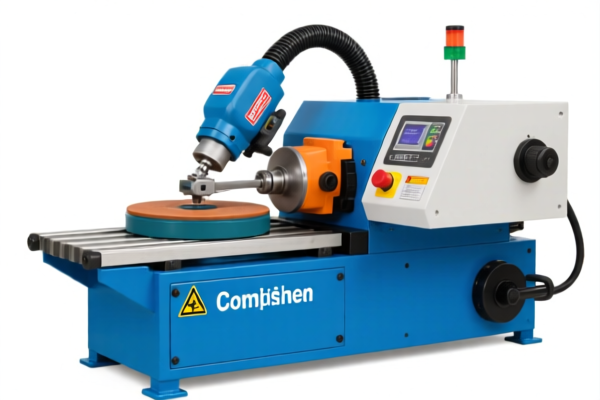
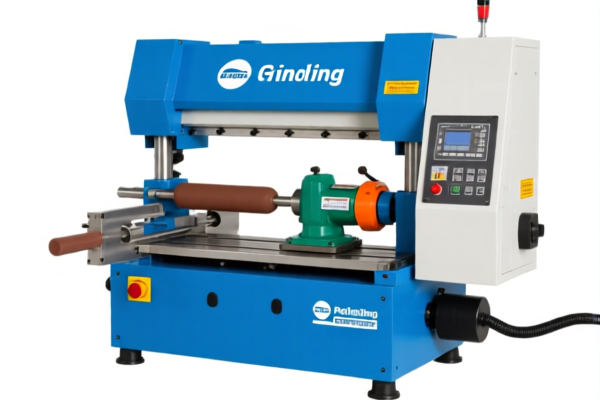
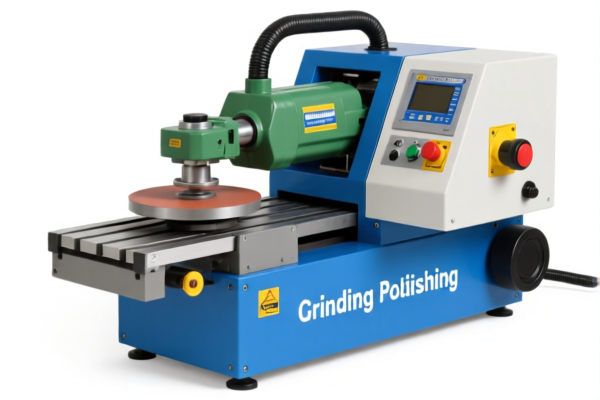
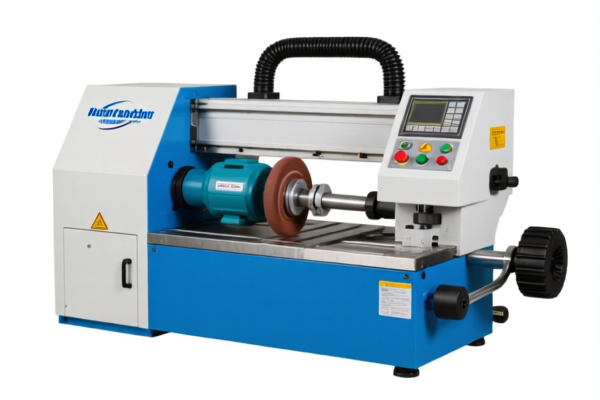
AI Analysis
🏭 Grinding, Honing, Polishing or Deburring Machine
🌐 HS Code Reference & Customs Clearance Guide | 2026 Latest Tariff Analysis | Professional Clearance Strategy
📌 I. Product Definition & Classification: What Exactly Are These Machines?
Grinding, Honing, Polishing, and Deburring machines are essential industrial equipment used for surface finishing, dimensional accuracy, and edge treatment. In international trade, they are strictly categorized based on their primary function, processed material, and mechanical structure.
⚠️ Key Distinction Points:
- If the machine is specifically designed for grinding, honing, or polishing METAL or CERAMIC METAL → It generally falls under Heading 84.60.
- If the machine has grinding functions but fits a broader "other machinery" category or uses different mechanics → It may fall under Heading 84.79.
- Crucial Note: The classification heavily depends on whether the machine is specialized for metal/ceramic finishing vs. general-purpose machinery with grinding capabilities.
📦 II. HS Code Classification Details (2026 Latest Tariff Authority Comparison)
| HS Code | Product Description | Applicable Scenario | Primary Material Processed |
|---|---|---|---|
8460.12.00.80 |
Machines for grinding, honing, polishing, or deburring; specifically for metal or ceramic metal workpieces. | Specialized metal finishing, ceramic component polishing. | Metal / Ceramic Metal |
8460.39.00.50 |
Machines for grinding, honing, polishing, or similar processing of metal; other than those specified in 8460.12. | Metal finishing where specific sub-criteria of 8460.12 are not met, or other metal/ceramic metal precision finishing. | Metal / Ceramic Metal |
8479.82.00.80 |
Machinery with grinding/abrasive functions; classified under "Other machines" as a fallback. | General machinery with grinding features; not strictly specialized under 84.60 logic. | Metal (General) |
🔍 Key Reminder:
- 84.60 codes are for specialized machines explicitly defined for grinding/honing/polishing metal/ceramic.
- 84.79.82 is often a "catch-all" or fallback for machinery with grinding functions that don't fit the strict definitions of 84.60.
- Misclassification between these can lead to significant tariff differences due to trade remedies (Section 301 & Section 122).
💰 III. 2026 Latest Tariff Rate Breakdown (Including Surtaxes & Policy Add-ons)
✅ Applicable Country: United States (US)
✅ Country of Origin: China (CN)
✅ Effective Date: Ongoing (Check latest Section 301/122 updates)
🎯 1. 8460.12.00.80 —— Machines for Grinding/Honing/Polishing (Metal/Ceramic)
| Item | Content |
|---|---|
| Base Tariff Rate | 4.4% (ad valorem) |
| Section 301 Surtax | +25.0% (25% additional duty) |
| Section 122 Surtax | +10.0% (Additional duty under Section 122) |
| Total Effective Rate | 39.4% |
| Tax Calculation | CIF Value × 39.4% |
| De Minimis Exemption | ❌ Not Eligible (High tariffs usually exclude small package exemptions from standard de minimis relief in trade war contexts) |
| Legal Basis Path | HTSUS:8460.12.00.80 → USITC Footnote 9903.88.01 (Section 301) → Section 122 Proclamation |
📌 Explanation:
- The 4.4% is the standard Most Favored Nation (MFN) duty rate.
- The 25% comes from Section 301 of the Trade Act of 1974, targeting Chinese imports.
- The 10% comes from Section 122 of the Trade Expansion Act of 1962, often applied to specific industrial equipment categories.
- Total: 39.4%. This is a high-cost classification.
🎯 2. 8460.39.00.50 —— Other Machines for Metal Grinding/Honing/Polishing
| Item | Content |
|---|---|
| Base Tariff Rate | 4.4% (ad valorem) |
| Section 301 Surtax | +25.0% |
| Section 122 Surtax | +10.0% |
| Total Effective Rate | 39.4% |
| Tax Calculation | CIF Value × 39.4% |
| De Minimis Exemption | ❌ Not Eligible |
| Legal Basis Path | HTSUS:8460.39.00.50 → USITC Footnote 9903.88.01 → Section 122 Proclamation |
📌 Note:
- Despite being in a different subheading (39vs12), this code shares the same tariff structure because both are under Heading 84.60 for metal/ceramic processing.
- The 39.4% total rate applies here as well.
🎯 3. 8479.82.00.80 —— Other Machinery with Grinding Functions (Fallback)
| Item | Content |
|---|---|
| Base Tariff Rate | 0.0% (ad valorem) |
| Section 301 Surtax | +25.0% |
| Section 122 Surtax | +10.0% |
| Total Effective Rate | 35.0% |
| Tax Calculation | CIF Value × 35.0% |
| De Minimis Exemption | ❌ Not Eligible |
| Legal Basis Path | HTSUS:8479.82.00.80 → USITC Footnote 9903.88.01 → Section 122 Proclamation |
📌 Key Advantage:
- This code has a 0% base duty instead of 4.4%.
- However, the 25% (301) and 10% (122) surtaxes still apply.
- Total: 35.0%. This is 4.4% lower than the 84.60 classifications.
- Caution: You can only use this if the machine does not meet the strict definition of "machines for grinding, honing, polishing, or deburring" under Heading 84.60. Misclassifying a specialized machine here could lead to customs audits and penalties.
🛠️ IV. Customs Clearance Practical Advice (Real-World Pitfall Guide)
✅ 1. Preparation Checklist (Mandatory)
| Document | Required | Description |
|---|---|---|
| ✅ Technical Specification Sheet | ✔️ | Detail the machine’s function, capacity, and primary use (metal vs. other materials). |
| ✅ Machine Classification Justification | ✔️ | Explain why it fits 84.60 vs. 84.79. If using 84.79, prove it’s not primarily for metal/ceramic grinding. |
| ✅ Product Photos & Diagrams | ✔️ | Show the grinding/honing mechanism clearly. |
| ✅ Commercial Invoice | ✔️ | Clearly state "Grinding Machine" or "Deburring Machine" with precise function. |
| ✅ Country of Origin Certificate | ✔️ | Confirm China origin to apply correct surtaxes. |
| ✅ Safety Certifications | ✔️ | CE, UL, OSHA compliance docs (often required for machinery import). |
✅ 2. Declaration Tips (Critical Mnemonics)
🔥 "Specialized Metal = 84.60 (39.4%), General Fallback = 84.79 (35.0%), Don't Guess!"
| Scenario | Correct HS Code | Consequence of Error |
|---|---|---|
| Machine specifically for metal/ceramic grinding/honing | 8460.12.00.80 or 8460.39.00.50 |
39.4% Duty |
| Machine has grinding function but is general-purpose or for non-metal | 8479.82.00.80 |
35.0% Duty |
| Misclassifying specialized 84.60 machine as 84.79 | 8479.82.00.80 |
Underpayment of 4.4%, risk of penalty, audit, and retroactive taxes. |
| Declaring as "Grinder" without function details | Risk of Re-classification | Customs may choose the higher 84.60 code → 39.4%. |
✅ 3. Special Handling Cases
| Case | Recommendation |
|---|---|
| Multi-function Machine (e.g., Grinding + Cutting) | Declare the primary function. If grinding/honing is dominant, 84.60 applies. |
| Deburring Machine for Plastic | Likely not 84.60 (which specifies metal/ceramic). May fall under 84.79 or other headings. Consult expert. |
| Portable Hand-held Grinder | May fall under 82.07 (Tools) or 84.60 depending on motor/power. Check specific heading notes. |
| Used Machinery | Provide proof of age/condition. Some duties may vary, but surtaxes (301/122) usually still apply. |
🌍 V. Global Market Comparison (2026 Latest)
| Country/Region | Recommended HS Code | Tariff Rate | Certification Requirement | Notes |
|---|---|---|---|---|
| 🇺🇸 USA | 8460.xxxx or 8479.82.00.80 |
39.4% (84.60) or 35.0% (84.79) | UL/CSA, OSHA Compliance | High surtaxes due to Section 301 & 122. |
| 🇨🇳 China | 8460.xxxx |
~4-14% (MFN) | CCC (if applicable) | No Section 301/122 surtaxes for exports. |
| 🇪🇺 EU | 84.60 |
~4-4.5% | CE Marking | No additional punitive tariffs. |
| 🇯🇵 Japan | 84.60 |
~3-4% | JIS Compliance | Standard MFN rates. |
📌 Conclusion:
- USA is the most challenging market due to Section 301 (25%) and Section 122 (10%) surtaxes.
- Total duty of 39.4% (for 84.60) is a significant cost factor.
- Optimization: If the machine is not strictly for metal/ceramic, argue for 8479.82.00.80 to save 4.4% (35.0% vs 39.4%).
📌 VI. Common Mistakes & Pitfall Guide (Lessons Learned)
❌ Mistake 1: Classifying a metal-specific grinding machine as 8479.82.00.80 to save 4.4%.
👉 Consequence: Customs audit → Back taxes + Penalties + Delayed shipment.
❌ Mistake 2: Ignoring Section 122 in tariff calculations.
👉 Consequence: Underestimating cost by 10% → Profit margin erosion.
❌ Mistake 3: Declaring "Grinding Machine" without specifying material processed.
👉 Consequence: Customs may assign the higher 84.60 code by default.
❌ Mistake 4: Assuming De Minimis applies to machinery.
👉 Consequence: Small shipments still subject to full duties if over $800 threshold or restricted items.
✅ Correct Approach:
"Vertical CNC Grinding Machine, Model XYZ, For Metal Components Only, UL Certified, HS Code 8460.12.00.80"
🎯 VII. Conclusion: Precise Classification Saves Money!
🎯 Remember the Golden Rule:
🔹 "Metal/Ceramic Specialized = 84.60 (39.4%),
🔹 "General/Fallback = 84.79 (35.0%),
🔹 "Don't Guess, Justify, or Pay the Price!"
📌 Pro Tip:
If your machine processes plastic, wood, or composite materials, it does not qualify for Heading 84.60 (which specifies metal/ceramic). Re-evaluate for 84.79 or other headings to potentially lower duties.
📣 Immediate Action:
📞 Contact Customs Broker + Provide Technical Specs + Confirm Material Processed
🚀 Ensure Accurate Classification, Avoid Audits, Protect Your Margin!
✨ Professional Clearance Starts with Precise Classification!
💼 Every Percent Saved is Pure Profit!
Customer Reviews
About HS Code Classification
The Harmonized System (HS) is an internationally standardized nomenclature developed by the World Customs Organization (WCO) to classify traded products. Over 200 countries use the HS system as the basis for customs tariffs, trade statistics, and import/export regulations.
Each HS code follows a hierarchical structure:
- Chapter (2 digits) — Broad category of goods (e.g., Chapter 84: Machinery and Mechanical Appliances)
- Heading (4 digits) — More specific grouping within the chapter
- Subheading (6 digits) — Internationally standardized breakdown, used by all WCO member countries
- National subdivisions (8-10 digits) — Country-specific extensions for further classification, such as US HTSUS 10-digit codes
Correct HS code classification is essential for smooth customs clearance, accurate duty payment, and compliance with trade regulations. Misclassification can lead to customs delays, overpayment of duties, or penalties.
When importing from CN to US, the applicable tariff rates may include:
- Most-Favored-Nation (MFN) rate — The standard duty rate applied to WTO members
- General rate — Applied to countries without trade agreements
- Trade remedy duties — Additional tariffs such as Section 301 (anti-dumping), Section 232 (national security), or countervailing duties
The information provided on this page is for reference purposes only. For official classification, please consult with your local customs authority or a licensed customs broker.