Grinding, Polishing or Deburring Machine
CN → US| HS Code | Tariff Rate | Origin | Destination | Doc |
|---|---|---|---|---|
| 8467290010 | 17.5% | CN | US | Official Doc |
| 8467891000 | 17.5% | CN | US | Official Doc |
| 8460120080 | 39.4% | CN | US | Official Doc |
Product Images
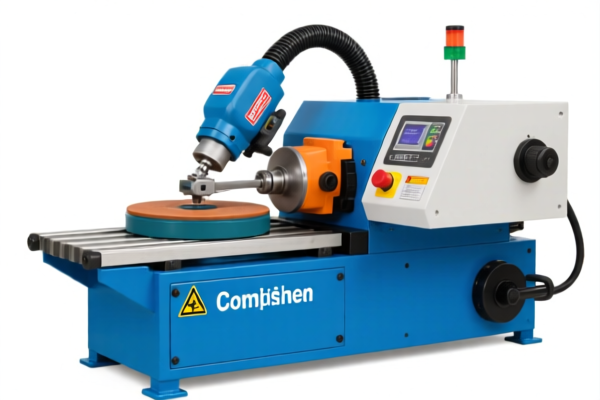
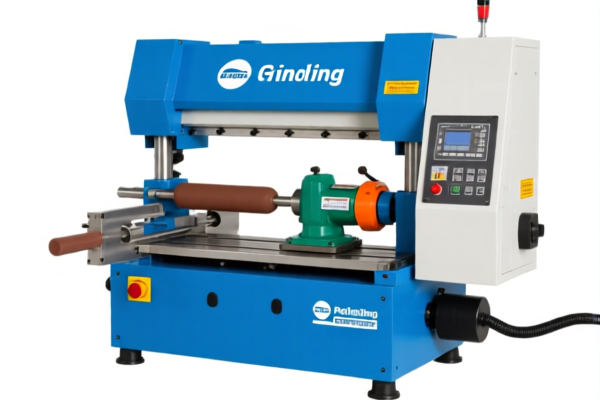
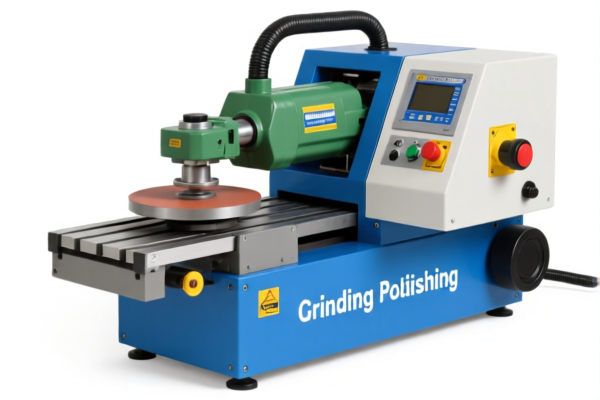
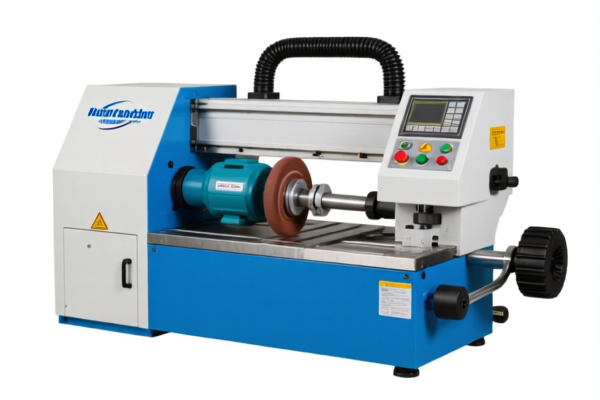
AI Analysis
🛠️ Grinding, Polishing or Deburring Machines (Industrial Surface Finishing Equipment)
🌐 HS Code Classification & Customs Clearance Guide | 2026 Tariff Analysis | Professional Compliance Strategy
📌 I. Product Definition & Functional Classification: Do You Really Know "Grinding Machines"?
Grinding, polishing, and deburring machines are core equipment in industrial manufacturing, used for surface finishing, precision machining, and defect removal on metal, ceramic, and composite materials. In international trade, these machines are classified based on their working principle, material removal method, and drive mechanism.
There are three primary categories:
1. Mechanical/Hand-Held or Benchtop Grinders & Polishers:
Tools or small machines that use rotating abrasives (wheels, belts, discs) for surface treatment, often used for manual or semi-automatic operation.
2. Precision Surface Grinding Machines:
Heavy-duty machinery that uses a rotating abrasive wheel to grind flat surfaces, cylindrical parts, or complex shapes with high precision. Often powered by hydraulic or electric drives.
3. Specialized Polishing & Deburring Units:
Machines specifically designed for mass deburring (removing burrs from cast/machined parts) or mirror polishing, often using chemical, mechanical, or abrasive flow media.
⚠️ Key Distinction Point:
- If it uses rotating abrasive wheels/discs for general material removal → Likely 8467 or 8460;
- If it is a precision surface grinder (e.g., surface grinding machine) → Likely 8460;
- The drive mechanism (electric, pneumatic, hydraulic) and specific application (metal vs. ceramic) significantly impact classification.
📦 II. HS Code Classification Details (2026 Latest Tariff Authority对照)
| HS Code | Product Description | Applicable Scenario | Classification Logic |
|---|---|---|---|
8467.29.00.10 |
Tools for working in the hand, pneumatic or self-powered, other (Grinding/Polishing tools) | Hand-held grinders, benchtop polishers, angle grinders, rotary polishers | ✅ Fits manual/portable grinding/polishing tools |
8467.89.10.00 |
Other parts of tools for working in the hand; other machinery for working in the hand, pneumatic or self-powered, other | Multi-function metal processing tools (grinding, honing, polishing) without clear drive specification | ✅ Fits general-purpose metal processing tools (grinding/honing/polishing) |
8460.12.00.80 |
Surface grinding machines, with a table for the workpiece | Precision surface grinding machines for metal/ceramic workpieces | ✅ Fits precision surface grinding machines |
🔍 Critical Reminder:
- Hand-held/portable grinding/polishing tools fall under 8467 (Tools for working in the hand);
- Fixed precision surface grinders fall under 8460 (Machine tools for grinding);
- If the machine does not clearly fit "hand-held" or "surface grinding," it may be classified under 8467.89 as "other machinery."
💰 III. 2026 Latest Tariff Rate Details (Including Additional Taxes & Policy Surcharges)
✅ Applicable Country: United States (US)
✅ Country of Origin: China (CN)
✅ Effective Date: From November 10, 2025 (for subsequent imports)
🎯 1. 8467.29.00.10 —— Hand-held/Portable Grinding & Polishing Tools
| Item | Content |
|---|---|
| Base Tariff Rate | 0% (ad valorem) |
| USITC Surcharge | +7.5% (Section 301 Tariff) |
| IEEPA Surcharge | +10% (China/HK specific, effective Nov 10, 2025) |
| Total Rate | 17.5% |
| Tax Calculation | CIF Value × 17.5% |
| De Minimis Exemption | ❌ Not Eligible (deny_de_minimis) |
| Legal Basis Path | IEEPA:9903.01.24 → USITC:8467.29.00.10 → FOOTNOTE:9903.88.01 |
📌 Explanation:
- This category covers portable grinders, polishers, and deburring tools;
- Total 17.5%: 0% base + 7.5% Section 301 + 10% IEEPA;
- High Compliance Risk: Misclassification as "parts" or "machinery" can lead to audits and back taxes.
🎯 2. 8467.89.10.00 —— Other Metal Processing Tools (Grinding/Honing/Polishing)
| Item | Content |
|---|---|
| Base Tariff Rate | 0% |
| USITC Surcharge | +7.5% |
| IEEPA Surcharge | +10% |
| Total Rate | 17.5% |
| Tax Calculation | CIF × 17.5% |
| De Minimis Exemption | ❌ Not Eligible |
| Legal Basis Path | IEEPA:9901.25 → IEEPA:9903.01.24 → USITC:8467.89.10.00 → FOOTNOTE:9903.88.01 |
📌 Note:
- Applicable to multi-function tools where grinding/honing/polishing is combined, and the drive mechanism is not explicitly specified as "hand-held";
- Same 17.5% total rate as above;
- Commonly used for industrial deburring machines or benchtop polishing units that don't fit strict "hand-held" definitions.
🎯 3. 8460.12.00.80 —— Surface Grinding Machines (Precision)
| Item | Content |
|---|---|
| Base Tariff Rate | 4.4% |
| USITC Surcharge | +25.0% (Section 301 Tariff) |
| IEEPA Surcharge | +10% |
| Total Rate | 39.4% |
| Tax Calculation | CIF × 39.4% |
| De Minimis Exemption | ❌ Not Eligible |
| Legal Basis Path | IEEPA:9903.01.25 → IEEPA:9903.01.24 → USITC:8460.12.00.80 → FOOTNOTE:9903.88.01 |
📌 Explanation:
- This category covers precision surface grinding machines (e.g., table-type grinders, cylindrical grinders);
- Total 39.4%: 4.4% base + 25% Section 301 + 10% IEEPA;
- Extremely High Tariff: This is one of the most heavily taxed categories for Chinese-origin machinery;
- Common Misclassification: Many importers mistakenly classify precision grinders under 8467, leading to significant underpayment penalties.
🛠️ IV. Customs Clearance Practical Advice (Real-World Pitfall Guide)
✅ 1. Required Documentation Checklist (Non-Negotiable)
| Document | Required | Description |
|---|---|---|
| ✅ Product Specification Sheet | ✔️ | Includes power rating, speed, max workpiece size, drive type (electric/pneumatic) |
| ✅ Operation Manual | ✔️ | Clarifies if it's "hand-held," "benchtop," or "fixed machine" |
| ✅ Photos (Clear & Labeled) | ✔️ | Showing motor, grinding wheel, control panel, and labels |
| ✅ Technical Diagram | ✔️ | To distinguish between "tool" (8467) and "machine tool" (8460) |
| ✅ Commercial Invoice | ✔️ | Must specify: "Grinding/Polishing Machine" with HS Code |
| ✅ Packing List | ✔️ | Detailing main unit vs. accessories (e.g., grinding wheels, coolant systems) |
| ✅ Certificate of Origin (CO) | ✔️ | If non-China origin, may apply for preferential rates |
✅ 2. Declaration Strategy (Key Mantra)
🔥 “Portable is 8467, Precision is 8460; Misclassification is 39.4%!”
| Scenario | Correct HS Code | Wrong Practice |
|---|---|---|
| Hand-held angle grinder, benchtop polisher | 8467.29.00.10 or 8467.89.10.00 (17.5%) |
Misclassified as 8460 → 39.4% |
| Precision surface grinding machine (table-type) | 8460.12.00.80 (39.4%) |
Misclassified as 8467 → Underpayment penalty |
| Multi-function deburring unit (fixed) | 8467.89.10.00 (17.5%) |
Over-declared as "parts" → 89.5% |
| Grinding wheels/abrasives (consumables) | 6804.22.00.00 |
Included in machine value → Incorrect valuation |
✅ 3. Special Cases Handling
| Scenario | Handling Advice |
|---|---|
| OEM Custom Grinding Machine | Provide design drawings + customer PO to clarify "hand-held" vs. "fixed" |
| Automatic Deburring Line | Classify main unit as 8467.89.10.00 if it's a self-contained unit; separate conveyors if complex |
| Ceramic Grinding Machine | Same classification as metal grinders (8460 or 8467); no change in HS logic |
| Machine with Integrated Coolant System | Still classified as grinder; coolant system is considered an accessory |
🌍 V. Global Market Comparison (2026 Latest)
| Country/Region | Recommended HS Code | Tariff | Certification | Note |
|---|---|---|---|---|
| 🇺🇸 USA | 8467.29.00.10 / 8460.12.00.80 |
17.5% or 39.4% | UL, CE, RoHS | High risk of audit for misclassification |
| 🇨🇳 China | 8467.29.00.10 / 8460.12.00.80 |
4.4% - 10% | CCC | No Section 301 or IEEPA |
| 🇪🇺 EU | 8467.29.00.10 / 8460.12.00.80 |
0% - 2.5% | CE, RoHS | No additional surcharges |
| 🇦🇺 Australia | 8467.29.00.10 / 8460.12.00.80 |
5% | RCM | No surcharges |
| 🇯🇵 Japan | 8467.29.00.10 / 8460.12.00.80 |
0% - 1.5% | PSE | No surcharges |
📌 Conclusion:
- USA is the only market with high surcharges (17.5%–39.4%);
- Misclassification between 8467 and 8460 is the most common and costly error;
- China-origin machinery faces significant tariff barriers in the US.
📌 VI. Common Errors & Pitfall Avoidance (Lessons Learned)
❌ Error 1: Classifying precision surface grinders under 8467 (17.5%) instead of 8460 (39.4%)
👉 Consequence: Underpayment of 21.9% → Back taxes + interest + penalties!
❌ Error 2: Classifying hand-held grinders under 8460 (39.4%) instead of 8467 (17.5%)
👉 Consequence: Overpayment of 21.9% → Reduced profit margin!
❌ Error 3: Failing to specify "hand-held" or "fixed" in product description
👉 Consequence: Customs inquiry → Delayed clearance → Storage fees!
❌ Error 4: Including grinding wheels (consumables) in the machine value
👉 Consequence: Incorrect valuation → Customs adjustment!
✅ Correct Approach:
“Hand-held Angle Grinder, 4.5-inch, 110V, 10,000 RPM, Electric, Model XYZ, UL Certified”
vs.
“Precision Surface Grinding Machine, Table-Type, 3HP, 220V, for Metal Workpieces, Model ABC, UL Certified”
🎯 VII. Conclusion: Precise Classification Saves Money!
🎯 Remember the Mantra:
🔹 “Portable = 8467 (17.5%), Precision = 8460 (39.4%); Misclassify = 21.9% Loss!”
🔹 “HS Code Determines Life or Death; Tariff Difference is 21.9 Points; One Step Wrong, Thousands Lost!”
📌 Pro Tip:
If your grinding/polishing machine is originating from Vietnam, Mexico, Thailand, or Malaysia, you may apply for IEEPA Exemption, reducing the tariff to 0%~5%.
Recommendation: Apply for an Advance Ruling before shipment to avoid clearance risks.
📣 Immediate Action:
📞 Contact a professional customs broker + Provide product photos + Apply for HS Code Advance Ruling
🚀 Let your grinding machine clear customs smoothly, boost efficiency, and double profits!
✨ Professional Customs Clearance Starts with Precise Classification!
💼 Every Cent of Your Cost Deserves Accurate Calculation!
Customer Reviews
About HS Code Classification
The Harmonized System (HS) is an internationally standardized nomenclature developed by the World Customs Organization (WCO) to classify traded products. Over 200 countries use the HS system as the basis for customs tariffs, trade statistics, and import/export regulations.
Each HS code follows a hierarchical structure:
- Chapter (2 digits) — Broad category of goods (e.g., Chapter 84: Machinery and Mechanical Appliances)
- Heading (4 digits) — More specific grouping within the chapter
- Subheading (6 digits) — Internationally standardized breakdown, used by all WCO member countries
- National subdivisions (8-10 digits) — Country-specific extensions for further classification, such as US HTSUS 10-digit codes
Correct HS code classification is essential for smooth customs clearance, accurate duty payment, and compliance with trade regulations. Misclassification can lead to customs delays, overpayment of duties, or penalties.
When importing from CN to US, the applicable tariff rates may include:
- Most-Favored-Nation (MFN) rate — The standard duty rate applied to WTO members
- General rate — Applied to countries without trade agreements
- Trade remedy duties — Additional tariffs such as Section 301 (anti-dumping), Section 232 (national security), or countervailing duties
The information provided on this page is for reference purposes only. For official classification, please consult with your local customs authority or a licensed customs broker.