Grinding, Polishing or Grinding Machine
CN → US| HS Code | Tariff Rate | Origin | Destination | Doc |
|---|---|---|---|---|
| 8466201010 | 39.6% | CN | US | Official Doc |
| 8203103000 | 35.0% | CN | US | Official Doc |
| 8203106000 | 35.0% | CN | US | Official Doc |
Product Images
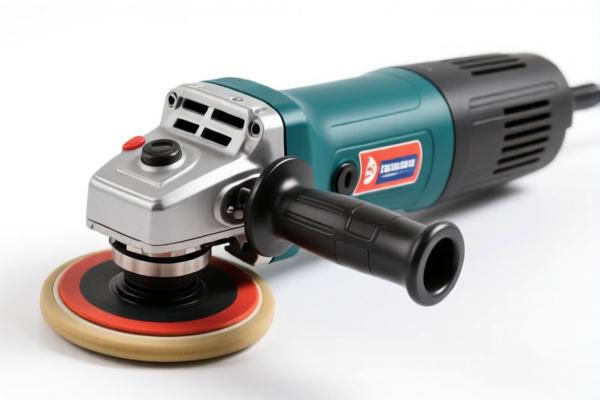
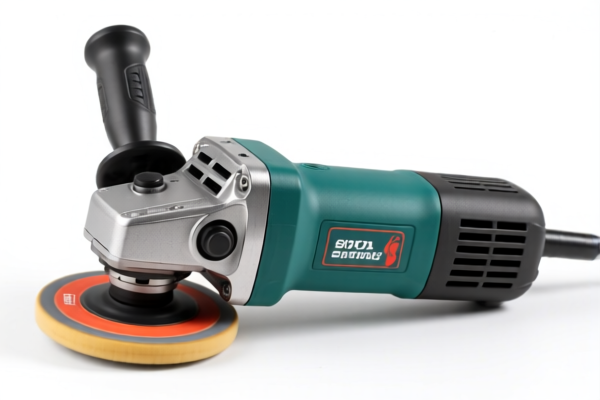
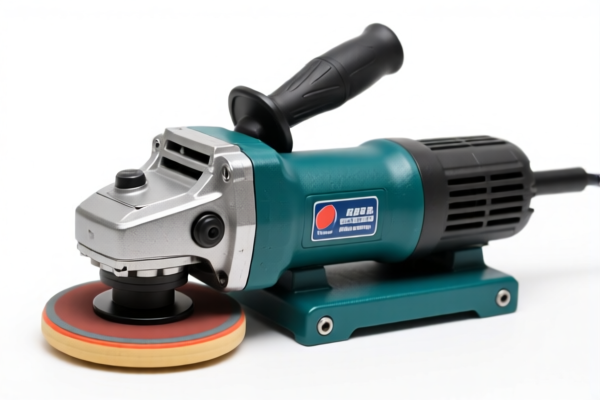
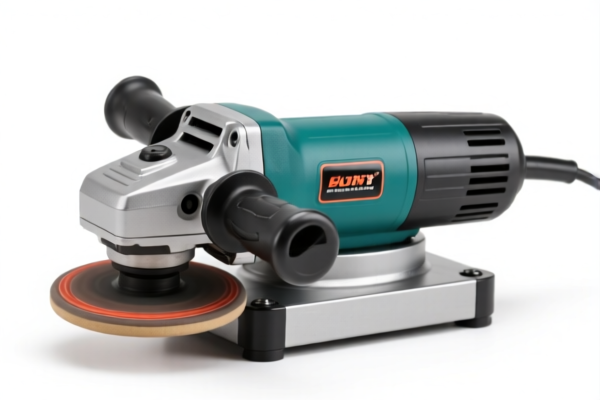
AI Analysis
🛠️ Grinding, Polishing, or Grinding Machines (Hand Tools & Machine Accessories)
🌐 HS Code Reference & Customs Clearance Guide | 2026 Latest Tariff Analysis | Professional Entry Strategies
📌 I. Product Definition & Classification: Understanding "Grinding & Polishing"
In international trade, "Grinding, Polishing, or Grinding Machines" is a broad category that splits sharply depending on how the tool is powered and its functionality.
- Hand Tools (Manual Operation): Tools operated by human force (e.g., manual files, polishing blocks, hand-held sanders without power sources). These fall under Chapter 82 (Articles of Iron or Steel).
- Machine Attachments/Accessories: Parts designed to be used with larger machine tools (e.g., spindle adapters, specific polishing heads for industrial CNC machines). These fall under Chapter 84 (Machinery and Mechanical Appliances).
⚠️ Key Distinction Point:
- If it is a standalone manual tool (like a file, rasp, or hand-polisher) → HS 8203.
- If it is an attachment/accessory for a machine tool (even if used for grinding/polishing) → HS 8466.
- Power Source Matters: If the tool is electric/pneumatic and self-contained, it is NOT a "hand tool" under HS 8203, but rather falls under HS 8466 or HS 8207 (depending on type). However, the provided data focuses on Manual/Accessory categories.
📦 II. HS Code Classification Details (2026 Latest Tariff Authority Comparison)
| HS Code | Product Description | Application Scenario | Power Source / Type |
|---|---|---|---|
8466.20.10.10 |
Machine tool accessories / Auxiliary tools (Manual grinding/polishing tools category) | Industrial attachments, specialized polishing heads, auxiliary tools for machine tools | ⚙️ Machine Accessory (Used with larger machines) |
8203.10.30.00 |
Files, rasps, and similar tools | Manual filing, deburring, shaping metal/wood | 🔨 Manual Hand Tool (Human-operated) |
8203.10.60.00 |
Files, file-staves, and similar tools | Manual filing, precision grinding aids | 🔨 Manual Hand Tool (Human-operated) |
🔍 Key Reminder:
- "Hand-held power grinders" (electric) are NOT listed in this specific data set. They typically fall under 8423 or 8207.
- The codes provided here (8203and8466) specifically target Manual Files/Rasps and Machine Tool Accessories.
- Misclassification occurs when users label an electric sander as a "manual tool" or a machine attachment as a generic "file."
💰 III. 2026 Latest Tariff Rate Breakdown (Including Surcharges & Policy Add-ons)
✅ Applicable Country: United States (US)
✅ Origin: China (CN)
✅ Effective Time: Current rates include Section 301 & Section 122 adjustments.
🎯 1. 8466.20.10.10 —— Machine Tool Accessories (Manual Grinding/Polishing Tools Category)
| Item | Content |
|---|---|
| Base Duty Rate | 4.6% (ad valorem) |
| Section 301 Surcharge | +25.0% |
| Section 122 Surcharge | +10.0% |
| Total Tariff Rate | 39.6% |
| Tax Calculation | CIF Value × 39.6% |
| De Minimis Exemption | ❌ Not Eligible (Deny de minimis for high-tariff goods from China) |
| Legal Basis Path | HTSUS:8466.20.10.10 → Section 301 Footnote → Section 122 Authority |
📌 Explanation:
- "Base 4.6%": Standard MFN (Most Favored Nation) duty for machine tool accessories.
- "+25% Section 301": Trade remedy duties under U.S. Trade Act of 1974, Section 301, targeting Chinese imports.
- "+10% Section 122": Additional duties under Section 122 of the Trade Act of 1962 (often applied to specific industrial inputs).
- Total 39.6%: This is a HIGH COST category. Must be factored into landed cost calculations.
🎯 2. 8203.10.30.00 —— Files, Rasps, and Similar Tools (Manual)
| Item | Content |
|---|---|
| Base Duty Rate | 0.0% (Free) |
| Section 301 Surcharge | +25.0% |
| Section 122 Surcharge | +10.0% |
| Total Tariff Rate | 35.0% |
| Tax Calculation | CIF Value × 35.0% |
| De Minimis Exemption | ❌ Not Eligible |
| Legal Basis Path | HTSUS:8203.10.30.00 → Section 301 Footnote → Section 122 Authority |
📌 Note:
- Although the Base Rate is 0%, the Section 301 (25%) and Section 122 (10%) still apply.
- Total effective rate is 35.0%.
- Even "cheap" hand tools incur significant tariffs due to trade war policies.
🎯 3. 8203.10.60.00 —— Files, File-staves, and Similar Tools (Manual)
| Item | Content |
|---|---|
| Base Duty Rate | 0.0% (Free) |
| Section 301 Surcharge | +25.0% |
| Section 122 Surcharge | +10.0% |
| Total Tariff Rate | 35.0% |
| Tax Calculation | CIF Value × 35.0% |
| De Minimis Exemption | ❌ Not Eligible |
| Legal Basis Path | HTSUS:8203.10.60.00 → Section 301 Footnote → Section 122 Authority |
📌 Note:
- Identical tax structure to8203.10.30.00.
- Applies to more specialized or smaller filing tools (file-staves).
- Total effective rate is 35.0%.
🛠️ IV. Customs Clearance Practical Advice (Real-World Pitfall Guide)
✅ 1. Documentation Checklist (Mandatory)
| Document | Required | Description |
|---|---|---|
| ✅ Product Specifications | ✔️ | Clearly state "Manual" vs. "Machine Accessory." Include material (Iron/Steel). |
| ✅ Product Photos | ✔️ | Show no electrical cords/plugs for HS 8203. Show mounting interfaces for HS 8466. |
| ✅ Commercial Invoice | ✔️ | Must explicitly describe goods as "Manual Files" or "Machine Tool Accessories." |
| ✅ Packing List | ✔️ | List individual SKUs if mixing types. |
| ✅ Origin Certificate | ✔️ | Proof of Origin from China (triggers 301/122 tariffs). |
✅ 2. Declaration Tips (Critical Rules)
🔥 "Classify by Function, Not Just Name! Power Source is King!"
| Scenario | Correct HS Code | Wrong Approach | Result |
|---|---|---|---|
| Manual metal file (hand-held, no power) | 8203.10.30.00 or 8203.10.60.00 |
Misdeclare as "Power Sander" | Risk of penalty + wrong rate |
| Electric Grinder (hand-held, with cord) | NOT Covered Here (Likely HS 8423/8207) | Force into HS 8203 | Customs Rejection/Seizure |
| Polishing Head for CNC Machine | 8466.20.10.10 |
Misdeclare as "Manual Tool" | Underpayment of Duty (4.6% vs 39.6% base) |
| Sandpaper/Sanding Blocks (Non-metal) | Different Chapter (e.g., HS 6805/6307) | Misdeclare as "Steel File" | Wrong Tariff & Material Declaration |
✅ 3. Special Cases Handling
| Situation | Recommendation |
|---|---|
| Set of Hand Tools | If a kit contains files + non-metal accessories, declare the principal component (files) under HS 8203. |
| Mixed Shipments | Separate "Manual Hand Tools" (HS 8203) from "Machine Accessories" (HS 8466) on the same invoice with clear descriptions. |
| OEM Custom Tools | Provide technical drawings showing if it attaches to a machine (HS 8466) or is used by hand (HS 8203). |
🌍 V. Global Market Clearance Comparison (2026 Latest)
| Country/Region | Recommended HS Code | Tariff (China Origin) | Certification Req. | Notes |
|---|---|---|---|---|
| 🇺🇸 USA | 8203.xxxx or 8466.xxxx |
35.0% - 39.6% | No specific cert. | High Section 301 + 122 duties. |
| 🇨🇳 China | 8203.10.30.00 |
0% - 4.6% | CCC (if electrical) | Low import duties. |
| 🇪🇺 EU | 8203.10 |
0% - 4.5% | CE (if mechanical) | No Section 301 equivalent. |
| 🇬🇧 UK | 8203.10 |
0% - 4.5% | UKCA | Post-Brexit tariff rates. |
| 🇨🇦 Canada | 8203.10 |
0% - 5.25% | CMCA | Generally lower duties. |
📌 Conclusion:
- USA is the most expensive market for these items due to Section 301 and Section 122 combined surcharges.
- EU/UK/Canada do not apply these specific US-style surcharges, making them more competitive for Chinese-manufactured hand tools.
📌 VI. Common Errors & Pitfall Guide (Lessons Learned)
❌ Error 1: Declaring an Electric Angle Grinder as a "Manual File" (HS 8203).
👉 Consequence: Severe Penalty for misclassification. Electric tools are not "hand tools" under HS 82.
❌ Error 2: Claiming De Minimis (Section 321) for shipments under $800.
👉 Consequence: Denied. Goods subject to Section 301/122 duties are explicitly excluded from de minimis exemption.
❌ Error 3: Mixing "Machine Accessories" (HS 8466) with "General Hardware" (HS 73).
👉 Consequence: Customs may reclassify as "General Metal Articles" with different duty rates, causing delays.
❌ Error 4: Ignoring Section 122.
👉 Consequence: Underpayment of 10%. Customs can audit back up to 3 years.
✅ Correct Practice:
"Manual Steel File, No Power Source, For Deburring Metal Surfaces, Model XYZ"
(Use HS 8203)"Spindle Adapter for Grinding Machine, Stainless Steel, CNC Compatible"
(Use HS 8466)
🎯 VII. Conclusion: Professional Classification, Cost Control, Efficiency!
🎯 Remember the Golden Rule:
🔹 "Manual = HS 8203 (35% Total)"
🔹 "Machine Accessory = HS 8466 (39.6% Total)"
🔹 "Electric Tool = NOT Covered Here (Check HS 8423/8207)"
🔹 "De Minimis = Dead End for China Origin"
📌 Pro Tip:
If you are shipping to the USA, budget for ~35-40% total duties.
If possible, consider origin shifting (e.g., via Vietnam or Mexico) to avoid Section 301/122 duties, but ensure substantial transformation rules are met.
✅ Apply for an Advance Ruling from CBP to lock in the classification and avoid future audits.
📣 Take Action Now:
📞 Consult a licensed Customs Broker + Provide Detailed Photos + Confirm Power Source
🚀 Clear Customs Smoothly, Save Costs, Scale Your Business!
✨ Professional Classification Starts with Precision!
💼 Every Percent Saved is Pure Profit!
Customer Reviews
About HS Code Classification
The Harmonized System (HS) is an internationally standardized nomenclature developed by the World Customs Organization (WCO) to classify traded products. Over 200 countries use the HS system as the basis for customs tariffs, trade statistics, and import/export regulations.
Each HS code follows a hierarchical structure:
- Chapter (2 digits) — Broad category of goods (e.g., Chapter 84: Machinery and Mechanical Appliances)
- Heading (4 digits) — More specific grouping within the chapter
- Subheading (6 digits) — Internationally standardized breakdown, used by all WCO member countries
- National subdivisions (8-10 digits) — Country-specific extensions for further classification, such as US HTSUS 10-digit codes
Correct HS code classification is essential for smooth customs clearance, accurate duty payment, and compliance with trade regulations. Misclassification can lead to customs delays, overpayment of duties, or penalties.
When importing from CN to US, the applicable tariff rates may include:
- Most-Favored-Nation (MFN) rate — The standard duty rate applied to WTO members
- General rate — Applied to countries without trade agreements
- Trade remedy duties — Additional tariffs such as Section 301 (anti-dumping), Section 232 (national security), or countervailing duties
The information provided on this page is for reference purposes only. For official classification, please consult with your local customs authority or a licensed customs broker.