Grinding, Sharpening, Polishing, or Abrasive Machine
CN → US| HS Code | Tariff Rate | Origin | Destination | Doc |
|---|---|---|---|---|
| 8460390050 | 39.4% | CN | US | Official Doc |
| 8479820080 | 35.0% | CN | US | Official Doc |
| 8460290150 | 39.4% | CN | US | Official Doc |
| 8467290010 | 17.5% | CN | US | Official Doc |
| 8467891000 | 17.5% | CN | US | Official Doc |
Product Images
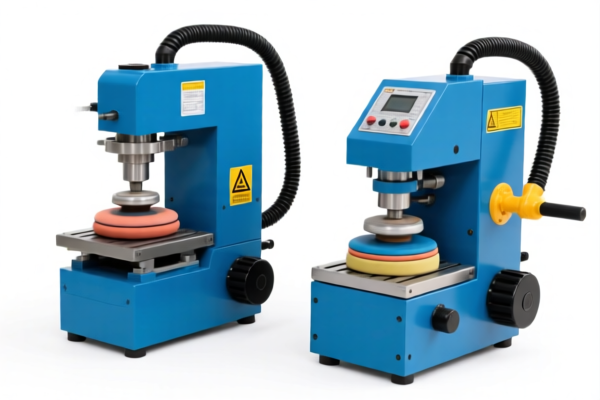
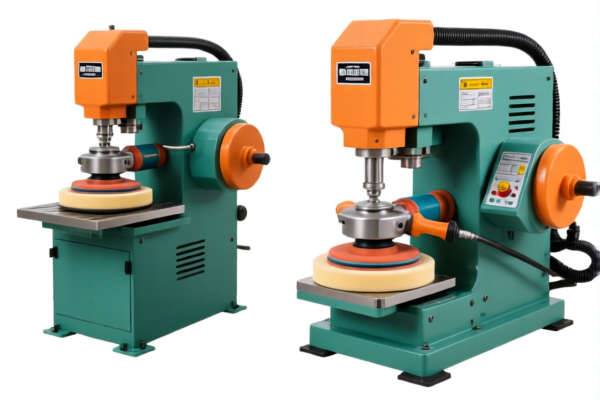
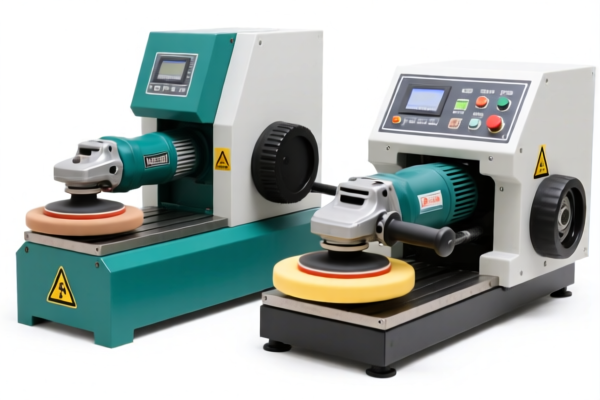
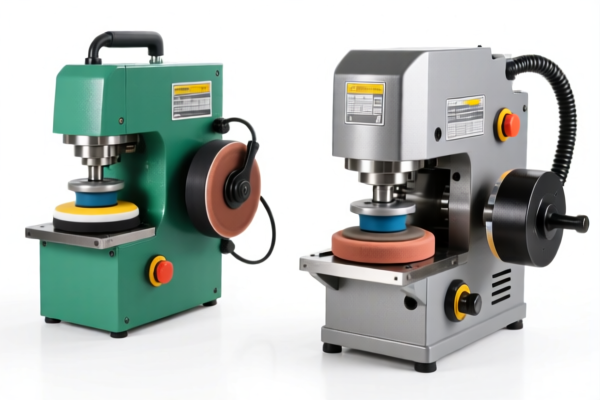
AI Analysis
⚙️ Grinding, Sharpening, Polishing, or Abrasive Machines
🌐 HS Code Reference & Clearance Guide | 2026 Latest Tariff Analysis | Strategic Entry for US Market
📌 I. Product Definition: What Exactly Are These Machines?
These industrial tools are designed for the finishing, smoothing, or shaping of materials, primarily metals. In international trade, classification depends heavily on the driving mechanism (self-powered vs. tool-driven) and the specific function.
Key Categories: * Stationary Self-Contained Machines: Complete units with motors, frames, and grinding wheels/spindles (e.g., bench grinders, surface grinders). These usually fall under Chapter 84, Heading 8460 or 8479. * Hand-Held or Pneumatic/Electric Tools: Devices where the machine is a tool driven by an external power source or hand-held (e.g., angle grinders, polishers, deburring tools). These fall under Chapter 84, Heading 8467.
⚠️ Critical Distinction:
- If the machine is a standalone unit with its own motor and frame for metal processing → 8460/8479.
- If the device is a portable tool (pneumatic/electric) for polishing/grinding → 8467.
📦 II. HS Code Classification Matrix (2026 Latest Data from <DATA>)
Based on the provided dataset, here are the exact HS Codes and their logical justifications.
| HS Code | Product Description & Logic | Applicable Scenario | Total Tax Rate |
|---|---|---|---|
| 8460.39.00.50 | Machine for Grinding/Abrasive: Specifically for metal grinding, polishing, or similar finishes. Fits the precise definition of metal finishing machinery. | Large stationary metal polishing/grinding machines; surface grinders. | 39.4% |
| 8460.29.01.50 | Machine for Metal Grinding: Fully compliant with the specific functional scope of metal grinding/polishing. | Industrial metal lapping, honing, or polishing machines. | 39.4% |
| 8479.82.00.80 | Other Machinery (Fallback): Machines with grinding capabilities, typically metal construction, falling under residual categories due to specific design features not covered by 8460. | Specialized non-standard grinding equipment; custom metal processing units. | 35.0% |
| 8467.29.00.10 | Portable Power Tools: Grinding, honing, polishing, or deburring tools. Function matches the classification of "grinding/polishing machines" but in tool format. | Hand-held angle grinders, bench-mounted pneumatic polishers, electric deburring tools. | 17.5% |
| 8467.89.10.00 | Parts/Tools for Hand-Held Machines: Metalworking tools (grinding/honing/polishing) where the driving method is not explicitly main or fallback. | Replacement grinding wheels, polishing pads, or detachable abrasive tools for power tools. | 17.5% |
🔍 Logic Explanation from
<DATA>:
- 8460 Codes: The data states these are for "metal grinding, polishing, or similar processing" and "fully comply with the specific functional scope."
- 8479 Code: Used as a "residual/fallback" category for machines with grinding functions but not fitting strictly into 8460’s precise definitions.
- 8467 Codes: Used for "grinding, honing, polishing, or deburring" functions, aligning with tool-based machinery.
💰 III. Detailed Tariff Breakdown (US Market | China Origin)
✅ Applicable Country: United States (US)
✅ Origin: China (CN)
✅ Effective Period: Current 2026 Tariff Structure
🎯 1. High-Tax Stationary Machines: 8460.39.00.50 & 8460.29.01.50
| Item | Detail |
|---|---|
| Base Tariff | 4.4% (Ad Valorem) |
| Section 301 Tariff | +25.0% (Additional Tariff on Chinese Goods) |
| Section 122 Tariff | +10.0% (Specific Add-on Tariff) |
| Total Effective Rate | 39.4% |
| Calculation Basis | CIF Value × 39.4% |
| De Minimis Exemption | ❌ Not Eligible (Value > $800 or restricted category) |
| Legal Path | Base HTSUS → Section 301 List 4/3 → Section 122 Add-on |
📌 Note: These codes attract the highest tax burden because they are classified as full industrial machinery. The 35-40% cost increase significantly impacts profitability.
🎯 2. Mid-Tax Specialized Machinery: 8479.82.00.80
| Item | Detail |
|---|---|
| Base Tariff | 0.0% |
| Section 301 Tariff | +25.0% |
| Section 122 Tariff | +10.0% |
| Total Effective Rate | 35.0% |
| Calculation Basis | CIF Value × 35.0% |
| De Minimis Exemption | ❌ Not Eligible |
📌 Note: While the base rate is 0%, the 35% total is still substantial. This code is used when the machine doesn’t fit the strict "grinding/polishing" definition of 8460 but performs similar metalworking tasks.
🎯 3. Lower-Tax Power Tools: 8467.29.00.10 & 8467.89.10.00
| Item | Detail |
|---|---|
| Base Tariff | 0.0% |
| Section 301 Tariff | +7.5% |
| Section 122 Tariff | +10.0% |
| Total Effective Rate | 17.5% |
| Calculation Basis | CIF Value × 17.5% |
| De Minimis Exemption | ❌ Not Eligible (for full tools); ⚠️ Check for small parts |
| Legal Path | Base HTSUS → Section 301 List 1/4 (Lower Rate) → Section 122 |
📌 Strategic Advantage:
If your product can be legally classified as a hand-held or pneumatic tool (8467) rather than a stationary machine (8460), you save ~22% in taxes!
- 8467 attracts only 7.5% Section 301 tariff (vs 25% for 8460).
- Crucial: Must prove it is a "tool" (hand-held/pneumatic) and not a "machine" (stationary/self-contained).
🛠️ IV. Customs Clearance Practical Advice
✅ 1. Documentation Checklist
| Document | Required? | Purpose |
|---|---|---|
| Product Specification Sheet | ✔️ | Must specify: Weight, Motor Type, Voltage, RPM, Max Wheel Diameter. |
| Circuit/Pneumatic Diagram | ✔️ | To prove if it’s a "self-powered machine" or "pneumatic tool." |
| Product Photos | ✔️ | Show control panel, housing, and power source (plug vs. air hose). |
| Commercial Invoice | ✔️ | Use precise descriptions: "Portable Electric Angle Grinder" vs. "Industrial Surface Grinding Machine." |
| Country of Origin | ✔️ | Must declare Made in China to trigger Section 301/122 accurately. |
| Declaration of Function | ✔️ | Explicitly state: "For metal polishing" or "For deburring operations." |
✅ 2. Classification Strategy (Key Decision Tree)
🔥 Golden Rule: "Tool vs. Machine Defines the Tax!"
| Scenario | Recommended HS Code | Tax Rate | Reason |
|---|---|---|---|
| Hand-held Angle Grinder (Electric/Pneumatic) | 8467.29.00.10 |
17.5% | Classified as a portable power tool. |
| Bench-Polisher (Small, handheld operation) | 8467.29.00.10 |
17.5% | If it operates as a tool held by the user. |
| Industrial Surface Grinder (Stationary, large) | 8460.29.01.50 |
39.4% | Classified as a stationary machine. |
| Custom Metal Polisher (Non-standard) | 8479.82.00.80 |
35.0% | Falls into "other machinery" residual category. |
| Grinding Wheel/Pad (Accessory) | 8467.89.10.00 |
17.5% | Classified as a part/tool for power tools. |
⚠️ Risk Alert:
Misclassifying a stationary machine as a "tool" to save taxes is considered customs fraud. Ensure the physical design (mobility, power source, operation method) supports the classification.
✅ 3. Special Considerations
| Issue | Advice |
|---|---|
| "Polisher" Ambiguity | If it’s a car polish (hand-held) → 8467 (17.5%). If it’s a factory floor polisher (standing unit) → 8460 (39.4%). |
| Section 122 Tariff | Applies to all these codes (+10%). Do not overlook this! It adds 10% on top of base+301. |
| Pre-Ruling | Highly Recommended for 8479 and 8467 borderline cases. File an Advance Ruling with CBP to lock in the 17.5% rate if eligible. |
| Packaging | If shipping grinding wheels separately, ensure they are declared as "parts" (8467.89) to potentially utilize different valuation methods, though tax rate remains similar. |
🌍 V. Global Market Context (2026)
| Region | HS Code Cluster | Avg. Tax (China) | Notes |
|---|---|---|---|
| 🇺🇸 USA | 8460 / 8467 |
17.5% - 39.4% | High Section 301 & 122 tariffs. Classify as tools if possible. |
| 🇪🇺 EU | 8460 / 8467 |
0% - 6% | Generally lower tariffs. No Section 301. CE Marking required. |
| 🇨🇳 China | 8460 / 8467 |
0% - 4.4% | Base rates. No anti-dumping surcharges for these HS codes. |
| 🇲🇽 Mexico | 8460 / 8467 |
0% | Under USMCA, may be duty-free if originating. |
📌 VI. Common Pitfalls & Solutions
❌ Pitfall 1: Calling a stationary grinder a "Polishing Tool" to get 17.5% tax.
👉 Result: CBP reclassifies to 8460 → Back taxes + Penalties.
✅ Solution: Clearly describe as "Industrial Bench Grinder, Model X, 5HP."
❌ Pitfall 2: Ignoring Section 122 Tariff.
👉 Result: Underpayment by 10% on all codes.
✅ Solution: Always add +10% to any calculation for Chinese-origin goods in 2026.
❌ Pitfall 3: Confusing Grinding Wheels with Grinding Machines.
👉 Result: Wheels are parts/tools (8467.89), Machines are complete units (8460).
✅ Solution: Ship wheels as "Abrasive Tools for Power Tools" if compatible.
🎯 VII. Conclusion: Strategic Clearance Recommendation
🎯 Key Takeaway:
🔹 If it’s hand-held or pneumatic → Aim for
8467(17.5%).
🔹 If it’s a heavy stationary machine → Expect8460/8479(35-39.4%).🔹 Action Plan:
1. Review Product Design: Can it be marketed/used as a hand-held tool?
2. Document Function: Provide diagrams showing portability and manual operation.
3. Apply for Advance Ruling: If borderline between8467and8460, file a CBP ruling.
4. Budget for Tariffs: Include 39.4% for stationary machines and 17.5% for tools in your Landed Cost model.
📣 Immediate Next Step:
📞 Contact your freight forwarder with the exact model number and operation method (hand-held vs. stationary).
📄 Prepare a Technical Data Sheet highlighting the "power source" and "mobility" to support the lower-tax8467classification if applicable.
✨ Precision in Classification = Savings in Costs!
💼 Don’t let tariff ambiguity eat your margins!
Customer Reviews
About HS Code Classification
The Harmonized System (HS) is an internationally standardized nomenclature developed by the World Customs Organization (WCO) to classify traded products. Over 200 countries use the HS system as the basis for customs tariffs, trade statistics, and import/export regulations.
Each HS code follows a hierarchical structure:
- Chapter (2 digits) — Broad category of goods (e.g., Chapter 84: Machinery and Mechanical Appliances)
- Heading (4 digits) — More specific grouping within the chapter
- Subheading (6 digits) — Internationally standardized breakdown, used by all WCO member countries
- National subdivisions (8-10 digits) — Country-specific extensions for further classification, such as US HTSUS 10-digit codes
Correct HS code classification is essential for smooth customs clearance, accurate duty payment, and compliance with trade regulations. Misclassification can lead to customs delays, overpayment of duties, or penalties.
When importing from CN to US, the applicable tariff rates may include:
- Most-Favored-Nation (MFN) rate — The standard duty rate applied to WTO members
- General rate — Applied to countries without trade agreements
- Trade remedy duties — Additional tariffs such as Section 301 (anti-dumping), Section 232 (national security), or countervailing duties
The information provided on this page is for reference purposes only. For official classification, please consult with your local customs authority or a licensed customs broker.