Grinding, Sharpening, Polishing or Abrasive Machine
CN → US| HS Code | Tariff Rate | Origin | Destination | Doc |
|---|---|---|---|---|
| 8460390050 | 39.4% | CN | US | Official Doc |
| 8479820080 | 35.0% | CN | US | Official Doc |
| 8460290150 | 39.4% | CN | US | Official Doc |
| 8460120080 | 39.4% | CN | US | Official Doc |
Product Images
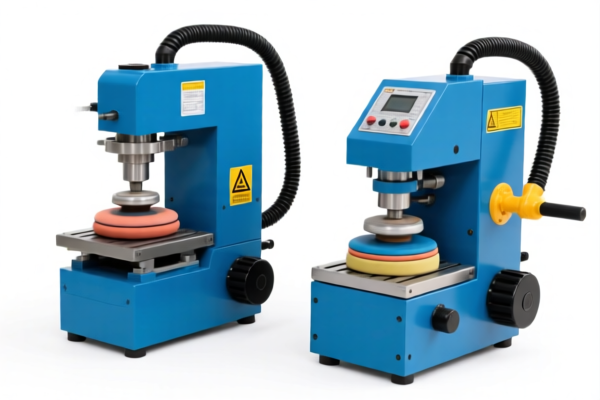
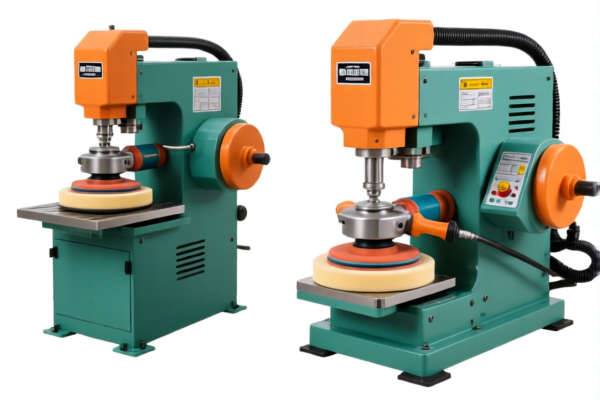
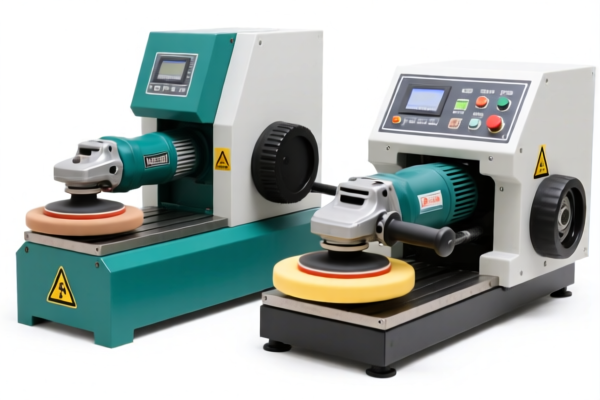
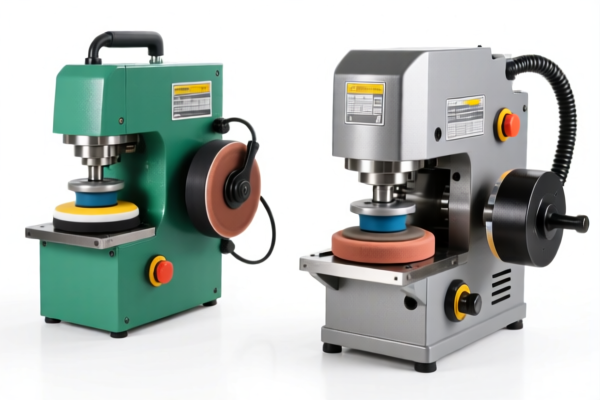
AI Analysis
⚙️ Grinding, Sharpening, Polishing or Abrasive Machines
🌐 HS Code Reference & Customs Clearance Guide | 2026 Latest Tariff Analysis | Professional Level Strategy
📌 Part 1: Product Definition & Classification: What Exactly Are We Importing?
Grinding, sharpening, polishing, and abrasive machines are industrial workhorses used for the precise removal of material from metal or ceramic workpieces. In international trade, these machines are strictly categorized by their primary function and specific capability (e.g., surface grinding, cylindrical grinding, or general polishing).
Key Distinction Logic: * Specific Grinding Functions (8460 Series): Machines dedicated to surface grinding, cylindrical grinding, tool grinding, or other specific metal grinding operations. These carry the 4.4% base tariff. * General/Residual Functions (8479 Series): Machines with grinding capabilities but falling under "other" machinery categories, often used for general deburring, honing, or superfinishing that doesn't fit the strict "grinding" definition of Chapter 84.60. These carry the 0% base tariff.
⚠️ Critical Classification Point:
- If the machine is specifically designed for metal surface/cylindrical grinding →归入 8460.xx.xx.xx
- If the machine is a general-purpose mechanical grinder or fits the "other machinery" residual clause → 归入 8479.82.00.80
📦 Part 2: HS Code Classification Details (2026 Latest Tariff Authority)
Based on the provided data, here are the precise HS Codes and their corresponding tax implications:
| HS Code | Product Description | Applicable Scenario | Base Tariff |
|---|---|---|---|
8460.39.00.50 |
Machines for metal grinding, lapping, polishing, or similar processes; fits the definition for metal/ceramic metal finishing. | Metal surface grinding, general polishing of metal/ceramics. | 4.4% |
8479.82.00.80 |
Mechanical equipment with grinding/sharpening functions, typically metal-bodied; fits the residual "other machinery" logic. | General-purpose mechanical grinders, deburring tools not strictly defined as "grinders" in 8460. | 0.0% |
8460.29.01.50 |
Machines for metal grinding, lapping, polishing, or similar processes; meets material and functional scope requirements. | Specific metal grinding operations (e.g., cylindrical, tool grinding). | 4.4% |
8460.12.00.80 |
Grinding, honing, polishing, or deburring machines; function and classification explanation fully match the use description. | High-precision surface grinding, lapping, or polishing machines. | 4.4% |
🔍 Key Reminder:
- All machines falling under 8460.12, 8460.29, and 8460.39 share the same 4.4% base tariff. - Machines falling under 8479.82 have a 0% base tariff but are subject to the same additional duties. - Do not confuse "polishing" (which can be in 8460 if for metal) with general polishing machines that might fall elsewhere. The key is the metal/ceramic finishing context.
💰 Part 3: 2026 Latest Tariff Rate Breakdown (Including Additional Duties & Policy Add-ons)
✅ Applicable Country: United States (US)
✅ Origin: China (CN)
✅ Effective Date: From November 10, 2025 (and subsequent imports)
🎯 1. 8460.39.00.50 & 8460.29.01.50 & 8460.12.00.80 —— Metal/Ceramic Grinding & Polishing Machines
| Item | Detail |
|---|---|
| Base Tariff | 4.4% (ad valorem) |
| Section 301 Additional Duty | +25.0% |
| Section 122 Additional Duty | +10.0% |
| Total Tariff Rate | 39.4% |
| Tax Calculation | CIF Value × 39.4% |
| De Minimis Eligibility | ❌ Not Eligible (High value industrial machinery exceeds thresholds) |
| Legal Basis Path | HTSUS:8460 → Section 301: Footnote 9903.88.01 → Section 122: IEEPA 10% |
📌 Explanation:
- The 4.4% is the standard Most Favored Nation (MFN) rate for these specific grinding machines. - The +25% is the Section 301 additional tariff on Chinese goods. - The +10% is the Section 122 tariff, a recent addition targeting specific Chinese industrial products. - Total: 39.4%. This is a high-cost category. Cost-saving strategies must focus on accurate classification to see if any part of the machine can be shipped separately or if a different HS Code (like 8479) applies.
🎯 2. 8479.82.00.80 —— General Mechanical Grinding/Sharpening Machines (Residual Category)
| Item | Detail |
|---|---|
| Base Tariff | 0.0% (ad valorem) |
| Section 301 Additional Duty | +25.0% |
| Section 122 Additional Duty | +10.0% |
| Total Tariff Rate | 35.0% |
| Tax Calculation | CIF Value × 35.0% |
| De Minimis Eligibility | ❌ Not Eligible |
| Legal Basis Path | HTSUS:8479 → Section 301: Footnote 9903.88.01 → Section 122: IEEPA 10% |
📌 Note:
- While the base rate is 0%, the additional duties bring the total to 35.0%. - This is 4.4% cheaper than the 8460 series. - Crucial: You can only use this code if the machine does not fit the specific functional definitions of Chapter 84.60. If it is a dedicated metal grinder, it must go to 8460. Misclassification here can lead to audits, penalties, and back-taxes.
🛠️ Part 4: Customs Clearance Practical Advice (Battle-Tested Pitfall Avoidance)
✅ 1. Documentation Checklist (Mandatory)
| Document | Required | Description |
|---|---|---|
| ✅ Product Specification Sheet | ✔️ | Must detail: Max workpiece size, spindle speed, motor power, primary function (e.g., "Surface Grinding" vs. "General Deburring"). |
| ✅ Technical Drawings/Photos | ✔️ | Clear images of the machine label, motor plate, and operational parts. Shows if it's a dedicated grinder or a multi-tool. |
| ✅ Commercial Invoice | ✔️ | Description must be precise: e.g., "CNC Surface Grinding Machine" vs. "Mechanical Abrasive Tool". |
| ✅ Packing List | ✔️ | Itemized list of accessories. Spare parts must be declared separately if they have independent value. |
| ✅ Origin Certificate (CO) | ✔️ | Required to prove Chinese origin for Section 301/122 assessment. |
| ✅ 3rd Party Test Report | ✔️ | If applicable, safety certifications (UL, CE) help prove machine integrity and intended use. |
✅ 2. Declaration Strategy (Key Mnemonic)
🔥 "Function Dictates Code, 8460 is 4.4%, 8479 is 0% Base!"
| Scenario | Correct HS Code | Error Consequence |
|---|---|---|
| Dedicated metal surface/cylindrical grinder | 8460.xx.xx.xx (39.4% Total) |
❌ Do not use 8479 to save tax → High audit risk, penalties, back-taxes + 25% interest. |
| General-purpose mechanical grinder/deburrer | 8479.82.00.80 (35.0% Total) |
❌ Do not use 8460 → Minor overpayment, but safer than misclassification. |
| Machine part (e.g., grinding wheel) | 6804.xx.xx.xx or 8430.xx.xx.xx |
❌ Declaring part as whole machine → 100% duty + fraud penalties. |
✅ 3. Special Case Handling
| Scenario | Handling Advice |
|---|---|
| Multi-Function Machine | If it grinds AND polishes AND cuts, declare the primary function. If grinding is primary, use 8460. If it's a "multi-tool" with minor grinding, argue for 8479. Provide technical proof. |
| OEM/Custom Machine | Provide original equipment manufacturer (OEM) drawings and user manuals showing intended use. Avoid generic names. |
| Used Machinery | Ensure the machine is in working condition. Customs may inspect for age and depreciation. Documentation must match new machine specs. |
| Accessories & Spare Parts | Never bundle spare grinding wheels into the machine HS code. Declare them separately under 6804 (stones) or 8430 (tools). |
🌍 Part 5: Global Market Clearance Comparison (2026 Latest)
| Country/Region | Recommended HS Code | Total Tariff (CN Origin) | Certification Requirements | Notes |
|---|---|---|---|---|
| 🇺🇸 USA | 8460.12.00.80 etc. |
39.4% (for 8460) 35.0% (for 8479) |
NIST, OSHA Safety | High additional duties due to Section 301 & 122. |
| 🇨🇳 China | 8460 or 8479 |
0% - 4.4% | CCC (if applicable) | No additional punitive tariffs. |
| 🇪🇺 EU | 8460 or 8479 |
0% - 4.4% | CE Marking, RoHS | No Section 301/122 equivalent. |
| 🇬🇧 UK | 8460 or 8479 |
0% - 4.4% | UKCA Marking | Post-Brexit rules apply. |
| 🇦🇺 Australia | 8460 or 8479 |
0% - 5% | RCM | Generally low tariffs. |
📌 Conclusion:
- The US is the only major market with these high punitive tariffs (35-39.4%) on these machines. - China, EU, UK, and Australia have significantly lower tariffs, making them more cost-effective for re-export or domestic use. - For US Imports: Cost-benefit analysis is critical. Is the machine price difference worth the $4,400 per $100,000 extra tariff cost between 8460 and 8479?
📌 Part 6: Common Errors & Pitfall Guide (Lessons Learned the Hard Way)
❌ Error 1: Declaring a dedicated Surface Grinding Machine as "General Machinery" (8479) to save 4.4%.
👉 Consequence: Customs audit reveals technical specs match 8460. Back taxes + 25% penalty + 25% interest.
❌ Error 2: Bundling Spindle Motors or Grinding Wheels into the main machine HS code.
👉 Consequence: Incorrect valuation. Parts should be declared separately with their own HS codes.
❌ Error 3: Using vague descriptions like "Industrial Machine" or "Metalworking Equipment."
👉 Consequence: Customs cannot classify accurately. Delays, inspections, and potential detention.
❌ Error 4: Ignoring Section 122 in 2026.
👉 Consequence: Assuming only 25% additional duty. Missing the extra 10% leads to underpayment.
✅ Correct Approach:
"CNC Surface Grinding Machine, Model XYZ, Max Workpiece: 500x300mm, Voltage: 380V, Primary Function: Metal Surface Grinding, Certified UL/CE"
🎯 Part 7: Conclusion: Precision Classification Saves Money!
🎯 Remember the Mnemonic:
🔹 "Grind Metal? Use 8460 (39.4%). General Tool? Use 8479 (35.0%). Don't Guess, Verify!"
🔹 "HS Code is Life, 4.4% Base Matters, 35-39% Total is Real, Misclassify = Pay Real Penalties!"
📌 Pro Tip:
If your machine has multiple functions (e.g., grinding + polishing + cutting), provide detailed technical documentation to justify the primary function. If you can legally justify it as "General Mechanical Equipment," you save 4.4% on the base tariff.
Always apply for a Pre-Ruling (Pre-Classification Ruling) from US Customs (CBP) if the machine is high-value or functionally ambiguous.
📣 Immediate Action:
📞 Contact a licensed customs broker + Provide technical specs + Request HS Code Pre-Ruling
🚀 Ensure your Grinding/Polishing Machines clear customs smoothly, efficiently, and cost-effectively!
✨ Professional Clearance Starts with Accurate Classification!
💼 Every penny saved is pure profit!
Customer Reviews
About HS Code Classification
The Harmonized System (HS) is an internationally standardized nomenclature developed by the World Customs Organization (WCO) to classify traded products. Over 200 countries use the HS system as the basis for customs tariffs, trade statistics, and import/export regulations.
Each HS code follows a hierarchical structure:
- Chapter (2 digits) — Broad category of goods (e.g., Chapter 84: Machinery and Mechanical Appliances)
- Heading (4 digits) — More specific grouping within the chapter
- Subheading (6 digits) — Internationally standardized breakdown, used by all WCO member countries
- National subdivisions (8-10 digits) — Country-specific extensions for further classification, such as US HTSUS 10-digit codes
Correct HS code classification is essential for smooth customs clearance, accurate duty payment, and compliance with trade regulations. Misclassification can lead to customs delays, overpayment of duties, or penalties.
When importing from CN to US, the applicable tariff rates may include:
- Most-Favored-Nation (MFN) rate — The standard duty rate applied to WTO members
- General rate — Applied to countries without trade agreements
- Trade remedy duties — Additional tariffs such as Section 301 (anti-dumping), Section 232 (national security), or countervailing duties
The information provided on this page is for reference purposes only. For official classification, please consult with your local customs authority or a licensed customs broker.