Grinding Sanding Ring
CN → US| HS Code | Tariff Rate | Origin | Destination | Doc |
|---|---|---|---|---|
| 6804224000 | 35.0% | CN | US | Official Doc |
| 6804226000 | 35.0% | CN | US | Official Doc |
| 8205595560 | 40.3% | CN | US | Official Doc |
| 8205598000 | 38.7% | CN | US | Official Doc |
Product Images


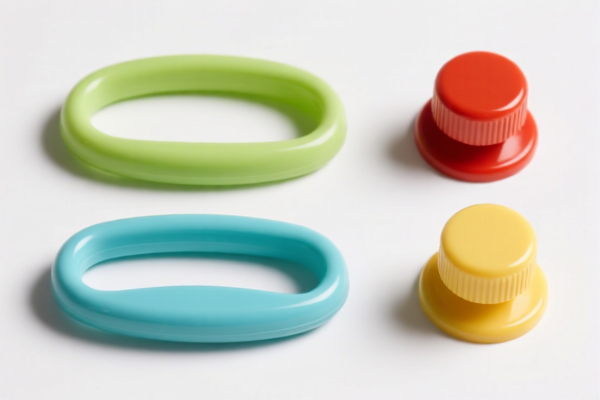

AI Analysis
🛠️ Grinding Sanding Rings: The Ultimate Guide to HS Classification & Duty Rates (2026)
🌐 HS Code Reference & Clearance Strategy | 2026 Latest Tariff Analysis | Professional Customs Strategy
📌 Part 1: Product Definition & Classification — Do You Really Know a "Grinding Sanding Ring"?
A Grinding Sanding Ring is a versatile abrasive tool used for contouring, deburring, polishing, and finishing complex shapes (pipes, curves, edges) where flat discs are ineffective. In international trade, these items are generally classified under Chapter 68 (Articles of Stone or of Plaster, Cement, Asbestos, Mica or Similar Materials) or Chapter 82 (Tools, Implements, Cutlery...), depending heavily on their structure and framework.
Key Distinction: 1. Abrasive Articles (No Framework): Solid rings made of natural stone, agglomerated abrasives, or ceramics. These fall under HS 6804. 2. Hand Tools (With Framework): If the ring is mounted on a handle, or if it is a "pedal-operated grinding wheel with a framework," it falls under HS 8205.
⚠️ Critical Classification Point:
- If it is a standalone abrasive ring (like a flexible flap disc, a resin-bonded grinding ring, or a ceramic grinding ring) without a metal handle/framework, it is an Abrasive Article.
- If it is a tool with a handle or a pedal-operated wheel with a frame, it is a Hand Tool.
- Most "Sanding Rings" imported as consumable abrasives are classified under 6804, NOT 8205.
📦 Part 2: HS Code Classification Details (2026 Latest Tariff Authority)
Based on the provided data, here are the exact HS Codes and their descriptions:
| HS Code | Product Description | Applicable Scenario | Framework? |
|---|---|---|---|
6804.22.40.00 |
Millstones, grindstones, grinding wheels... of other agglomerated abrasives or of ceramics: Abrasive wheels | Standard resin-bonded or ceramic grinding rings/disks; flap discs; non-metal-backed abrasive rings. | ❌ No |
6804.22.60.00 |
Millstones, grindstones, grinding wheels... of other agglomerated abrasives or of ceramics: Other | Non-standard abrasive rings, shaped grinding tools, specialized abrasive components not classified as "wheels." | ❌ No |
8205.59.55.60 |
Handtools... base metal parts thereof: Other handtools... Of iron or steel... | Grinding tools with integrated metal handles/frameworks (e.g., rotary burrs with shafts, specialized hand-held grinding tools made of iron/steel). | ✅ Yes |
8205.59.80.00 |
Handtools... Other: Other | Other hand-held grinding tools not specified elsewhere, typically with frameworks or handles. | ✅ Yes |
🔍 Key Reminder:
- If your product is a consumable abrasive ring (resin, ceramic, flexible flap), it almost certainly belongs to 6804.22.40.00 or 6804.22.60.00.
- Do NOT classify a simple abrasive ring under 8205 unless it has a permanent metal handle/framework. Misclassification can lead to significant duty discrepancies.
💰 Part 3: 2026 Latest Tariff Rate Breakdown (Including Surtaxes & Policies)
✅ Applicable Country: United States (US)
✅ Country of Origin: China (CN)
✅ Effective Time: Current rates apply (2025-2026)
🎯 1. 6804.22.40.00 — Abrasive Wheels (Agglomerated/Ceramic)
| Item | Details |
|---|---|
| Base Tariff | 0.0% (ad valorem) |
| Surtax (Section 301) | +25.0% |
| Total Tax Rate | 25.0% |
| Tax Calculation | CIF Value × 25% |
| De Minimis Eligibility | ❌ Not Eligible (High duty threshold) |
| Legal Basis | USITC Footnote for Chapter 68, Section 301 List |
📌 Explanation:
- Base Rate 0%: Many abrasive articles have zero base duty.
- Surtax 25%: This is the critical cost driver. Due to US-China trade tensions, most goods from China in this category face a 25% additional tariff.
- Total 25%: This is a high-cost item for importers. Budget accordingly!
🎯 2. 6804.22.60.00 — Other Millstones/Grindstones (Agglomerated/Ceramic)
| Item | Details |
|---|---|
| Base Tariff | 0.0% (ad valorem) |
| Surtax (Section 301) | +25.0% |
| Total Tax Rate | 25.0% |
| Tax Calculation | CIF Value × 25% |
| De Minimis Eligibility | ❌ Not Eligible |
| Legal Basis | Same as above |
📌 Note:
- Even if the product is "other" (non-standard shape), the tariff remains 25%.
- This applies to specialized grinding rings, shaped abrasive tools, etc.
🎯 3. 8205.59.55.60 — Handtools (Iron/Steel)
| Item | Details |
|---|---|
| Base Tariff | 0.0% |
| Surtax (Section 301) | +0.0% |
| Total Tax Rate | 0.0% |
| Tax Calculation | CIF Value × 0% |
| De Minimis Eligibility | ✅ Eligible (if under $800) |
| Legal Basis | USITC Section 301 Exclusions (if applicable) |
📌 Critical Insight:
- If your product can be classified as a handtool with a framework (e.g., a grinding tool with a metal handle), the duty might be 0%!
- However, this classification is strict. The tool must have a framework/handle. Simple abrasive rings do NOT qualify.
🎯 4. 8205.59.80.00 — Other Handtools
| Item | Details |
|---|---|
| Base Tariff | 3.7% |
| Surtax (Section 301) | +25.0% |
| Total Tax Rate | 28.7% |
| Tax Calculation | CIF Value × 28.7% |
| De Minimis Eligibility | ❌ Not Eligible |
| Legal Basis | USITC Section 301 List |
📌 Warning:
- If classified here, the duty is 28.7%, which is higher than the abrasive classification (25%).
- Avoid this code unless absolutely necessary.
🛠️ Part 4: Customs Clearance Practical Advice (Real-World Pitfall Guide)
✅ 1. Required Documentation Checklist (Must-Have)
| Document | Must Provide? | Description |
|---|---|---|
| ✅ Product Specification Sheet | ✔️ | Material (resin, ceramic, diamond?), diameter, thickness, grain size, RPM rating. |
| ✅ Product Photos | ✔️ | Clear images showing NO framework/handle (if claiming HS 6804). |
| ✅ Commercial Invoice | ✔️ | Must clearly state "Grinding Ring" or "Abrasive Tool," NOT "Hand Tool." |
| ✅ Packing List | ✔️ | Weight and dimensions for freight calculation. |
| ✅ Certificate of Origin | ✔️ | To prove origin (China) and apply correct surtax. |
✅ 2. Declaration Tips (Key Mantra)
🔥 "No Handle = Abrasive (6804), Handle = Tool (8205). Declare Accurately!"
| Scenario | Correct HS Code | Wrong HS Code | Consequence |
|---|---|---|---|
| Resin-bound grinding ring (no handle) | 6804.22.40.00 |
8205.59.55.60 |
Overpaying duty? No, but underpaying if misclassified as 0% tool. Audit risk! |
| Flap disc (flexible abrasive) | 6804.22.40.00 |
6804.22.60.00 |
Minor difference, but 40.00 is more specific for wheels/discs. |
| Grinding tool with metal shaft/handle | 8205.59.55.60 |
6804.22.40.00 |
Underpaying duty (0% vs 25%). High audit risk! |
| Ceramic grinding ring | 6804.22.40.00 |
8205.59.80.00 |
Overpaying (25% vs 28.7%) or underpaying if wrong framework claim. |
📌 Pro Tip:
- If your grinding ring is flexible (fabric-backed), it may still be 6804.22.40.00.
- If it is a solid ceramic ring, it is 6804.22.40.00.
- Always emphasize "Abrasive" and "No Framework" in the description if using HS 6804.
✅ 3. Special Cases
| Case | Handling Advice |
|---|---|
| Diamond Grinding Rings | Classify under 6804.22.40.00 if bonded on non-metal substrate. If on metal core, still 6804. |
| Kit with Handle | If sold as a kit with a disposable handle, declare as Abrasive + Handtool separately or as a whole? Usually, the abrasive part dominates. Consult customs broker. |
| OEM for US Brand | Ensure invoice lists US Brand, but origin remains China. Surtax still applies. |
| Samples | If value < $800, De Minimis may apply. But with 25% duty, customs may still require entry. Verify current CBP guidelines. |
🌍 Part 5: Global Market Comparison (2026)
| Country/Region | Recommended HS Code | Duty Rate (China Origin) | Certification | Notes |
|---|---|---|---|---|
| 🇺🇸 USA | 6804.22.40.00 |
25% (Base 0% + Surtax 25%) | None | High duty due to Section 301. |
| 🇪🇺 EU | 6804.22.40.00 |
~3.9% | CE (if tool) | Lower base duty, no Section 301 surtax. |
| 🇨🇳 China | 6804.22.40.00 |
0% | CCC (if tool) | Exporting to China? Duty-free. |
| 🇬🇧 UK | 6804.22.40.00 |
~3.9% | UKCA | Post-Brexit, similar to EU. |
📌 Conclusion:
- USA is the most expensive market due to 25% surtax.
- EU/UK are more favorable with ~3.9% base duty.
- Strategy: If shipping to USA, ensure accurate classification to avoid penalties. Consider sourcing from Vietnam/Mexico for tariff avoidance (if rules of origin allow).
📌 Part 6: Common Mistakes & Pitfalls (Blood & Tears Lessons)
❌ Mistake 1: Classifying all grinding tools under 8205 to get 0% duty.
👉 Result: Customs rejects because no framework. Backdated duties + penalties.
❌ Mistake 2: Declaring "Sanding Ring" as "Part of Machine" (HS 84.66).
👉 Result: Wrong chapter. Must be abrasive article (68) or hand tool (82).
❌ Mistake 3: Ignoring Surtax.
👉 Result: Budgeting based on 0% base rate, but actual cost is 25%. Cash flow crisis!
❌ Mistake 4: Not declaring Material (Resin vs. Ceramic).
👉 Result: Customs may question classification. Be specific: "Ceramic Bonded Grinding Ring."
✅ Correct Declaration Example:
"Ceramic Bonded Grinding Ring, 4 inches diameter, 1/2 inch thickness, for metal finishing, NO HANDLE, HS 6804.22.40.00, Country of Origin: China"
🎯 Part 7: Conclusion — Precision Saves Money!
🎯 Remember the Mantra:
🔹 "No Handle = 25% Duty (6804), Handle = 0-28% Duty (8205). Declare Truthfully!"
🔹 "Surtax is King: 25% on Abrasives from China. Plan Your Budget!"
📌 Pro Tip:
If your product can be classified as a handtool with a framework, and you want 0% duty, ensure it clearly has a metal handle. If not, accept the 25% duty for abrasive rings.
Consider Advance Ruling from CBP if volume is high.
📣 Immediate Action:
📞 Contact your customs broker with photos and specs.
🚀 Accurate Classification = Lower Risk + Predictable Costs.
✨ Professional Clearance Starts with Precision!
💼 Every dollar in duty matters. Optimize your HS Code today!
Customer Reviews
About HS Code Classification
The Harmonized System (HS) is an internationally standardized nomenclature developed by the World Customs Organization (WCO) to classify traded products. Over 200 countries use the HS system as the basis for customs tariffs, trade statistics, and import/export regulations.
Each HS code follows a hierarchical structure:
- Chapter (2 digits) — Broad category of goods (e.g., Chapter 84: Machinery and Mechanical Appliances)
- Heading (4 digits) — More specific grouping within the chapter
- Subheading (6 digits) — Internationally standardized breakdown, used by all WCO member countries
- National subdivisions (8-10 digits) — Country-specific extensions for further classification, such as US HTSUS 10-digit codes
Correct HS code classification is essential for smooth customs clearance, accurate duty payment, and compliance with trade regulations. Misclassification can lead to customs delays, overpayment of duties, or penalties.
When importing from CN to US, the applicable tariff rates may include:
- Most-Favored-Nation (MFN) rate — The standard duty rate applied to WTO members
- General rate — Applied to countries without trade agreements
- Trade remedy duties — Additional tariffs such as Section 301 (anti-dumping), Section 232 (national security), or countervailing duties
The information provided on this page is for reference purposes only. For official classification, please consult with your local customs authority or a licensed customs broker.