Ground ginger powder
CN → USProduct Images
AI Analysis
🌿 Ground Ginger Powder (Spices, Condiments, and Preserved Vegetables)
🌐 HS Code Reference & Customs Clearance Guide | 2026 Latest Tariff Analysis | Professional Clearance Strategy
📌 I. Product Definition & Classification: Do You Really Know "Ground Ginger"?
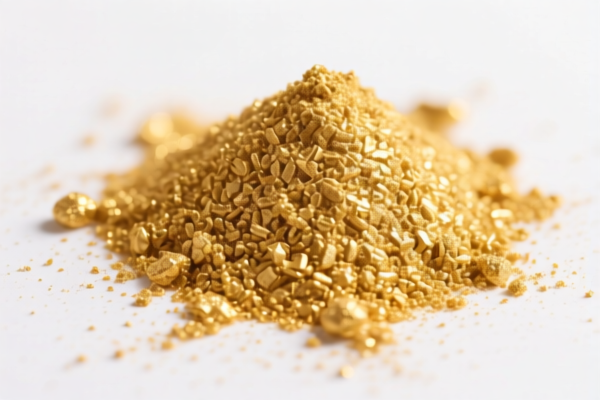
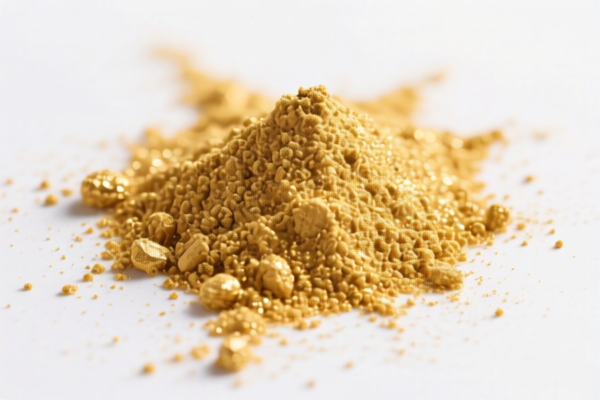
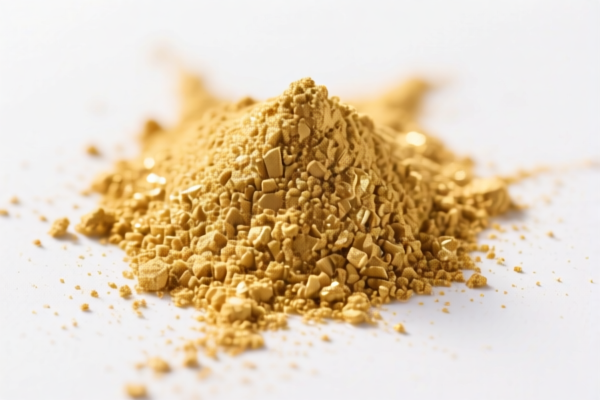
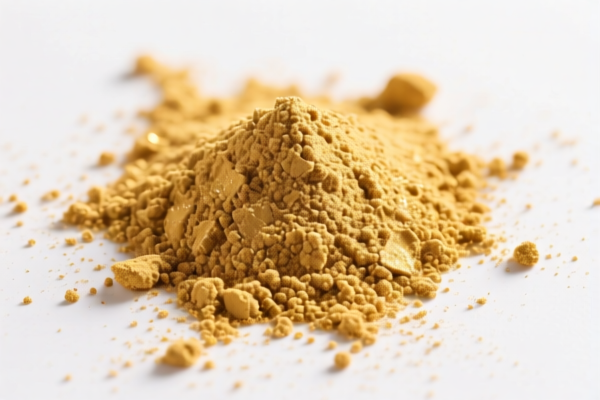
Ground ginger powder is a widely used spice derived from the dried and ground rhizomes of the ginger plant (Zingiber officinale). In international trade, it is strictly classified under Chapter 9 (Coffee, Tea, Mate and Spices) due to its primary use as a flavoring agent rather than a food additive or preservative in its raw state.
It is distinct from: 1. Fresh Ginger: Classified under Chapter 7 (Edible Vegetables), HS 0709.70. 2. Ginger Extracts/Oils: Classified under Chapter 33 (Essential Oils), HS 3301. 3. Prepared Mixtures: If mixed with salt, sugar, or other spices, it may fall under Chapter 21 (Miscellaneous Edible Preparations).
⚠️ Key Distinction:
- Pure ground ginger (no additives) → HS 0910.91
- Ginger mixed with other spices (e.g., curry powder) → HS 0910.99
- Ginger in vinegar or vinegar substitute (preserved) → HS 2001.90
📦 II. HS Code Classification Details (2026 Latest Tariff Authority Comparison)
| HS Code | Product Description | Application Scenario | Additives? |
|---|---|---|---|
0910.91.00.00 |
Ginger, ground or crushed | Pure ginger powder, no additives, used for cooking/spices | ❌ None |
0910.99.00.00 |
Other spices (mixed) | Ginger blends (e.g., with turmeric, cumin), spice mixes | ✅ Mixed |
2001.90.90.00 |
Vegetables prepared/preserved in vinegar | Pickled ginger, ginger in brine | ✅ Preserved |
0712.90.99.00 |
Dried vegetables (general) | Incorrect classification: Only if not considered a "spice" by local customs | N/A |
2103.90.90.00 |
Sauces and preparations | Ginger paste in a sauce base | ✅ Sauce base |
🔍 Key Reminder:
- Pure ground ginger powder MUST be classified under 0910.91.00.00. Misclassifying it as0712(dried vegetables) or2103(sauces) leads to clearance delays or penalties.
- If the product contains anti-caking agents (e.g., silicon dioxide), check local rules. Some countries still allow0910.91if the agent is minimal (<2%), but others may shift it to2103.90.
💰 III. 2026 Latest Tariff Rate Details (Including Surcharge Policies)
✅ Applicable Country: United States (US)
✅ Country of Origin: China (CN)
✅ Effective Date: From November 10, 2025 (and subsequent imports)
🎯 1. 0910.91.00.00 —— Ginger, Ground or Crushed
| Item | Content |
|---|---|
| Base Rate | 0% (ad valorem) |
| USITC Surcharge | None (Excluded from Section 301 list) |
| IEEPA Surcharge | 0% (Not targeted under recent IEEPA orders) |
| Total Tariff Rate | 0% |
| Tax Calculation | CIF Value × 0% |
| De Minimis Eligibility | ✅ Yes (Under $800, eligible for de minimis clearance) |
| Legal Basis Path | HTSUS:0910.91.00.00 → USITC:General → No Footnotes |
📌 Explanation:
- Ginger powder is NOT subject to Section 301 tariffs (25%) or IEEPA surcharges (10%) applied to many Chinese goods.
- Total Cost: 0%. This is a low-risk, low-cost category for clearance.
- Unlike electronics or steel, spices are largely exempt from trade war tariffs.
🎯 2. 0910.99.00.00 —— Other Spices (Mixed Spices)
| Item | Content |
|---|---|
| Base Rate | 0% |
| USITC Surcharge | None |
| IEEPA Surcharge | 0% |
| Total Tariff Rate | 0% |
| Tax Calculation | CIF Value × 0% |
| De Minimis Eligibility | ✅ Yes |
📌 Note:
- Even if mixed with other Chinese-origin spices, the rate remains 0%.
- However, ensure the product is truly a "spice mix" and not a "prepared food" (e.g., ginger sauce), which might have different duties.
🛠️ IV. Customs Clearance Practical Advice (Real-World Pitfall Avoidance)
✅ 1. Required Documentation Checklist (No Exceptions)
| Document | Mandatory | Description |
|---|---|---|
| ✅ Product Specification Sheet | ✔️ | Must state "Ground Ginger," particle size, moisture content (<8%), and purity (100% ginger). |
| ✅ Certificate of Origin (CO) | ✔️ | If claiming preferential rates (e.g., under RCEP or ASEAN), though not needed for 0% US duty. |
| ✅ Phytosanitary Certificate | ✔️ | CRITICAL: Ginger is an agricultural product. Many countries require this to prove it is pest-free. |
| ✅ Ingredient List | ✔️ | Must clearly state "No additives," "No anti-caking agents" (or specify type/amount if allowed). |
| ✅ Commercial Invoice | ✔️ | Use description: "Ground Ginger Powder, Pure, No Additives, HS 0910.91.00.00" |
| ✅ Labeling Compliance | ✔️ | Must show net weight, country of origin, and allergen warnings (if cross-contaminated). |
✅ 2. Declaration Tips (Key Mantra)
🔥 "Pure Ginger is 0910, Mix is 0910.99, Additives Change It All!"
| Situation | Correct Declaration | Wrong Practice |
|---|---|---|
| Pure ground ginger | 0910.91.00.00 |
Misclassifying as 0712 (Dried Veg) → Risk of audit |
| Ginger with salt/anti-caking | Check Local Rules: Often still 0910.91 if <2%, but some regions require 2103.90 |
Declaring pure when mixed → Penalty |
| Ginger in syrup/pickle | 2001.90.90.00 |
Declaring as spice → Incorrect chapter |
| Ginger powder mixed with salt | 0910.99.00.00 or 0910.91 (depending on mix) |
Ignoring additives → Classification error |
✅ 3. Special Handling
| Situation | Handling Advice |
|---|---|
| Anti-caking Agents | If silicon dioxide is used, declare it. In the US, it’s usually still 0910.91. In EU, it might trigger food additive regulations. |
| De Minimis (Under $800) | ✅ Eligible. No duty, simplified entry. But still requires accurate HS code and documentation. |
| FDA Registration | For US imports, facility must be FDA registered. Ginger is a "high-risk" food category in some contexts; ensure compliance. |
| Pesticide Residue | US EPA sets MRLs. Ensure ginger meets US pesticide limits. Provide test reports if requested. |
🌍 V. Global Market Comparison (2026 Latest)
| Country/Region | Recommended HS Code | Tariff Rate (China Origin) | Certification Required | Notes |
|---|---|---|---|---|
| 🇺🇸 USA | 0910.91.00.00 |
0% | FDA, Phytosanitary | No Section 301 tariffs on ginger. |
| 🇨🇳 China | 0910.91.00.00 |
8% | None (Import) | Domestic consumption tax may apply. |
| 🇪🇺 EU | 0910.91.00.00 |
0% (under GSP/Trade Agreements) | EU Food Safety, Pesticide MRLs | Strict pesticide limits. |
| 🇯🇵 Japan | 0910.91.00.00 |
0% | Food Sanitation Act, Pesticide MRLs | Very strict on residues. |
| 🇦🇺 Australia | 0910.91.00.00 |
5% | Biosecurity Import Permit | Strict biosecurity controls. |
📌 Conclusion:
- USA, EU, Japan: 0% tariff on ground ginger powder.
- Biosecurity/Phytosanitary: This is the biggest hurdle, not tariffs. Ensure proper certificates.
- Anti-caking agents: Check local food additive laws.
📌 VI. Common Errors & Pitfalls (Lessons Learned)
❌ Error 1: Declaring "Ginger Powder" as 0712.90 (Dried Vegetables)
👉 Consequence: Customs may reclassify to 0910, causing delays. While duty is similar, it triggers spice-specific regulations (pesticide tests).
❌ Error 2: Ignoring Anti-Caking Agents
👉 Consequence: If silicon dioxide is present but not declared, customs may classify as 2103.90 (Prepared Food), potentially changing duty treatment or requiring different FDA notifications.
❌ Error 3: Missing Phytosanitary Certificate
👉 Consequence: Rejection or Destruction. Ginger is a soil-grown product; pests/diseases are a major concern. Without this certificate, the shipment can be blocked at port.
❌ Error 4: Incorrect Description on Invoice
👉 Consequence: "Spice" is too vague. Use "Ground Ginger, Pure, No Additives, HS 0910.91.00.00" to avoid questions.
✅ Correct Practice:
"Ground Ginger Powder, 100% Pure Zingiber Officinale, No Additives, Fine Powder, Pesticide Residue Compliant with US EPA Standards, HS 0910.91.00.00"
🎯 VII. Conclusion: Professional Clearance for Spices
🎯 Key Takeaways:
🔹 "Ginger is 0910, Duty is 0%, but Phyto Cert is King!"
🔹 "No Section 301 Tariffs, but Biosecurity is Strict!"
🔹 "Declare Purity, List Additives, Avoid Delays!"
📌 Tips:
- If exporting to the US, ensure FDA registration is up to date.
- If exporting to EU/Japan, conduct pesticide residue testing before shipping.
- For small shipments (<$800), use de minimis but still provide accurate HS code and description.
📣 Immediate Action:
📞 Contact: Verify pesticide MRLs with local authorities + Ensure Phytosanitary Certificate is issued by origin country’s plant protection agency.
🚀 Let your ginger powder pass customs smoothly, without tariff burdens!
✨ Professional Clearance Starts with Accurate Classification!
💼 Your spice supply chain, optimized for cost and compliance!
Customer Reviews
About HS Code Classification
The Harmonized System (HS) is an internationally standardized nomenclature developed by the World Customs Organization (WCO) to classify traded products. Over 200 countries use the HS system as the basis for customs tariffs, trade statistics, and import/export regulations.
Each HS code follows a hierarchical structure:
- Chapter (2 digits) — Broad category of goods (e.g., Chapter 84: Machinery and Mechanical Appliances)
- Heading (4 digits) — More specific grouping within the chapter
- Subheading (6 digits) — Internationally standardized breakdown, used by all WCO member countries
- National subdivisions (8-10 digits) — Country-specific extensions for further classification, such as US HTSUS 10-digit codes
Correct HS code classification is essential for smooth customs clearance, accurate duty payment, and compliance with trade regulations. Misclassification can lead to customs delays, overpayment of duties, or penalties.
When importing from CN to US, the applicable tariff rates may include:
- Most-Favored-Nation (MFN) rate — The standard duty rate applied to WTO members
- General rate — Applied to countries without trade agreements
- Trade remedy duties — Additional tariffs such as Section 301 (anti-dumping), Section 232 (national security), or countervailing duties
The information provided on this page is for reference purposes only. For official classification, please consult with your local customs authority or a licensed customs broker.