Grounding Mat
CN → US| HS Code | Tariff Rate | Origin | Destination | Doc |
|---|---|---|---|---|
| 6304996040 | 20.7% | CN | US | Official Doc |
| 9404909605 | 17.3% | CN | US | Official Doc |
| 6304920000 | 23.8% | CN | US | Official Doc |
| 9404909623 | 17.3% | CN | US | Official Doc |
| 4016910000 | 37.7% | CN | US | Official Doc |
Product Images
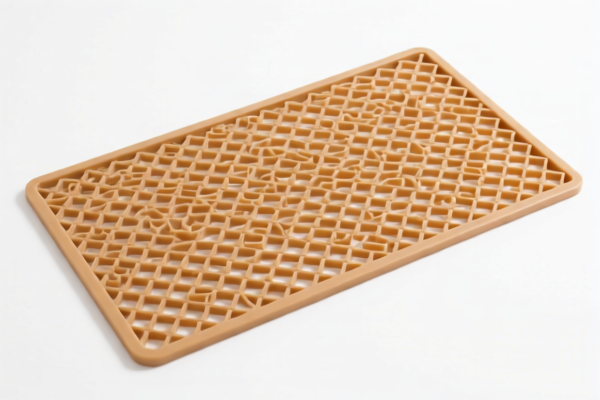
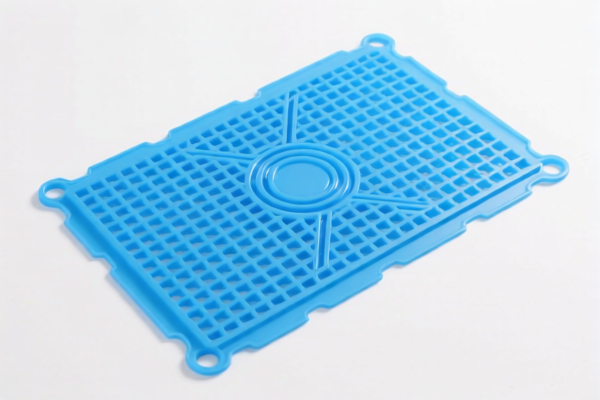
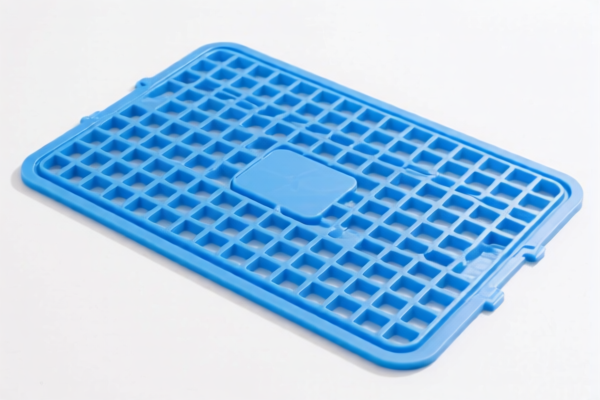
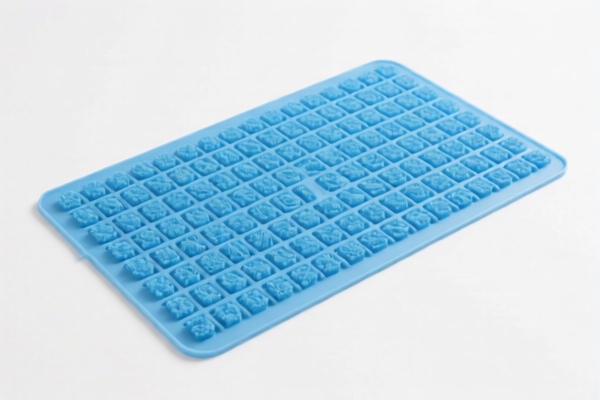
AI Analysis
🧘♂️ Grounding Mat (Earthing Mat)
🌐 HS Code Reference & Customs Clearance Guide | 2026 Latest Tariff Analysis | Professional Clearance Strategy
📌 Part 1: Product Definition & Classification: What is a "Grounding Mat"?
A Grounding Mat (also known as an Earthing Mat) is a product used in wellness, alternative medicine, and industrial safety contexts. Its primary function is to connect the user’s body to the earth’s electrical potential to neutralize free radicals, or to provide an insulated surface for electrical safety.
In international trade, its classification depends heavily on its material composition and primary intended use:
1. Textile/Household Type (Wellness/Bedding): * Description: Mats made of fabric (cotton, polyester) with conductive threads or coatings, used for sleeping, yoga, or therapeutic relaxation. * Key Feature: Soft, flexible, textile-based.
2. Industrial/Rubber Type (Electrical Safety): * Description: Mats made of rubber or plastic, used in laboratories or electrical panels to insulate workers from ground. * Key Feature: Durable, non-conductive, heavy-duty.
⚠️ Critical Distinction Point:
- If the mat is primarily textile-based and used for health/wellness purposes → It falls under Chapter 63 (Other Made-up Textile Articles) or Chapter 94 (Furniture/Bedding).
- If the mat is made of rubber and used for electrical insulation → It falls under Chapter 40 (Rubber Articles).
- Note: The data provided below specifically covers scenarios where the mat is interpreted as a textile bedding item OR an industrial rubber mat.
📦 Part 2: HS Code Classification Details (2026 Latest Tariff Authoritative Comparison)
| HS Code | Product Description | Application Scenario | Material Assumption |
|---|---|---|---|
6304.99.60.40 |
Other made-up furnishing articles (Household Textiles) | Wellness grounding sheets/blankets for home use | Cotton, Polyester, Non-wool/Silk |
9404.90.96.05 |
Bedding and similar furnishing articles | Grounding mattresses, bed pads, therapeutic bedding | Cotton or Fiber-based |
9404.90.96.23 |
Other bedding articles (Fallback Category) | Generic grounding mats not fitting specific sub-headings | Universal Fiber/Texile |
6304.92.00.00 |
Other made-up furnishing articles (Non-knitted) | Woven grounding mats, thick fabric floor mats | Non-knitted Woven Fabric |
4016.91.00.00 |
Other vulcanized rubber articles (Floor Coverings) | Industrial rubber grounding mats for electrical safety | Vulcanized Rubber |
🔍 Key Reminder:
- Textile Mats: If your product is soft, fabric-like, and marketed for "sleep," "yoga," or "wellness," do NOT classify it as rubber (4016) to save costs; customs may reject it based on material inspection. It likely belongs to 9404 or 6304.
- Rubber Mats: If it is hard, smell-like rubber, and sold for "lab safety" or "electrical work," it must be4016.91.00.00.
- Material Inference: The provided data assumes Cotton/Polyester for textile codes and Vulcanized Rubber for the rubber code.
💰 Part 3: 2026 Latest Tariff Rate Breakdown (Including Surtaxes & Policy Add-ons)
✅ Applicable Country: United States (US)
✅ Origin: China (CN)
✅ Effective Time: Post-November 2025 (Current Policy)
🎯 1. 6304.99.60.40 —— Other Household Textile Furnishings
| Item | Details |
|---|---|
| Base Tariff | 3.2% (ad valorem) |
| Section 301 Surcharge | +7.5% (List 4B or equivalent textile surcharge) |
| IEEPA Surcharge | +10.0% (China-specific emergency powers) |
| Total Tariff | 20.7% |
| Calculation | CIF Value × 20.7% |
| De Minimis Eligibility | ❌ No (Denied) |
| Legal Path | IEEPA:9903.01.25 → USITC:6304.99.60.40 |
📌 Explanation:
- Textile articles often face higher base tariffs.
- The 7.5% Section 301 surcharge applies to many textile/furnishing goods from China.
- Total 20.7% is a moderate-to-high rate for textiles.
🎯 2. 9404.90.96.05 & 9404.90.96.23 —— Bedding & Similar Articles
| Item | Details |
|---|---|
| Base Tariff | 7.3% (ad valorem) |
| Section 301 Surcharge | 0.0% (Many bedding items are excluded or have lower surcharges) |
| IEEPA Surcharge | +10.0% (China-specific emergency powers) |
| Total Tariff | 17.3% |
| Calculation | CIF Value × 17.3% |
| De Minimis Eligibility | ❌ No (Denied) |
| Legal Path | IEEPA:9901.25 → USITC:9404.90.96.05 |
📌 Explanation:
- Why is this lower? While the base tariff (7.3%) is higher than6304, the Section 301 surcharge is 0% for certain bedding/furniture components.
- Total 17.3% makes9404a more cost-effective classification than6304(20.7%) for wellness grounding mats, if they can be legally described as "bedding" or "similar furnishing."
- Crucial: You must prove the product is used for rest/sleep or therapeutic bedding to use this code.
🎯 3. 6304.92.00.00 —— Other Made-up Furnishing Articles (Non-knitted)
| Item | Details |
|---|---|
| Base Tariff | 6.3% (ad valorem) |
| Section 301 Surcharge | +7.5% |
| IEEPA Surcharge | +10.0% |
| Total Tariff | 23.8% |
| Calculation | CIF Value × 23.8% |
| De Minimis Eligibility | ❌ No (Denied) |
| Legal Path | IEEPA:9903.01.25 → USITC:6304.92.00.00 |
📌 Explanation:
- This code applies to woven (non-knitted) textile mats.
- It has the highest total rate (23.8%) among the textile options due to the combination of base tariff and 301 surcharge.
- Avoid this code unless the product is strictly a woven floor mat and not bedding.
🎯 4. 4016.91.00.00 —— Other Vulcanized Rubber Articles
| Item | Details |
|---|---|
| Base Tariff | 2.7% (ad valorem) |
| Section 301 Surcharge | +25.0% (High surcharge for rubber/electrical components) |
| IEEPA Surcharge | +10.0% |
| Total Tariff | 37.7% |
| Calculation | CIF Value × 37.7% |
| De Minimis Eligibility | ❌ No (Denied) |
| Legal Path | IEEPA:9903.01.25 → USITC:4016.91.00.00 → FOOTNOTE:301 |
📌 Explanation:
- This is for industrial rubber mats (e.g., for electricians).
- Despite a low base tariff (2.7%), the 25% Section 301 surcharge drives the total to 37.7%.
- Warning: This is the most expensive option. Only use if the product is clearly rubber and for industrial safety. Do not try to classify a textile wellness mat as rubber to avoid the 20%+ rates; customs will catch material discrepancies and impose penalties.
🛠️ Part 4: Customs Clearance Practical Advice (Real-World Pitfall Guide)
✅ 1. Essential Documentation Checklist
| Document | Required? | Notes |
|---|---|---|
| ✅ Product Specification Sheet | ✔️ | Must state material (e.g., "100% Cotton with Silver Thread" vs. "Vulcanized Rubber") |
| ✅ Material Composition Statement | ✔️ | Crucial for distinguishing between 9404 (Textile) and 4016 (Rubber) |
| ✅ Intended Use Declaration | ✔️ | "For Wellness/Sleeping" vs. "For Industrial Electrical Insulation" |
| ✅ Product Photos | ✔️ | Show texture (fabric weave vs. rubber surface) |
| ✅ Commercial Invoice | ✔️ | Description must match HS Code logic (e.g., "Grounding Bed Sheet" vs. "Rubber Safety Mat") |
| ✅ Certifications | ✔️ | FCC/UL (if electronic components present), OEKO-TEX (for textiles) |
✅ 2. Declaration Strategy (Key Mnemonic)
🔥 "Material First, Use Second, Don't Mix Codes!"
| Scenario | Correct HS Code | Incorrect Code | Consequence |
|---|---|---|---|
| Wellness Mat (Fabric) | 9404.90.96.05 (17.3%) |
4016.91.00.00 (37.7%) |
Overpaying 20%+ |
| Wellness Mat (Fabric) | 9404.90.96.05 (17.3%) |
6304.92.00.00 (23.8%) |
Overpaying 6.5% |
| Industrial Rubber Mat | 4016.91.00.00 (37.7%) |
9404.90.96.05 (17.3%) |
Misclassification Fraud Risk |
| Woven Floor Mat | 6304.99.60.40 (20.7%) |
9404.90.96.05 (17.3%) |
Borderline; risk of audit if not bedding |
📌 Crucial Tip:
- If your grounding mat is made of fabric and sold for sleeping/yoga, always choose9404.90.96.05. It offers the best balance of legal compliance and lower tax (17.3%) compared to other textile codes.
- Avoid6304codes unless necessary, as they carry a 7.5% surcharge.
- Never classify a textile mat as rubber (4016) to save money if it’s not rubber; the physical inspection will fail.
✅ 3. Special Cases
| Case | Recommendation |
|---|---|
| Conductive Silver Thread Mat | Still 9404.90.96.05 if primarily textile. Declare "Cotton Blend with Conductive Fiber." |
| Electrically Heated Grounding Mat | May require additional FDA/UL certification. HS Code remains 9404 or 8516 (if heating element is main feature). Check with broker. |
| Industrial Rubber Mat | Must declare "Vulcanized Rubber" and "Non-Slip." Use 4016.91.00.00. Expect high tax. |
| Sample Imports | Small quantities (< $800) may not be subject to de minimis exemption for China origin due to current IEEPA rules. Assume taxes apply. |
🌍 Part 5: Global Market Comparison (2026 Latest)
| Country/Region | Recommended HS Code | Estimated Total Tariff (China Origin) | Notes |
|---|---|---|---|
| 🇺🇸 USA | 9404.90.96.05 |
17.3% | Best option for textile wellness mats |
| 🇺🇸 USA | 4016.91.00.00 |
37.7% | For industrial rubber mats |
| 🇪🇺 EU | 9404.90 |
~5-6% | Generally lower tariffs, no Section 301 |
| 🇨🇳 China | 9404.90 |
~5% | Import tariff only |
| 🇬🇧 UK | 9404.90 |
~6% | Post-Brexit tariff applies |
📌 Conclusion:
- USA has the highest friction due to IEEPA/Section 301.
- Opt for9404.90.96.05for textile grounding mats to minimize US duties.
- Avoid6304due to the extra 7.5% surcharge.
📌 Part 6: Common Errors & Pitfalls (Lessons Learned)
❌ Error 1: Classifying a fabric wellness mat as 4016 (Rubber) to avoid higher textile tariffs.
👉 Result: Customs seizes goods, claims misdeclaration, fines apply. Rubber tests fail.
❌ Error 2: Using 6304.99.60.40 for a bed sheet-style grounding mat.
👉 Result: Paying 20.7% instead of 17.3% unnecessarily. 9404 is more appropriate for bedding.
❌ Error 3: Not declaring material composition clearly.
👉 Result: Customs cannot determine if it’s textile or rubber. Leads to detention and re-inspection.
❌ Error 4: Assuming De Minimis ($800) exemption applies.
👉 Result: It does NOT apply for goods from China under current IEEPA rules. Taxes apply even to small parcels.
✅ Correct Approach:
"Grounding Bed Sheet, 100% Cotton with Silver Conductive Thread, for Therapeutic Use, Model XYZ"
→ HS Code:9404.90.96.05
→ Rate: 17.3%
🎯 Part 7: Conclusion: Smart Classification, Save Costs!
🎯 Remember the Mnemonic:
🔹 "Fabric for Sleep? Use 9404 (17.3%)! Don't use 6304 (20.7%)!"
🔹 "Rubber for Safety? Use 4016 (37.7%)! Prepare for high tax!"
🔹 "No De Minimis for China! Pay tax on small orders too!"
📌 Pro Tip:
If your grounding mats are made in Vietnam, India, or Mexico, you may qualify for 0% Section 301 tariffs. Consider supply chain diversification to reduce the 10% IEEPA + 0-25% 301 burden.
📣 Immediate Action:
📞 Consult a licensed US Customs Broker.
📄 Provide material test reports (Cotton vs. Rubber).
🚀 Apply for a Binding Ruling if shipping large volumes to ensure legal certainty.
✨ Professional Clearance Starts with Precise Classification!
💼 Every 1% of Tariff Saved is Pure Profit!
Customer Reviews
About HS Code Classification
The Harmonized System (HS) is an internationally standardized nomenclature developed by the World Customs Organization (WCO) to classify traded products. Over 200 countries use the HS system as the basis for customs tariffs, trade statistics, and import/export regulations.
Each HS code follows a hierarchical structure:
- Chapter (2 digits) — Broad category of goods (e.g., Chapter 84: Machinery and Mechanical Appliances)
- Heading (4 digits) — More specific grouping within the chapter
- Subheading (6 digits) — Internationally standardized breakdown, used by all WCO member countries
- National subdivisions (8-10 digits) — Country-specific extensions for further classification, such as US HTSUS 10-digit codes
Correct HS code classification is essential for smooth customs clearance, accurate duty payment, and compliance with trade regulations. Misclassification can lead to customs delays, overpayment of duties, or penalties.
When importing from CN to US, the applicable tariff rates may include:
- Most-Favored-Nation (MFN) rate — The standard duty rate applied to WTO members
- General rate — Applied to countries without trade agreements
- Trade remedy duties — Additional tariffs such as Section 301 (anti-dumping), Section 232 (national security), or countervailing duties
The information provided on this page is for reference purposes only. For official classification, please consult with your local customs authority or a licensed customs broker.