Grouting Tools
CN → US| HS Code | Tariff Rate | Origin | Destination | Doc |
|---|---|---|---|---|
| 8479100040 | 35.0% | CN | US | Official Doc |
| 6812992000 | 35.0% | CN | US | Official Doc |
| 6812999000 | 35.0% | CN | US | Official Doc |
| 8205595560 | 40.3% | CN | US | Official Doc |
| 8205598000 | 38.7% | CN | US | Official Doc |
Product Images
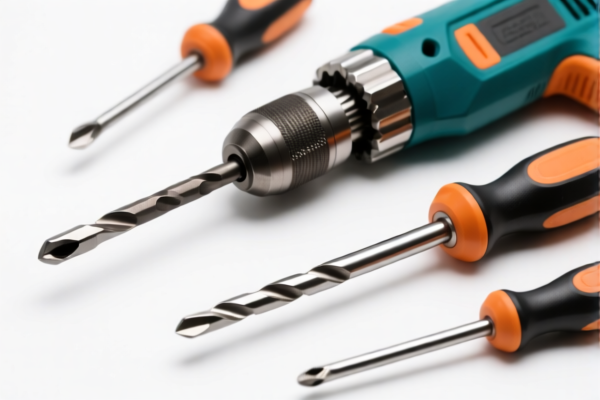
AI Analysis
🧱 Grouting Tools (Construction & Jointing Equipment)
🌐 HS Code Reference & Customs Clearance Guide | 2026 Latest Tariff Analysis | Professional-Level Strategy
📌 Part I: Product Definition & Classification: What Exactly Are "Grouting Tools"?
In the construction and infrastructure industry, "Grouting Tools" refer to a diverse range of equipment used for filling, sealing, or leveling joints in concrete, pavement, and other structural materials. However, customs classification is not based on the single generic term "Grouting Tool." It depends strictly on: 1. Function: Is it a machine (automated) or a hand tool? 2. Form: Is it a consumable material (sheets/pads) or a durable instrument? 3. Material: Is it metal, stone-based, or asbestos-contaminated?
⚠️ Critical Distinction Points:
- If the tool is a machine for concrete joint treatment →归入 8479.10.00.40
- If the tool is a sheet/pad for sealing →归入 6812.99.20.00 or 6812.99.90.00
- If the tool is a handheld instrument (metal) →归入 8205.59.55.60 or 8205.59.80.00
📦 Part II: HS Code Classification Details (2026 Latest Tariff Authority Match)
| HS Code | Product Description | Application Scenario | Key Feature |
|---|---|---|---|
8479.10.00.40 |
Grouting Machine / Joint Filler | Automated machines for concrete joint treatment, leveling roads | 🏗️ Machine (Functional equivalence to leveling machines) |
6812.99.20.00 |
Grouting Pad (Sealing Type) | Sheet-shaped or roll-shaped sealing gaskets/pads | 📄 Consumable Material (Sheet/Roll form) |
6812.99.90.00 |
Grouting Pad (Asbestos-Based) | Products made of asbestos fiber or asbestos-based mixtures | ⚠️ Special Material (Asbestos content triggers specific code) |
8205.59.55.60 |
Joint Tool (Metal Hand Tool) | Metal (iron/steel) handheld tools for joint finishing | 🛠️ Hand Tool (Specific metal composition) |
8205.59.80.00 |
Joint Tool (Other Hand Tools) | General manual tools, categorized under "Other Hand Tools" | 🔨 Hand Tool (General category) |
🔍 Key Reminder:
- Machines never fall under "Hand Tools." If it plugs in or has a motor, it’s 8479. - Hand Tools are strictly manual. If it’s metal, check the specific metal sub-code (8205.59.55.60) vs. general others (8205.59.80.00). - Asbestos products are highly sensitive. Ensure 6812.99.90.00 if asbestos is present, as it may face additional environmental restrictions despite the tariff structure.
💰 Part III: 2026 Latest Tariff Rate Details (Including Surcharge Policies)
✅ Applicable Country: United States (US)
✅ Country of Origin: China (CN)
✅ Effective Date: Current policy applies (Based on 301 & IEEPA provisions)
🎯 1. 8479.10.00.40 —— Grouting Machine (Concrete Joint Treatment)
| Item | Content |
|---|---|
| Base Tariff | 0.0% (ad valorem) |
| USITC Surcharge (Section 301) | +25.0% |
| IEEPA Surcharge (Section 122/Other) | +10.0% |
| Total Tariff Rate | 35.0% |
| Tax Calculation | CIF Value × 35% |
| De Minimis Exemption | ❌ Not Applicable (deny_de_minimis) |
| Legal Basis Path | USITC:8479.10.00.40 → FOOTNOTE:301 → IEEPA:122 |
📌 Explanation:
- Although the base tariff is 0%, the 35% total rate is prohibitive. - The 25% comes from Section 301 tariffs on specific industrial machinery. - The 10% is a policy-based surcharge (often linked to Section 122 or broader trade measures).
🎯 2. 6812.99.20.00 & 6812.99.90.00 —— Grouting Pads/Mats
A. For Sealing Sheets/Gaskets (6812.99.20.00)
| Item | Content |
|---|---|
| Base Tariff | 0.0% |
| USITC Surcharge (Section 301) | +25.0% |
| IEEPA Surcharge | +10.0% |
| Total Tariff Rate | 35.0% |
| Tax Calculation | CIF Value × 35% |
| De Minimis Exemption | ❌ Not Applicable |
B. For Asbestos-Based Products (6812.99.90.00)
| Item | Content |
|---|---|
| Base Tariff | 0.0% |
| USITC Surcharge (Section 301) | +25.0% |
| IEEPA Surcharge | +10.0% |
| Total Tariff Rate | 35.0% |
| Tax Calculation | CIF Value × 35% |
| De Minimis Exemption | ❌ Not Applicable |
📌 Note:
- Both pad types incur the same 35% rate. - ⚠️ CRITICAL WARNING: For6812.99.90.00(Asbestos), even though the tariff is 35%, importing asbestos-containing products into the US is heavily restricted or banned under EPA regulations. Clearance may be denied entirely regardless of tariff payment. Verify EPA compliance before shipment!
🎯 3. 8205.59.55.60 & 8205.59.80.00 —— Hand Tools
A. Specific Metal Hand Tool (8205.59.55.60)
| Item | Content |
|---|---|
| Base Tariff | 5.3% |
| USITC Surcharge (Section 301) | +25.0% |
| IEEPA Surcharge | +10.0% |
| Total Tariff Rate | 40.3% |
| Tax Calculation | CIF Value × 40.3% |
| De Minimis Exemption | ❌ Not Applicable |
B. Other Hand Tools (8205.59.80.00)
| Item | Content |
|---|---|
| Base Tariff | 3.7% |
| USITC Surcharge (Section 301) | +25.0% |
| IEEPA Surcharge | +10.0% |
| Total Tariff Rate | 38.7% |
| Tax Calculation | CIF Value × 38.7% |
| De Minimis Exemption | ❌ Not Applicable |
📌 Note:
- Hand tools are generally more expensive due to higher base tariffs (3.7%-5.3%). - The distinction between.55.60and.80.00depends on the exact metal composition and specificity. If unsure,.80.00is the safer "catch-all," but.55.60might apply if specific iron/steel criteria are met. Misclassification here can lead to audits.
🛠️ Part IV: Customs Clearance Practical Advice (Real-World Pitfall Avoidance)
✅ 1. Documentation Checklist (Essential)
| Document | Required? | Explanation |
|---|---|---|
| ✅ Product Technical Sheet | ✔️ | Must clearly define if it’s a machine, pad, or hand tool. |
| ✅ Material Composition Report | ✔️ | Crucial for 6812 codes. Must explicitly state "Contains No Asbestos" or "Asbestos-Free" to avoid EPA bans. |
| ✅ Function Description | ✔️ | For 8479: "Automated concrete joint filler." For 8205: "Manual iron bar for smoothing joints." |
| ✅ Commercial Invoice | ✔️ | Describe item precisely. Avoid vague terms like "Construction Supplies." Use "Grouting Machine" or "Steel Joint Trowel." |
| ✅ Photos (Labeled) | ✔️ | Show power cords (for machines), labels, and dimensions. |
✅ 2. Classification Strategy (Key Mantra)
🔥 “Machine is 84, Pad is 68, Hand Tool is 82. Check Asbestos, Check Metal!”
| Scenario | Correct HS Code | Risk of Wrong Classification |
|---|---|---|
| Electric Concrete Joint Filler | 8479.10.00.40 |
If misclassified as hand tool → Audit for fraud. |
| Rubber/Composite Sealing Pad | 6812.99.20.00 |
If misclassified as machine → Rejected at customs. |
| Asbestos-Containing Pad | 6812.99.90.00 |
⚠️ HIGH RISK: May be banned by EPA. Do not import without EPA clearance. |
| Steel Joint Trowel (Manual) | 8205.59.55.60 |
If misclassified as plastic/tool → Rate dispute. |
| Generic Manual Joint Cleaner | 8205.59.80.00 |
Safe fallback if specific metal spec is unclear. |
✅ 3. Special Handling Tips
| Situation | Handling Suggestion |
|---|---|
| "Grouting" vs. "Sealing" | Ensure the description matches the HS summary. "Sealing Gasket" → 6812. "Grouting Machine" → 8479. |
| Asbestos Content | Do not guess. If there is any doubt, get a lab report confirming "Asbestos-Free." Importing asbestos items can result in immediate seizure and fines. |
| Mixed Containers | If a container has both machines and pads, separate lines on the invoice. Do not lump under one HS Code. |
| Duty Optimization | Rates are high (35%-40%). Consider if the product qualifies for any HTS Exclusions (if available in your specific import window) or if re-routing through a non-China origin (e.g., Vietnam, Mexico) can apply for IEEPA exemptions. |
🌍 Part V: Market Comparison (2026 Update)
| Country/Region | Recommended HS Code | Est. Tariff (China Origin) | Notes |
|---|---|---|---|
| 🇺🇸 USA | See Table Above | 35% - 40.3% | High tariffs. EPA strict on asbestos. |
| 🇨🇳 China | Varies | Lower (~3-10%) | Domestic use or re-export. |
| 🇪🇺 EU | Varies | ~0-6% | Generally no Section 301/IEEPA surcharges. |
| 🇨🇦 Canada | Varies | ~0-5% | CUSMA eligible if originating in NA. |
📌 Conclusion:
- The US market is the most expensive for these goods due to layered surcharges. - Asbestos products (6812.99.90.00) are practically non-importable for commercial use without special EPA permits. - Machines (8479) are slightly cheaper in duty (35%) than Hand Tools (8205) (38.7%-40.3%), but machines often have higher unit values, so absolute tax may be higher.
📌 Part VI: Common Mistakes & Pitfalls (Lessons Learned)
❌ Mistake 1: Calling a "Grouting Machine" a "Tool" to avoid machine tariffs.
👉 Consequence: Customs will inspect and reclassify, imposing penalties + back taxes.
❌ Mistake 2: Ignoring asbestos content in sealing pads.
👉 Consequence: Seizure by EPA/Customs. Fines up to $10,000+ per violation.
❌ Mistake 3: Using generic "Construction Equipment" description.
👉 Consequence: Delayed clearance. CBP will request detailed technical specs, causing demurrage charges.
❌ Mistake 4: Assuming "Hand Tool" is always cheaper.
👉 Consequence: Hand tools have higher base rates (3.7%-5.3%) + surcharges, often making them more expensive than machinery with 0% base rate.
✅ Correct Approach:
"Describe by Function & Form. Verify Asbestos. Declare Accurately."
Example: "Electric Concrete Joint Filler, Model XYZ, 220V, 50Hz" →8479.10.00.40
🎯 Part VII: Conclusion: Precision Saves Money
🎯 Remember the Golden Rule:
🔹 Machine = 8479 (35%)
🔹 Pad = 6812 (35%) (Check Asbestos!)
🔹 Hand Tool = 8205 (38.7%-40.3%)🔹 "HS Code is Destiny. 5% difference in base rate = Thousands in savings."
📌 Pro Tip:
If you are importing large volumes, consider HTS Exclusion Applications (if eligible) or explore Third-Country Manufacturing (e.g., Vietnam, Thailand) to avoid US surcharges. Always apply for a Binding Ruling from CBP before the first shipment.
📣 Immediate Action:
📞 Contact your Customs Broker with Product Photos + Material Specs.
📄 Request a Pre-Ruling for8479.10.00.40,6812.99.20.00, or8205.59.xx.
🚀 Avoid Surprises. Clear Fast. Maximize Profit.
✨ Professional Clearance Starts with Correct Classification!
💼 Every Percent Counts in Global Trade!
Customer Reviews
About HS Code Classification
The Harmonized System (HS) is an internationally standardized nomenclature developed by the World Customs Organization (WCO) to classify traded products. Over 200 countries use the HS system as the basis for customs tariffs, trade statistics, and import/export regulations.
Each HS code follows a hierarchical structure:
- Chapter (2 digits) — Broad category of goods (e.g., Chapter 84: Machinery and Mechanical Appliances)
- Heading (4 digits) — More specific grouping within the chapter
- Subheading (6 digits) — Internationally standardized breakdown, used by all WCO member countries
- National subdivisions (8-10 digits) — Country-specific extensions for further classification, such as US HTSUS 10-digit codes
Correct HS code classification is essential for smooth customs clearance, accurate duty payment, and compliance with trade regulations. Misclassification can lead to customs delays, overpayment of duties, or penalties.
When importing from CN to US, the applicable tariff rates may include:
- Most-Favored-Nation (MFN) rate — The standard duty rate applied to WTO members
- General rate — Applied to countries without trade agreements
- Trade remedy duties — Additional tariffs such as Section 301 (anti-dumping), Section 232 (national security), or countervailing duties
The information provided on this page is for reference purposes only. For official classification, please consult with your local customs authority or a licensed customs broker.