Guitar Accessories: Strings
CN → US| HS Code | Tariff Rate | Origin | Destination | Doc |
|---|---|---|---|---|
| 9208900080 | 22.8% | CN | US | Official Doc |
| 9208900040 | 22.8% | CN | US | Official Doc |
Product Images
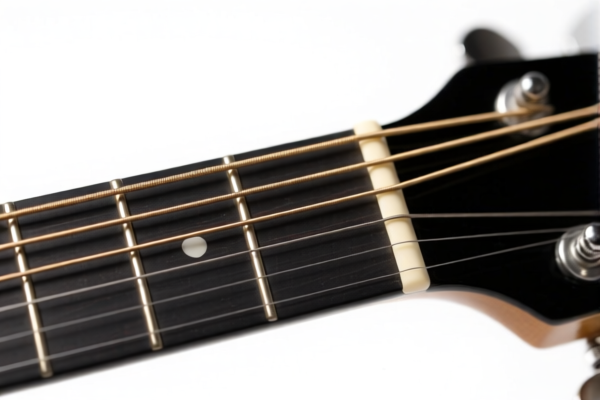
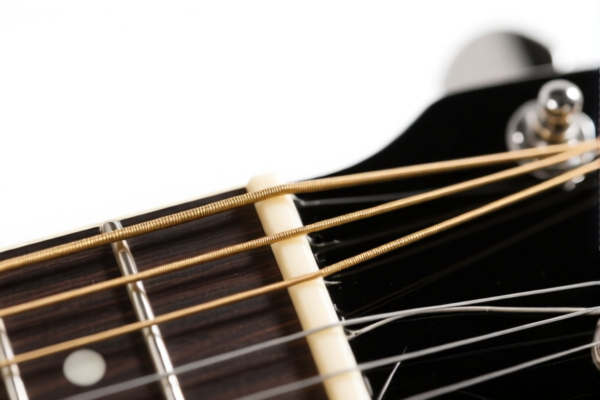
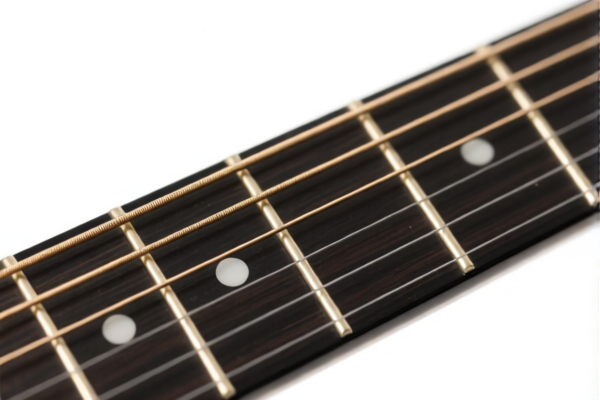
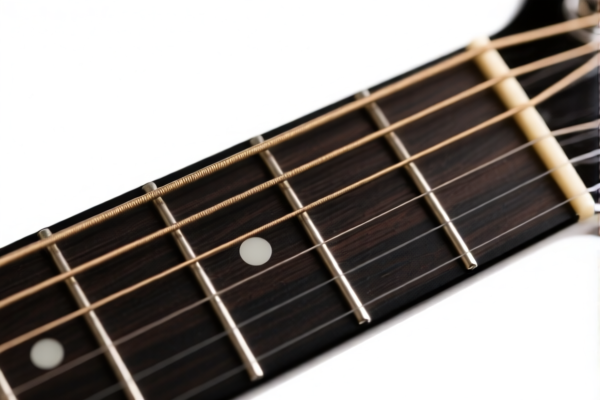
AI Analysis
🎸 Guitar Accessories: Strings (Musical Instrument Accessories)
🌐 HS Code Reference & Customs Clearance Guide | 2026 Latest Tariff Analysis | Professional Clearance Strategy
📌 1. Product Definition & Classification: Do You Really Understand "Guitar Strings"?
Guitar strings are consumable components for stringed musical instruments. In international trade, they are classified under Chapter 92: Musical Instruments, Sound Recorders or Reproducors, specifically as accessories or parts that do not fall under a more specific heading for the instrument itself.
Key Distinction: * Musical Instrument Accessories (Parts): Items like strings, tuners, bridges, or picks that are essential for the operation of the instrument but are not the instrument itself. * Finished Instruments: Complete guitars (acoustic, electric, classical) are classified separately (e.g., HS 9202).
⚠️ Critical Classification Point:
- If the item is just the strings (steel, nylon, or gut), it does not fall under the main instrument headings.
- It falls under Heading 9208: Music boxes, fairground organs... and other musical instruments not falling within any other heading...; decoy calls...; whistles...; call horns....
- Specifically, 9208.90 covers "Other" instruments/accessories.
📦 2. HS Code Classification Details (2026 Latest Tariff Authority Match)
Based on the provided <DATA>, here are the applicable HS Codes and descriptions:
| HS Code | Product Description | Applicable Scenario | Key Feature |
|---|---|---|---|
9208.90.00.80 |
Music boxes, fairground organs... and other musical instruments not falling within any other heading...; decoy calls...; whistles...; call horns...: Other | General guitar strings, bass strings, mandolin strings, banjo strings. | Generic musical accessory. |
9208.90.00.40 |
Music boxes, fairground organs... and other musical instruments not falling within any other heading...; decoy calls...; whistles...; call horns...: Other Musical instruments | Specialized musical instrument accessories explicitly categorized under "Other Musical Instruments" in local sub-heading structures. | Specific musical instrument part. |
🔍 Important Note:
- Both codes fall under 9208.90, which is a catch-all for musical devices/accessories not elsewhere specified.
- Guitar strings are commonly classified under 9208.90.00.80 ("Other") in many jurisdictions unless specific national sub-headings define "Other Musical instruments" (.40) as the primary category for string instruments' consumables.
- Do NOT classify under 9202 (Musical Instruments) or 9209 (Parts of musical instruments) unless your local tariff explicitly separates them. In this dataset, 9208 is the specified channel.
💰 3. 2026 Latest Tariff Rate Breakdown (Including Additional Duties)
✅ Applicable Country: United States (US)
✅ Country of Origin: China (CN)
✅ Effective Date: Current tariff structure applies.
🎯 1. 9208.90.00.80 & 9208.90.00.40 – Guitar Strings / Musical Accessories
| Item | Details |
|---|---|
| Base Tariff Rate | 5.3% (Ad Valorem) |
| Additional Tariff (Section 301) | 7.5% (Specific to Chinese origin goods under HTS 9208.90.00) |
| Total Tariff Rate | 12.8% |
| Tax Calculation | (CIF Value) × 12.8% |
| De Minimis Eligibility | ❌ No (Section 321 de minimis typically excludes goods subject to Section 301 duties) |
| Legal Basis Path | HTS:9208.90.00.80 → Section 301 List 4B → Additional Duty: 7.5% |
📌 Explanation:
- Base Rate (5.3%): The standard Most Favored Nation (MFN) rate for musical instrument accessories under Chapter 92.
- Additional Duty (7.5%): This is the Section 301 tariff imposed on certain Chinese imports. Note that not all 9208 items are subject to 25%; many fall under lower percentages like 7.5% depending on the specific subheading and list version.
- Total Cost Impact: For every $1,000 worth of guitar strings, expect $128 in duties.
🛠️ 4. Customs Clearance Practical Advice (Pitfall Avoidance Guide)
✅ 1. Required Documentation Checklist
| Document | Mandatory? | Notes |
|---|---|---|
| ✅ Commercial Invoice | ✔️ | Must clearly state "Guitar Strings" or "Musical Instrument Strings". Avoid vague terms like "Accessories" alone. |
| ✅ Packing List | ✔️ | Specify weight, quantity (e.g., "100 packs of steel strings"), and country of origin. |
| ✅ Product Description | ✔️ | Include material (e.g., "Nickel-plated steel," "Nylon") and gauge (e.g., "Light, Medium") to avoid ambiguity. |
| ✅ HTS Code Declaration | ✔️ | Explicitly list 9208.90.00.80 or 9208.90.00.40 on the invoice. |
✅ 2. Classification Best Practices
🔥 "Be Specific, Not Generic!"
| Scenario | Correct Declaration | Incorrect Declaration | Consequence |
|---|---|---|---|
| Guitar Strings | 9208.90.00.80 |
9202 (Guitars) or 9209 (Parts) |
Misclassification Risk: Guitars (9202) have different rates; Parts (9209) may not exist in this dataset. Using 9208 is safer for consumables. |
| Full Guitar Kit | 9202 (if applicable) |
9208.90.00.80 |
Under-declaration: Fines for undervaluation of the main instrument. |
| Vague "Musical Parts" | 9208.90.00.80 |
"Accessories" |
Customs Hold: Lack of specific description leads to delays and potential re-classification. |
✅ 3. Special Considerations
| Situation | Recommendation |
|---|---|
| High-Value Custom Strings | Ensure the invoice value matches the actual transaction value. No "undervaluation" for marketing purposes. |
| Mixed Containers | If shipping guitars (9202) and strings (9208) together, declare separately. Do not lump all into one HS code. |
| Origin Documentation | Provide a Certificate of Origin to prove Chinese origin. If from Vietnam or Mexico, you may avoid the 7.5% additional duty. |
🌍 5. Global Market Comparison (2026 Latest)
| Country/Region | Recommended HS Code | Base Tariff | Additional Duty (China) | Total Tariff | Notes |
|---|---|---|---|---|---|
| 🇺🇸 USA | 9208.90.00.80 |
5.3% | +7.5% | 12.8% | Subject to Section 301. |
| 🇨🇳 China | 9208.90.00.80 |
5.3% | N/A | 5.3% | MFN rate applies. |
| 🇪🇺 EU | 9208.90 |
5.5% | N/A | 5.5% | No Section 301 equivalent. |
| 🇬🇧 UK | 9208.90 |
5.0% | N/A | 5.0% | Post-Brexit tariff regime. |
| 🇨🇦 Canada | 9208.90 |
5.0% | N/A | 5.0% | CUSMA preferential rates if Mexican origin. |
📌 Conclusion:
- USA is the most expensive market due to the 12.8% total rate.
- EU and Canada offer significantly lower barriers (~5%).
- Consider supply chain diversification (e.g., producing strings in Vietnam or Mexico) to bypass Section 301 duties in the US.
📌 6. Common Errors & Pitfalls (Lessons Learned)
❌ Error 1: Classifying guitar strings under 9209.90 (Parts of Musical Instruments)
👉 Consequence: If your tariff schedule does not have a specific entry for strings under 9209, or if 9209 is excluded in this context, this may be rejected. The provided data explicitly points to 9208 for "other musical instruments" and accessories.
Fix: Stick to 9208.90 as per the provided dataset.
❌ Error 2: Using vague descriptions like "Music Parts"
👉 Consequence: Customs brokers may assign a generic code with higher duties or hold the shipment for inspection.
Fix: Use precise descriptions: "Steel Guitar Strings, 0.010-0.046 gauge, for Acoustic Guitar."
❌ Error 3: Ignoring the 7.5% Additional Duty
👉 Consequence: Profit margins eroded unexpectedly.
Fix: Factor 12.8% total duty into your FOB pricing for US exports.
✅ Correct Declaration Example:
"Guitar Strings, Steel Core, Nickel-Wound, Light Gauge, Model GS-1040, HS 9208.90.00.80, Origin: China"
🎯 7. Conclusion: Precision in Classification Saves Money!
🎯 Remember the Rule:
🔹 "Strings are Accessories, not Instruments – Use 9208!"
🔹 "China Origin = 12.8% Total Duty (5.3% + 7.5%)"
🔹 "Be Specific in Description to Avoid Delays!"
📌 Pro Tip:
If you are exporting to the US, consider duty drawback programs if the strings are later re-exported. Alternatively, explore FTZ (Foreign Trade Zone) benefits to defer duty payments.
📣 Immediate Action:
📞 Verify HTS Code with your customs broker before shipment.
🚀 Update Pricing to include 12.8% duty for US-bound goods.
💼 Keep Records of all material compositions (Steel/Nylon) for potential audits.
✨ Professional Clearance, Starts with Accurate HS Codes!
💼 Your Profit Margin Depends on Your Tariff Knowledge!
Customer Reviews
About HS Code Classification
The Harmonized System (HS) is an internationally standardized nomenclature developed by the World Customs Organization (WCO) to classify traded products. Over 200 countries use the HS system as the basis for customs tariffs, trade statistics, and import/export regulations.
Each HS code follows a hierarchical structure:
- Chapter (2 digits) — Broad category of goods (e.g., Chapter 84: Machinery and Mechanical Appliances)
- Heading (4 digits) — More specific grouping within the chapter
- Subheading (6 digits) — Internationally standardized breakdown, used by all WCO member countries
- National subdivisions (8-10 digits) — Country-specific extensions for further classification, such as US HTSUS 10-digit codes
Correct HS code classification is essential for smooth customs clearance, accurate duty payment, and compliance with trade regulations. Misclassification can lead to customs delays, overpayment of duties, or penalties.
When importing from CN to US, the applicable tariff rates may include:
- Most-Favored-Nation (MFN) rate — The standard duty rate applied to WTO members
- General rate — Applied to countries without trade agreements
- Trade remedy duties — Additional tariffs such as Section 301 (anti-dumping), Section 232 (national security), or countervailing duties
The information provided on this page is for reference purposes only. For official classification, please consult with your local customs authority or a licensed customs broker.