Gunpowder
CN → US| HS Code | Tariff Rate | Origin | Destination | Doc |
|---|---|---|---|---|
| 3601000000 | 20.75% | CN | US | Official Doc |
Product Images

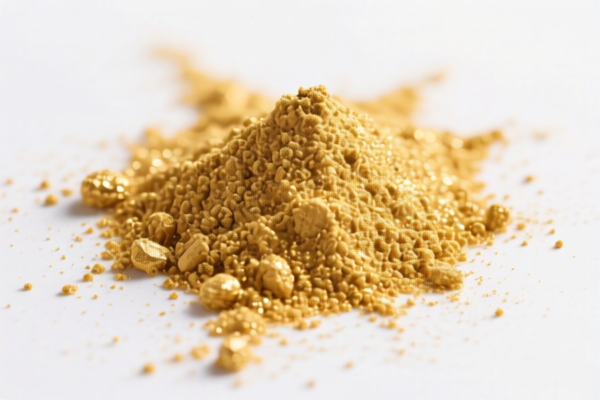
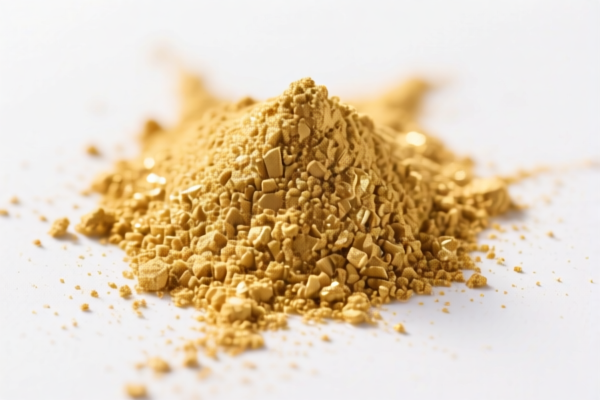
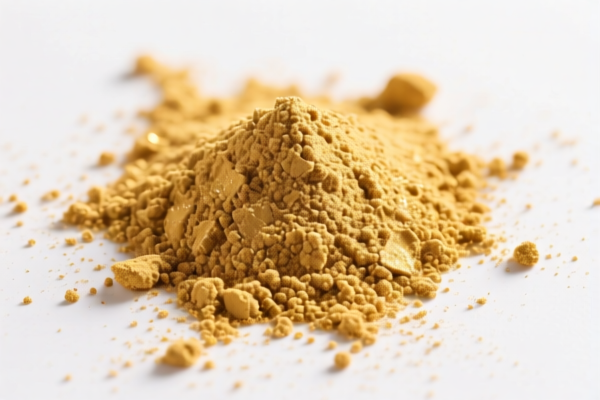
AI Analysis
💣 Propellant Powders (Gunpowder for Firearms)
🌐 HS Code Reference & Customs Clearance Guide | 2026 Latest Tariff Analysis | Professional Leveling Strategy
📌 1. Product Definition & Classification: Do You Understand "Propellant Powders"?
Propellant Powders (often referred to as gunpowder in trade contexts, though distinct from black powder used in pyrotechnics) are specialized energetic materials used as propellants in ammunition, firearms, and military applications. In international trade, they fall under Chapter 36 of the HS Code, specifically as "Gunpowder and other explosives; Pyrotechnic products; Matches; Pyrophoric alloys; Certain combustible preparations."
⚠️ Key Distinction: * Propellant Powders (3601): Specifically designed for firearm/ammunition propulsion. High stability, controlled burn rate. * Black Powder/Pyrotechnics (3602): Used in fireworks, fuses, or signaling devices. Different chemical composition and safety standards.
⚠️ Critical Point:
- If the product is specifically formulated for firearms/ammunition, it must be declared as "Propellant Powders" under HS Code 3601.
- Misclassification as general chemical compounds or other explosives can lead to severe customs delays, seizures, or legal penalties due to the dual-use nature of such goods.
📦 2. HS Code Classification Details (2026 Latest Tariff Authority Comparison)
| HS Code | Product Description | Application Scenario | Chemical Nature |
|---|---|---|---|
3601.00.00.00 |
Propellant powders (specifically for firearms/ammunition) | Military ammunition, hunting loads, industrial detonators | Nitrocellulose-based, smokeless powder |
🔍 Key Reminder:
- Only3601.00.00.00is applicable for propellant powders as per the provided data.
- Other codes (e.g., 3602 for prepared explosives, 3824 for chemical mixtures) are not applicable here.
- Ensure the product description explicitly states "Propellant Powders" to avoid confusion with generic explosives or pyrotechnics.
💰 3. 2026 Latest Tariff Rate Details (Including Additional Taxes, Policy Add-ons)
✅ Applicable Country: United States (US)
✅ Origin: China (CN)
✅ Effective Date: 2025-11-10 onwards (including subsequent imports)
🎯 1. 3601.00.00.00 —— Propellant Powders
| Item | Content |
|---|---|
| Basic Tariff Rate | 0.0% (ad valorem) |
| Additional Tariff (Section 301) | 0.0% |
| IEEPA Additional Tariff | 0.0% |
| Total Tariff Rate | 0.0% |
| Tax Calculation | CIF Value × 0.0% = $0 |
| De Minimis Exemption Eligible | ❌ No (Dual-use/military goods are generally excluded from de minimis relief) |
| Legal Basis Path | HTSUS:3601.00.00.00 → USITC:3601 → No Additional Footnotes |
📌 Explanation:
- The basic tariff rate for propellant powders is 0%, reflecting its strategic classification.
- No additional tariffs (such as Section 301 or IEEPA) are applied to this specific HS code in the provided data.
- However, due to its nature as a controlled substance, regulatory compliance (e.g., ATF regulations in the US) is critical, even if the tariff is zero.📌 Note:
- Even though the tariff is 0%, importers must ensure proper documentation and compliance with military/dual-use export controls.
- Misdeclaration can result in heavy penalties, shipment seizure, or criminal charges, regardless of the low tariff.
🛠️ 4. Customs Clearance Practical Advice (Combat Pitfall Avoidance Guide)
✅ 1. Required Documentation Checklist (All Mandatory)
| Document | Required | Notes |
|---|---|---|
| ✅ Commercial Invoice | ✔️ | Must clearly state "Propellant Powders for Firearms" |
| ✅ Certificate of Origin | ✔️ | Required for tariff verification |
| ✅ Product Specification Sheet | ✔️ | Include chemical composition, burn rate, stability data |
| ✅ Safety Data Sheet (SDS) | ✔️ | Mandatory for hazardous materials |
| ✅ ATF License/Permit (US) | ✔️ | Required for import of ammunition components |
| ✅ Packaging Declaration | ✔️ | Must comply with DOT/IMO dangerous goods regulations |
| ✅ Bill of Lading | ✔️ | Properly classify as "Dangerous Goods" if applicable |
✅ 2. Declaration Tips (Key Principles)
🔥 “Accurate Description, Full Compliance, Zero Tariff, High Risk!”
| Scenario | Correct Declaration | Incorrect Action |
|---|---|---|
| Propellant Powders for Firearms | 3601.00.00.00 |
Misdeclared as "Chemicals" or "Explosives" |
| Black Powder for Fireworks | 3602.00.00.00 |
Misdeclared as 3601 → Compliance Issue |
| Smokeless Powder (Military Grade) | 3601.00.00.00 |
Not declaring as Dual-Use → Seizure Risk |
✅ 3. Special Circumstances Handling
| Situation | Handling Advice |
|---|---|
| OEM/Custom Propellants | Provide client order + technical specs. Avoid generic terms. |
| Mixed Packages | Declare each component separately. Do not combine with non-hazardous goods. |
| Military vs. Civilian Use | Clearly state end-use. Civilian use may require additional ATF permits. |
| Dual-Use Goods | Submit ITAR/EAR compliance documents if applicable. |
🌍 5. Global Market Comparison (2026 Latest)
| Country/Region | Recommended HS Code | Tariff | Certification | Remarks |
|---|---|---|---|---|
| 🇺🇸 United States | 3601.00.00.00 |
0.0% | ATF Permit + DOT | Zero tariff, but strict regulatory compliance |
| 🇨🇳 China | 3601.00.00.00 |
0.0% | None | No additional tariffs |
| 🇪🇺 European Union | 3601.00.00.00 |
0.0% | CE + ADR | Zero tariff, hazardous material regulations apply |
| 🇦🇺 Australia | 3601.00.00.00 |
0.0% | DG Regulations | Zero tariff, strict dangerous goods rules |
| 🇯🇵 Japan | 3601.00.00.00 |
0.0% | PSE/DG | Zero tariff, safety standards required |
📌 Conclusion:
- Tariff is 0.0% globally for propellant powders under HS Code3601.00.00.00.
- Regulatory compliance is the biggest challenge, not tariff cost.
- Ensure all necessary licenses (e.g., ATF, ITAR, EAR) are in place before shipping.
📌 6. Common Mistakes & Pitfalls (Lessons Learned)
❌ Mistake 1: Declaring "Propellant Powders" as "Chemical Compounds"
👉 Consequence: Customs holds shipment for reclassification → Delay + Potential Seizure
❌ Mistake 2: Failing to disclose hazardous nature
👉 Consequence: Violation of DG regulations → Heavy Fines + Legal Action
❌ Mistake 3: Using generic terms like "Gunpowder" without specification
👉 Consequence: Ambiguity leads to incorrect HS code assignment → Audit Risk
❌ Mistake 4: Ignoring ATF/ITAR requirements for US imports
👉 Consequence: Criminal Charges + Shipment Confiscation
✅ Correct Practice:
"Smokeless Propellant Powder for Firearms, Nitrocellulose-Based, Model XYZ, ATF Compliant, Dangerous Goods Class 1.1"
🎯 7. Conclusion: Professional Declaration, Save Time, Reduce Risk!
🎯 Remember the Mantra:
🔹 "Zero Tariff, High Compliance. Accurate HS Code, Zero Trouble!"
🔹 "Propellant Powders are Strategic Goods. Declare Properly, Ship Safely."
📌 Pro Tip:
- Even with a 0% tariff, always verify regulatory requirements in the destination country.
- Engage a licensed customs broker with experience in dual-use/military goods to ensure full compliance.
📣 Immediate Action:
📞 Contact a specialized customs broker + Provide full technical specs + Verify ATF/ITAR licenses
🚀 Ensure your shipment of propellant powders clears customs smoothly, legally, and efficiently.
✨ Professional Clearance Starts with Accurate Classification!
💼 Your Safety and Compliance are Worth Every Effort!
Customer Reviews
About HS Code Classification
The Harmonized System (HS) is an internationally standardized nomenclature developed by the World Customs Organization (WCO) to classify traded products. Over 200 countries use the HS system as the basis for customs tariffs, trade statistics, and import/export regulations.
Each HS code follows a hierarchical structure:
- Chapter (2 digits) — Broad category of goods (e.g., Chapter 84: Machinery and Mechanical Appliances)
- Heading (4 digits) — More specific grouping within the chapter
- Subheading (6 digits) — Internationally standardized breakdown, used by all WCO member countries
- National subdivisions (8-10 digits) — Country-specific extensions for further classification, such as US HTSUS 10-digit codes
Correct HS code classification is essential for smooth customs clearance, accurate duty payment, and compliance with trade regulations. Misclassification can lead to customs delays, overpayment of duties, or penalties.
When importing from CN to US, the applicable tariff rates may include:
- Most-Favored-Nation (MFN) rate — The standard duty rate applied to WTO members
- General rate — Applied to countries without trade agreements
- Trade remedy duties — Additional tariffs such as Section 301 (anti-dumping), Section 232 (national security), or countervailing duties
The information provided on this page is for reference purposes only. For official classification, please consult with your local customs authority or a licensed customs broker.