Gunpowder for Pistol
CN → USProduct Images



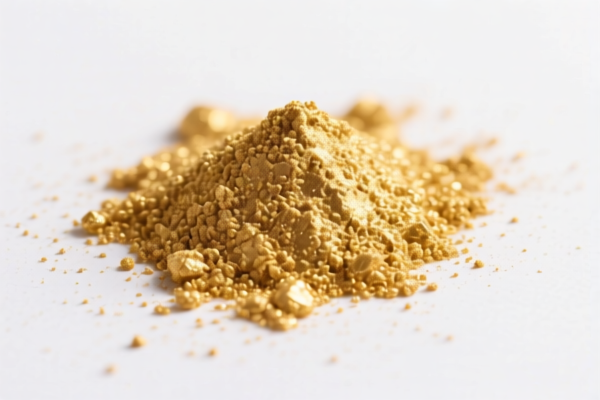
AI Analysis
🔫 Gunpowder for Pistol (Pyrotechnics / Propellants)
🌐 HS Code Reference & Customs Clearance Guide | 2026 Latest Tariff Analysis | Professional Compliance Strategy
📌 I. Product Definition & Classification: What Exactly is "Gunpowder for Pistol"?
In international trade, "Gunpowder for Pistol" is a broad term that usually refers to Firearm Propellants (smokeless powder) or Black Powder used as a propellant in small arms ammunition. Under the Harmonized System (HS), this product is strictly regulated due to its potential dual-use (civilian vs. military) and safety risks.
The classification depends heavily on the chemical composition and packaging:
- Smokeless Powder (Nitrocellulose/Nitroglycerin-based): The most common modern propellant for pistols.
- If in bulk: Usually falls under Chapter 36 (Explosives).
- If contained in cartridges/ammo: Falls under Chapter 93 (Arms & Ammunition).
- Black Powder (Gunpowder proper): Traditional mixture of saltpeter, sulfur, and charcoal.
- Falls under Chapter 36 (Explosives).
⚠️ Key Distinction:
- If you are importing loose powder (for reloading): It is classified as an Explosive/Pyrotechnic Substance (HS 3604/3605).
- If you are importing finished ammunition (bullets loaded with powder): It is classified as Ammunition (HS 9306).
- Note: This guide focuses on the propellant powder itself (HS 36), not finished ammo.
📦 II. HS Code Classification Details (2026 Latest Tariff Schedule)
| HS Code | Product Description | Applicable Scenario | Contains Propellant? |
|---|---|---|---|
3604.10.00 |
Signaling Flares, Rainmaking Cartridges & Other Pyrotechnic Articles | NOT APPLICABLE for standard pistol powder. Often confused. | ❌ No |
3605.00.00 |
Matches, Pyrotechnic Sticks, Pyrotechnic Powders & Other Pyrotechnic Articles | Loose Pyrotechnic Powders (including black powder or specific smokeless powders not classified elsewhere). | ✅ Yes |
3601.00.00 |
Gunpowder and Other Explosives (Primed or Unprimed) | Traditional Gunpowder (Black Powder) used for blasting or firearms. | ✅ Yes (Black Powder) |
3602.00.00 |
Detonating, Blasting or Other High Explosives (Other than Gunpowder) | Smokeless powders sometimes fall here if deemed "high explosive" rather than "deflagrating," but usually 3601 or 3605. |
✅ Yes |
9306.21.00 |
Ammunition for Pistols and Revolvers | If the powder is already loaded into cartridges. | ✅ Yes (Assembled) |
🔍 Critical Reminder for 2026:
- Loose Powder for Reloading: Typically classified under3605.00.00(Pyrotechnic Powders) or3601.00.00(Gunpowder) depending on the exact chemical formulation and regulatory definitions in the importing country.
- US Customs (CBP) often classifies smokeless powder for firearms under3605.00.00as "Pyrotechnic Powders" if not specifically named as "Gunpowder" in subheading 3601.
- Do NOT confuse with9306(Ammo). If it’s loose powder, it’s Chapter 36. If it’s in a cartridge, it’s Chapter 93.
💰 III. 2026 Latest Tariff Rate Details (With Surcharges & Policies)
✅ Applicable Country: United States (US)
✅ Origin: China (CN)
✅ Effective Date: November 10, 2025 (and subsequent imports)
🎯 1. 3605.00.00 —— Pyrotechnic Powders (Including Smokeless Gunpowder for Reloading)
| Item | Details |
|---|---|
| Base Tariff Rate | 0% (ad valorem) |
| USITC Surtax | +25% (Under USITC Footnote 9903.88.01 / Section 301) |
| IEEPA Surcharge | +10% (Targeting China/HK products, effective Nov 10, 2025) |
| Total Tariff Rate | 35% |
| Tax Calculation | CIF Value × 35% |
| De Minimis Exemption | ❌ NOT ALLOWED (deny_de_minimis) |
| Legal Path | IEEPA:9903.01.25 → IEEPA:9903.01.24 → USITC:3605.00.00 → FOOTNOTE:9903.88.01 |
📌 Explanation:
- USITC 25%: Part of the "Section 301" tariffs on Chinese goods.
- IEEPA 10%: Additional tariffs under the International Emergency Economic Powers Act.
- Total 35%: High tariff burden. Must be factored into landed cost.
- Strict Regulation: Import requires ATF (Bureau of Alcohol, Tobacco, Firearms and Explosives) approval or DEA registration for pyrotechnic substances.
🎯 2. 3601.00.00 —— Gunpowder (Black Powder)
| Item | Details |
|---|---|
| Base Tariff Rate | 0% |
| USITC Surtax | +25% |
| IEEPA Surcharge | +10% |
| Total Tariff Rate | 35% |
| Tax Calculation | CIF Value × 35% |
| De Minimis Exemption | ❌ NOT ALLOWED (deny_de_minimis) |
| Legal Path | IEEPA:9901.25 → IEEPA:9903.01.24 → USITC:3601.00.00 → FOOTNOTE:9903.88.01 |
📌 Note:
- Black powder is strictly controlled globally.
- Requires ATF License for importation in the US.
- Dangerous Goods (DG) classification: Class 1.3G (Fire Hazard) for transport.
🛠️ IV. Customs Clearance Practical Advice (Avoid Pitfalls)
✅ 1. Required Documentation (All Mandatory)
| Document | Required | Explanation |
|---|---|---|
| ✅ Product Specification Sheet | ✔️ | Must detail chemical composition (e.g., Nitrocellulose %), burn rate, and intended use (reloading). |
| ✅ MSDS (Material Safety Data Sheet) | ✔️ | Critical for DG clearance. Must show UN Number (e.g., UN0027 for Black Powder, UN0503 for Smokeless Powder). |
| ✅ ATF Import Permit / License | ✔️ | US Only: Importers must be licensed by ATF (Form 5310.23). Without it, shipment will be seized. |
| ✅ Certificate of Origin (CO) | ✔️ | Required for origin determination (China origin triggers surcharges). |
| ✅ Commercial Invoice | ✔️ | Clearly state "Pyrotechnic Powder for Firearms Reloading," NOT "Food" or "Chemical Fertilizer." |
| ✅ Packing List | ✔️ | Detail net/gross weight, package dimensions, and hazard labels. |
| ✅ Dangerous Goods Declaration | ✔️ | Required for air/sea freight. Must comply with IATA/IMDG codes. |
✅ 2. Declaration Tips (Critical Rules)
🔥 "Loose Powder = Chapter 36, Loaded Ammo = Chapter 93. Never Mix!"
| Scenario | Correct Declaration | Wrong Practice |
|---|---|---|
| Loose Smokeless Powder | HS 3605.00.00 |
Misclassifying as 3824 (Chemicals) → Seizure |
| Loose Black Powder | HS 3601.00.00 |
Misclassifying as 3605 → Possible Fine |
| Finished Pistol Ammo | HS 9306.21.00 |
Declaring loose powder for loaded ammo → Higher Tax/Complexity |
| Gunpowder for Toy Guns | Check Local Laws | USA: Most "toy" powders are illegal if they meet firearm propellant specs. |
✅ 3. Special Situation Handling
| Situation | Handling Advice |
|---|---|
| OEM Private Label | Provide brand authorization. ATF checks both exporter and importer. |
| Small Sample Shipments | No De Minimis Exemption! Even small amounts require ATF license and full duty payment. |
| Air Freight | High risk. Must use DG-capable airlines. Cost is 3x-5x standard freight. |
| Sea Freight | More cost-effective for bulk. Requires proper DG stowage. |
🌍 V. Global Market Customs Comparison (2026 Latest)
| Country/Region | Recommended HS Code | Tariff | Certification/Approval | Notes |
|---|---|---|---|---|
| 🇺🇸 USA | 3605.00.00 / 3601.00.00 |
35% (CN) | ATF License Mandatory | Strictest control. No de minimis. |
| 🇨🇳 China | 3601.00.00 / 3605.00.00 |
0-5% | Firearm/Explosive License | Domestic control is extreme. |
| 🇪🇺 EU | 3605.00 / 3601.00 |
0% (if EORI & License) | ADR Transport, National License | Requires national explosives license. |
| 🇬🇧 UK | 3605.00 / 3601.00 |
0-5% | Home Office License | Post-Brexit rules apply. |
| 🇦🇺 Australia | 3605.00 / 3601.00 |
5% | State/Federal License | Very strict import bans. |
📌 Conclusion:
- USA is the most expensive and regulated market for importing gunpowder from China.
- ATF Approval is non-negotiable. Without it, the shipment will be confiscated.
- Tariff cost is high (35%), so margin protection is essential.
📌 VI. Common Mistakes & Pitfalls (Lessons Learned)
❌ Mistake 1: Declaring "Gunpowder" as "Chemical Compound" (HS 38)
👉 Consequence: Customs inspection reveals DG nature → Seizure + Fine + ATF Investigation.
❌ Mistake 2: Ignoring ATF License Requirements
👉 Consequence: Shipment held at port for 6+ months → Demurrage Costs or Destruction.
❌ Mistake 3: Mixing Loose Powder with Finished Ammo in One Shipment
👉 Consequence: Complex dual-classification errors → Delays and Higher Tax Assessment.
❌ Mistake 4: Assuming De Minimis ($800) Applies
👉 Consequence: NO De Minimis for DG/ATF Items. Small orders are taxed fully + processing fees.
✅ Correct Approach:
"Smokeless Powder for Handgun Reloading, 1lb Bottle, UN0503, Class 1.3G, With ATF Import License #XYZ."
🎯 VII. Conclusion: Compliant Imports, Safe Trade, Cost Control!
🎯 Remember the Mantra:
🔹 "Loose Powder = 3605/3601, Ammo = 9306. ATF License First, Then Declare!"
🔹 "35% Tariff for China, No De Minimis, DG Rules Apply."
🔹 "Wrong HS Code = Seizure. Right License = Clearance."
📌 Pro Tip:
If your powder is originally from Vietnam, Thailand, or Malaysia, you MIGHT avoid the 25% USITC surcharge (Section 301), reducing the total tariff to 10% (IEEPA only). However, ATF license requirements remain unchanged.
Always apply for an ATF Import License before shipping.
📣 Immediate Action:
📞 Contact ATF-licensed customs broker + Apply for ATF Import Permit
🚀 Ensure your supplier provides MSDS and UN Packaging
💼 Compliance is the only way to move explosives legally!
✨ Professional Classification, Safe and Secure!
💼 Your supply chain depends on accuracy!
Customer Reviews
About HS Code Classification
The Harmonized System (HS) is an internationally standardized nomenclature developed by the World Customs Organization (WCO) to classify traded products. Over 200 countries use the HS system as the basis for customs tariffs, trade statistics, and import/export regulations.
Each HS code follows a hierarchical structure:
- Chapter (2 digits) — Broad category of goods (e.g., Chapter 84: Machinery and Mechanical Appliances)
- Heading (4 digits) — More specific grouping within the chapter
- Subheading (6 digits) — Internationally standardized breakdown, used by all WCO member countries
- National subdivisions (8-10 digits) — Country-specific extensions for further classification, such as US HTSUS 10-digit codes
Correct HS code classification is essential for smooth customs clearance, accurate duty payment, and compliance with trade regulations. Misclassification can lead to customs delays, overpayment of duties, or penalties.
When importing from CN to US, the applicable tariff rates may include:
- Most-Favored-Nation (MFN) rate — The standard duty rate applied to WTO members
- General rate — Applied to countries without trade agreements
- Trade remedy duties — Additional tariffs such as Section 301 (anti-dumping), Section 232 (national security), or countervailing duties
The information provided on this page is for reference purposes only. For official classification, please consult with your local customs authority or a licensed customs broker.