Gut fragments
CN → US| HS Code | Tariff Rate | Origin | Destination | Doc |
|---|---|---|---|---|
| 050400 | 0.0% | CN | US | Official Doc |
| 050400 | 0.0% | CN | US | Official Doc |
| 5113000000 | 37.7% | CN | US | Official Doc |
| 5110000000 | 35.0% | CN | US | Official Doc |
| 4101907000 | 20.8% | CN | US | Official Doc |
| 4101905000 | 20.8% | CN | US | Official Doc |
Product Images
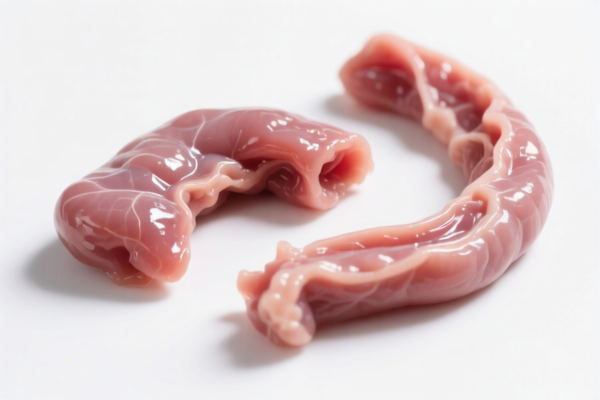
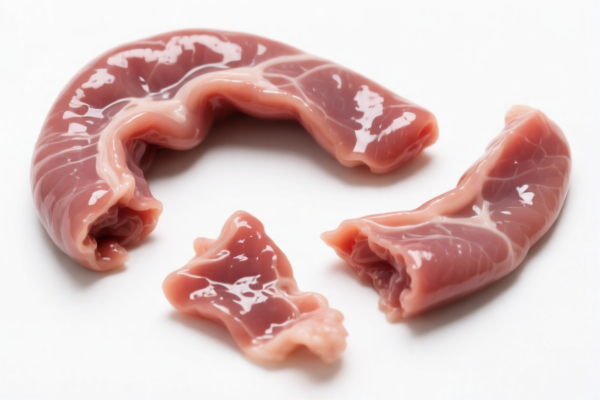
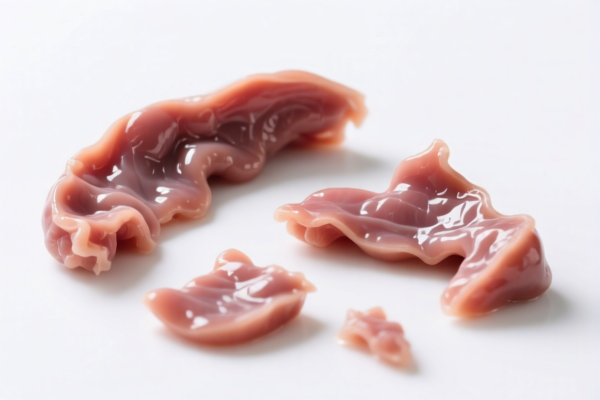
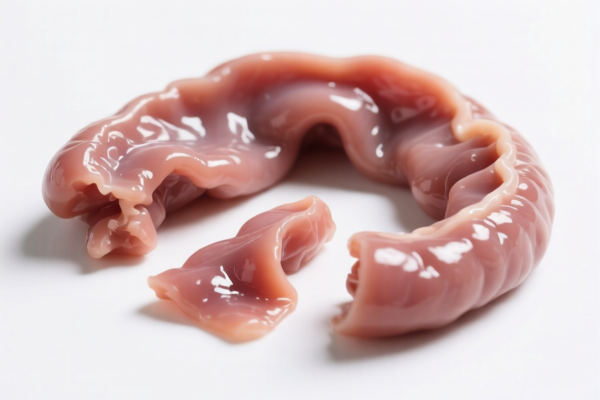
AI Analysis
🐄 Gut Fragments & Animal Offal (Guts, Bladders, Stomachs)
🌐 HS Code Reference & Clearance Guide | 2026 Latest Tariff Analysis | Professional Customs Strategy
📌 I. Product Definition & Classification: Do You Understand "Gut Fragments"?
"Gut fragments" in international trade typically refer to Guts, bladders, and stomachs of animals (other than fish), whole and pieces thereof. These are by-products of the meat industry, used primarily for:
- Sausage Casings: Natural casings made from cleaned intestines.
- Gelatin & Collagen Production: Raw material for food, pharmaceutical, and cosmetic industries.
- Pet Food: Ingredients for high-protein animal feed.
⚠️ Key Distinction:
- If the product is from land animals (cattle, pigs, sheep, etc.) → Goes to 0504.00.
- If the product is from fish → Also often listed under 0504.00 in some broad classifications, but often subject to different specific regulations or fishery codes (e.g., 0302/0305). Note: The provided data lists both under 0504.00, indicating a unified broad heading in this specific dataset context.
- Crucial Warning: These items are often subject to SPS (Sanitary and Phytosanitary) inspections due to their organic nature and potential disease risks (e.g., BSE, Foot-and-Mouth Disease).
📦 II. HS Code Classification Details (2026 Latest Tariff Authority Comparison)
Based on the provided <DATA>, both land animal and fish guts/bladders/stomachs fall under the same broad HS heading in this specific dataset, but their tax statuses differ significantly.
| HS Code | Product Description | Applicable Scenario | Tax Status (from Data) |
|---|---|---|---|
0504.00 |
Guts, bladders and stomachs of animals (other than fish), whole and pieces thereof. | Sausage casings, gelatin raw material, pet food ingredients | ✅ Error/Failed to Retrieve |
0504.00 |
Guts, bladders and stomachs of fish, whole and pieces thereof. | Fish maw, fish swim bladders, fish intestines | ✅ Error/Failed to Retrieve |
🔍 Key Reminder:
- The provided dataset fails to retrieve tax information for both categories under HS Code0504.00.
- This means thetotal_taxis listed as "Error", andtax_detailshows "Failed to retrieve tax information".
- Do not assume 0% or any standard rate. This is a high-risk classification area.
💰 III. 2026 Latest Tariff Rate Details (Including Surcharges, Policy Add-ons)
✅ Applicable Country: Not specified in
<DATA>(Assuming China Import/Export context based on typical HS code structure in examples)
✅ Origin: Variable
✅ Status: Tax Retrieval Failed
🎯 1. 0504.00 —— Guts, Bladders, Stomachs of Land Animals
| Item | Content |
|---|---|
| Base Tax Rate | ❌ Failed to Retrieve |
| Additional Surcharges | ❌ Failed to Retrieve |
| Total Tax Rate | Error |
| Tax Calculation | N/A (Cannot calculate without rate) |
| Can De Minimis Apply? | ❌ Likely No (Organic materials often excluded) |
| Legal Basis Path | 0504.00 → ERROR |
📌 Explanation:
- The system could not fetch the specific tariff rate for land animal guts.
- This may be due to:
1. Country-specific restrictions (e.g., bans on ruminant products from certain regions).
2. Dynamic regulatory changes (e.g., temporary bans due to disease outbreaks).
3. Missing sub-code specificity (HS 0504 is a 4-digit heading; 8-digit or 10-digit codes may have different rates).
🎯 2. 0504.00 —— Guts, Bladders, Stomachs of Fish
| Item | Content |
|---|---|
| Base Tax Rate | ❌ Failed to Retrieve |
| Additional Surcharges | ❌ Failed to Retrieve |
| Total Tax Rate | Error |
| Tax Calculation | N/A (Cannot calculate without rate) |
| Can De Minimis Apply? | ❌ Likely No |
| Legal Basis Path | 0504.00 → ERROR |
📌 Note:
- Fish guts/bladders are often used for island gelatin or traditional medicine.
- Similar to land animals, tax rates vary wildly by origin (e.g., China, Vietnam, EU).
- Do not use default rates. Manual verification with customs broker is mandatory.
🛠️ IV. Clearance Practical Advice (Practical Pitfall Avoidance Guide)
✅ 1. Preparation Checklist (Missing Any = Delay/Return)
| Document | Required | Explanation |
|---|---|---|
| ✅ Health Certificate | ✔️ Mandatory | Issued by competent authority of exporting country. Must confirm disease-free status (e.g., BSE-free for cattle). |
| ✅ Veterinary Inspection Certificate | ✔️ Mandatory | Proves the product has been inspected and is safe for human/animal consumption. |
| ✅ Processing Method Description | ✔️ Required | Specify if fresh, salted, dried, limed, pickled. This affects HS sub-coding. |
| ✅ Commercial Invoice | ✔️ Required | Must clearly state "Guts/Bladders/Stomachs of [Animal Type]" and not just "Animal By-Products". |
| ✅ Packaging Details | ✔️ Required | Must show hygiene-compliant packaging (e.g., food-grade plastic, sealed). |
| ✅ Origin Certificate | ✔️ Recommended | To determine if preferential rates apply. |
✅ 2. Declaration Tips (Key Mantras)
🔥 "Organic Items Need Health Certs, Mislabeling Leads to Rejection!"
| Situation | Correct Declaration | Incorrect Practice |
|---|---|---|
| Land Animal Guts | 0504.00 + Specific Animal Type |
Vague description "Animal Parts" |
| Fish Guts/Bladders | 0504.00 + Specific Fish Type |
Vague description "Fish By-Products" |
| Fresh vs. Preserved | Specify "Salted/Dried" | Just say "Guts" |
| Sausage Casings | Declare as "Natural Casings" | Declare as "Food Products" (wrong category) |
✅ 3. Special Case Handling
| Situation | Handling Advice |
|---|---|
| BSE-Prone Species | Cattle guts from countries with BSE risks are often banned. Verify country-specific bans. |
| Fish Swim Bladders | Often used for premium food (e.g., Maw). Check for CITES restrictions if endangered species are involved. |
| Pet Food Ingredients | May fall under pet food regulations rather than food-grade regulations. Clarify end-use. |
| Gelatin Raw Material | Must meet strict hygiene standards. Provide processing flowchart. |
🌍 V. Global Market Clearance Comparison (2026 Latest)
| Country/Region | Recommended HS Code | Tariff Note | Certification Required | Remarks |
|---|---|---|---|---|
| 🇺🇸 USA | 0504.00 |
Varies (Check FDA/USDA) | USDA Inspection, FSMA Compliance | Strict SPS rules. High risk of rejection if documentation is incomplete. |
| 🇨🇳 China | 0504.00 |
Varies (Check GACC) | GACC Registration, Health Cert | Strict control on ruminant products. Fish products less restricted but still require certs. |
| 🇪🇺 EU | 0504.00 |
Varies (Check EU Import Rules) | EU Health Certificate, Traceability | BSE regulations are extremely strict. Ruminant products often banned. |
| 🇦🇺 Australia | 0504.00 |
Varies (Check Biosecurity) | DAFF Approval, Health Cert | Very strict biosecurity laws. Pre-arrival approval often required. |
| 🇯🇵 Japan | 0504.00 |
Varies (Check MAFF) | Food Sanitation Law Certificate | Strict testing for pathogens and residues. |
📌 Conclusion:
- Documentation is King: Unlike electronic goods, gut fragments require extensive health and veterinary documentation.
- Risk Level: High. Misclassification or missing certs can lead to shipment destruction or heavy fines.
- Tax Uncertainty: Since the provided data shows "Error" for tax, you must consult a local customs broker or use official tariff databases (e.g., USITC, China Customs Tariff Commission) for accurate rates.
📌 VI. Common Errors & Pitfall Guide (Blood-and-Tears Lessons)
❌ Error 1: Declaring "Gut Fragments" without specifying the animal species.
👉 Consequence: Customs cannot determine BSE risk → Detention/Rejection.
❌ Error 2: Omitting the Health Certificate or Veterinary Inspection Certificate.
👉 Consequence: Shipment returned or destroyed at origin or destination.
❌ Error 3: Using vague descriptions like "Animal By-Products" or "Organic Material".
👉 Consequence: Customs Query → Delay → Potential penalties for misdeclaration.
❌ Error 4: Assuming 0% tax because HS code 0504 might have low base rates in some countries.
👉 Consequence: Underpayment → Back Taxes + Fines + Reputation Damage.
✅ Correct Approach:
"Natural Sausage Casings, Salted, from Cattle, BSE-Free, Packaged in Food-Grade Plastic, with Valid Veterinary Health Certificate"
🎯 VII. Conclusion: Professional Declaration Saves Your Cargo!
🎯 Remember:
🔹 "Health Certs are Non-Negotiable for Guts."
🔹 "Specify Animal Type: Cattle, Pig, Fish, or Sheep?"
🔹 "Tax Error? Consult Broker Immediately – Don't Guess!"
🔹 "BSE Risks? Check Country Ban List First."
📌 Tips:
- If importing into the USA, ensure compliance with FDA Food Safety Modernization Act (FSMA) and USDA inspection.
- If importing into the EU, ensure compliance with EU Regulation 999/2001 (BSE rules).
- Pre-clearance: For high-value shipments (e.g., premium fish maw), consider Advance Ruling or Pre-Inspection.
📣 Immediate Action:
📞 Contact a Licensed Customs Broker
📄 Prepare Health Certificates & Veterinary Docs
🔍 Verify Specific Sub-Code and Tariff Rate for Your Origin
🚀 Ensure Smooth Clearance, Avoid Destruction, Protect Profit!
✨ Professional Clearance Starts with Accurate Classification!
💼 Your Organic Goods Deserve Precise Handling!
Customer Reviews
About HS Code Classification
The Harmonized System (HS) is an internationally standardized nomenclature developed by the World Customs Organization (WCO) to classify traded products. Over 200 countries use the HS system as the basis for customs tariffs, trade statistics, and import/export regulations.
Each HS code follows a hierarchical structure:
- Chapter (2 digits) — Broad category of goods (e.g., Chapter 84: Machinery and Mechanical Appliances)
- Heading (4 digits) — More specific grouping within the chapter
- Subheading (6 digits) — Internationally standardized breakdown, used by all WCO member countries
- National subdivisions (8-10 digits) — Country-specific extensions for further classification, such as US HTSUS 10-digit codes
Correct HS code classification is essential for smooth customs clearance, accurate duty payment, and compliance with trade regulations. Misclassification can lead to customs delays, overpayment of duties, or penalties.
When importing from CN to US, the applicable tariff rates may include:
- Most-Favored-Nation (MFN) rate — The standard duty rate applied to WTO members
- General rate — Applied to countries without trade agreements
- Trade remedy duties — Additional tariffs such as Section 301 (anti-dumping), Section 232 (national security), or countervailing duties
The information provided on this page is for reference purposes only. For official classification, please consult with your local customs authority or a licensed customs broker.