Gutter Cleaning Tools
CN → US| HS Code | Tariff Rate | Origin | Destination | Doc |
|---|---|---|---|---|
| 8205517500 | 38.7% | CN | US | Official Doc |
| 9603908050 | 70.3% | CN | US | Official Doc |
Product Images
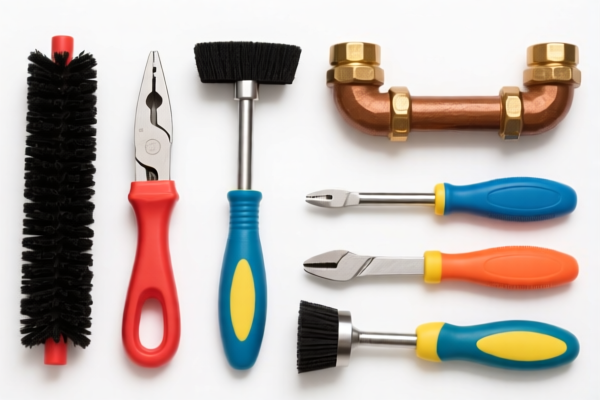
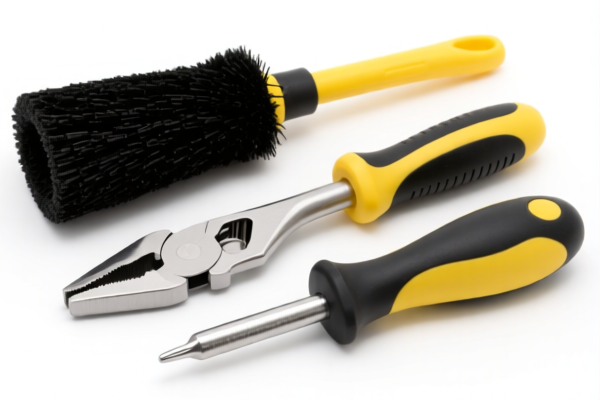
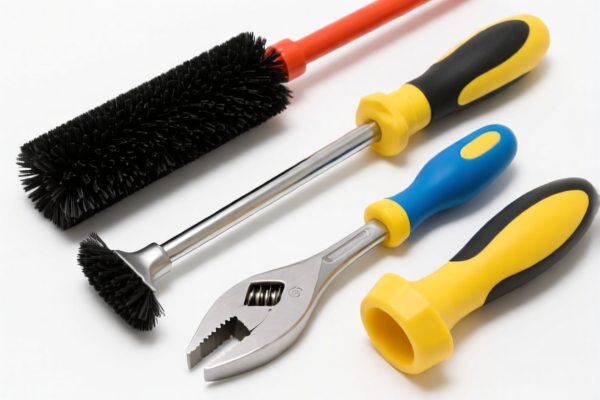
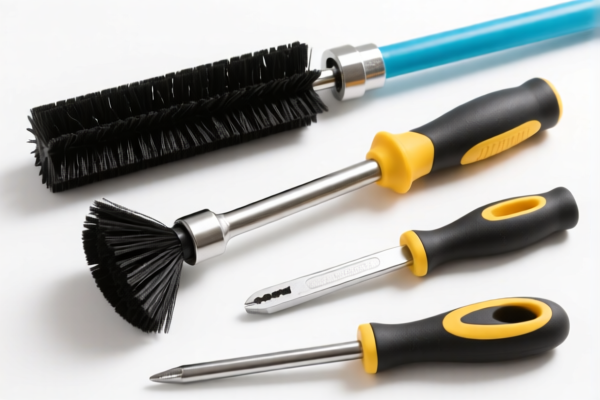
AI Analysis
🌧️ Gutter Cleaning Tools (Handtools for Gutter Maintenance)
🌐 HS Code Reference & Customs Clearance Guide | 2026 Latest Tariff Analysis | Professional Clearance Strategy
📌 I. Product Definition and Classification: Do You Really Know "Gutter Cleaning Tools"?
Gutter cleaning tools are specialized devices designed to remove debris (leaves, twigs, sediment) from roof gutters. In international trade, these are not always grouped together. They are strictly divided based on their mechanical structure, power source, and specific function:
- Manual Handtools (Non-Motorized): Includes gutter scoops, handheld brushes, long-handled brushes, and simple scoops. These are classified as general handtools.
- Specialized Brushing/Scraping Tools: Includes specific brush heads, squeegee-like gutter cleaners, and knot/tuft preparations for brushes.
- Not Included: Motorized vacuums, pressure washers, or robotic cleaners fall under different chapters (e.g., Chapter 84 for machinery).
⚠️ Key Distinction Point:
- If the tool is manual, handheld or attached to a pole, and not motorized → It falls under Chapter 82 or Chapter 96.
- If it is a motorized vacuum or power washer → It falls under Chapter 84 (not covered in this specific data).
- Critical Warning: Do not misclassify a "gutter scoop" as a "part of a machine." It is a standalone handtool.
📦 II. HS Code Classification Details (2026 Latest Tariff Authority Comparison)
| HS Code | Product Description | Applicable Scenario | Power Source |
|---|---|---|---|
8205.51.75.00 |
Other handtools (including glass cutters) and parts thereof: Household tools, and parts thereof: Other | Manual gutter scoops, hand-held scrapers, simple non-motorized cleaning rods, basic metal/plastic scoops. | ✅ Manual |
9603.90.80.50 |
Brooms, brushes... paint rollers; squeegees: Other Other Other | Gutter brushes (round or flat), specialized gutter cleaning brushes, squeegee-type gutter cleaners, prepared knots for brush making. | ✅ Manual |
🔍 Focus Reminder:
- "Scoops" and "Scrapers" made of base metal or simple composite materials are typically classified under 8205.51.75.00 as general handtools.
- "Brushes" and "Squeegees" specifically designed for cleaning surfaces (including gutters) fall under 9603.90.80.50.
- Misclassification Risk: Calling a brush a "handtool" might still get it classified under 8205 if the customs officer views it broadly, but 9603 is the more precise description for "brushes." Conversely, a plastic scoop might be argued under 8205 or even 3924 (plastic household articles), but in this dataset, we only have 8205 and 9603 options.
💰 III. 2026 Latest Tariff Rate Details (Including Surcharges, Policy Add-ons)
✅ Applicable Country: United States (US)
✅ Origin: China (CN)
✅ Effective Date: Current rates apply (2025-2026 trade policy)
🎯 1. 8205.51.75.00 —— Manual Gutter Scoops & Handtools
| Item | Content |
|---|---|
| Base Tariff | 3.7% |
| Additional Tariff (Section 301/Trump Tariff) | 0.0% |
| Total Tax Rate | 3.7% |
| Tax Calculation | CIF Value × 3.7% |
| De Minimis Eligibility | ❌ No (Generally, handtools from China are subject to full tariff assessment if value > $800, but no extra surcharge in this specific code line). |
| Legal Basis Path | HTSUS: 8205.51.75.00 → Base Rate: 3.7% |
📌 Explanation:
- This code represents "Other handtools" not specified elsewhere.
- Excellent News: There is NO additional 25% or 7.5% surcharge listed for this specific subheading in the provided data.
- This makes manual gutter scoops significantly cheaper to import than brushed/squeegee tools.
🎯 2. 9603.90.80.50 —— Gutter Brushes, Squeegees & Brush Parts
| Item | Content |
|---|---|
| Base Tariff | 2.8% |
| Additional Tariff (Section 301/Trump Tariff) | 7.5% |
| Steel/Aluminum/Copper Products Surcharge | 50% (Note: Only applies if the brush handle/bristles contain significant base metal components deemed "steel/aluminum/copper products" under specific ruling) |
| Total Tax Rate (Standard) | 10.3% (2.8% + 7.5%) |
| Total Tax Rate (If Metal-Surcharge Applies) | 60.3% (2.8% + 7.5% + 50%) |
| Tax Calculation | CIF Value × 10.3% OR CIF Value × 60.3% |
| De Minimis Eligibility | ❌ No |
| Legal Basis Path | HTSUS: 9603.90.80.50 → Base: 2.8% → Add-on: 7.5% → Metal Surcharge: 50% |
📌 Explanation:
- The 7.5% is a standard additional duty on many Chinese goods under current US trade policy.
- Critical Alert: The 50% surcharge is mentioned in the data as "Steel, Aluminum, Copper Products Surcharge."
- If your gutter brush has a metal shaft, metal bristles, or metal frame, US Customs may apply this 50% surcharge, pushing the total tax to 60.3%.
- If it is purely plastic/fiber, it may only pay 10.3%, but customs often scrutinize metal handles for this surcharge.
🛠️ IV. Customs Clearance Practical Advice (Battle-Tested Pitfall Guide)
✅ 1. Preparation Checklist (Must-Haves)
| Document | Required | Explanation |
|---|---|---|
| ✅ Product Specification Sheet | ✔️ | Detail material composition (e.g., "Plastic handle, nylon bristles" vs. "Aluminum shaft, stainless steel bristles"). Crucial for determining the 50% surcharge. |
| ✅ Product Photos | ✔️ | Clear images of the tool, showing handles, bristles, and any metal parts. |
| ✅ Commercial Invoice | ✔️ | Must clearly state "Gutter Cleaning Brush" or "Gutter Scoop," not just "Cleaning Tool." |
| ✅ Packing List | ✔️ | Separate quantities for brushes vs. scoops if mixed. |
| ✅ Country of Origin Certificate | ✔️ | To prove Chinese origin (for tariff calculation). |
✅ 2. Declaration Tips (Key Mnemonic)
🔥 "Material Dictates Rate: Plastic Low, Metal High! Scoop is Safe, Brush is Hazardous!"
| Scenario | Correct HS Code | Tax Rate | Risk Level |
|---|---|---|---|
| Plastic/Metal Scoop (No bristles) | 8205.51.75.00 |
3.7% | ✅ Low |
| Plastic Brush (Nylon bristles, plastic handle) | 9603.90.80.50 |
10.3% | ⚠️ Medium |
| Metal Shaft Brush (Aluminum/Steel handle) | 9603.90.80.50 |
60.3% | 🔴 HIGH (Possible 50% surcharge) |
| Motorized Gutter Vacuum | Not in Data | N/A | ❌ Do Not Use This Data |
📌 Note:
- If you declare a metal-handled brush under8205.51.75.00to avoid the 50% surcharge, customs may reclassify it under9603upon inspection, leading to back taxes and penalties.
- Best Practice: For metal-handled brushes, consider if you can classify parts separately or if the value of the metal justifies the higher tax, or opt for fiberglass handles to avoid the "Steel/Aluminum" surcharge.
✅ 3. Special Cases
| Situation | Handling Advice |
|---|---|
| Mixed Sets (Scoop + Brush) | Declare Separately. Do not bundle into one line item. Declare the scoop under 8205.51.75.00 and the brush under 9603.90.80.50. |
| "Gutter Cleaning Kit" with Poles | The pole may be classified separately (e.g., as a part of a machine or other metal article). Consult a customs broker for the pole's HS Code. |
| Brush Heads Only | If sold as replacement parts, they may still fall under 9603.90.80.50 as "prepared knots/tufts for brush making" or "other brushes." |
🌍 V. Global Market Comparison (2026 Latest)
| Country/Region | Recommended HS Code | Estimated Tariff | Note |
|---|---|---|---|
| 🇺🇸 USA | 8205.51.75.00 / 9603.90.80.50 |
3.7% / 10.3%-60.3% | High risk of surcharge on metal components. |
| 🇨🇳 China | 8205.51.75.00 / 9603.90.80.50 |
~5-13% | Import duties apply, but no US-style surcharges. |
| 🇪🇺 EU | 8205.51 / 9603.90 |
0-6.5% | Generally lower base rates; check EORI compliance. |
| 🇬🇧 UK | 8205.51 / 9603.90 |
0-6.5% | Post-Brexit tariffs apply. |
📌 Conclusion:
- The US market is the most challenging due to the specific 50% surcharge on metal products and additional 7.5% duties on brushes.
- Manual scoops (8205) are the most tariff-efficient choice for US importers.
📌 VI. Common Mistakes & Pitfalls (Lessons Learned)
❌ Mistake 1: Declaring all gutter tools under 8205.51.75.00 to save tax.
👉 Consequence: Customs reclassifies brushes as 9603, applies 7.5% + 50% surcharge, and issues a penalty for misdeclaration.
❌ Mistake 2: Ignoring the "Steel/Aluminum/Copper" surcharge clause in 9603.90.80.50.
👉 Consequence: Paying 10.3% instead of 60.3% on metal-handled brushes → Massive back-payment + interest.
❌ Mistake 3: Combining motorized vacuums with manual tools in one shipment.
👉 Consequence: The entire shipment may be held for inspection, causing delays. Separate declarations are critical.
✅ Correct Approach:
"Plastic Gutter Scoop, Manual, Model GS-1" →
8205.51.75.00
"Nylon Bristle Gutter Brush, Plastic Handle, Model GB-1" →9603.90.80.50
"Aluminum Shaft Gutter Brush, Model AB-1" →9603.90.80.50(Expect 60.3% tax)
🎯 VII. Conclusion: Precise Classification Saves Thousands!
🎯 Remember the Mnemonic:
🔹 "Scoops are Cheap (3.7%), Brushes are Expensive (10-60%), Metal Handles are Killers!"
🔹 "Check the Material: Plastic Saves Money, Metal Burns Wallets!"
📌 Pro Tip:
If your supply chain allows, shift to fiberglass or plastic handles for gutter brushes to avoid the 50% steel/aluminum surcharge. This alone can save 50% on the duty for brushed tools.
Always request a Customs Ruling if you have large volume imports of mixed-material tools.
📣 Immediate Action:
📞 Contact a Customs Broker to review your product samples.
📸 Provide Clear Photos showing material composition.
📝 Separate Your Declarations for Scoops (8205) vs. Brushes (9603).
✨ Professional Clearance Starts with Accurate Classification!
💼 Every Percent Saved is Profit Gained!
Customer Reviews
About HS Code Classification
The Harmonized System (HS) is an internationally standardized nomenclature developed by the World Customs Organization (WCO) to classify traded products. Over 200 countries use the HS system as the basis for customs tariffs, trade statistics, and import/export regulations.
Each HS code follows a hierarchical structure:
- Chapter (2 digits) — Broad category of goods (e.g., Chapter 84: Machinery and Mechanical Appliances)
- Heading (4 digits) — More specific grouping within the chapter
- Subheading (6 digits) — Internationally standardized breakdown, used by all WCO member countries
- National subdivisions (8-10 digits) — Country-specific extensions for further classification, such as US HTSUS 10-digit codes
Correct HS code classification is essential for smooth customs clearance, accurate duty payment, and compliance with trade regulations. Misclassification can lead to customs delays, overpayment of duties, or penalties.
When importing from CN to US, the applicable tariff rates may include:
- Most-Favored-Nation (MFN) rate — The standard duty rate applied to WTO members
- General rate — Applied to countries without trade agreements
- Trade remedy duties — Additional tariffs such as Section 301 (anti-dumping), Section 232 (national security), or countervailing duties
The information provided on this page is for reference purposes only. For official classification, please consult with your local customs authority or a licensed customs broker.