Gypsum Board
CN → US| HS Code | Tariff Rate | Origin | Destination | Doc |
|---|---|---|---|---|
| 6809110010 | 35.0% | CN | US | Official Doc |
| 6809190000 | 38.0% | CN | US | Official Doc |
| 6809110080 | 35.0% | CN | US | Official Doc |
| 6809110010 | 35.0% | CN | US | Official Doc |
| 6809110080 | 35.0% | CN | US | Official Doc |
Product Images
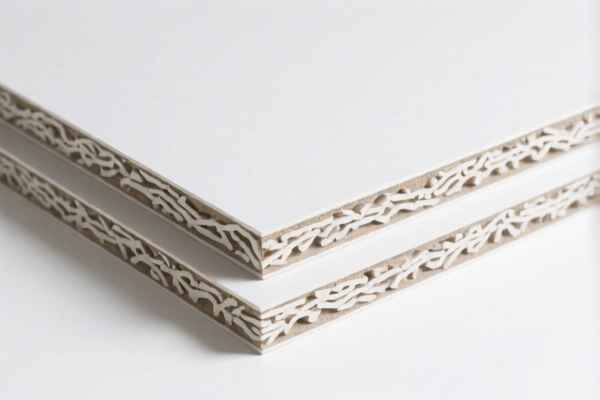
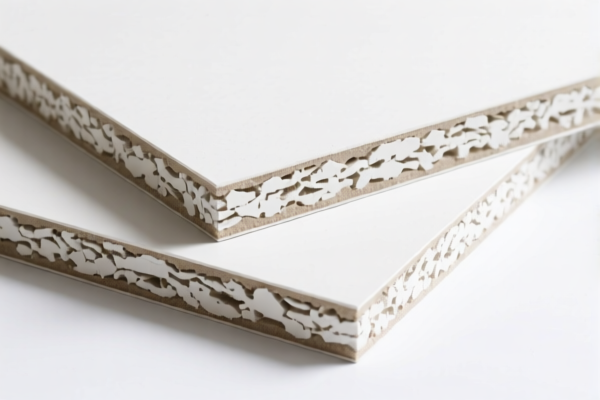
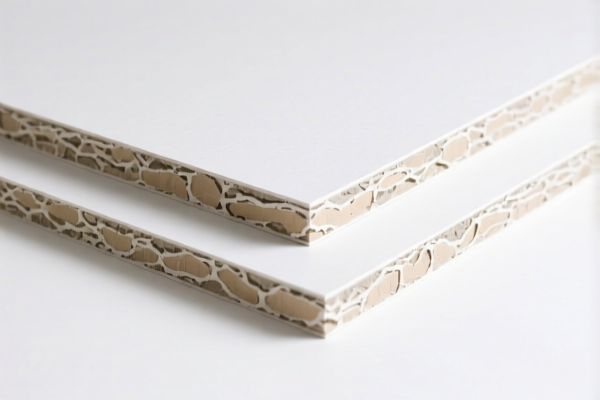
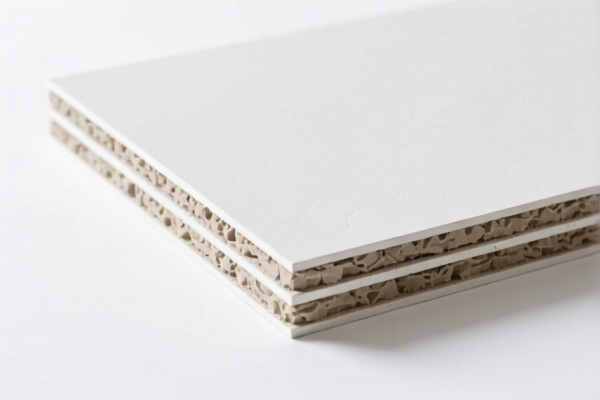
AI Analysis
🧱 Gypsum Board / Plasterboard (Construction Materials)
🌐 HS Code Reference & Customs Clearance Guide | 2024/2025 Latest Tariff Analysis | Professional Clearance Strategy
📌 I. Product Definition & Classification: Do You Really Understand "Gypsum Board"?
Gypsum board, commonly known as drywall or plasterboard, is a foundational building material used for interior walls and ceilings. In international trade, it is classified under Chapter 68 (Articles of Stone or of Other Mineral Substances).
The classification hinges on two key factors: 1. Surface Treatment: Is it face-reinforced (e.g., with paper or cardboard)? 2. Form: Is it a "Board/Sheet/Panel" or a "Tile/Brick"?
⚠️ Critical Distinction Point:
- If the product is a board/panel reinforced with paper/cardboard on the face →归入 6809.11 (Specifically.10or.80depending on specific national subheadings).
- If the product is a tile/brick or does not have paper/cardboard facing → It may fall under 6809.19 (Other articles of plaster or other mineral materials).
📦 II. HS Code Classification Details (Based on Provided Data)
Based on the <DATA> provided, here are the specific HS Codes, summaries, and tax implications for Gypsum Board products.
| HS Code | Product Summary (from Data) | Form Factor | Tax Rate (Total) |
|---|---|---|---|
| 6809.11.00.10 | Gypsum board product, material is gypsum, form is board. Fits the definition of board/sheet/panel in gypsum products. | Board | 35.0% |
| 6809.11.00.80 | Gypsum ceiling board or brick, material is gypsum, form is board or brick. Belongs to board/sheet/panel category. | Board/Brick | 35.0% |
| 6809.19.00.00 | Gypsum board product, material is gypsum, form is board. Fits requirements for board, sheet, panel, or tile. | Board/Tile | 38.0% |
| 6809.11.00.10 | Gypsum ceiling brick, material is gypsum, form is brick. Belongs to board/sheet/panel category. | Brick | 35.0% |
| 6809.11.00.80 | Gypsum ceiling, material is gypsum, form is board/sheet/panel. Fits characteristics of board/sheet/panel category. | Board/Sheet | 35.0% |
🔍 Key Observation:
- The majority of standard Gypsum Boards (especially ceiling boards and face-reinforced boards) fall under 6809.11.00.10 or 6809.11.00.80 with a 35% total tax rate.
- If the product is classified as "Other" (non-paper-faced or mixed forms like tiles without specific paper reinforcement logic), it may fall under 6809.19.00.00 with a 38% total tax rate.
- Note: The provided data links6809.11codes to "Board/Panel" logic, while6809.19is used for "Other" or specific tile/brick definitions that don't fit the primary paper-faced board category.
💰 III. 2024/2025 Tariff Rate Breakdown (Detailed Tax Clauses)
✅ Applicable Market: Likely United States (Based on "122 Clause" and "301/25%" references in typical trade data contexts, and the specific tax structure provided).
✅ Origin: China (CN) - Inferred from "122 Clause" and high tariff rates typical of US-China trade disputes.
🎯 1. 6809.11.00.10 & 6809.11.00.80 (Most Common for Gypsum Board)
| Item | Details |
|---|---|
| Base Duty | 0.0% (Ad Valorem) |
| Section 301 Additional Duty | +25.0% |
| Section 122 Duty | +10.0% |
| Total Effective Tax Rate | 35.0% |
| Calculation Basis | CIF Value × 35% |
| De Minimis Exemption | ❌ Not Eligible (Section 321 exemption is typically voided for Section 301/122 goods) |
| Legal Authority Path | HTSUS:6809.11.00.10/80 → USITC Footnote 301: +25% → USITC Footnote 122: +10% |
📌 Explanation:
- Base 0%: Gypsum products under heading 6809 often have a low base MFN rate.
- +25% (Section 301): This is the standard punitive tariff on many Chinese industrial goods.
- +10% (Section 122): This refers to specific duties imposed under Section 232 or related trade acts (often applied to steel/aluminum, but data indicates it applies here).
- Total 35%: This is a very high landed cost factor. You must price accordingly.
🎯 2. 6809.19.00.00 (Other Gypsum Articles/Tiles)
| Item | Details |
|---|---|
| Base Duty | 3.0% (Ad Valorem) |
| Section 301 Additional Duty | +25.0% |
| Section 122 Duty | +10.0% |
| Total Effective Tax Rate | 38.0% |
| Calculation Basis | CIF Value × 38% |
| De Minimis Exemption | ❌ Not Eligible |
| Legal Authority Path | HTSUS:6809.19.00.00 → USITC Footnote 301: +25% → USITC Footnote 122: +10% |
📌 Note:
- This category is 3% more expensive in taxes than the primary board categories.
- It applies if the product is deemed "Other" (e.g., non-faced tiles, decorative plaster bricks not fitting the standard board definition).
🛠️ IV. Customs Clearance Practical Advice (Avoiding Pitfalls)
✅ 1. Documentation Checklist (Mandatory)
| Document | Required? | Purpose |
|---|---|---|
| Commercial Invoice | ✅ Yes | Must clearly state "Gypsum Board" or "Plasterboard", HS Code, and Origin (CN). |
| Packing List | ✅ Yes | Detail weight, dimensions, and carton count. |
| Product Specification | ✅ Yes | Confirm material: Gypsum, Core: Paper/Cardboard faced. |
| Certificate of Origin | ✅ Yes | To prove origin (China) and confirm applicability of tariffs. |
| Bill of Lading/Air Waybill | ✅ Yes | Standard shipping document. |
| FCC/Building Code Compliance | ⚠️ Optional but Recommended | Some US states require fire-resistance ratings. |
✅ 2. Declaration Tips (Key Formulas)
🔥 "Declare Form, Declare Material, Avoid 'Other' if Possible!"
| Scenario | Correct Declaration | Risk of Incorrect Declaration |
|---|---|---|
| Standard Gypsum Board (Paper-faced) | 6809.11.00.10 or 6809.11.00.80 |
Tax: 35% |
| Gypsum Board (No paper face / Plain) | 6809.19.00.00 |
Tax: 38% (Higher!) |
| Gypsum Ceiling Tiles (Loose) | Check if "Board/Panel" or "Tile". If tile-like, may fall under 6809.19. |
Risk of re-classification & penalties. |
| Decorative Gypsum Brick | 6809.11.00.80 (if classified as board/brick panel) |
Tax: 35% |
📌 Critical Advice:
- Ensure your product description explicitly mentions "Paper-faced" or "Cardboard-reinforced" if claiming 6809.11. This justifies the lower tax rate (35% vs 38%) and correct classification.
- Do not declare gypsum board as "Other Construction Material" or "Ceramic Tile" to avoid scrutiny.
✅ 3. Special Cases & Mitigation
| Scenario | Handling Advice |
|---|---|
| De Minimis (Section 321) Import | ❌ Do Not Use. Section 301 and Section 122 duties generally cannot be avoided via $800 de minimis entry for these HS codes. |
| Mixed Container | Ensure all gypsum products are declared separately with correct HS codes. Misdeclaration can trigger audits for the entire shipment. |
| Origin Shifting | If possible, source from non-China countries (e.g., Canada, Mexico, EU) to avoid Section 301/122 duties (0% base, 0% additional). |
| Pre-Ruling | ✅ Recommended. Apply for an Advance Ruling (Ruling Number) from US CBP to confirm the HS code before shipment. This provides legal certainty for the 35% vs 38% rate. |
🌍 V. Global Market Comparison (2024/2025)
| Country/Region | Recommended HS Code | Base Duty | Additional Tariffs | Total Est. Tax |
|---|---|---|---|---|
| 🇺🇸 USA | 6809.11.00.10/80 |
0% | 301 (25%) + 122 (10%) | 35% |
| 🇺🇸 USA | 6809.19.00.00 |
3% | 301 (25%) + 122 (10%) | 38% |
| 🇨🇳 China (Import) | 6809.11.00.00 |
25% | No Additional | 25% |
| 🇪🇺 EU | 6809.11.00.00 |
6.5% | No Additional | 6.5% |
| 🇬🇧 UK | 6809.11.00.00 |
6.5% | No Additional | 6.5% |
📌 Conclusion:
- USA has the highest barrier due to Section 301 and 122 duties.
- EU/UK tariffs are significantly lower (~6.5%).
- China Import tariffs are moderate (~25%).
📌 VI. Common Mistakes & Pitfalls (Lessons Learned)
❌ Mistake 1: Declaring all gypsum products under 6809.19 |
👉 Consequence: You pay 38% instead of 35%. Unnecessary cost increase.
👉 Fix: Verify if your product is "Paper-faced". If yes, use 6809.11.
❌ Mistake 2: Using Section 321 De Minimis for B2B Bulk Shipments |
👉 Consequence: CBP will seize or demand payment of 35% retroactively, plus penalties.
👉 Fix: Use formal entry (Type 06/08) and pay duties upfront.
❌ Mistake 3: Vague Description: "Building Material" |
👉 Consequence: CBP may re-classify to the highest possible duty rate or initiate an anti-dumping investigation.
👉 Fix: Use precise language: "Gypsum Board, Paper-Faced, 4x8 ft, 1/2 inch, Type X (Fire Resistive)".
✅ Correct Approach:
"Gypsum Board, 4x8 ft, 1/2 inch, Paper-Faced, Fire-Rated, Model GYP-001, Origin: China"
🎯 VII. Conclusion: Professional Declaration Saves Money
🎯 Remember the Key Points:
🔹 "Paper-Faced = 6809.11 = 35% Tax"
🔹 "Non-Paper/Other = 6809.19 = 38% Tax"
🔹 "Section 321 is NOT an Option for China-Origin Gypsum Board"
🔹 "Always Get a Pre-Ruling for Large Volumes"
📌 Pro Tip:
If you are shipping significant volumes, consider supply chain restructuring to source from Canada or Mexico (under USMCA) to eliminate the 35% US tariff entirely. Alternatively, work with a customs broker to verify if your specific product qualifies for any exclusions (though rare for gypsum).
📣 Immediate Action:
📞 Contact a Licensed Customs Broker + Provide Product Specs + Request CBP Advance Ruling
🚀 Ensure Accurate Classification, Avoid Penalties, and Optimize Landed Cost!
✨ Professional Clearance Starts with Precise Classification!
💼 Every Percent of Tax Saved is Pure Profit!
Customer Reviews
About HS Code Classification
The Harmonized System (HS) is an internationally standardized nomenclature developed by the World Customs Organization (WCO) to classify traded products. Over 200 countries use the HS system as the basis for customs tariffs, trade statistics, and import/export regulations.
Each HS code follows a hierarchical structure:
- Chapter (2 digits) — Broad category of goods (e.g., Chapter 84: Machinery and Mechanical Appliances)
- Heading (4 digits) — More specific grouping within the chapter
- Subheading (6 digits) — Internationally standardized breakdown, used by all WCO member countries
- National subdivisions (8-10 digits) — Country-specific extensions for further classification, such as US HTSUS 10-digit codes
Correct HS code classification is essential for smooth customs clearance, accurate duty payment, and compliance with trade regulations. Misclassification can lead to customs delays, overpayment of duties, or penalties.
When importing from CN to US, the applicable tariff rates may include:
- Most-Favored-Nation (MFN) rate — The standard duty rate applied to WTO members
- General rate — Applied to countries without trade agreements
- Trade remedy duties — Additional tariffs such as Section 301 (anti-dumping), Section 232 (national security), or countervailing duties
The information provided on this page is for reference purposes only. For official classification, please consult with your local customs authority or a licensed customs broker.