Gypsum Board Products
CN → USProduct Images
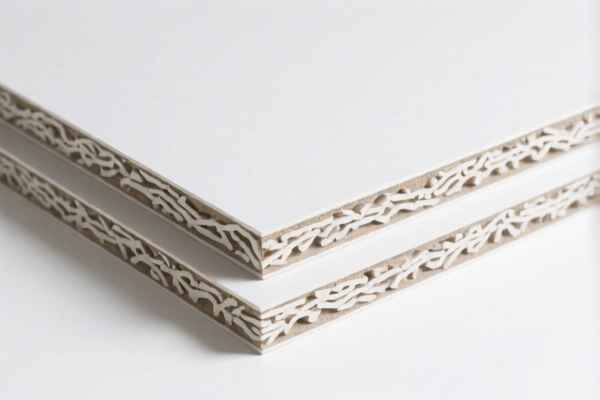
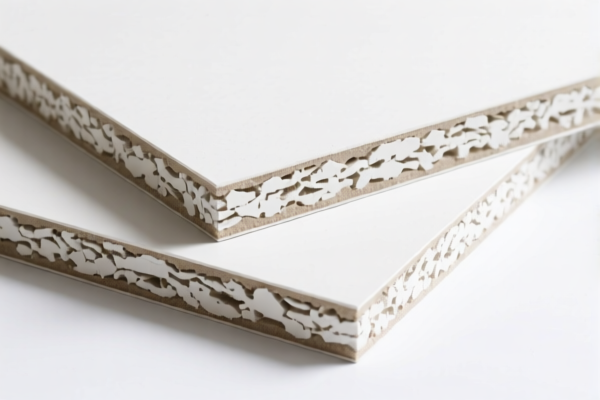
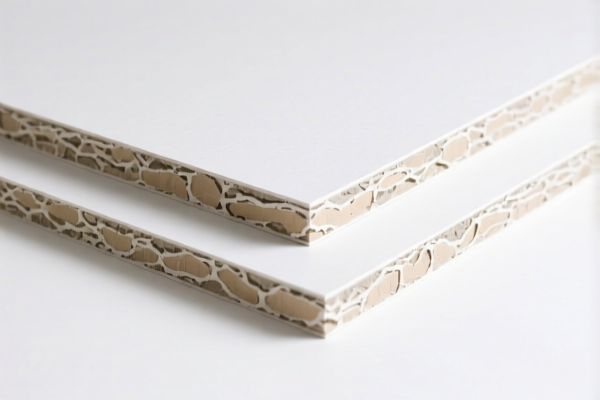
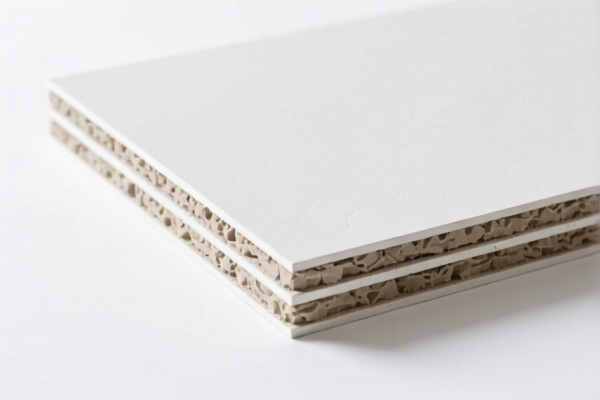
AI Analysis
🏗️ Gypsum Board Products (Drywall / Plasterboard)
🌐 HS Code Reference & Clearance Guide | 2026 Latest Tariff Analysis | Professional Customs Strategy
📌 I. Product Definition & Classification: Do You Really Know "Gypsum Board"?
Gypsum board products, commonly known as drywall, plasterboard, or wallboard, are essential construction materials used for interior walls and ceilings. In international trade, they are strictly categorized based on their core material and surface treatment.
Gypsum Board (Plain or Textured): Boards consisting of a core of gypsum plaster encased in paper or fiberglass facing.
Gypsum Boards with other coverings: Boards covered with materials other than paper or fiberglass (e.g., PVC, foil).
⚠️ Key Distinction Point:
- If the core is calcined gypsum (plaster) and faced with paper → Classified under 6815.91.00.00
- If the core is cement-based or contains significant amounts of other binders → May be classified under 6810.99 or 3925.30 (depending on composition).
- Crucial Note: Pure gypsum boards with paper facing are almost exclusively 6815.91.00.00.
📦 II. HS Code Classification Details (2026 Latest Tariff Authority Comparison)
| HS Code | Product Description | Applicable Scenario | Core Material |
|---|---|---|---|
6815.91.00.00 |
Gypsum articles (including gypsum boards with paper facing) | Standard interior drywall, cement backer boards (if <5% cement binder), fire-resistant gypsum boards | ✅ Gypsum Plaster |
6815.10.00.00 |
Asbestos-cement articles | (Historical/Less Common) Asbestos-based boards (banned in many countries) | ❌ Not Gypsum |
6810.99.00.00 |
Other articles of cement, concrete, or artificial stone | Cement-based backer boards, fiber cement siding | ❌ Cement/Stone |
3925.30.00.00 |
Doors, windows, frames, and thresholds of plastics | Plastic-faced gypsum boards (if plastic layer is structural) | ⚠️ Mixed |
🔍 Key Reminder:
- Paper-faced gypsum board is the most common type and falls under 6815.91.00.00.
- If the board is primarily cement-based (e.g., HardieBacker), it falls under 6810.99.00.00.
- Do not confuse gypsum boards with insulation boards (mineral wool/foam), which have different HS codes.
💰 III. 2026 Latest Tariff Rate Details (Including Surtaxes & Policy Add-ons)
✅ Applicable Country: United States (US)
✅ Origin: China (CN)
✅ Effective Date: From November 10, 2025 (including subsequent imports)
🎯 1. 6815.91.00.00 —— Gypsum Articles (Including Gypsum Boards)
| Item | Content |
|---|---|
| Base Tariff Rate | 0% (ad valorem) |
| USITC Surtax | +25% (from USITC Footnote 9903.88.01, Section 301) |
| IEEPA Surtax | +10% (Against China/HK products, effective Nov 10, 2025) |
| Total Tariff Rate | 35% |
| Tax Calculation | CIF Value × 35% |
| De Minimis Eligibility | ❌ No (deny_de_minimis) |
| Legal Basis Path | IEEPA:9903.01.25 → IEEPA:9903.01.24 → USITC:6815.91.00.00 → FOOTNOTE:9903.88.01 |
📌 Explanation:
- The "USITC Surtax 25%" is from Section 301 of the Trade Act.
- The "IEEPA 10%" is the emergency economic power surcharge against Chinese goods.
- Total 35% is a high tariff for a commodity. This significantly impacts the cost of imported drywall.
🛠️ IV. Customs Clearance Practical Advice (Combat Pitfall Guide)
✅ 1. Document Checklist (None Can Be Omitted)
| Document | Must Provide | Description |
|---|---|---|
| ✅ Product Specification Sheet | ✔️ | Includes thickness, size, fire-rating (Type X, C, etc.), core density |
| ✅ Material Composition Proof | ✔️ | Statement of Gypsum content vs. Paper/Fiberglass ratio |
| ✅ Product Photos (including Label) | ✔️ | Clear view of brand, model, and "Made in China" mark |
| ✅ Third-Party Test Report | ✔️ | ASTM E84 (Flame Spread), UL Certification, GreenGuard (if eco-friendly) |
| ✅ Commercial Invoice | ✔️ | Must specify "Gypsum Board / Drywall" and HS Code 6815.91.00.00 |
| ✅ Certificate of Origin (CO) | ✔️ | If not China-made, to claim preferential rates |
| ✅ Packing List | ✔️ | Show pallet configuration to prevent "mixed shipment" issues |
✅ 2. Declaration Tips (Key Mantra)
🔥 “Core is Gypsum, Paper is Facing, Declare as 6815.91, Avoid 6810.99!”
| Situation | Correct Declaration Method | Wrong Action |
|---|---|---|
| Standard Paper-Faced Gypsum Board | 6815.91.00.00 |
Misdeclare as Cement Board → 6810.99 (Different Tax) |
| Cement Backer Board | 6810.99.00.00 |
Misdeclare as Gypsum Board → Penalties for misclassification |
| Gypsum Board + Insulation | Split Declaration | Declare as one item → Confusion in valuation |
| Fiberglass-faced Gypsum Board | 6815.91.00.00 |
Misdeclare as Plastic Article → 3925.30 |
✅ 3. Special Case Handling
| Situation | Handling Advice |
|---|---|
| Moisture-Resistant (Green Board) | Still 6815.91.00.00. Provide ASTM C1396 compliance report. |
| Fire-Rated (Type X/C) | Still 6815.91.00.00. Provide UL Label and fire rating test. |
| OEM Custom Sizes | Provide customer order + dimensions. Avoid being deemed "irregular." |
| Gypsum Boards from Vietnam/Mexico | Check for IEEPA Exemptions. If origin is clear, tariffs may drop to 0-10%. |
🌍 V. Global Market Clearance Comparison (2026 Latest)
| Country/Region | Recommended HS Code | Tariff (China Origin) | Certification Requirements | Remarks |
|---|---|---|---|---|
| 🇺🇸 USA | 6815.91.00.00 |
35% | ASTM E84, UL, IBC Compliance | High tariff due to trade wars. |
| 🇨🇳 China | 6815.91.00.00 |
5% | CCC (if applicable), GB/T 9775 | No surtaxes. |
| 🇪🇺 EU | 6815.91.00.00 |
0% - 2.5% | CE Marking, EN 520, REACH | Low tariffs if CE certified. |
| 🇬🇧 UK | 6815.91.00.00 |
5% | UKCA Marking | Post-Brexit standards apply. |
| 🇦🇺 Australia | 6815.91.00.00 |
5% | AS/NZS 2588, Fire Rating | Strict fire safety codes. |
📌 Conclusion:
- USA is the highest cost market due to the 35% combined tariff.
- EU and UK remain competitive with low base tariffs but require strict CE/UKCA compliance.
- China-origin gypsum boards face significant barriers in the US. Consider sourcing from Southeast Asia or Mexico to mitigate IEEPA/301 tariffs.
📌 VI. Common Mistakes & Pitfall Guide (Blood Lessons)
❌ Mistake 1: Declaring "Cement Board" as "Gypsum Board"
👉 Consequence: Wrong HS Code (6810 vs 6815) → Detention, Investigation, and Penalties.
❌ Mistake 2: Ignoring Fire Rating Documentation
👉 Consequence: US Customs (CBP) or building inspectors reject shipment → Demurrage Charges.
❌ Mistake 3: Mixing Gypsum Boards with Insulation in One HS Code
👉 Consequence: Valuation confusion → Higher Tax Assessment.
❌ Mistake 4: Using "Wallboard" without specifying Material
👉 Consequence: CBP may classify as "Plastic Articles" (3925) → Wrong Tax Rate.
✅ Correct Action:
"Gypsum Board, Paper-Faced, Fire-Rated Type X, ASTM C1396 Compliant, Size 4x8 ft, 1/2 inch Thick, Model ABC, UL Listed."
🎯 VII. Conclusion: Precise Classification Saves Money!
🎯 Remember the Mantra:
🔹 "Gypsum Core + Paper = 6815.91.00.00"
🔹 "Cement Core = 6810.99.00.00"
🔹 "USA Tariff = 35%, Avoid It If Possible!"
📌 Pro Tip:
If your gypsum boards are originating from Vietnam, Mexico, Thailand, or Malaysia, check for IEEPA Exemptions. You might save 35% in tariffs on the US market.
Recommend applying for an Advance Ruling if the product has unique features (e.g., non-standard cores).
📣 Immediate Action:
📞 Contact a professional customs broker + Provide Product Spec + Apply for HS Code Advance Ruling
🚀 Let your Gypsum Boards Clear Customs Smoothly, Boost Profits!
✨ Professional Clearance Starts with Precise Classification!
💼 Every Cost Cent is Worth Calculating!
Customer Reviews
About HS Code Classification
The Harmonized System (HS) is an internationally standardized nomenclature developed by the World Customs Organization (WCO) to classify traded products. Over 200 countries use the HS system as the basis for customs tariffs, trade statistics, and import/export regulations.
Each HS code follows a hierarchical structure:
- Chapter (2 digits) — Broad category of goods (e.g., Chapter 84: Machinery and Mechanical Appliances)
- Heading (4 digits) — More specific grouping within the chapter
- Subheading (6 digits) — Internationally standardized breakdown, used by all WCO member countries
- National subdivisions (8-10 digits) — Country-specific extensions for further classification, such as US HTSUS 10-digit codes
Correct HS code classification is essential for smooth customs clearance, accurate duty payment, and compliance with trade regulations. Misclassification can lead to customs delays, overpayment of duties, or penalties.
When importing from CN to US, the applicable tariff rates may include:
- Most-Favored-Nation (MFN) rate — The standard duty rate applied to WTO members
- General rate — Applied to countries without trade agreements
- Trade remedy duties — Additional tariffs such as Section 301 (anti-dumping), Section 232 (national security), or countervailing duties
The information provided on this page is for reference purposes only. For official classification, please consult with your local customs authority or a licensed customs broker.