Gypsum Mortar
CN → US| HS Code | Tariff Rate | Origin | Destination | Doc |
|---|---|---|---|---|
| 6812991000 | 35.0% | CN | US | Official Doc |
| 3816002050 | 38.0% | CN | US | Official Doc |
| 3816002010 | 38.0% | CN | US | Official Doc |
| 6812999000 | 35.0% | CN | US | Official Doc |
Product Images
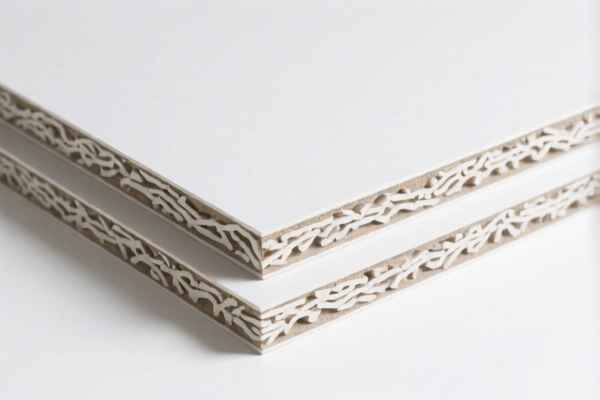
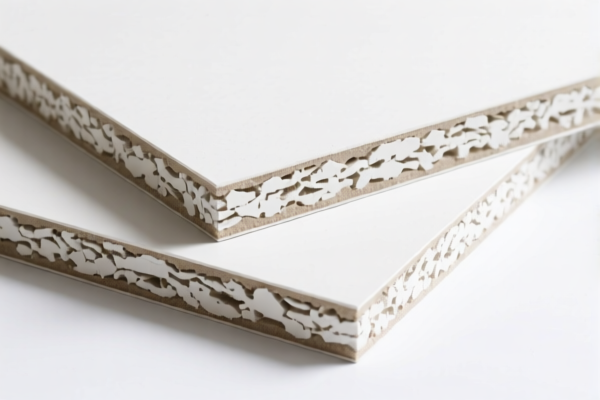
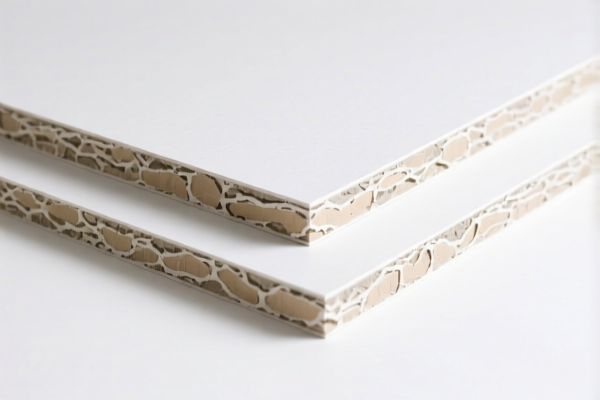
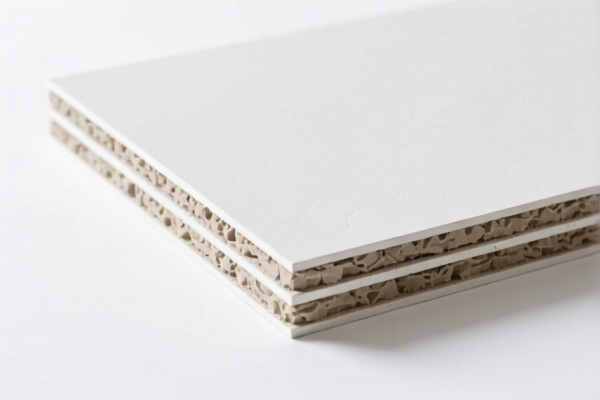
AI Analysis
🏗️ Gypsum Mortar: HS Code Classification & US Customs Clearance Guide (2026)
🌐 HS Code Reference & Customs Strategy | 2026 Latest Tariff Analysis | Professional Clearance Protocol
📌 I. Product Definition: What is "Gypsum Mortar"?
Gypsum Mortar is a construction material primarily composed of gypsum (calcium sulfate dihydrate) mixed with fibers, aggregates, and additives. It is widely used for interior wall plastering, ceiling smoothing, and fireproofing. In international trade, it is classified based on its material composition (gypsum-based) and form (powdered mixture/mortar).
⚠️ Key Classification Logic:
- If the product is primarily a gypsum-based mixture, it falls under Chapter 68 (Mineral Products) or Chapter 38 (Miscellaneous Chemical Products).
- Chapter 68 is generally preferred for mineral-based mortars/plasters.
- Chapter 38 may apply if classified as a "fireproof mortar" or if the specific formulation aligns with chemical preparations, though this is less common for standard gypsum plasters.
📦 II. HS Code Classification Details (2026 Latest Tariff Alignment)
Based on the provided data, four specific HS Codes are identified as potential matches. Below is the detailed breakdown:
| HS Code | Product Description | Classification Logic & Summary | Tax Rate |
|---|---|---|---|
6812.99.10.00 |
Gypsum Fiber Mixtures / Gypsum-Based Mortars | Best Match. • Material: Contains gypsum components. • Form: Mortar is a mixture of gypsum and fibers, fitting the logic of "gypsum products and mixtures." |
35.0% |
6812.99.90.00 |
Other Gypsum Products (Including Mortars) | Strong Match. • Material: Explicitly includes "gypsum" material, meeting the requirement for gypsum-based mixtures. • Form: Mortar is a mixed product, fitting the "Other" category without material conflict. |
35.0% |
3816.00.20.10 |
Fireproof Mortars (Other Than Refractory Cements/Concretes) | Alternative Match. • Logic: Product name explicitly states "Mortar," fitting the "Mortar" material and form characteristics. • Note: While not explicitly stated as clay-based, it fits under the "Other" category, and gypsum material does not conflict with this code. |
38.0% |
3816.00.20.50 |
Other Fireproof/Refractory Preparations | Alternative Match. • Logic: Explicitly belongs to the "Mortar" category, matching the material and form of fireproof mortar. • Note: Although not directly specified as clay-based, it falls under the "Other" category, and gypsum material is not in conflict. |
38.0% |
🔍 Critical Distinction:
- Codes6812.99.10.00&6812.99.90.00are likely the most accurate for standard gypsum mortar because they specifically address gypsum-based mixtures.
- Codes3816.00.20.10&3816.00.20.50are broader "Fireproof Mortar" categories. They may be used if the mortar is primarily marketed for its fireproofing properties rather than its gypsum base, but they carry a higher tax burden.
💰 III. 2026 US Tariff Rate Breakdown (Detailed Policy Analysis)
✅ Applicable Country: United States (US)
✅ Country of Origin: China (CN)
✅ Effective Date: November 10, 2025 (and onwards)
🎯 1. For HS Codes 6812.99.10.00 & 6812.99.90.00 (Gypsum-Based)
| Item | Content |
|---|---|
| Base Tariff | 0.0% (Ad Valorem) |
| Section 301 Tariff | +25.0% (Additional Duty) |
| Section 122 Tariff | +10.0% (Additional Duty) |
| Total Tax Rate | 35.0% |
| Calculation | CIF Value × 35% |
| De Minimis Exemption | ❌ Not Applicable (Denied) |
| Legal Path | Base Tariff → Section 301 (USITC) → Section 122 (IEEPA/Executive Order) |
📌 Explanation:
- 0% Base: Gypsum products often have low base tariffs.
- 25% Section 301: This is the standard additional duty on Chinese goods under Trade Act Section 301.
- 10% Section 122: This reflects the additional duty imposed under Executive Order 14117 or similar authorities (often referenced as "122 Clause" in internal systems), targeting specific Chinese imports.
- Total Impact: Even with a 0% base, the 35% effective rate is significant and must be factored into cost calculations.
🎯 2. For HS Codes 3816.00.20.10 & 3816.00.20.50 (Fireproof Mortars)
| Item | Content |
|---|---|
| Base Tariff | 3.0% (Ad Valorem) |
| Section 301 Tariff | +25.0% (Additional Duty) |
| Section 122 Tariff | +10.0% (Additional Duty) |
| Total Tax Rate | 38.0% |
| Calculation | CIF Value × 38% |
| De Minimis Exemption | ❌ Not Applicable (Denied) |
| Legal Path | Base Tariff (3%) → Section 301 → Section 122 |
📌 Explanation:
- 3% Base: Chemical/other preparations may have a slightly higher base tariff.
- Additional Duties: Same as above (+25% + 10%).
- Total Impact: The 38% effective rate is 3% higher than the gypsum-specific codes.
- Recommendation: Avoid these codes unless the product is definitively classified as a "chemical fireproofing preparation" rather than a "mineral gypsum mortar," as they are more expensive.
🛠️ IV. Customs Clearance Practical Advice (Actionable Strategy)
✅ 1. Preparation Checklist (Mandatory Documents)
| Document | Required? | Notes |
|---|---|---|
| ✅ Product Specification Sheet | ✔️ | Must list: Gypsum content %, fiber type, density, water absorption, fire resistance rating. |
| ✅ Formula/Composition Data | ✔️ | Critical to prove it is gypsum-based (to justify 6812 vs 3816). |
| ✅ Product Photos | ✔️ | Show packaging, label (HS Code claim), and bulk appearance (powder/sack). |
| ✅ Commercial Invoice | ✔️ | Clearly state: "Gypsum-Based Mortar for Construction." Avoid vague terms like "Chemical Mix." |
| ✅ Packing List | ✔️ | Detail net/gross weight. |
| ✅ Certificate of Origin (CO) | ✔️ | If applicable, to verify China origin (triggers tariffs). |
| ✅ Safety Data Sheet (SDS) | ✔️ | If considered hazardous or containing specific additives. |
✅ 2. Declaration Strategy (Key Tips)
🔥 "Clarify Base, Avoid 'Chemical' Labels, Stick to Gypsum!"
| Scenario | Recommended HS Code | Risk if Misdeclared |
|---|---|---|
| Standard Gypsum Plaster | 6812.99.10.00 or 6812.99.90.00 |
Using 3816 leads to +3% higher tax (38% vs 35%). |
| Fire-Resistant Gypsum Mortar | 6812.99.10.00 |
Still preferred if gypsum is the main component. |
| Non-Gypsum Fire Mortar | 3816.00.20.10 |
Only if no gypsum is present. |
| Sample/Small Shipment | ❌ No De Minimis | Do not use Section 321 (De Minimis) for commercial quantities; 35-38% tax will be assessed. |
✅ 3. Special Considerations
| Issue | Advice |
|---|---|
| Gypsum vs. Clay | Do not mislabel as "clay mortar" if it is gypsum. Customs may reclassify and apply different penalties. |
| Fireproofing Claim | If you claim "fireproof," ensure the product has a certified fire resistance rating (e.g., ASTM E136). Otherwise, it may be rejected as misleading. |
| Packaging | Gypsum mortar is hygroscopic. Ensure packaging is waterproof (plastic-lined sacks) to prevent hardening during transit, which could lead to "defective goods" claims. |
🌍 V. Global Market Comparison (2026)
| Country/Region | Recommended HS Code | Tariff Rate | Certification Required | Notes |
|---|---|---|---|---|
| 🇺🇸 USA | 6812.99.10.00 |
35% (301+122) | No specific cert, but SDS recommended | Highest Tariff Risk |
| 🇨🇳 China | 6812.99.10.00 |
5-8% | CCC (if applicable) | Lower base tariff |
| 🇪🇺 EU | 6812.99.10.00 |
0-2% | CE Marking (Construction Products Regulation) | Low tariff, but strict conformity |
| 🇦🇺 Australia | 6812.99.10.00 |
5% | GMA (Gas Marking Association) | No additional duties |
📌 Conclusion:
- The USA imposes a significant 35% duty on gypsum mortar from China.
- EU/Australia are more cost-effective for duty purposes, but compliance (CE/GMA) is stricter.
📌 VI. Common Mistakes & Pitfalls (Lessons Learned)
❌ Mistake 1: Declaring as "Chemical Mortar" (3816) when it is 6812
👉 Consequence: Overpaying 3% on the CIF value unnecessarily.
Fix: Use 6812.99.10.00 if gypsum is the primary binder.
❌ Mistake 2: Ignoring Section 122 Tariff
👉 Consequence: Underestimating landed cost by 10%.
Fix: Always calculate Base + 301 + 122.
❌ Mistake 3: Vague Description ("Mortar Mix")
👉 Consequence: Customs holds shipment for classification review, causing delays.
Fix: Use precise name: "Gypsum-Based Interior Plaster Mortar, Powder Form."
✅ Best Practice:
"Declare as 'Gypsum Mortar,' HS Code
6812.99.10.00, with full composition details to avoid reclassification."
🎯 VII. Conclusion: Professional Declaration Saves Money!
🎯 Key Takeaway:
🔹 Use
6812.99.10.00for standard gypsum mortar to minimize tax (35% vs 38%).
🔹 Include Section 122 (10%) in your cost model—it is mandatory for China-origin goods in 2026.
🔹 Avoid De Minimis for commercial shipments—customs will assess full duty.
📌 Pro Tip:
If you are importing large volumes, consider applying for a Section 301 Exclusion (if available for your specific product code) or explore third-country origin (e.g., Vietnam, Mexico) to mitigate the 25% + 10% additional duties.
📣 Immediate Action:
📞 Consult a licensed customs broker to confirm Section 122 applicability for your specific shipment.
📄 Prepare composition sheets to prove gypsum content for6812classification.
🚀 Optimize your HS Code choice to save 3% on every shipment!
✨ Precision in Classification, Profit in Clearance!
💼 Every percentage point counts in global trade.
Customer Reviews
About HS Code Classification
The Harmonized System (HS) is an internationally standardized nomenclature developed by the World Customs Organization (WCO) to classify traded products. Over 200 countries use the HS system as the basis for customs tariffs, trade statistics, and import/export regulations.
Each HS code follows a hierarchical structure:
- Chapter (2 digits) — Broad category of goods (e.g., Chapter 84: Machinery and Mechanical Appliances)
- Heading (4 digits) — More specific grouping within the chapter
- Subheading (6 digits) — Internationally standardized breakdown, used by all WCO member countries
- National subdivisions (8-10 digits) — Country-specific extensions for further classification, such as US HTSUS 10-digit codes
Correct HS code classification is essential for smooth customs clearance, accurate duty payment, and compliance with trade regulations. Misclassification can lead to customs delays, overpayment of duties, or penalties.
When importing from CN to US, the applicable tariff rates may include:
- Most-Favored-Nation (MFN) rate — The standard duty rate applied to WTO members
- General rate — Applied to countries without trade agreements
- Trade remedy duties — Additional tariffs such as Section 301 (anti-dumping), Section 232 (national security), or countervailing duties
The information provided on this page is for reference purposes only. For official classification, please consult with your local customs authority or a licensed customs broker.